Cui Chen, Lu Chuang, Cai Yanling, Xiong Yuhua, Duan Yihong, Lan Kaiwen, Fan Yi, Zhou Xuedong, Wei Xi
Hospital of Stomatology, Guanghua School of Stomatology, Sun Yat-sen University, Guangzhou 510055, China.
Guangdong Provincial Key Laboratory of Stomatology, Guangzhou 510055, China.
Int J Mol Sci. 2024 Nov 24;25(23):12607. doi: 10.3390/ijms252312607.
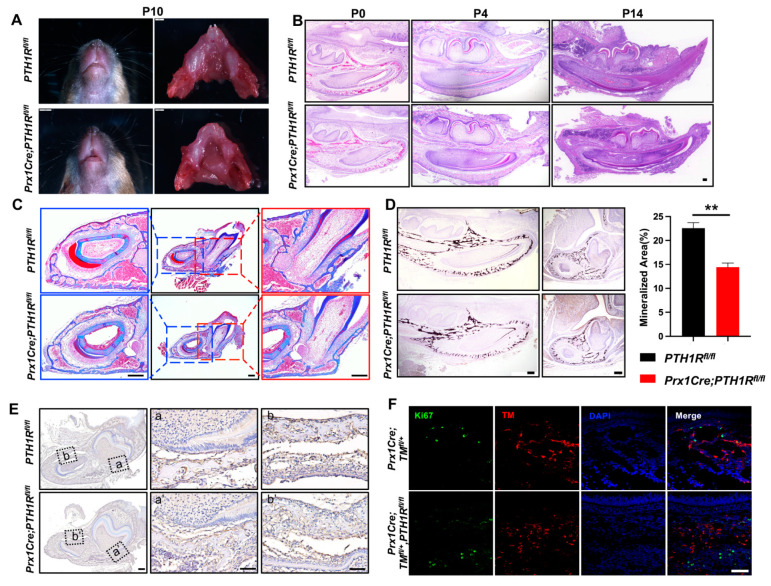
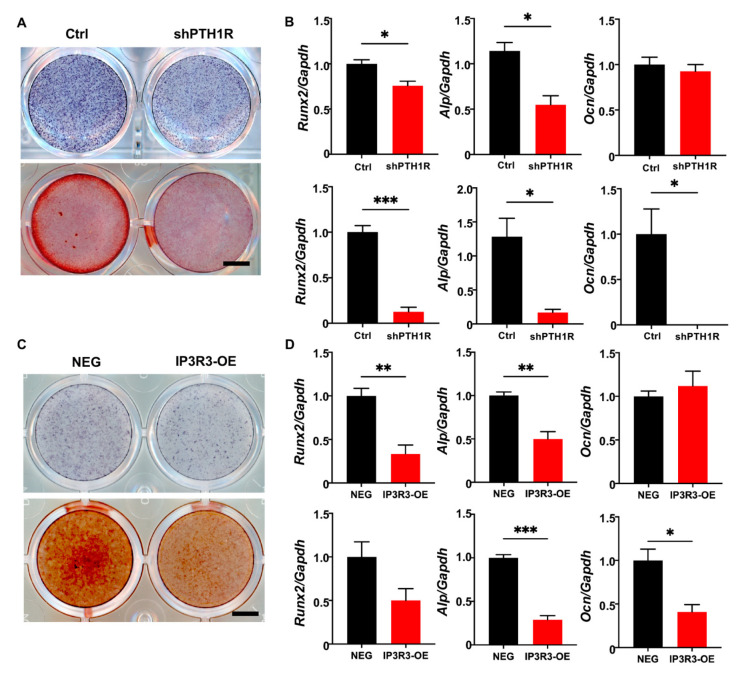
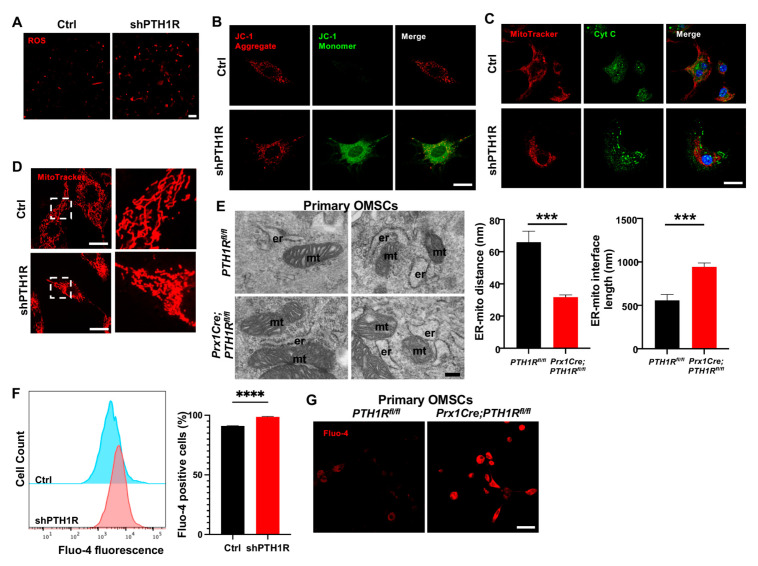
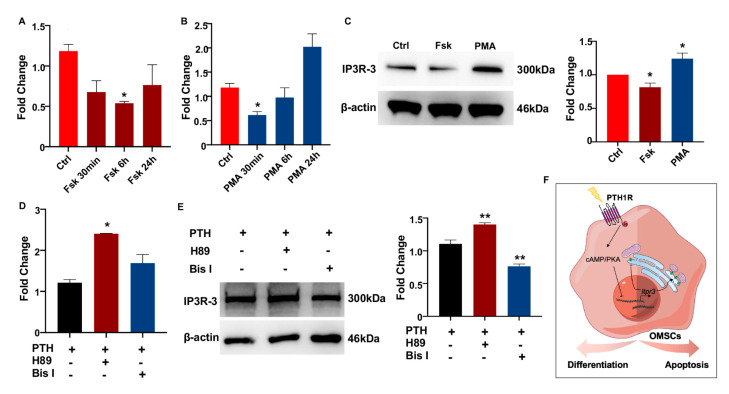
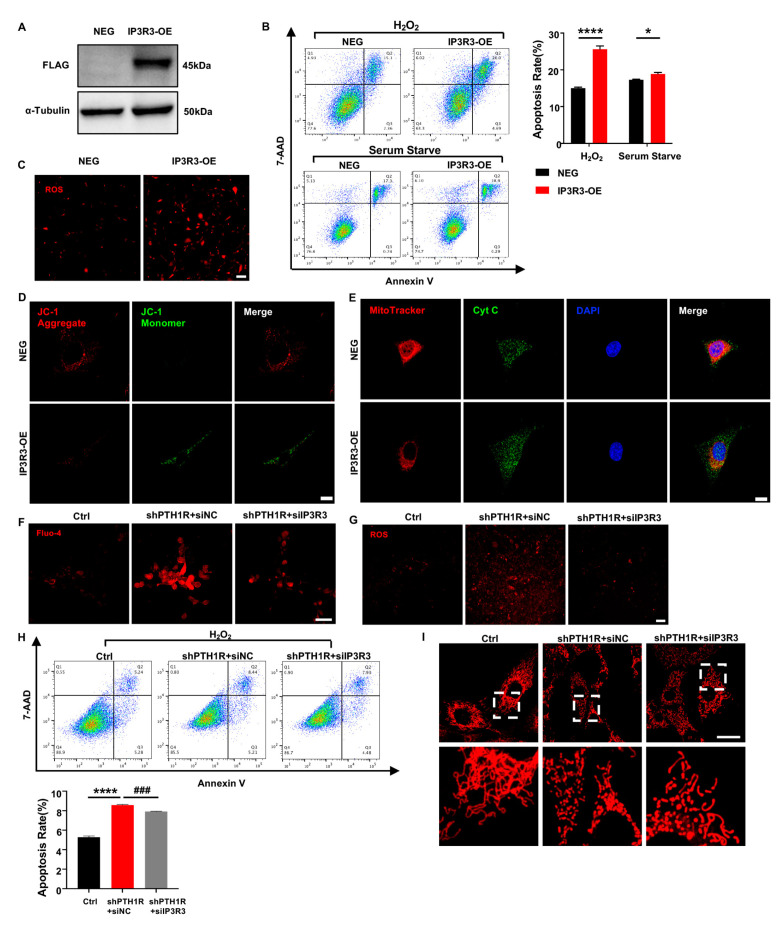
Genetic abnormalities of the parathyroid hormone 1 receptor (PTH1R) lead to profound craniomaxillofacial bone and dentition defects on account of inappropriate tissue metabolism and cellular differentiation. The coordinated activity of differentiation and viability in bone cells is indispensable for bone metabolism. Recent research demonstrates mesenchymal progenitors are responsive to PTH1R signaling for osteogenic differentiation, whereas the effect of PTH1R on cellular survival remains incompletely understood. Here, we report that mice with deletion of PTH1R in Prx1-positive mesenchymal cells () exhibit decreased alveolar bone mass due in part to apoptotic response activation. The exploration of oral bone-derived mesenchymal stem cells (OMSCs) with PTH1R deficiency suggests PTH1R signaling modulates OMSCs' apoptosis by interfering mitochondrial function and morphology. The underlying molecular mechanisms are studied by transcriptome sequencing analysis, finding that inositol trisphosphate receptor-3 (IP3R-3), an endoplasmic reticulum calcium channel protein, serves as a modulator of pro-apoptosis in OMSCs. Furthermore, we find PTH1R and its downstream protein kinase A (PKA) pathway dampen IP3R-3's expression. Of note, OMSCs with IP3R-3 overexpression recapitulate the PTH1R-deletion phenotypes, while IP3R-3 silence rescues mitochondrial dysfunction. Altogether, our study uncovers the anti-apoptotic function of PTH1R signaling in OMSCs and proves that excess apoptosis partly contributes to a weakening potential of osteogenic differentiation and aberrant mandibular development.
甲状旁腺激素1受体(PTH1R)的基因异常会导致严重的颅颌面骨和牙列缺陷,原因是组织代谢和细胞分化不当。骨细胞中分化与活力的协同活动对骨代谢至关重要。最近的研究表明,间充质祖细胞对PTH1R信号作出反应以进行成骨分化,而PTH1R对细胞存活的影响仍未完全了解。在这里,我们报告Prx1阳性间充质细胞中PTH1R缺失的小鼠()牙槽骨量减少,部分原因是凋亡反应激活。对缺乏PTH1R的口腔骨源性间充质干细胞(OMSCs)的探索表明,PTH1R信号通过干扰线粒体功能和形态来调节OMSCs的凋亡。通过转录组测序分析研究了潜在的分子机制,发现内质网钙通道蛋白肌醇三磷酸受体3(IP3R-3)是OMSCs中促凋亡的调节因子。此外,我们发现PTH1R及其下游蛋白激酶A(PKA)途径会抑制IP3R-3的表达。值得注意的是,过表达IP3R-3的OMSCs重现了PTH1R缺失的表型,而沉默IP3R-3可挽救线粒体功能障碍。总之,我们的研究揭示了PTH1R信号在OMSCs中的抗凋亡功能,并证明过度凋亡部分导致成骨分化潜能减弱和下颌发育异常。