Tsunetoshi Yasuo, Sanada Fumihiro, Kanemoto Yuko, Shibata Kana, Masamune Atsushi, Taniyama Yoshiaki, Yamamoto Koichi, Morishita Ryuichi
Department of Geriatric and General Medicine, Graduate School of Medicine, Osaka University, Suita 565-0871, Japan.
Department of Clinical Gene Therapy, Graduate School of Medicine, Osaka University, Suita 565-0871, Japan.
Int J Mol Sci. 2024 Dec 8;25(23):13205. doi: 10.3390/ijms252313205.
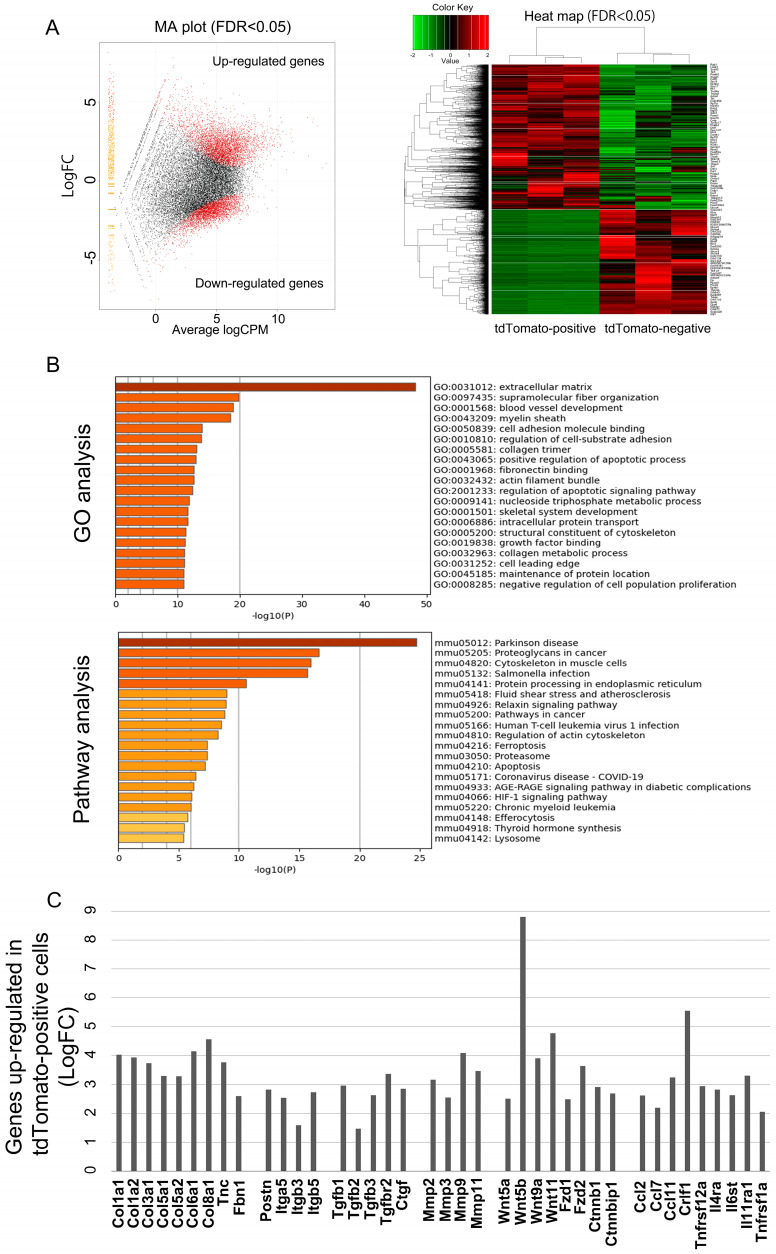
Pancreatic ductal adenocarcinoma (PDAC) characterized by an abundant cancer stroma is an aggressive malignancy with a poor prognosis. Periostin (Pn) is a key extracellular matrix (ECM) protein in various tumor progression. Previously, we described the role of Pn alternative splicing variants (ASVs) with specific functional features in breast cancer. Pn is known to associate with a chemoresistance of PDAC, but the functions of the Pn-ASVs remain largely unknown. In this study, we focused on physiological and pathological Pn-ASVs, and examined the characteristics of Pn-expressing cells and the difference in function of each ASV. We found that cancer-associated fibroblasts (CAFs) are a main source of Pn synthesis, which selectively secrete pathological Pn-ASVs with exon 21 both in mouse and human samples. RNA sequencing identified a gene signature of Pn-positive CAFs associated with ECM-related genes and chemokines, factors that shape the chemoresistance tumor microenvironment (TME). Additionally, only pathological Pn-ASVs interacted with heat shock protein 70-1a (HSP70-1a), leading to significant rescue of gemcitabine-induced PDAC apoptosis. In silico analysis revealed that the presence or absence of exon 21 changes the tertiary structure of Pn and the binding sites for HSP70-1a. Altogether, Pn-ASVs with exon 21 secreted from CAFs play a key role in supporting tumor growth by interacting with cancer cell-derived HSP70-1a, indicating that Pn-ASVs with exon 21 might be a potential therapeutic and diagnostic target in PDAC patients with rich stroma.
以丰富的癌间质为特征的胰腺导管腺癌(PDAC)是一种侵袭性恶性肿瘤,预后较差。骨膜蛋白(Pn)是各种肿瘤进展中的关键细胞外基质(ECM)蛋白。此前,我们描述了具有特定功能特征的Pn可变剪接变体(ASVs)在乳腺癌中的作用。已知Pn与PDAC的化疗耐药性有关,但其ASVs的功能仍 largely未知。在本研究中,我们聚焦于生理性和病理性Pn-ASVs,研究了表达Pn的细胞的特征以及每种ASV在功能上的差异。我们发现癌相关成纤维细胞(CAFs)是Pn合成的主要来源,在小鼠和人类样本中均选择性分泌含有外显子21的病理性Pn-ASVs。RNA测序确定了与ECM相关基因和趋化因子相关的Pn阳性CAFs的基因特征,这些因子塑造了化疗耐药性肿瘤微环境(TME)。此外,只有病理性Pn-ASVs与热休克蛋白70-1a(HSP70-1a)相互作用,从而显著挽救吉西他滨诱导的PDAC细胞凋亡。计算机分析表明,外显子21的存在与否会改变Pn的三级结构以及与HSP70-1a的结合位点。总之,CAFs分泌的含有外显子21的Pn-ASVs通过与癌细胞来源的HSP70-1a相互作用在支持肿瘤生长中起关键作用,这表明含有外显子21的Pn-ASVs可能是富含间质的PDAC患者潜在的治疗和诊断靶点。