Nguyen C Long, Nguyen Andy, Brown Jason, Byrne Terry, Ngo Binh Thanh, Luong Chieu Xuan
School of Engineering, University of Southern Queensland, Springfield, QLD 4300, Australia.
Academic Affairs Administration, University of Southern Queensland, Toowoomba, QLD 4350, Australia.
Sensors (Basel). 2024 Dec 6;24(23):7818. doi: 10.3390/s24237818.
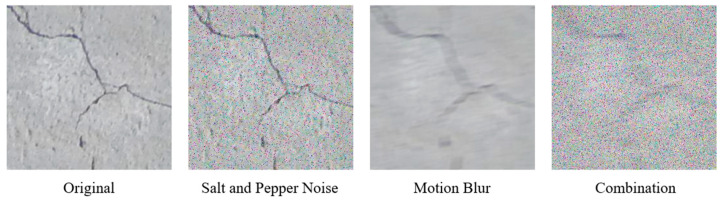
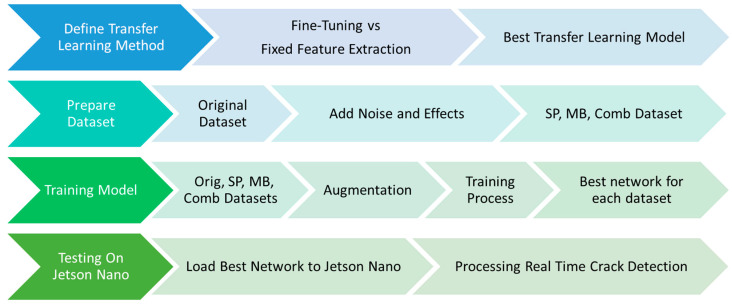
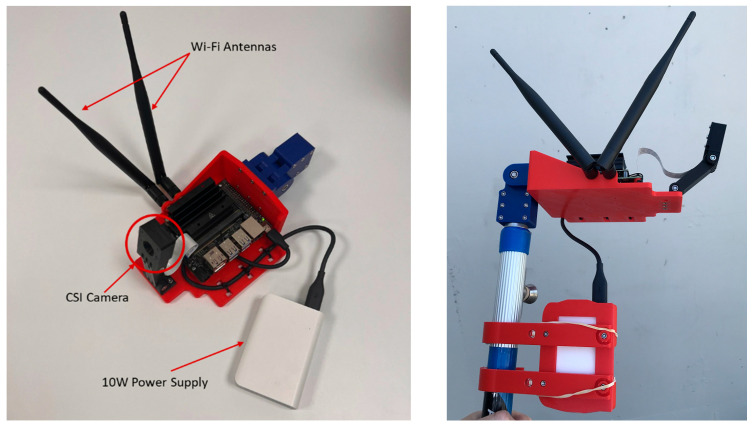
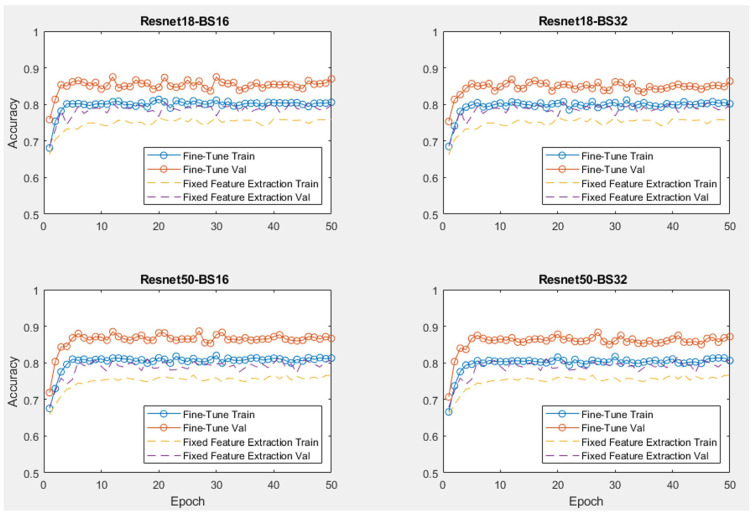
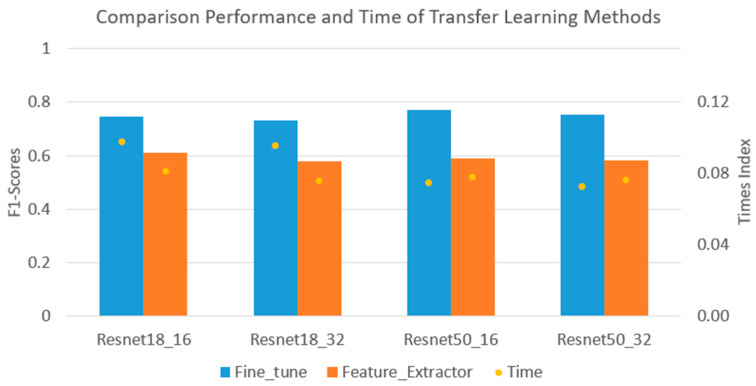
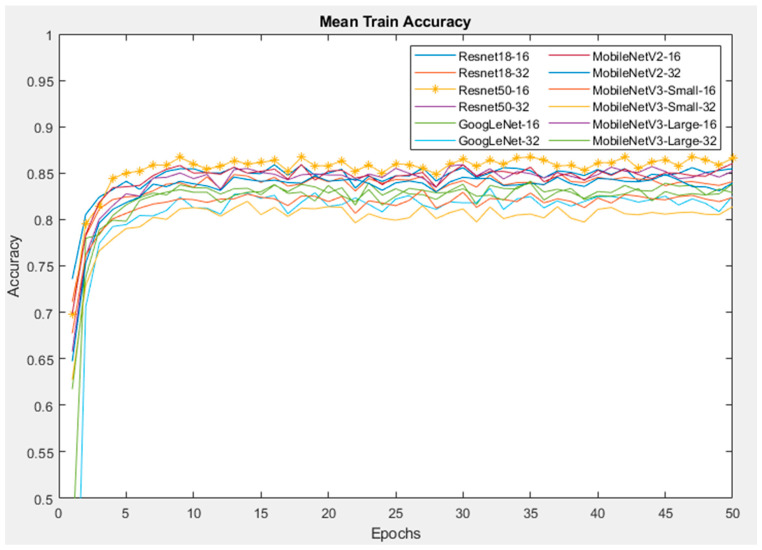
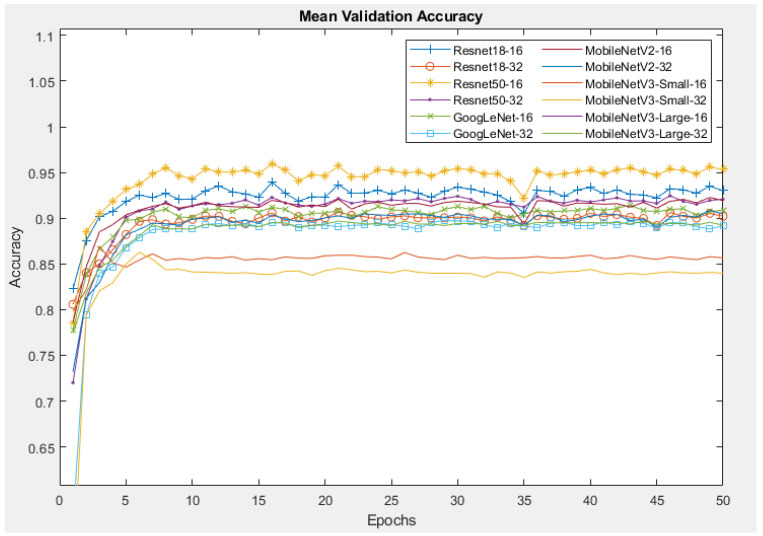
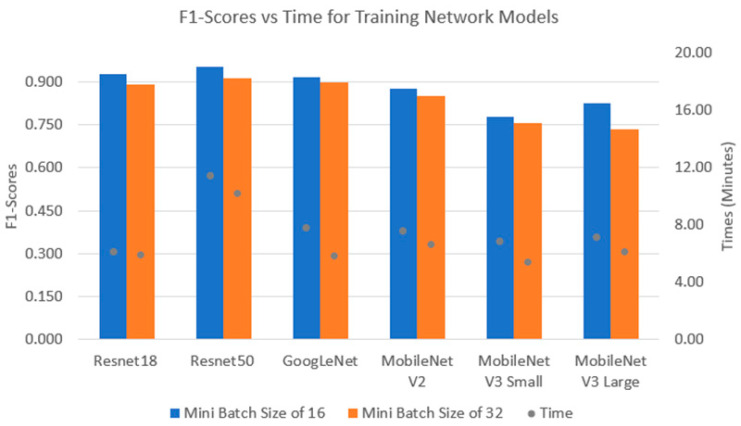
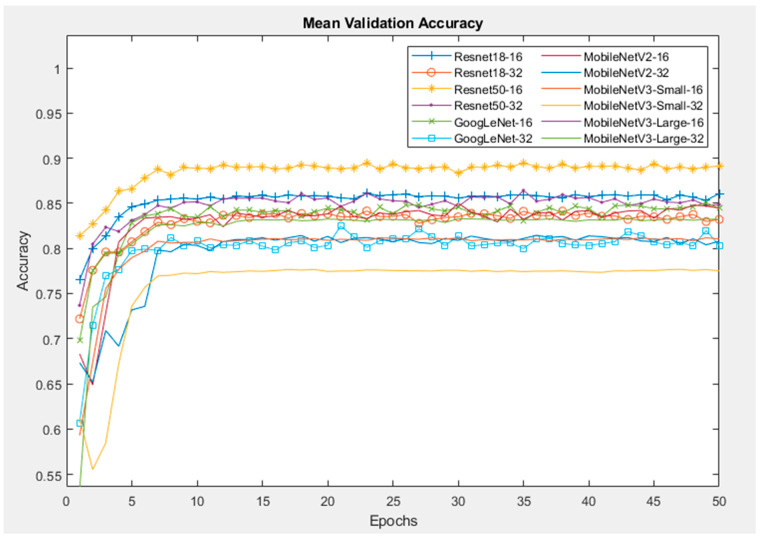
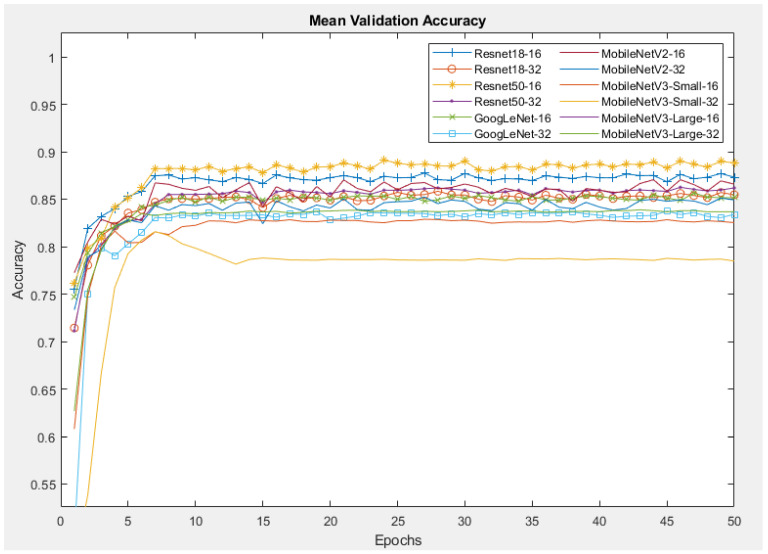
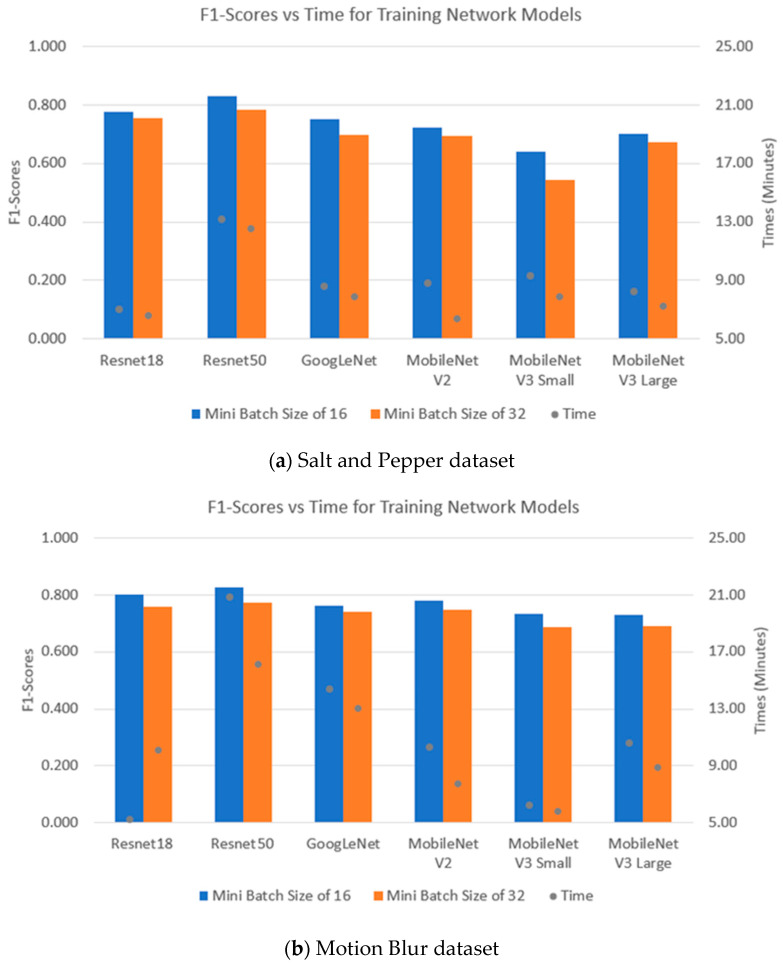
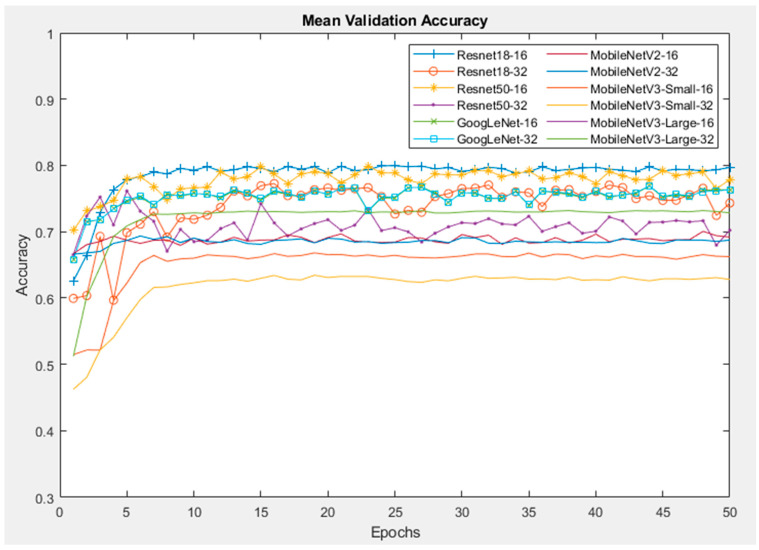
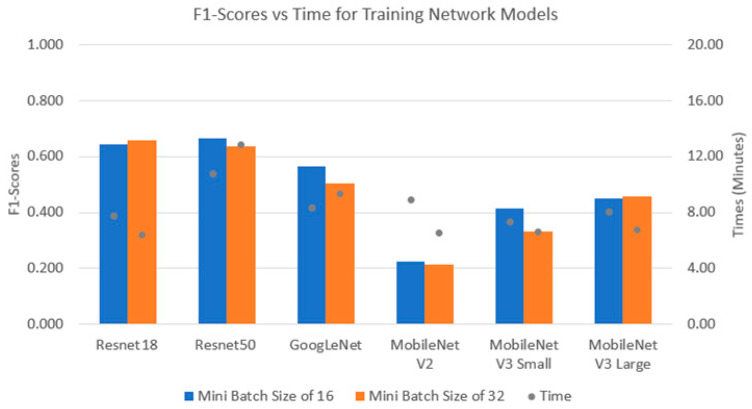
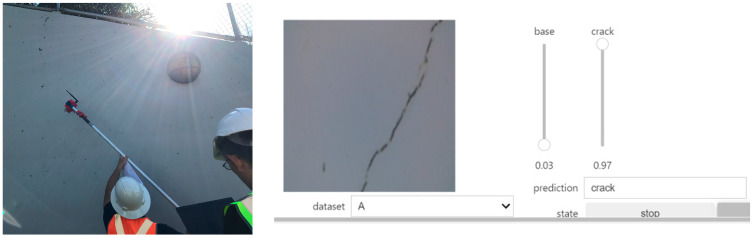
The use of Artificial Intelligence (AI) to detect defects such as concrete cracks in civil and transport infrastructure has the potential to make inspections less expensive, quicker, safer and more objective by reducing the need for on-site human labour. One deployment scenario involves using a drone to carry an embedded device and camera, with the device making localised predictions at the edge about the existence of defects using a trained convolutional neural network (CNN) for image classification. In this paper, we trained six CNNs, namely Resnet18, Resnet50, GoogLeNet, MobileNetV2, MobileNetV3-Small and MobileNetV3-Large, using transfer learning technology to classify images of concrete structures as containing a crack or not. To enhance the model's robustness, the original dataset, comprising 3000 images of concrete structures, was augmented using salt and pepper noise, as well as motion blur, separately. The results show that Resnet50 generally provides the highest validation accuracy (96% with the original dataset and a batch size of 16) and the highest validation F1-score (95% with the original dataset and a batch size of 16). The trained model was then deployed on an Nvidia Jetson Nano device for real-time inference, demonstrating its capability to accurately detect cracks in both laboratory and field settings. This study highlights the potential of using transfer learning on Edge AI devices for Structural Health Monitoring, providing a cost-effective and efficient solution for automated crack detection in concrete structures.
利用人工智能(AI)检测土木和交通基础设施中的缺陷,如混凝土裂缝,通过减少对现场人力的需求,有可能使检查成本更低、速度更快、更安全且更客观。一种部署场景是使用无人机携带嵌入式设备和摄像头,该设备利用经过训练的用于图像分类的卷积神经网络(CNN)在边缘进行关于缺陷存在与否的局部预测。在本文中,我们使用迁移学习技术训练了六个CNN,即Resnet18、Resnet50、GoogLeNet、MobileNetV2、MobileNetV3 - Small和MobileNetV3 - Large,以将混凝土结构图像分类为是否包含裂缝。为增强模型的鲁棒性,分别使用椒盐噪声和运动模糊对包含3000张混凝土结构图像的原始数据集进行了扩充。结果表明,Resnet50通常提供最高的验证准确率(原始数据集且批量大小为16时为96%)和最高的验证F1分数(原始数据集且批量大小为16时为95%)。然后将训练好的模型部署在英伟达Jetson Nano设备上进行实时推理,证明了其在实验室和现场环境中准确检测裂缝的能力。本研究突出了在边缘人工智能设备上使用迁移学习进行结构健康监测的潜力,为混凝土结构中的自动裂缝检测提供了一种经济高效的解决方案。