Hao Yuqing, Xu Longzhu, Peng Meiyu, Yang Zhugen, Wang Weiqi, Meng Fanyu
Department of Environmental Hygiene, School of Public Health, Harbin Medical University, Harbin, 150081, China.
Faculty of Engineering and Applied Science, Cranfield University, Cranfield, MK43 0AL, UK.
Environ Sci Ecotechnol. 2024 Nov 22;23:100515. doi: 10.1016/j.ese.2024.100515. eCollection 2025 Jan.
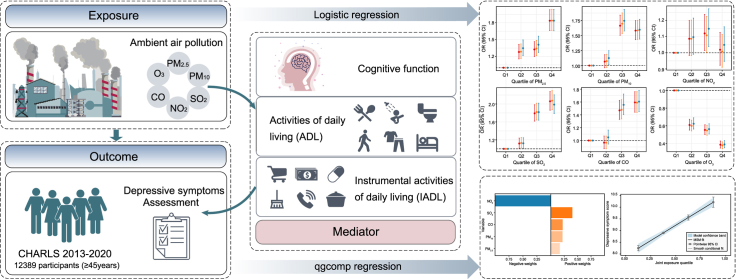
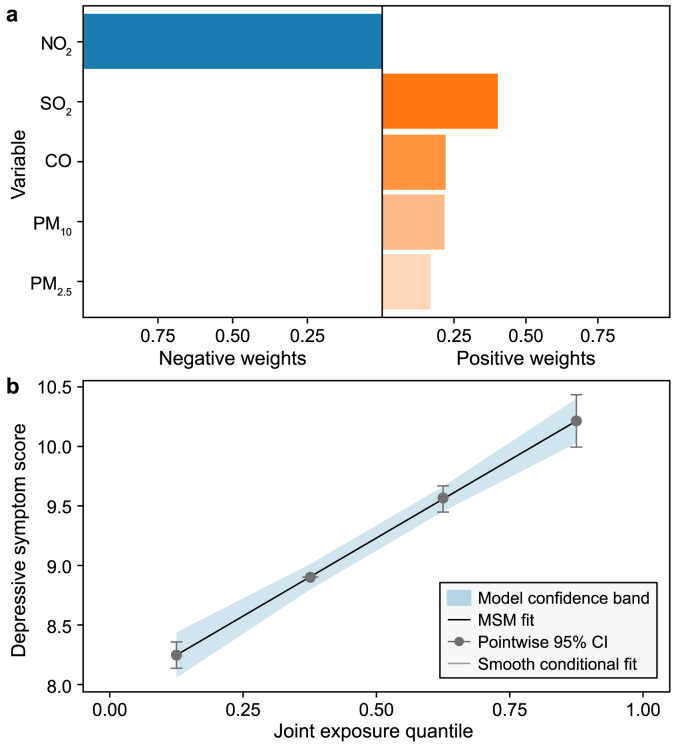
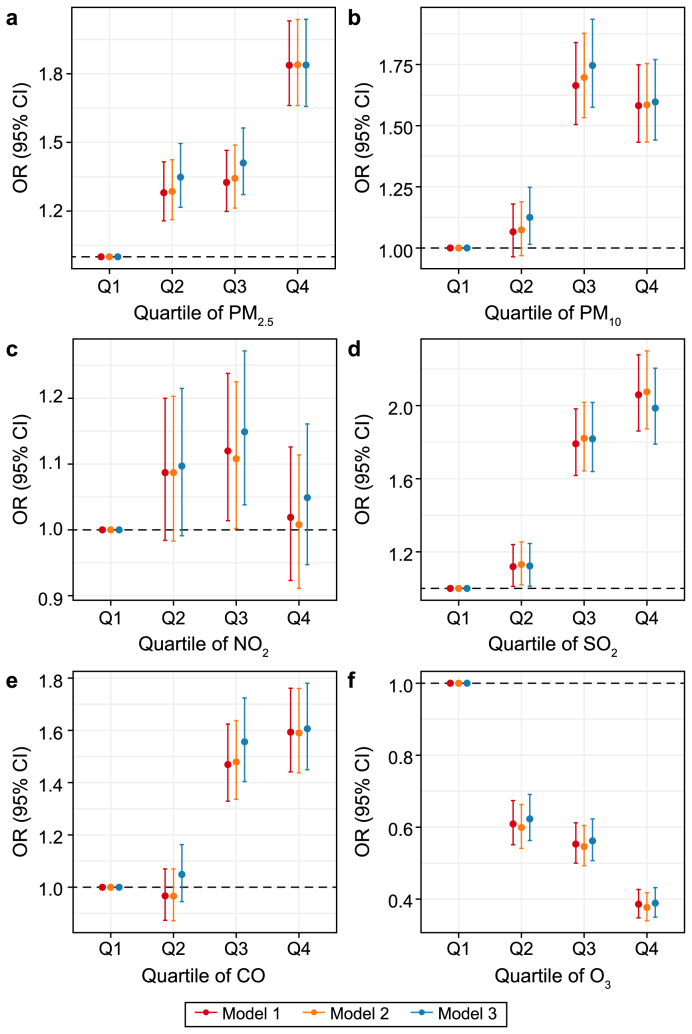
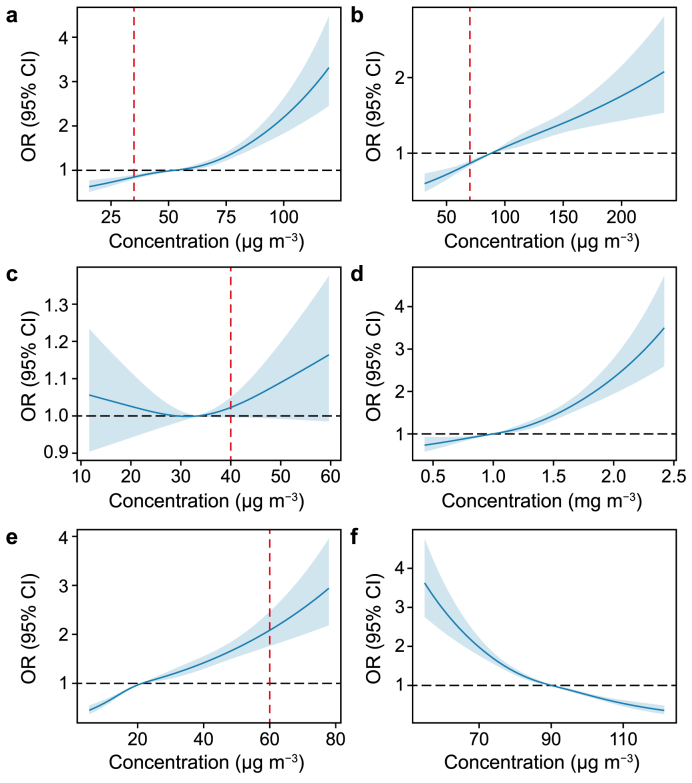
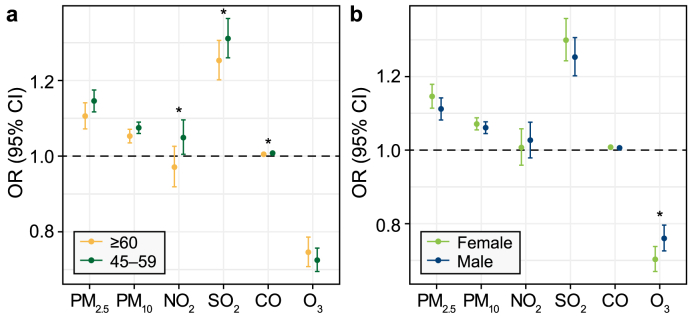
Depression is a leading mental health disorder worldwide, contributing substantially to the global disease burden. While emerging evidence suggests links between specific air pollutants and depression, the potential interactions among multiple pollutants remain underexplored. Here we show the influence of six common air pollutants on depressive symptoms among middle-aged and older Chinese adults. In single-pollutant models, a 10 μg m increase in SO, CO, PM, and PM is associated with increased risks of depressive symptoms, with odds ratios (95% confidence intervals) of 1.276 (1.238-1.315), 1.007 (1.006-1.008), 1.066 (1.055-1.078), and 1.130 (1.108-1.153), respectively. In two-pollutant models, SO remains significantly associated with depressive symptoms after adjusting for other pollutants. Multi-pollutant models uncover synergistic effects, with SO, CO, NO, PM, and PM exhibiting significant interactions, identifying SO as the primary driver of these associations. Mediation analyses further indicate that cognitive and physical impairments partially mediate the relationship between air pollution and depressive symptoms. These findings underscore the critical mental health impacts of air pollution and highlight the need for integrated air quality management strategies. Targeted mitigation of specific pollutants, particularly SO, is expected to significantly enhance public mental health outcomes.
抑郁症是全球主要的心理健康障碍,对全球疾病负担有重大影响。虽然新出现的证据表明特定空气污染物与抑郁症之间存在联系,但多种污染物之间的潜在相互作用仍未得到充分探索。在此,我们展示了六种常见空气污染物对中国中老年成年人抑郁症状的影响。在单污染物模型中,SO₂、CO、PM₂.₅和PM₁₀每增加10 μg/m³与抑郁症状风险增加相关,优势比(95%置信区间)分别为1.276(1.238 - 1.315)、1.007(1.006 - 1.008)、1.066(1.055 - 1.078)和1.130(1.108 - 1.153)。在双污染物模型中,在调整其他污染物后,SO₂仍与抑郁症状显著相关。多污染物模型揭示了协同效应,SO₂、CO、NO₂、PM₂.₅和PM₁₀表现出显著的相互作用,确定SO₂为这些关联的主要驱动因素。中介分析进一步表明,认知和身体损伤部分介导了空气污染与抑郁症状之间的关系。这些发现强调了空气污染对心理健康的关键影响,并突出了综合空气质量管理策略的必要性。针对性地减少特定污染物,特别是SO₂,有望显著改善公众心理健康状况。