Kim Jua, Gilbert Jeremy L, Lv William W, Du Ping, Pan Haobo
Shenzhen Key Laboratory of Marine Biomaterials, CAS-HK Joint Lab of Biomaterials, Shenzhen Institute of Advanced Technology, Chinese Academy of Sciences, 1068 Xueyuan Avenue, Shenzhen University Town, Shenzhen, 518055, PR China.
Syracuse Biomaterials Institute, Syracuse University, 318 Bowne Hall, Syracuse University, Syracuse, NY, 13244, USA.
Bioact Mater. 2024 Nov 30;45:363-387. doi: 10.1016/j.bioactmat.2024.11.020. eCollection 2025 Mar.
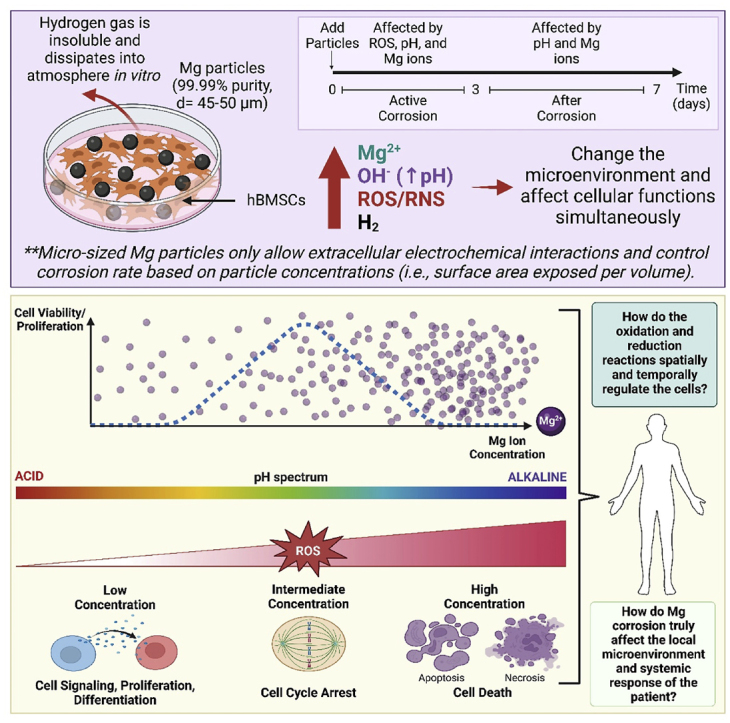
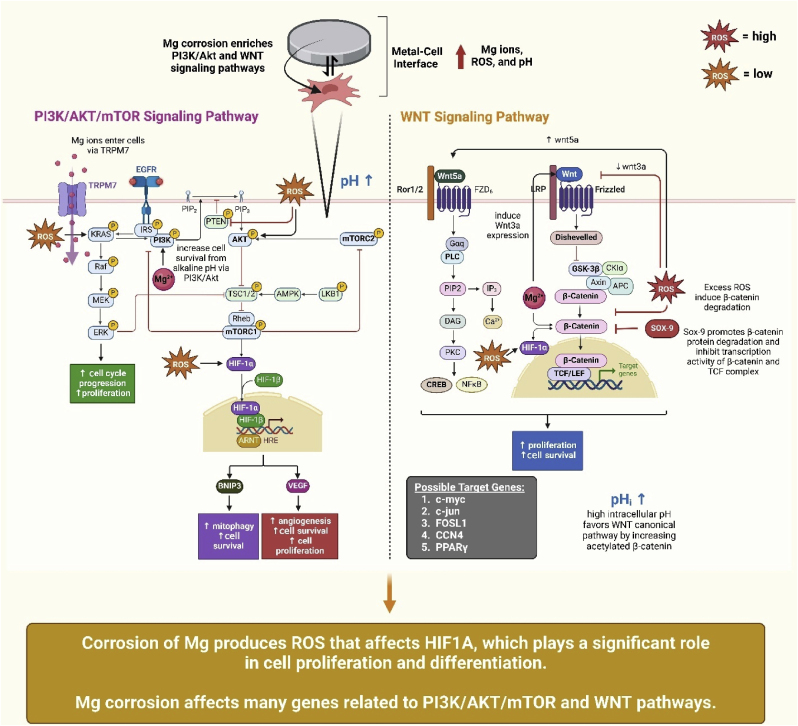
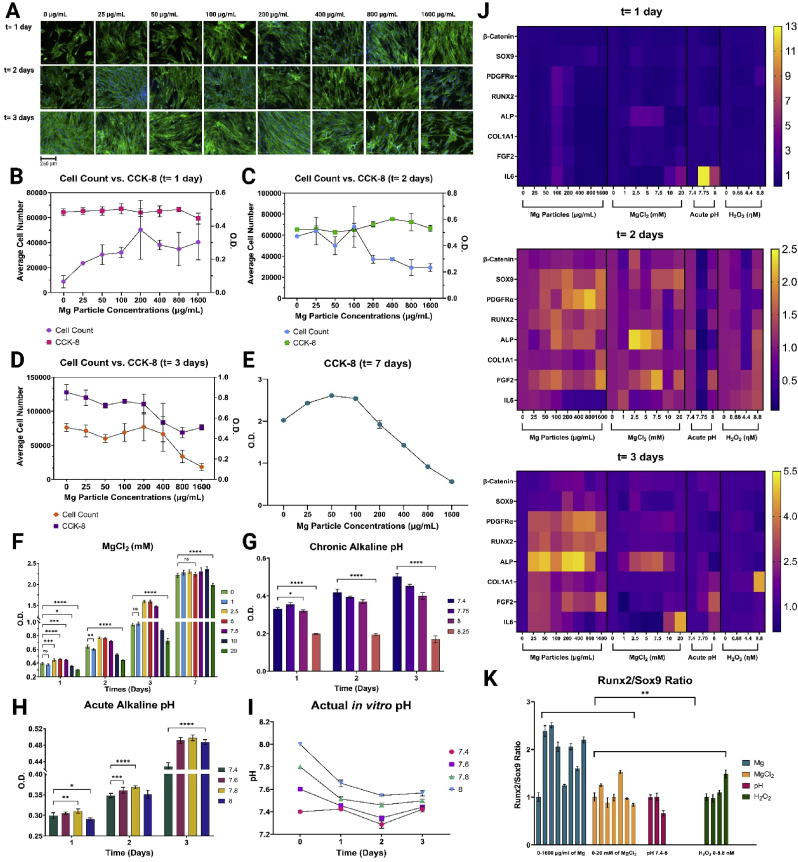
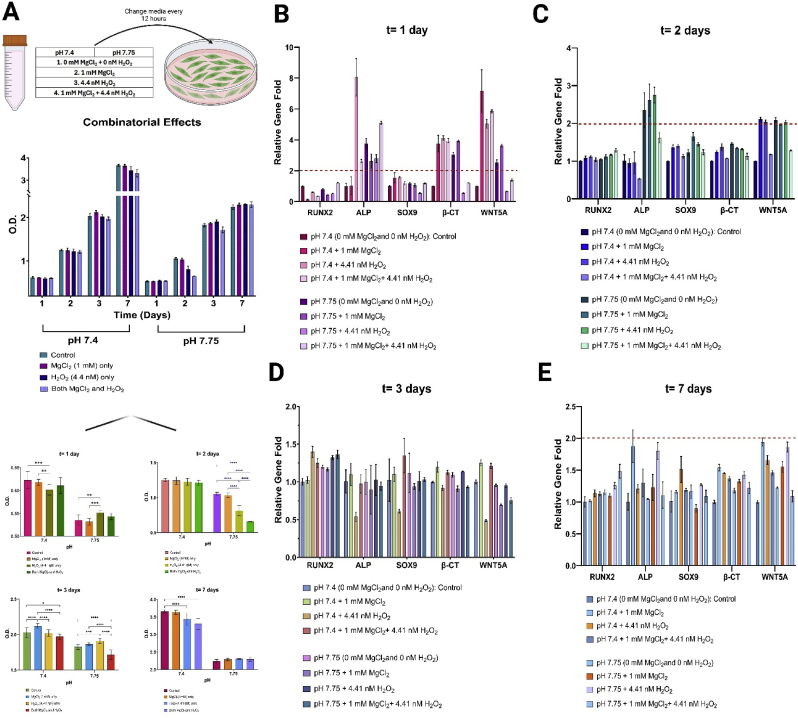
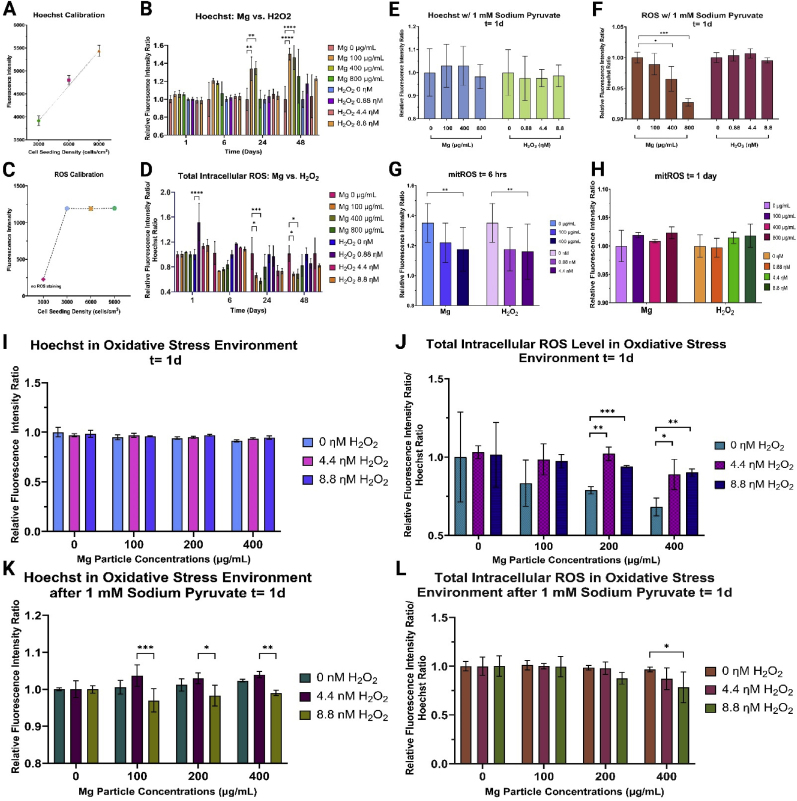
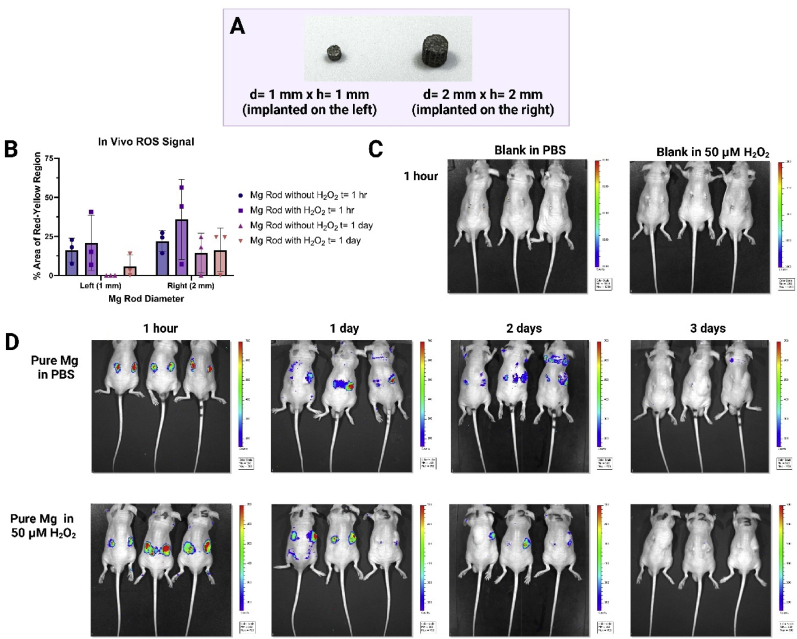
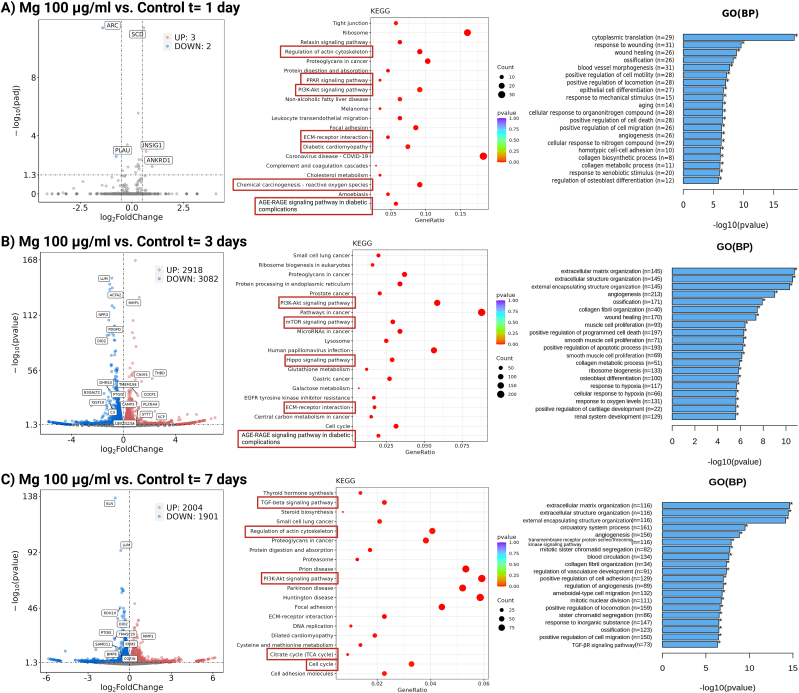
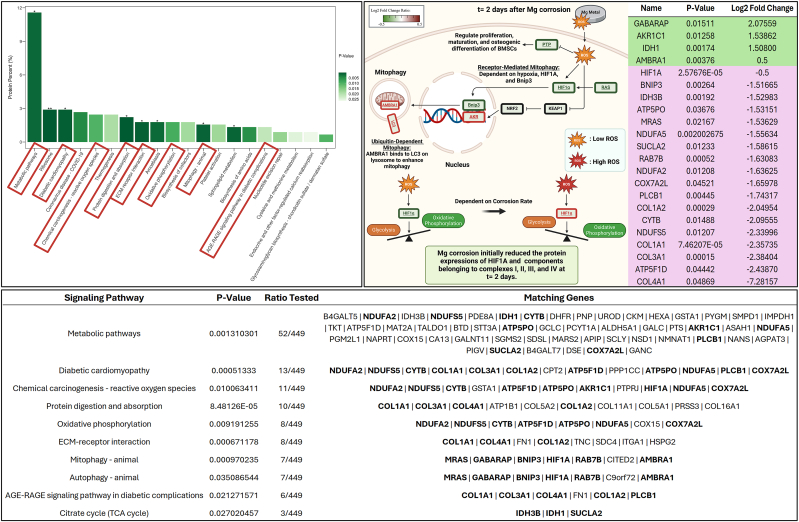
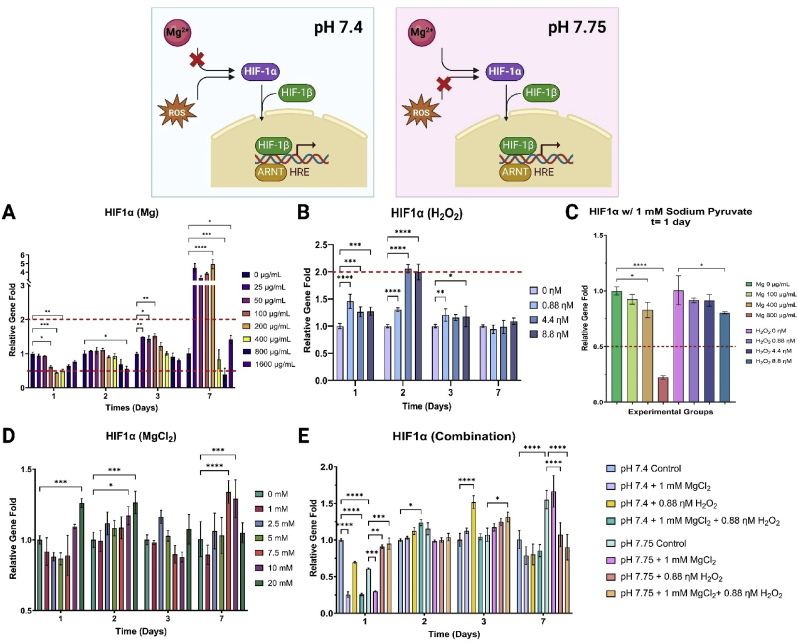
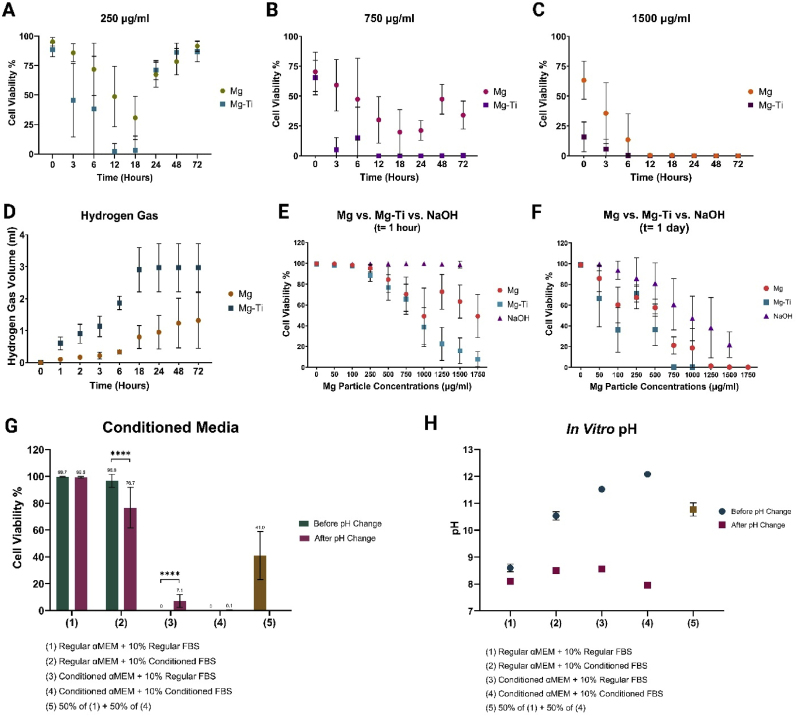
Magnesium (Mg) alloys are popular biodegradable metals studied for orthopedic and cardiovascular applications, mainly because Mg ions are essential trace elements known to promote angiogenesis and osteogenesis. However, Mg corrosion consists of oxidation and reduction reactions that produce by-products, such as hydrogen gas, reactive oxygen species, and hydroxides. It is still unclear how all these by-products and Mg ions concomitantly alter the microenvironment and cell behaviors spatially and temporally. This study shows that Mg corrosion can enhance cell proliferation by reducing intracellular ROS. However, Mg cannot decrease ROS and promote cell proliferation in simulated inflammatory conditions, meaning the microenvironment is critical. Furthermore, cells may respond to Mg ions differently in chronic or acute alkaline pH or oxidative stress. Depending on the corrosion rate, Mg modulates HIF1α and many signaling pathways like PI3K/AKT/mTOR, mitophagy, cell cycle, and oxidative phosphorylation. Therefore, this study provides a fundamental insight into the importance of reduction reactions in Mg alloys.
镁(Mg)合金是用于骨科和心血管应用研究的常见可生物降解金属,主要是因为镁离子是已知促进血管生成和骨生成的必需微量元素。然而,镁腐蚀由氧化和还原反应组成,会产生氢气、活性氧和氢氧化物等副产物。目前仍不清楚所有这些副产物和镁离子如何在空间和时间上同时改变微环境和细胞行为。本研究表明,镁腐蚀可通过降低细胞内活性氧来增强细胞增殖。然而,在模拟炎症条件下,镁无法降低活性氧并促进细胞增殖,这意味着微环境至关重要。此外,在慢性或急性碱性pH值或氧化应激条件下,细胞对镁离子的反应可能不同。根据腐蚀速率,镁会调节缺氧诱导因子1α(HIF1α)以及许多信号通路,如PI3K/AKT/mTOR、线粒体自噬、细胞周期和氧化磷酸化。因此,本研究为镁合金中还原反应的重要性提供了基本见解。