Yang Jiashu, Jiao Chenyang, Liu Nannan, Liu Wen, Wang Yueyao, Pan Ying, Kong Lingdong, Guo Wenjie, Xu Qiang
State Key Laboratory of Pharmaceutical Biotechnology, Department of Gastroenterology, Nanjing Drum Tower Hospital, School of Life Sciences, Nanjing University, Nanjing, China.
School of Pharmacy, Nanjing University of Chinese Medicine, Nanjing, China.
Research (Wash D C). 2024 Dec 17;7:0551. doi: 10.34133/research.0551. eCollection 2024.
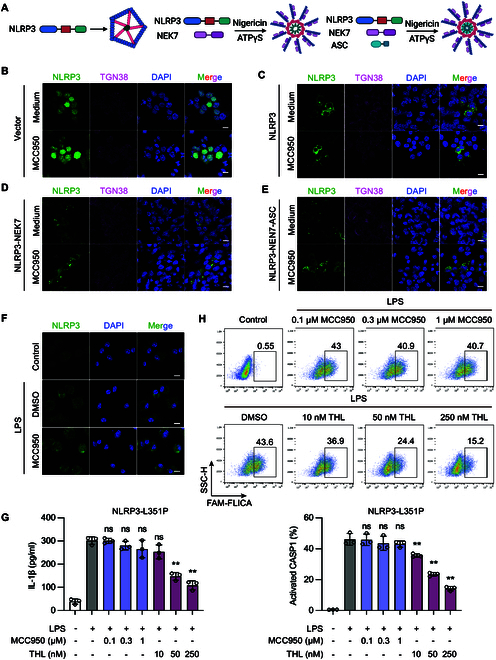
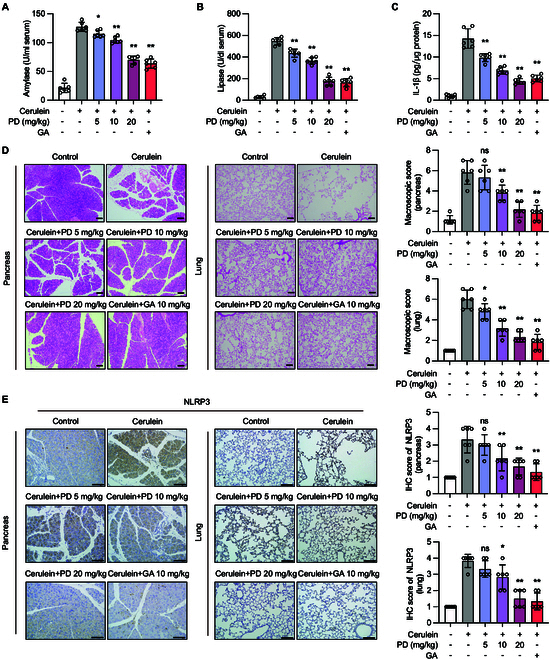
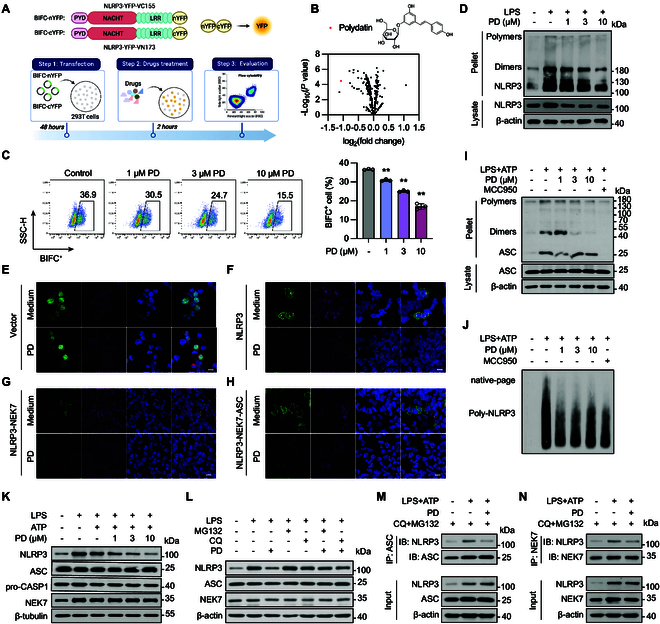
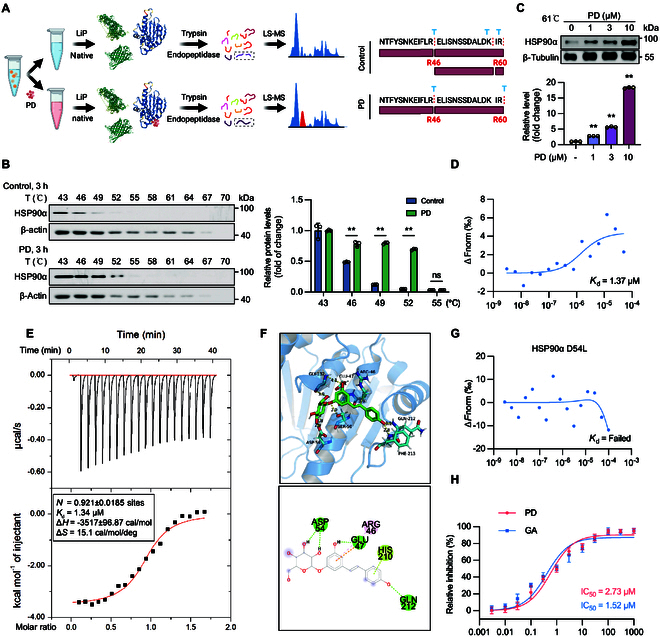
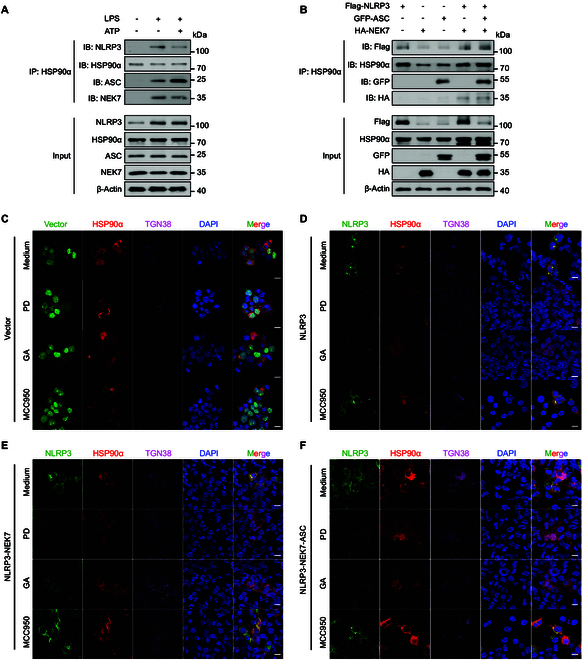
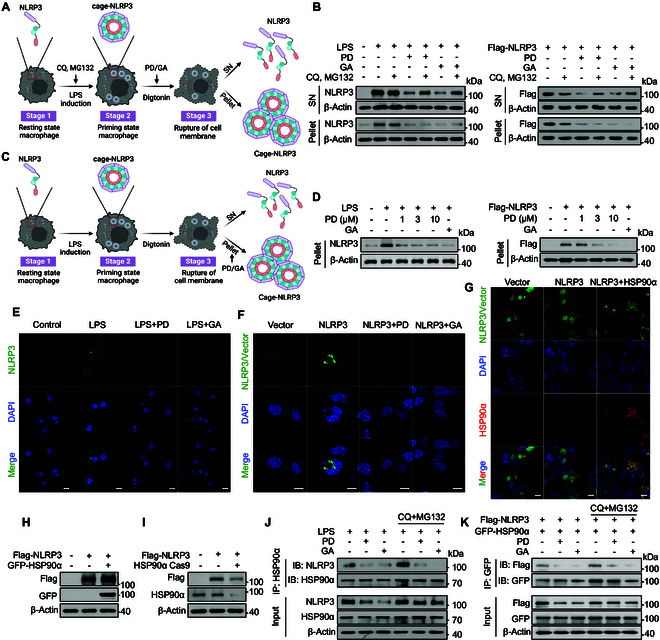
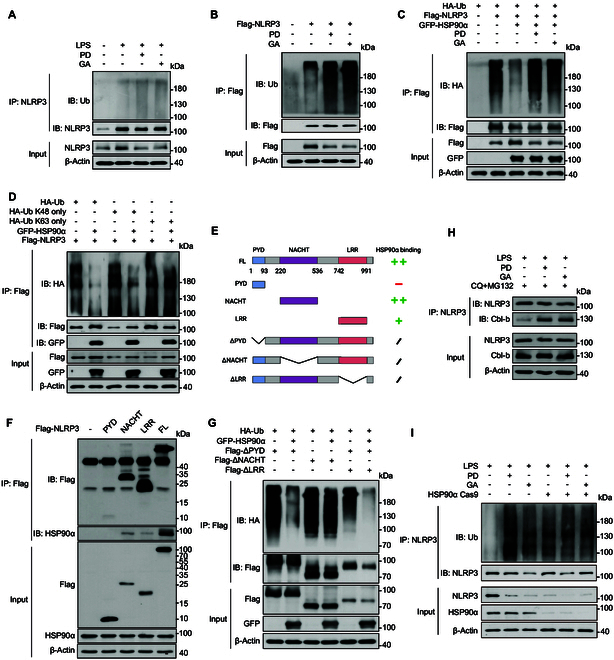
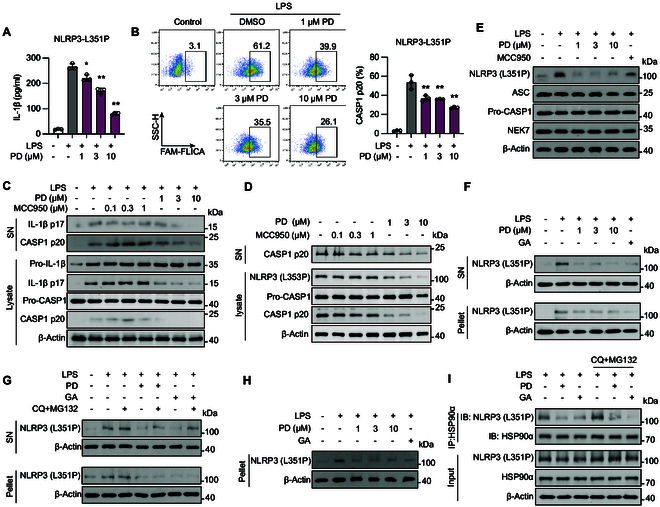
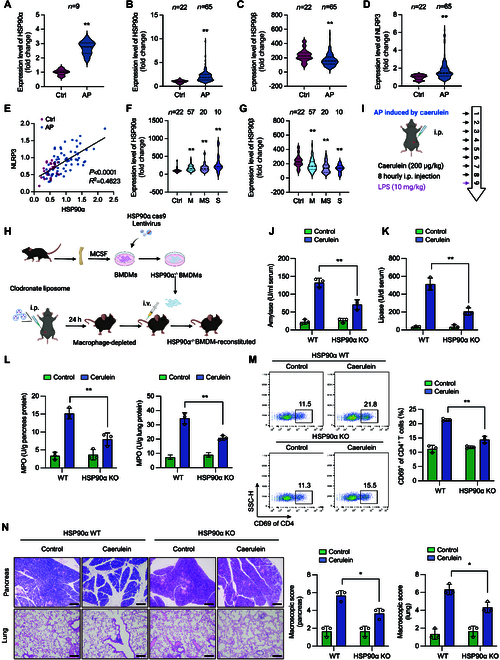
The NLRP3 inflammasome plays a critical role in various inflammatory conditions. However, despite extensive research in targeted drug development for NLRP3, including MCC950, clinical success remains elusive. Here, we discovered that the activated NLRP3 inflammasome complex (disc-NLRP3) and the activating mutation L351P exhibited resistance to MCC950. Through investigations using the small-molecule compound polydatin, HSP90α was found to stabilize both the resting (cage-NLRP3) and activated state (disc-NLRP3) of NLRP3 complexes, sustaining its activation. Our mechanistic studies revealed that polydatin specifically targets HSP90α, binding to it directly and subsequently interfering with the HSP90α-NLRP3 interaction. This disruption leads to the dissipation of cage-NLRP3, disc-NLRP3 complexes and NLRP3 L351P. Importantly, genetic and pharmacological inactivation of HSP90α effectively reduced NLRP3 inflammasome activation and alleviated cerulein-induced acute pancreatitis. These therapeutic effects highlight the clinical potential of HSP90α inhibition. Our findings demonstrate that HSP90α is crucial for the stability of both the resting and activated states of the NLRP3 inflammasome during its sustained activation, and targeting HSP90α represents a promising therapeutic strategy for diseases driven by the NLRP3 inflammasome.
NLRP3炎性小体在多种炎症状态中发挥关键作用。然而,尽管针对NLRP3的靶向药物研发(包括MCC950)进行了广泛研究,但临床成功仍难以实现。在此,我们发现活化的NLRP3炎性小体复合物(disc-NLRP3)和激活突变L351P对MCC950具有抗性。通过使用小分子化合物白藜芦醇苷进行研究,发现热休克蛋白90α(HSP90α)可稳定NLRP3复合物的静息状态(笼状NLRP3)和激活状态(disc-NLRP3),维持其激活。我们的机制研究表明,白藜芦醇苷特异性靶向HSP90α,直接与其结合,随后干扰HSP90α与NLRP3的相互作用。这种干扰导致笼状NLRP3、disc-NLRP3复合物和NLRP3 L351P的消散。重要的是,HSP90α的基因和药理学失活有效降低了NLRP3炎性小体的激活,并减轻了雨蛙肽诱导的急性胰腺炎。这些治疗效果凸显了抑制HSP90α的临床潜力。我们的研究结果表明,HSP90α在NLRP3炎性小体持续激活过程中对其静息和激活状态的稳定性至关重要,靶向HSP90α代表了一种针对由NLRP3炎性小体驱动的疾病的有前景的治疗策略。