
锌和pH值对人甘氨酸受体α3亚基(GlyRα3)调节作用的潜在机制
Mechanisms underlying modulation of human GlyRα3 by Zn and pH.
作者信息
Kindig Kayla, Gibbs Eric, Seiferth David, Biggin Philip C, Chakrapani Sudha
机构信息
Department of Physiology and Biophysics, School of Medicine, Case Western Reserve University, Cleveland, OH 44106-4970, USA.
Cleveland Center for Membrane and Structural Biology, School of Medicine, Case Western Reserve University, Cleveland, OH 44106-4970, USA.
出版信息
Sci Adv. 2024 Dec 20;10(51):eadr5920. doi: 10.1126/sciadv.adr5920. Epub 2024 Dec 18.
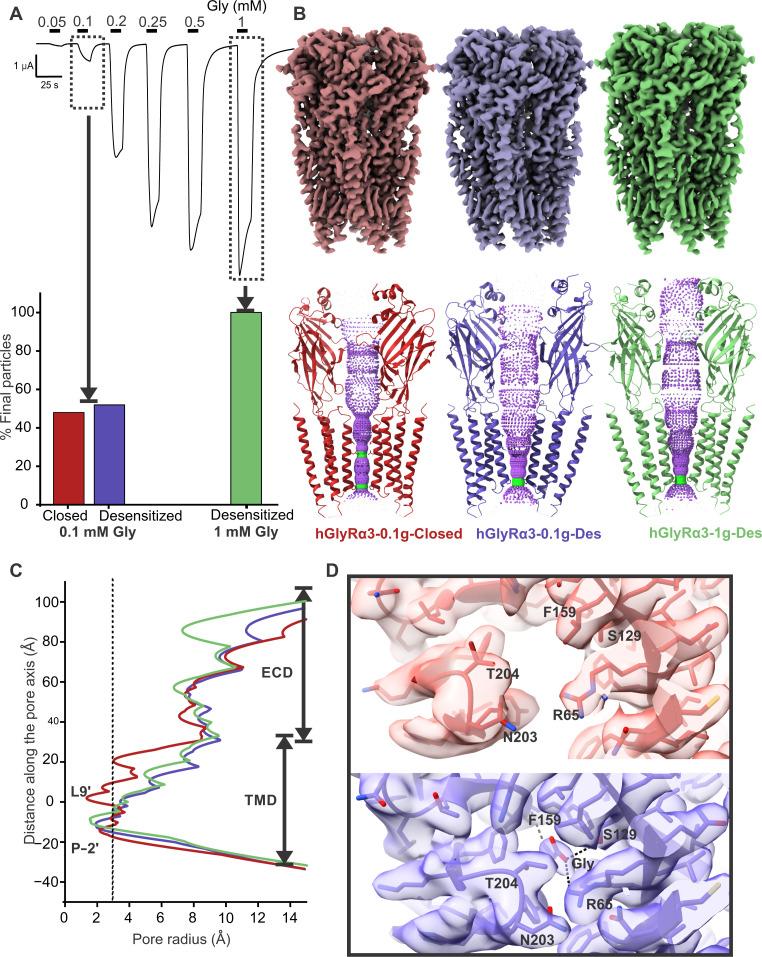
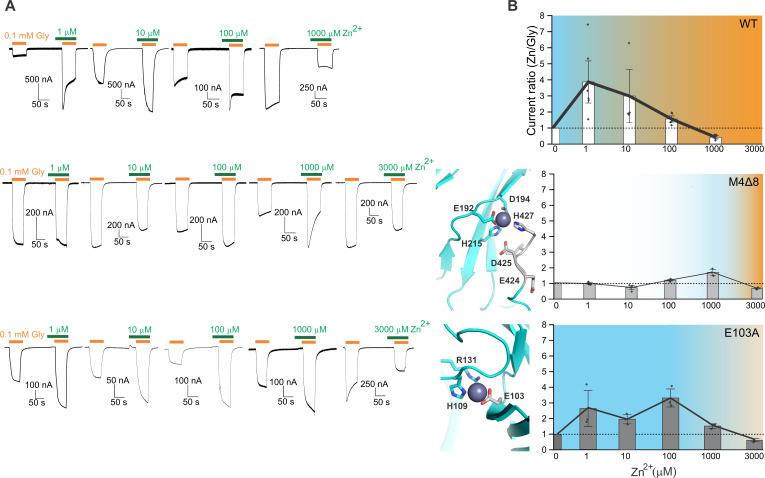
Glycine receptors (GlyRs) regulate motor control and pain processing in the central nervous system through inhibitory synaptic signaling. The subtype GlyRα3 expressed in nociceptive sensory neurons of the spinal dorsal horn is a key regulator of physiological pain perception. Disruption of spinal glycinergic inhibition is associated with chronic inflammatory pain states, making GlyRα3 an attractive target for pain treatment. GlyRα3 activity is modulated by numerous endogenous and exogenous ligands that consequently affect pain sensitization. To understand the mechanism of two such endogenous modulators, Zn and protons, we have used cryo-electron microscopy to determine structures of full-length human GlyRα3 in various functional states. Whereas acidic pH reduces peak glycine response, Zn displays biphasic modulation in a concentration-dependent manner. Our findings reveal the effector sites and also capture intermediate conformations in the gating cycle. Combined with molecular dynamics simulations and electrophysiology, this work provides important insights into GlyRα3 activation and regulation.
甘氨酸受体(GlyRs)通过抑制性突触信号传导调节中枢神经系统中的运动控制和疼痛处理。在脊髓背角伤害性感觉神经元中表达的亚型GlyRα3是生理性疼痛感知的关键调节因子。脊髓甘氨酸能抑制的破坏与慢性炎症性疼痛状态有关,使得GlyRα3成为疼痛治疗的一个有吸引力的靶点。GlyRα3的活性受到多种内源性和外源性配体的调节,这些配体进而影响疼痛敏化。为了了解两种这样的内源性调节剂锌和质子的作用机制,我们使用冷冻电子显微镜来确定全长人GlyRα3在各种功能状态下的结构。酸性pH值会降低甘氨酸的峰值反应,而锌则以浓度依赖的方式表现出双相调节。我们的研究结果揭示了效应位点,并捕捉到了门控循环中的中间构象。结合分子动力学模拟和电生理学,这项工作为GlyRα3的激活和调节提供了重要的见解。





 Zotero 插件