Ali Tahani, Hkima Abou Fakher Faihaa, Alawir Malek, Allababidi Abdulsater, Sheikh Hasan Aya
Pediatric Hematopoietic Stem Cell Transplant Center, Children's University Hospital, Almazeeh, Damascus, Syria.
Faculty of Medicine, University of Damascus, Almazeeh Street, Damascus, Syria.
BMC Pediatr. 2024 Dec 19;24(1):818. doi: 10.1186/s12887-024-05298-6.
Guillain-Barré syndrome (GBS) is an autoimmune disease that affects the peripheral nervous system leading to motor, sensory, and sometimes autonomic manifestations. Therapeutic plasma exchange (TPE), which involves the selective removal of pathological molecules, such as auto-antibodies, from plasma, has proven to be safe and effective in adults with GBS. However, its application in pediatric patients lacks sufficient evidence. This study aims to evaluate the efficacy and safety of TPE in pediatric patients with severe GBS, in a low-resource setting.
This is a single-center retrospective study of 36 GBS patients aged between 2 and 13 years. A total of 122 TPE sessions were administered, with a median of four sessions per patient. A human albumin solution was the exchange fluid in all the sessions. Clinical improvement was evaluated through general examination and muscle power assessment using the Medical Research Council (MRC) scale.
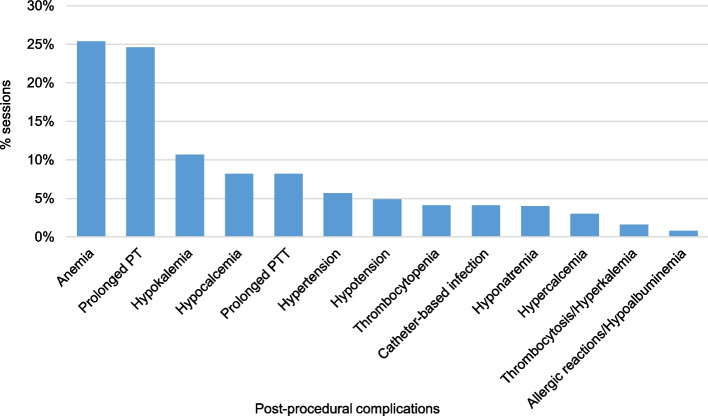
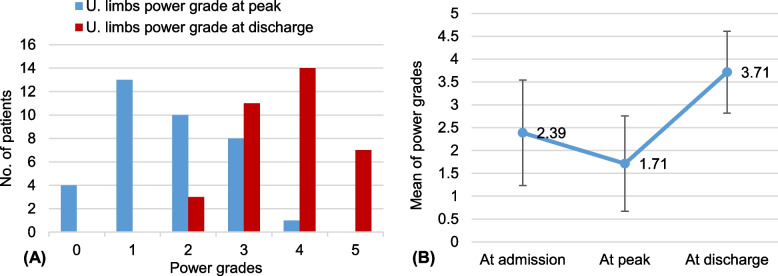
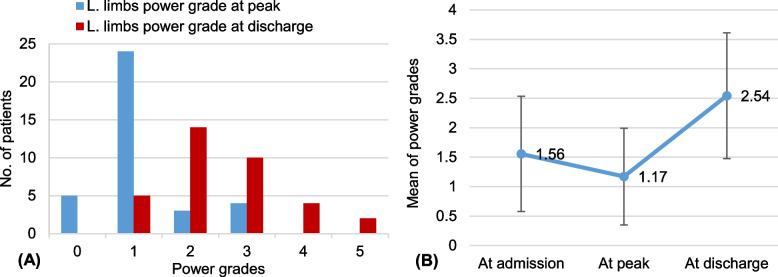
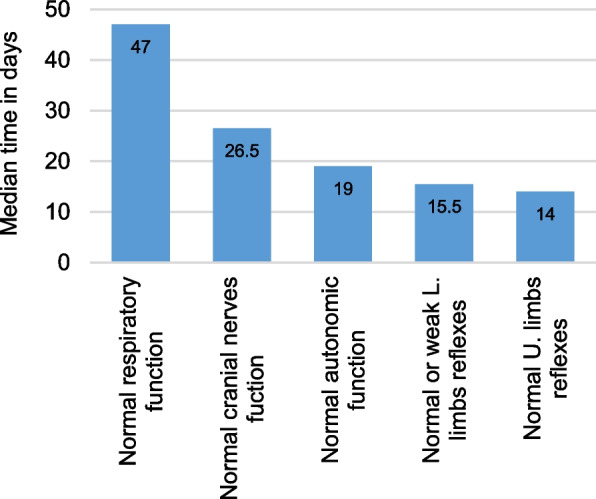
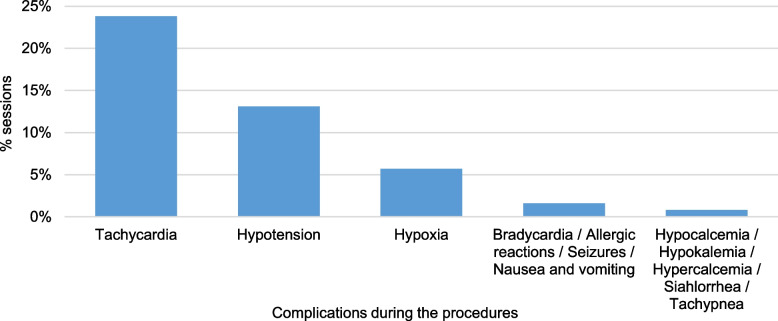
All patients showed clinical improvement upon treatment with TPE. The grade of power in the upper extremities increased from a mean of 1.7 ± 1.1 at the peak of illness to 3.7 ± 0.9 at discharge, indicating an increase of 2.0 ± 1.1 (95% CI, 1.6 to 2.4, p< 0.001). Alternatively, in the lower extremities, it increased from 1.2 ± 1.1 to 2.5 ± 0.8, indicating a significant rise of 1.4 ± 0.8 (95% CI, 1.1 to 1.6, p< 0.001). There was a significant improvement in the cranial, autonomic, and respiratory functions among all patients. Half of the patients were available for follow-up and showed full recovery, with six of them still exhibiting minimal residual deficits. TPE-related complications were mostly mild or moderate, with tachycardia, hypotension, and mild anemia being the most common. However, serious complications occurred in three of the patients, necessitating the discontinuation of the treatment in two of them. There was no mortality related to TPE in this study.
TPE shows promise in treating pediatric GBS. In this study, TPE was associated with the recovery of neurological functions, yielding positive outcomes with only minimal residual deficits. However, balancing its benefits with potential risks requires careful clinical judgment and rigorous monitoring to ensure patient safety and optimize outcomes. TPE was a more cost-effective and accessible option than IVIG in this financially restricted, low-income setting.
吉兰 - 巴雷综合征(GBS)是一种自身免疫性疾病,会影响周围神经系统,导致运动、感觉,有时还会出现自主神经症状。治疗性血浆置换(TPE),即从血浆中选择性去除诸如自身抗体等病理分子,已被证明对成年GBS患者安全有效。然而,其在儿科患者中的应用缺乏充分证据。本研究旨在评估在资源匮乏地区TPE治疗重症儿科GBS患者的疗效和安全性。
这是一项对36例年龄在2至13岁之间的GBS患者进行的单中心回顾性研究。共进行了122次TPE治疗,每位患者的中位数为4次。所有治疗均使用人白蛋白溶液作为置换液。通过体格检查和使用医学研究委员会(MRC)量表进行肌肉力量评估来评价临床改善情况。
所有患者经TPE治疗后均显示临床改善。上肢力量等级从疾病高峰期的平均1.7±1.1增加到出院时的3.7±0.9,增加了2.0±1.1(95%可信区间,1.6至2.4,p<0.001)。下肢力量等级从1.2±1.1增加到2.5±0.8,显著增加了1.4±0.8(95%可信区间,1.1至1.6,p<0.001)。所有患者的颅神经、自主神经和呼吸功能均有显著改善。一半的患者可供随访,且显示完全康复,其中6例仍有轻微残留缺陷。TPE相关并发症大多为轻度或中度,最常见的是心动过速、低血压和轻度贫血。然而,3例患者出现严重并发症,其中2例需要停止治疗。本研究中未发生与TPE相关的死亡。
TPE在治疗儿科GBS方面显示出前景。在本研究中,TPE与神经功能恢复相关,仅产生极小的残留缺陷,取得了积极的结果。然而,要平衡其益处与潜在风险,需要仔细的临床判断和严格的监测,以确保患者安全并优化治疗效果。在这个经济受限的低收入环境中,TPE比静脉注射免疫球蛋白(IVIG)是更具成本效益且更容易获得的选择。