Dixit Tanu, Vaidya Anuradha, Ravindran Selvan
Symbiosis School of Biological Sciences (SSBS), Faculty of Medical & Health Sciences, Symbiosis International (Deemed University), Lavale, Pune, 412115, India.
Arthritis Res Ther. 2024 Dec 19;26(1):216. doi: 10.1186/s13075-024-03452-0.
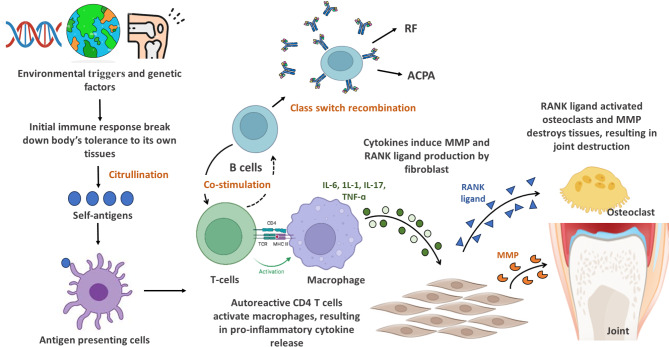
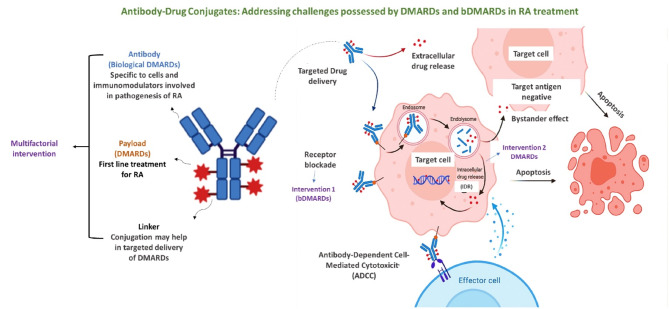
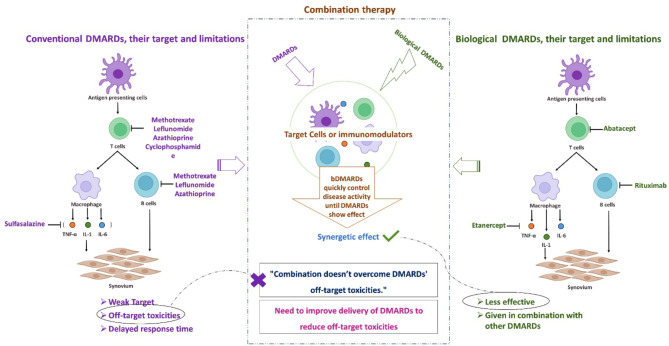
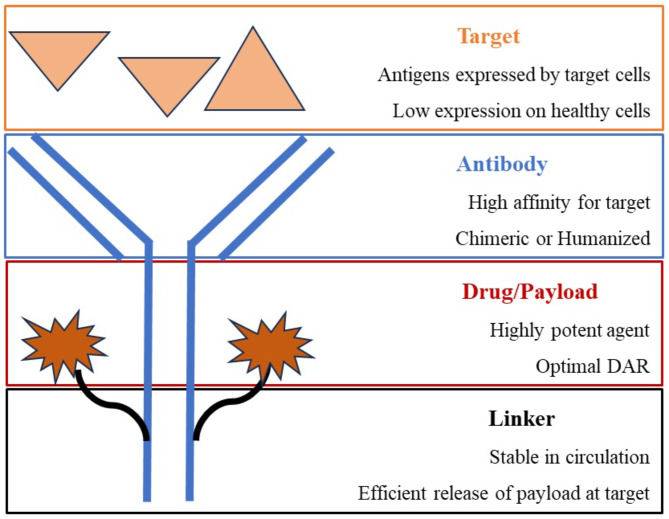
In an age where there is a remarkable upsurge in developing precision medicines, antibody-drug conjugates (ADCs) have emerged as a progressive therapeutic strategy. ADCs typically consist of monoclonal antibodies (mAb) conjugated to the cytotoxic payloads by utilizing a linker, combining the benefits of definitive target specificity of mAbs and potent killing impact of payload to achieve precise and efficient elimination of target cells. In addition to their well-established role in oncology, ADCs are currently demonstrating encouraging potential in addressing the unmet requirements in the treatment of autoimmune conditions such as rheumatoid arthritis (RA). Prevalent long-term autoimmune disease RA costs billions of dollars annually but still, there is a lack of precision-targeted therapeutics with minimal side effects. This review provides an overview of the RA pathogenesis, pre-existing therapies, and their limitations, the introduction of ADCs in RA treatment, the mechanism of ADCs, and a summary of ADCs in preclinical and clinical trials. Based on the literature we also propose a strategy in ADC synthesis, which may increase the efficiency in targeting multifactorial diseases like RA. We propose to utilize DMARDs (Disease-modifying anti-rheumatic drugs), the first-line treatment for RA, as a payload for ADC synthesis. DMARDs are the only class of medication that limits the disease progression, but their efficacy is limited due to off-target toxicities. Hence, utilizing them as payload will help to deliver them directly at the targeted site, reducing their off-target toxicity, which in turn will increase their efficiency in targeting disease. Also, as mAbs are not sufficient to achieve remission, they are given in combinations with DMARDs. Hence, synthesizing ADCs may reduce the multiple and higher dosages given to patients, which in turn may enhance patient compliance.
在一个精准药物开发显著兴起的时代,抗体药物偶联物(ADC)已成为一种先进的治疗策略。ADC通常由单克隆抗体(mAb)组成,通过连接子与细胞毒性有效载荷偶联,结合了mAb明确的靶点特异性和有效载荷的强大杀伤作用,以实现对靶细胞的精确有效清除。除了在肿瘤学中已确立的作用外,ADC目前在满足类风湿关节炎(RA)等自身免疫性疾病治疗中未满足的需求方面显示出令人鼓舞的潜力。普遍存在的长期自身免疫性疾病RA每年花费数十亿美元,但仍然缺乏副作用最小的精准靶向治疗方法。本综述概述了RA的发病机制、现有疗法及其局限性、ADC在RA治疗中的引入、ADC的作用机制以及ADC在临床前和临床试验中的总结。基于文献,我们还提出了一种ADC合成策略,这可能会提高针对RA等多因素疾病的靶向效率。我们建议将RA的一线治疗药物改善病情抗风湿药(DMARDs)用作ADC合成的有效载荷。DMARDs是唯一一类能限制疾病进展的药物,但其疗效因脱靶毒性而受限。因此,将它们用作有效载荷将有助于将其直接递送至靶点,降低其脱靶毒性,进而提高其靶向疾病的效率。此外,由于mAb不足以实现缓解,它们通常与DMARDs联合使用。因此,合成ADC可能会减少给予患者的多种高剂量药物,进而可能提高患者的依从性。