Carvalho Isaura, Carvalho Miguel, Abelha Fernando, Martins Teresa
Hospital Prelada, Porto, Portugal.
Department of Textile Engineering, University of Minho, Braga, Portugal.
BMC Anesthesiol. 2024 Dec 19;24(1):455. doi: 10.1186/s12871-024-02830-0.
Disturbances in the thermoregulatory system can precipitate inadvertent hypothermia in patients undergoing surgeries lasting over 60 min, causing serious complications in the recovery process. Cutaneous thermal protection is relevant for the control of temperature of patients in the perioperative setting. The standard thermal protection widely utilized is an electric forced warm air blanket. This study compared a new layered textile blanket with the standard protection. The hypothesis posited that the textile blanket could provide cutaneous thermal protection comparable to that of the standard protection (forced-air warming blanket), in terms of temperature variation and safety.
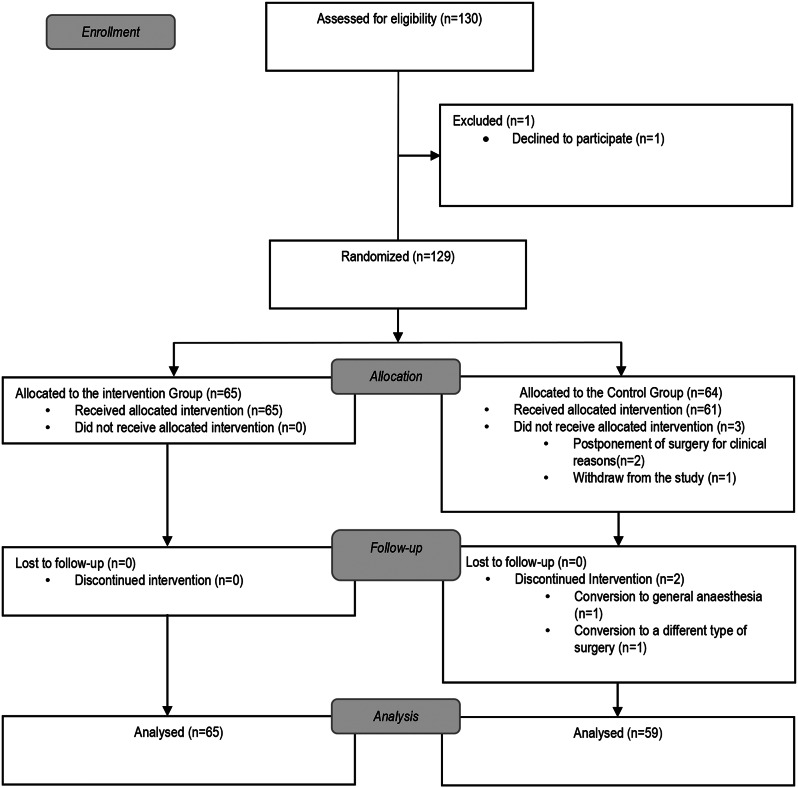
This randomized controlled trial was conducted at a Portuguese orthopedic hospital from October 2018 to January 2019, comprising 124 adult patients undergoing elective total knee arthroplasty. Participants were randomly allocated to either the intervention group, receiving the textile blanket, or to the control group, receiving standard measures. Tympanic temperature, shivering, and thermal comfort perception were evaluated at six time points. Comfort dimensions and ergonomic aspects were also assessed. Parametric statistics were performed, and independent samples t-tests and repeated measures were used to compare temperature variations and thermal comfort.
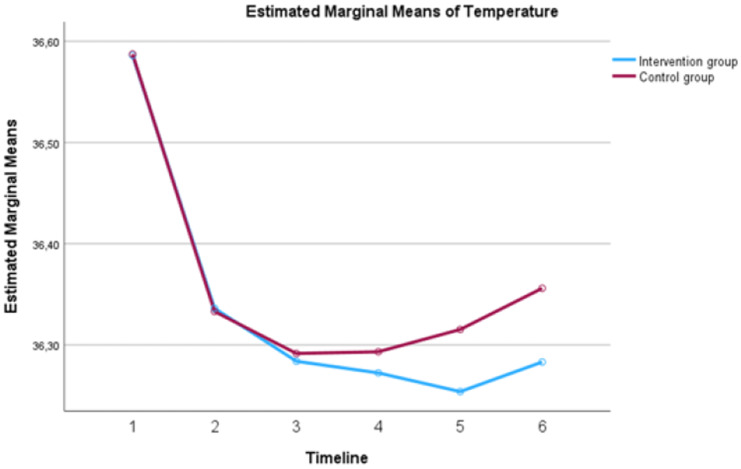
No statistically significant differences were found between groups in mean temperature variation, visual perception of thermal comfort, and thermal and perioperative comfort scales. The intervention group (n = 65) scored significantly higher in ergonomic evaluations compared to the control group (n = 59) for: fit to body and general comfort (p = 0.004), touch (p = 0.005), and feeling of comfort with the inner layer texture and shape (p < 0.001).
The tested blanket had a comparable performance to the standard protection, suggesting it as a potential sustainable alternative to the recommended measures for thermal protection. However, further investigations across diverse contexts and populations are needed to validate these findings.
体温调节系统紊乱可导致手术时间超过60分钟的患者意外发生体温过低,在恢复过程中引发严重并发症。皮肤热保护对于围手术期患者体温控制至关重要。广泛使用的标准热保护措施是电动强制暖空气毯。本研究将一种新型分层纺织毯与标准保护措施进行了比较。提出的假设是,就温度变化和安全性而言,纺织毯能提供与标准保护措施(强制空气加温毯)相当的皮肤热保护。
本随机对照试验于2018年10月至2019年1月在一家葡萄牙骨科医院进行,纳入124例接受择期全膝关节置换术的成年患者。参与者被随机分配至干预组(使用纺织毯)或对照组(接受标准措施)。在六个时间点评估鼓膜温度、寒战和热舒适感。还评估了舒适维度和人体工程学方面。进行了参数统计,并使用独立样本t检验和重复测量来比较温度变化和热舒适度。
两组在平均温度变化、热舒适视觉感知以及热和围手术期舒适量表方面均未发现统计学显著差异。干预组(n = 65)在人体工程学评估中的得分显著高于对照组(n = 59),具体体现在:贴合身体和总体舒适度(p = 0.004)、触感(p = 0.005)以及对内层质地和形状的舒适感(p < 0.001)。
经测试的毯子与标准保护措施具有相当的性能,表明它是热保护推荐措施的一种潜在可持续替代方案。然而,需要在不同背景和人群中进行进一步研究以验证这些发现。