Javid Mona, Mirdamadi Arian, Javid Mohammadreza, Keivanlou Mohammad-Hossein, Amini-Salehi Ehsan, Norouzi Naeim, Abbaspour Elahe, Alizadeh Ahmad, Joukar Farahnaz, Mansour-Ghanaei Fariborz, Hassanipour Soheil
Gastrointestinal and Liver Diseases Research Center, Guilan University of Medical Sciences, Rasht, Iran.
Student Research Committee, School of Medicine, Guilan University of Medical Sciences, Rasht, Iran.
BMC Cancer. 2024 Dec 18;24(1):1531. doi: 10.1186/s12885-024-13288-1.
Papillary thyroid carcinoma (PTC) is the predominant form of thyroid cancer, and the presence of extrathyroidal extension (ETE) significantly impacts treatment decisions and prognosis. Accurate preoperative detection of ETE remains challenging, highlighting the need to evaluate advanced imaging techniques.This systematic review and meta-analysis aimed to investigate the diagnostic accuracy of magnetic resonance imaging (MRI) in detecting extrathyroidal extension (ETE) among patients diagnosed with papillary thyroid carcinoma (PTC).
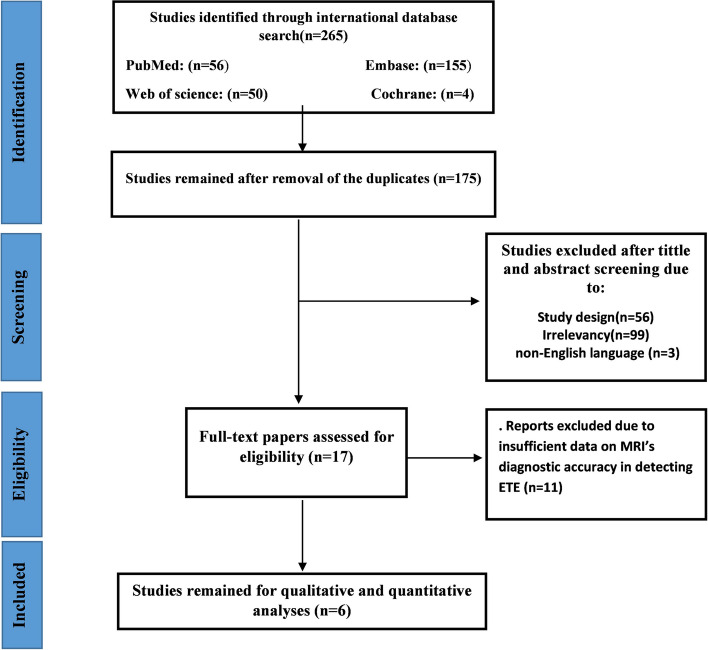
We conducted a comprehensive search of global databases including PubMed, Web of Science, EMBASE, and the Cochrane Library, spanning from inception to November 03, 2024. We included studies that utilized preoperative MRI to evaluate the presence of ETE. Quality assessment was carried out using the Joanna Briggs Institute (JBI) standard checklists. Data analysis was performed using Comprehensive Meta-Analysis (CMA) software version 3. The study protocol was registered in PROSPERO (CRD42024499536).
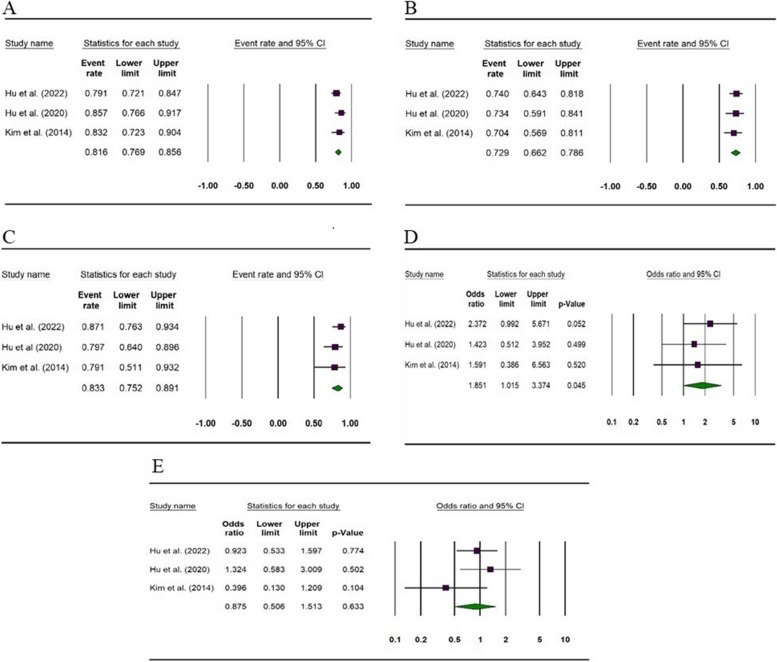
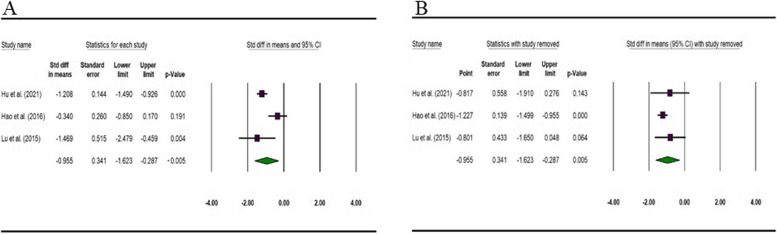
Six studies were included in our final quantitative analysis. The included studies were classified into two groups; the first group focused on evaluating the accuracy of MRI in detecting ETE, while the second group assessed the apparent diffusion coefficient (ADC). The accuracy of MRI for overall ETE, minimal ETE (mETE), and gross ETE (gETE) was 81.0% (95% CI: 76.9%-85.6%), 72.9% (95% CI: 66.2%-78.6%), and 83.3% (95% CI: 75.2%-89.1%), respectively. MRI demonstrated a statistically significant difference in detecting gETE compared to mETE (OR = 1.85, 95% CI: 1.01-3.37, P-value = 0.045). Our analysis showed that the ADC of the lesion for b-value 500 is lower in patients with ETE compared to those without ETE (SMD = 0.95, 95% CI: 0.28-1.62, P-value = 0.005).
Our findings demonstrate that MRI has substantial accuracy in detecting ETE in PTC, especially for gross ETE. This suggests MRI could be a valuable tool in preoperative planning, helping to guide surgical decision-making by more precisely identifying patients at higher risk. However, the limited number of studies underscores the need for further research to confirm MRI's role in routine clinical practice and to refine imaging protocols for more accurate differentiation between minimal and gross ETE.
乳头状甲状腺癌(PTC)是甲状腺癌的主要形式,甲状腺外侵犯(ETE)的存在显著影响治疗决策和预后。术前准确检测ETE仍然具有挑战性,这凸显了评估先进成像技术的必要性。本系统评价和荟萃分析旨在研究磁共振成像(MRI)在诊断为乳头状甲状腺癌(PTC)的患者中检测甲状腺外侵犯(ETE)的诊断准确性。
我们对包括PubMed、Web of Science、EMBASE和Cochrane图书馆在内的全球数据库进行了全面检索,检索时间跨度从建库至2024年11月3日。我们纳入了利用术前MRI评估ETE存在情况的研究。使用乔安娜·布里格斯研究所(JBI)标准清单进行质量评估。使用综合荟萃分析(CMA)软件版本3进行数据分析。该研究方案已在PROSPERO(CRD42024499536)中注册。
六项研究纳入了我们最终的定量分析。纳入的研究分为两组;第一组侧重于评估MRI检测ETE的准确性,而第二组评估表观扩散系数(ADC)。MRI对总体ETE、微小ETE(mETE)和大体ETE(gETE)的检测准确性分别为81.0%(95%CI:76.9%-85.6%)、72.9%(95%CI:66.2%-78.6%)和83.3%(95%CI:75.2%-89.1%)。与mETE相比,MRI在检测gETE方面显示出统计学显著差异(OR = 1.85,95%CI:1.01-3.37,P值 = 0.045)。我们的分析表明,与无ETE的患者相比,有ETE的患者病变在b值为500时的ADC较低(标准化均数差 = 0.95,95%CI:0.28-1.62,P值 = 0.005)。
我们的研究结果表明,MRI在检测PTC中的ETE方面具有较高的准确性,尤其是对于大体ETE。这表明MRI可能是术前规划中的一个有价值的工具,通过更精确地识别高风险患者来帮助指导手术决策。然而,研究数量有限强调了需要进一步研究以确认MRI在常规临床实践中的作用,并完善成像方案以更准确地区分微小和大体ETE。