Liu Hongman, Li Mengting, Xiang Bing, Yang Ziying, Cao Shiyu, Gong Wen, Li Jingjing, Zhou Wenjing, Ding Liang, Tang Qingsong, Wang Shengnan, Tang Jin, Fan Zixuan, He Ke, Jiang Xuan, Shen Zhenya, Chen Weiqian, Hui Jie
Department of Cardiovascular Surgery of The First Affiliated Hospital & Institute for Cardiovascular Science, Suzhou Medical College, Soochow University, Suzhou, China.
Department of Cardiology, The First Affiliated Hospital of Soochow University, Suzhou, China.
J Nanobiotechnology. 2024 Dec 19;22(1):770. doi: 10.1186/s12951-024-03032-z.
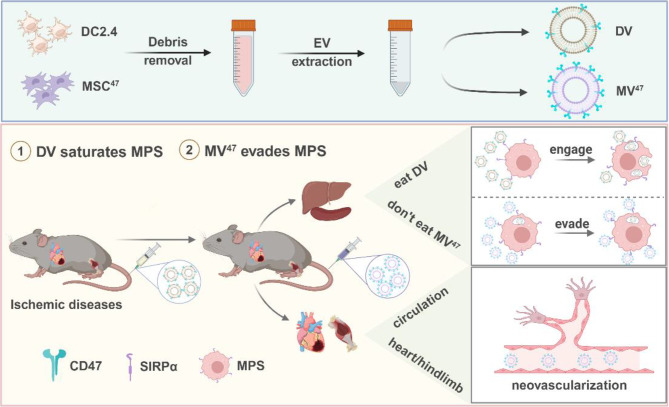
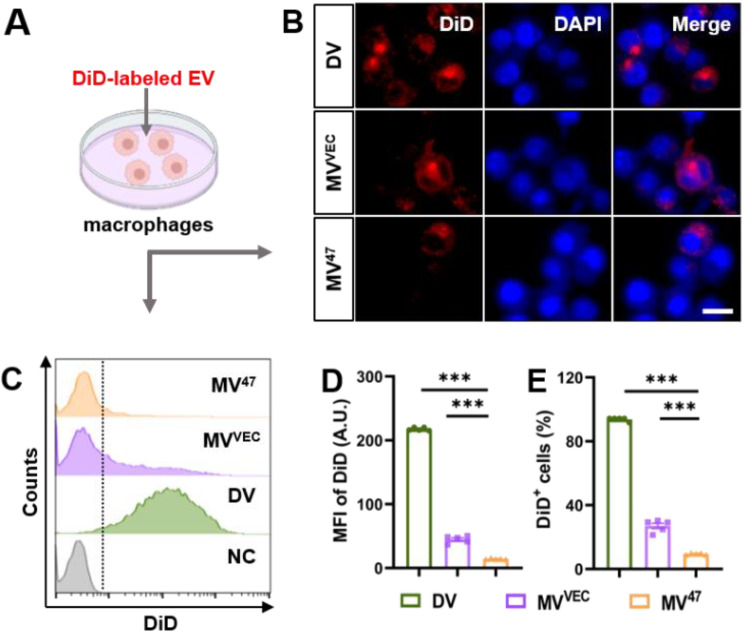
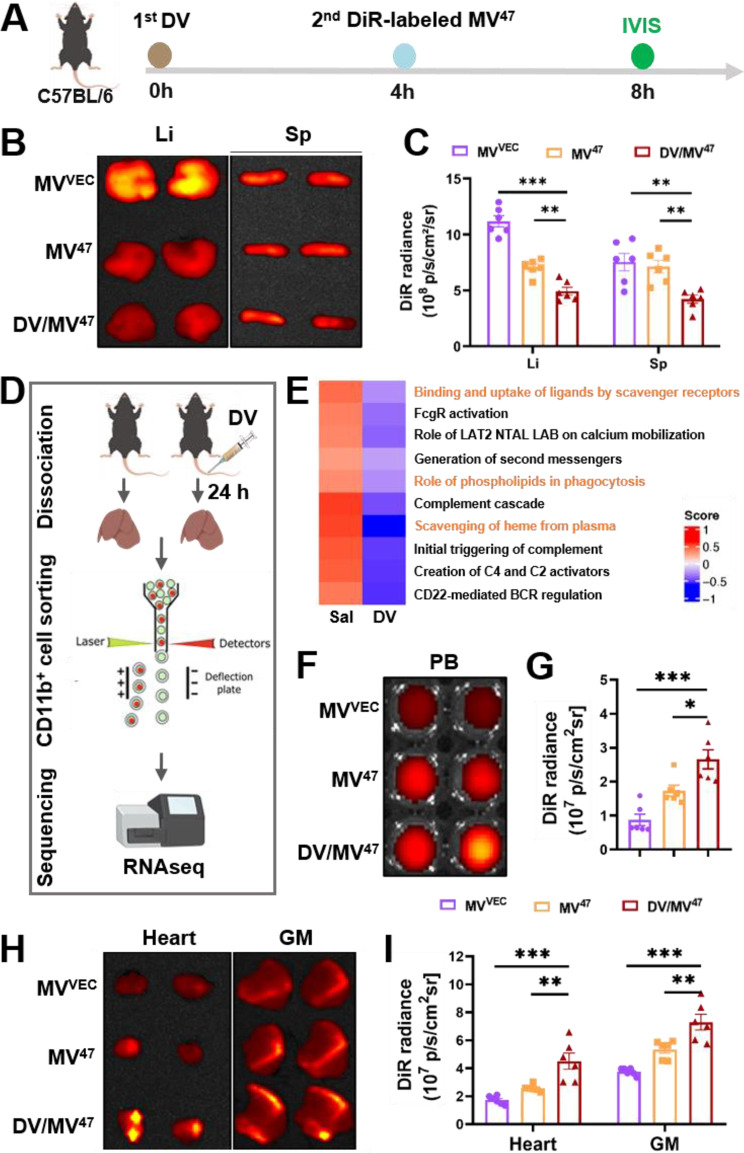
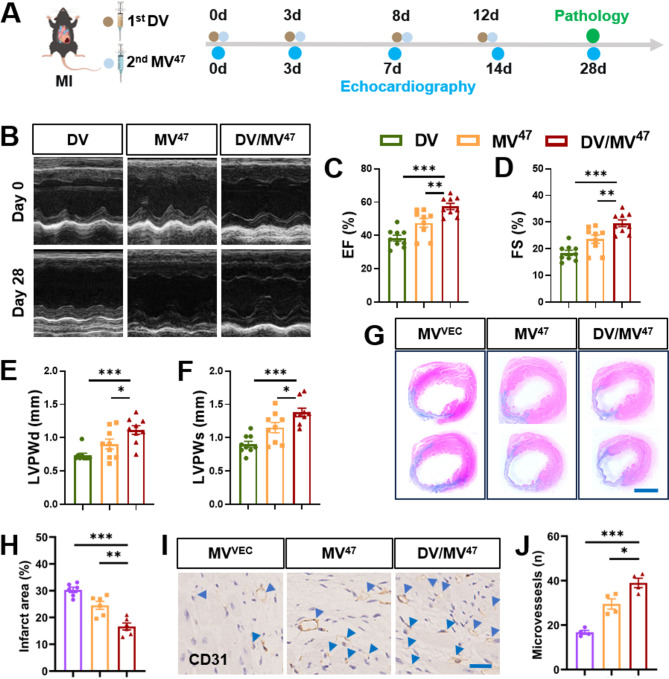
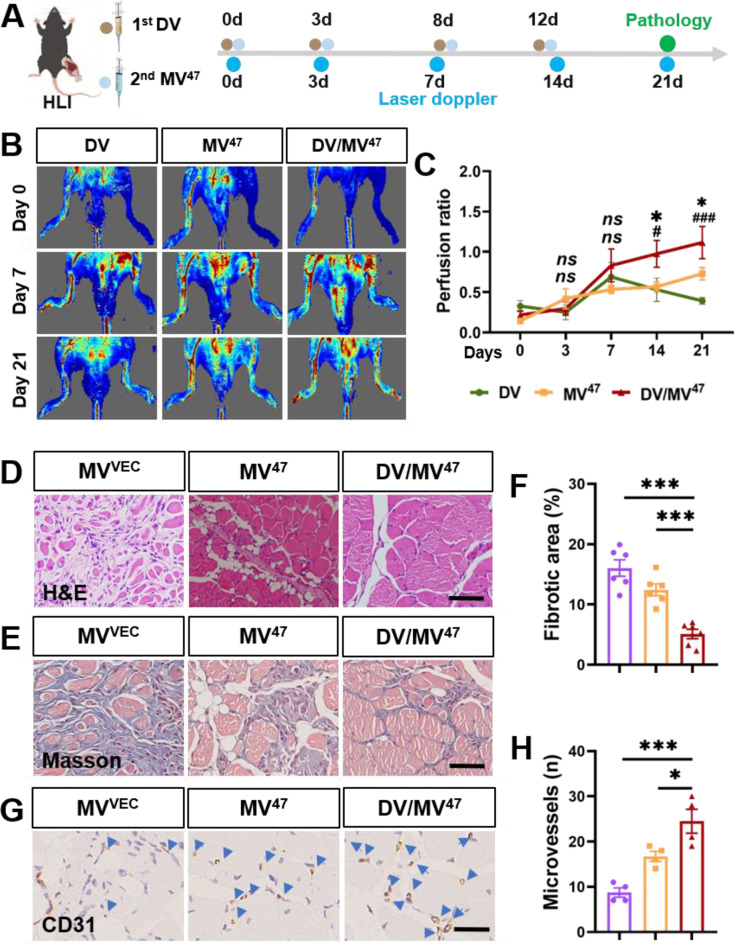
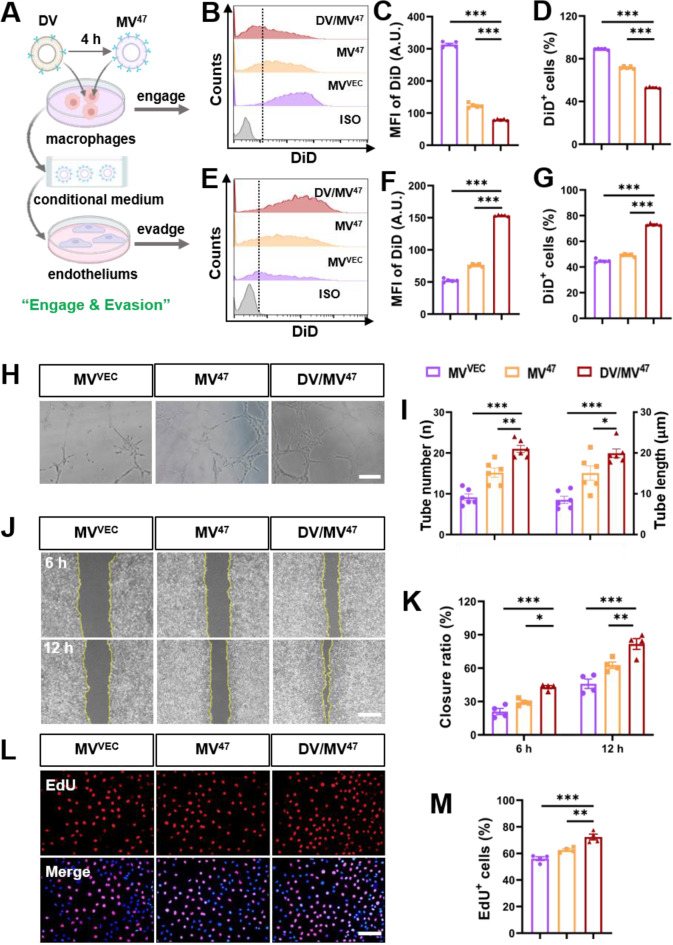
Ischemic diseases are major contributors to global morbidity and mortality, posing a substantial threat to human health. Extracellular vesicles (EVs) play an essential role in enhancing neovascularization in ischemic tissues, thereby facilitating tissue repair and regeneration. However, the utilization of EVs is hindered by their rapid uptake and clearance by the mononuclear phagocyte system (MPS), which markedly impedes their therapeutic efficacy and organ-specific accumulation. Notably, CD47, upon binding to signal regulatory protein alpha, initiates a "don't eat me" signal, enabling immune evasion from the MPS. Our research has demonstrated that phagocytes predominantly engulf CD47 dendritic DC2.4 cell-derived EVs (DV), while engineered CD47 EVs (MV) experience minimal ingestion. Leveraging these findings, we have developed a dual-faceted "Engage & Evasion" strategy. Initially, DVs were employed to saturate the MPS, serving as the "engage" component. Subsequently, MV, fortified with CD47, was introduced for "evasion" purposes. This approach effectively minimized entrapment by the liver and spleen, boosted serum concentration, and enhanced final accumulation in non-MPS organs. In summary, our "Engage & Evasion" therapeutic strategy offers a promising avenue to enhance EV therapeutic potential against ischemic challenges through improved systemic distribution.
缺血性疾病是全球发病率和死亡率的主要促成因素,对人类健康构成重大威胁。细胞外囊泡(EVs)在促进缺血组织中的新血管形成方面发挥着重要作用,从而促进组织修复和再生。然而,EVs的利用受到单核吞噬细胞系统(MPS)对其快速摄取和清除的阻碍,这显著妨碍了它们的治疗效果和器官特异性积累。值得注意的是,CD47与信号调节蛋白α结合后,会启动一个“别吃我”信号,从而实现对MPS的免疫逃逸。我们的研究表明,吞噬细胞主要吞噬CD47树突状DC2.4细胞衍生的囊泡(DV),而经过工程改造的CD47囊泡(MV)的摄取量则极少。基于这些发现,我们开发了一种双方面的“参与与逃逸”策略。最初,使用DV来饱和MPS,作为“参与”部分。随后,引入用CD47强化的MV用于“逃逸”目的。这种方法有效地减少了肝脏和脾脏的截留,提高了血清浓度,并增强了在非MPS器官中的最终积累。总之,我们的“参与与逃逸”治疗策略通过改善全身分布,为增强EVs对抗缺血挑战的治疗潜力提供了一条有前景的途径。