Holst Laurens, Brabers Anne, Rademakers Jany, de Jong Judith
Nivel, the Netherlands Institute for Health Services Research, PO Box 1568, Utrecht, 3500 BN, the Netherlands.
CAPHRI, Maastricht University, PO Box 616, Maastricht, 6200 MD, the Netherlands.
BMC Health Serv Res. 2024 Dec 18;24(1):1567. doi: 10.1186/s12913-024-12062-0.
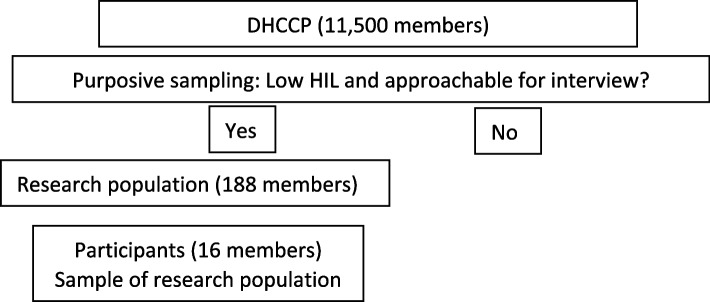
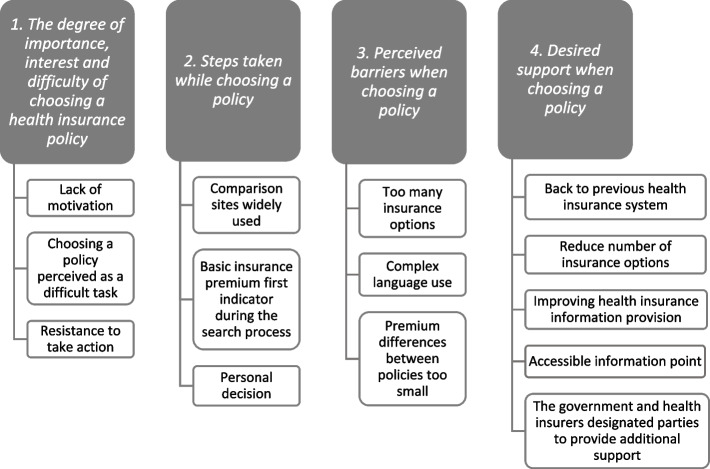
Various countries have implemented a choice-based health insurance system. For such systems to function as intended, it is crucial that all citizens have the opportunity to make well-informed decisions with regard to their health insurance policy. There is, however, ample research evidence to suggest that many citizens may lack the required skills to do so, thus increasing the likelihood of suboptimal insurance choices and incurring unexpected costs. The current study explored what barriers citizens in the Netherlands, with low health insurance literacy (HIL), face when selecting a health insurance policy, and what their specific needs and preferences are regarding information and support. Semi-structured interviews (online or telephone) were performed between January 2023 and April 2023 among sixteen with a low level of HIL. The data were analyzed using thematic analysis methods. Our results show that not all citizens with low HIL are sufficiently motivated to actively look for alternative health insurance options every year. This is partly due to the feeling that it is a task imposed upon them by the government, and because choosing a health insurance policy is perceived as too complicated and not sufficiently worthwhile. There is a need among citizens with low HIL for clear and practical information about health insurance policies, especially from the government and health insurers. In addition to this need, we recommend enhancing awareness regarding the consequences of neglecting to explore such health insurance options. Moreover, more personal attention for the process of selecting a health insurance policy should be offered to vulnerable groups such as those who possess insufficient digital skills.
各国都实施了基于选择的医疗保险制度。为使这些制度按预期发挥作用,至关重要的是所有公民都有机会就其医疗保险政策做出明智的决定。然而,有大量研究证据表明,许多公民可能缺乏这样做所需的技能,从而增加了选择次优保险的可能性并产生意外费用。本研究探讨了荷兰医疗保险素养较低的公民在选择医疗保险政策时面临哪些障碍,以及他们在信息和支持方面的具体需求和偏好是什么。2023年1月至2023年4月期间,对16名医疗保险素养较低的人进行了半结构化访谈(在线或电话访谈)。使用主题分析方法对数据进行了分析。我们的结果表明,并非所有医疗保险素养较低的公民都有足够的积极性每年积极寻找替代医疗保险选项。部分原因是他们觉得这是政府强加给他们的任务,而且选择医疗保险政策被认为过于复杂且不值得。医疗保险素养较低的公民需要有关医疗保险政策的清晰实用的信息,尤其是来自政府和医疗保险公司的信息。除了这一需求之外,我们建议提高人们对忽视探索此类医疗保险选项后果的认识。此外,对于像那些数字技能不足的弱势群体,在选择医疗保险政策的过程中应给予更多的个人关注。