Zhong Chuanfan, Wang Jiaxing, Peng Hangyang, Lu Jianming, Long Zining, Lin Zhuoyuan, Chen Guo, Cai Chao, Cheng Shilong, Chen Zhongjie, Zhang Le, Zhong Weibo, Mo Rujun, Mao Xiangming
Department of Urology, Zhujiang Hospital, Southern Medical University, 510282, Guangzhou, Guangdong, China.
Department of Urology, The Tenth Affiliated Hospital of Southern Medical University (Dongguan people's hospital), 523059, Dongguan, Guangdong, China.
Cell Commun Signal. 2024 Dec 18;22(1):600. doi: 10.1186/s12964-024-01977-0.
Advanced prostate cancer (PCa) often initially responds to androgen receptor signaling inhibitors (ARSI) but frequently develops resistance, driven by tumor heterogeneity and therapeutic pressure. Addressing the clinical challenge of identifying non-responsive patients and discovering new therapeutic targets is urgently needed.
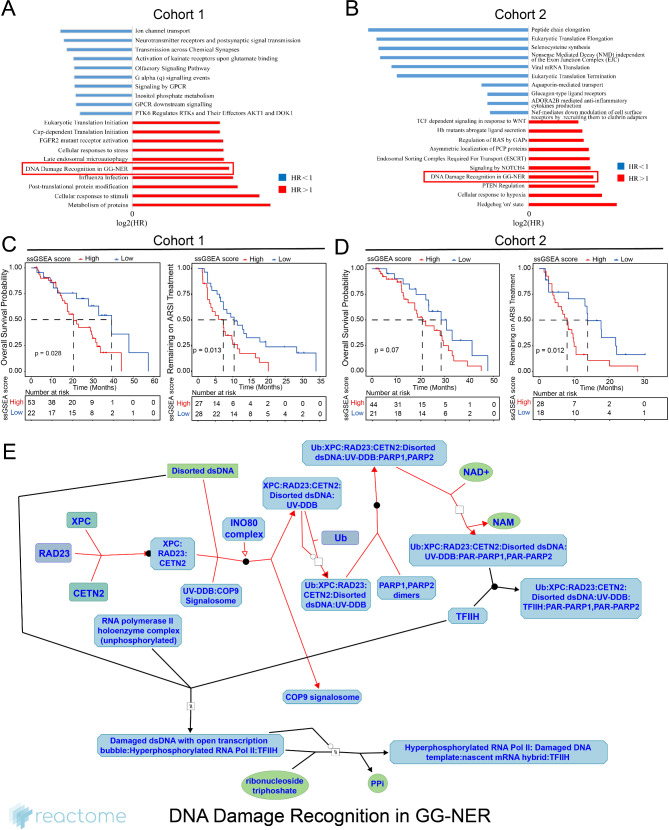
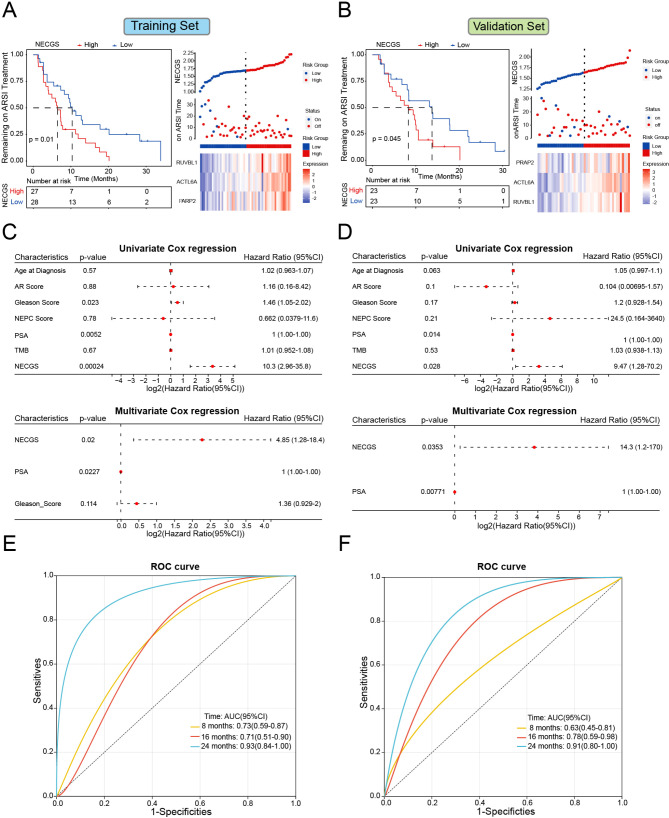
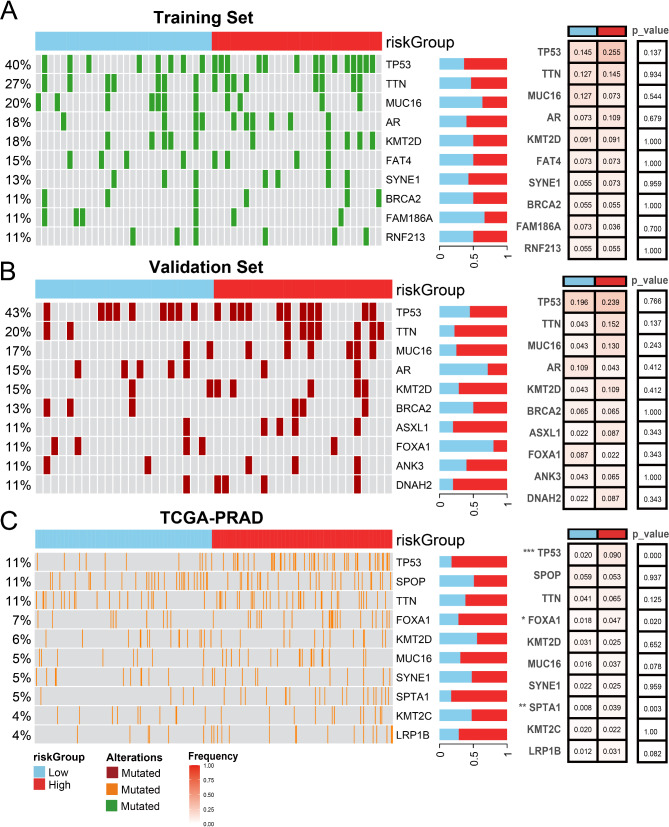
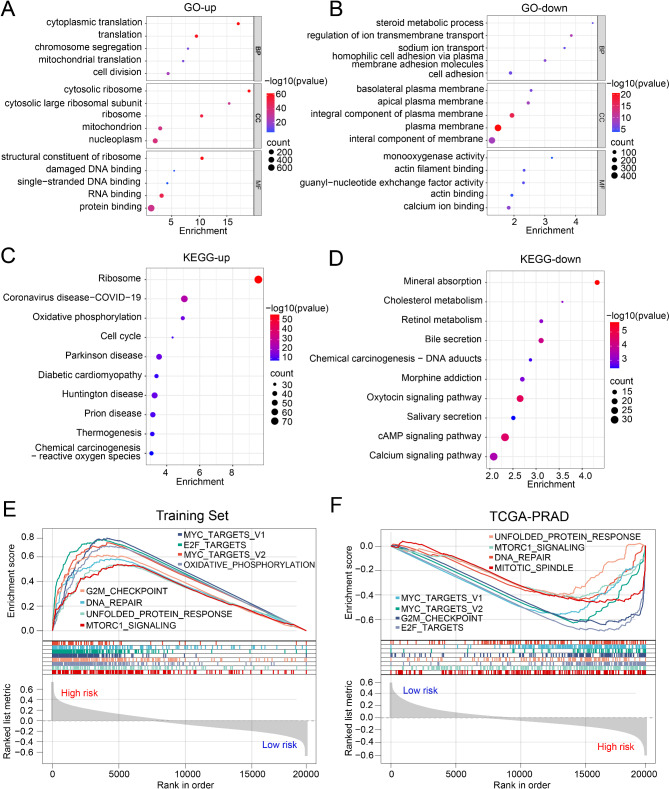
We utilized single-sample gene set enrichment analysis (ssGSEA) to elucidate the influence of the GG-NER pathway on ARSI response in PCa. We then constructed and validated a prognostic model based on this pathway using LASSO regression, Kaplan-Meier analysis, Cox regression, and ROC analysis. Additionally, we mapped tumor mutations to delineate the mutational landscapes across different risk groups and explored functional pathways through GO, KEGG, and GSEA analyses. The impact of the GG-NER pathway on enzalutamide sensitivity and DNA repair in PCa was further validated through CCK-8 assays, colony formation assays, in vivo experiments, and immunofluorescence.
ssGSEA indicated a trend of GG-NER pathway upregulation in patients with poor ARSI response. The GG-NER characteristic gene score (NECGS) identified a high-risk group with diminished ARSI response, serving as an independent prognostic indicator with strong predictive power. This high-risk group exhibited elevated TP53 mutation frequencies and significant enrichment in key pathways such as ribosome and mitochondrial functions, as well as MYC and E2F signaling. Experimental validation confirmed that targeting the GG-NER pathway or its key gene, ACTL6A, significantly reduces enzalutamide resistance in resistant cell lines and increases γH2AX expression.
NECGS effectively predicts ARSI response in PCa, and our comprehensive analysis underscores the critical role of the GG-NER pathway in enzalutamide resistance, positioning ACTL6A as a potential therapeutic target for PCa.
晚期前列腺癌(PCa)通常最初对雄激素受体信号抑制剂(ARSI)有反应,但由于肿瘤异质性和治疗压力,常出现耐药。迫切需要应对识别无反应患者这一临床挑战并发现新的治疗靶点。
我们利用单样本基因集富集分析(ssGSEA)来阐明GG-NER途径对PCa中ARSI反应的影响。然后,我们使用LASSO回归、Kaplan-Meier分析、Cox回归和ROC分析,基于该途径构建并验证了一个预后模型。此外,我们绘制肿瘤突变图谱以描绘不同风险组的突变格局,并通过GO、KEGG和GSEA分析探索功能途径。通过CCK-8试验、集落形成试验、体内实验和免疫荧光进一步验证了GG-NER途径对PCa中恩杂鲁胺敏感性和DNA修复的影响。
ssGSEA表明,ARSI反应不佳的患者中GG-NER途径有上调趋势。GG-NER特征基因评分(NECGS)确定了一个ARSI反应减弱的高危组,作为具有强大预测能力的独立预后指标。该高危组显示TP53突变频率升高,在核糖体和线粒体功能以及MYC和E2F信号等关键途径中显著富集。实验验证证实,靶向GG-NER途径或其关键基因ACTL6A可显著降低耐药细胞系中的恩杂鲁胺耐药性,并增加γH2AX表达。
NECGS可有效预测PCa中的ARSI反应,我们的综合分析强调了GG-NER途径在恩杂鲁胺耐药中的关键作用,将ACTL6A定位为PCa的潜在治疗靶点。