Cao Shaoyi, Li Huaqiu, Ye Xiaoyan, Xing Xinxing, Xie Yonghuan, Zeng Xiangfeng, Liu Hongjiao, Zhong Xing, Yang Xinyi, Xing Wenxiu, Zhu Cairong, Wu Xiaoping
Department of Immunology and Microbiology, College of Life Science and Technology, MOE Key Laboratory of Tumor Molecular Biology, Jinan University, No. 601 Huangpu Avenue West, Tianhe, Guangzhou, 510632, China.
Guangzhou Women and Children's Medical Center, Guangzhou Medical University, No. 9 Jinsui Road, Zhujiang New Town, Tianhe, Guangzhou, 510623, China.
Eur J Med Res. 2024 Dec 20;29(1):611. doi: 10.1186/s40001-024-02187-7.
The T790M mutation in the epidermal growth factor receptor (EGFR) gene is the primary cause of resistance to EGFR-tyrosine kinase inhibitor (TKI) therapy in non-small cell lung cancer (NSCLC) patients. Previous research demonstrated that certain traditional Chinese medicine (TCM) monomers exhibit anti-tumor effects against various malignancies. This study aims to investigate the potentials of shikonin screened from a TCM monomer library containing 1060 monomers in killing EGFR-T790M drug-resistant NSCLC cells and elucidate the underlying mechanisms.
MTT method was used to screen for the TCM monomers with significant killing effects on H1975 cells carrying the EGFR-T790M mutation. The influences of the identified monomer shikonin on cell growth were determined by the colony formation assay. Annexin-V/PI staining and JC-1 staining were applied to detect the effects of shikonin on cell apoptosis. The influences of shikonin on cell membrane integrity were detected by lactate dehydrogenase (LDH) release assay. Reactive oxygen species (ROS) generation was analyzed using DCFH-DA as probe. The mechanisms of shikonin affecting the stability of cyclooxygenase-2 (COX-2) were evaluated by using specific inhibitors for protein degradation pathways. Western blotting was performed to assess the effects of the alteration of COX-2 expression or enzymatic activity on the related signal pathways as well as the apoptotic and pyroptotic markers.
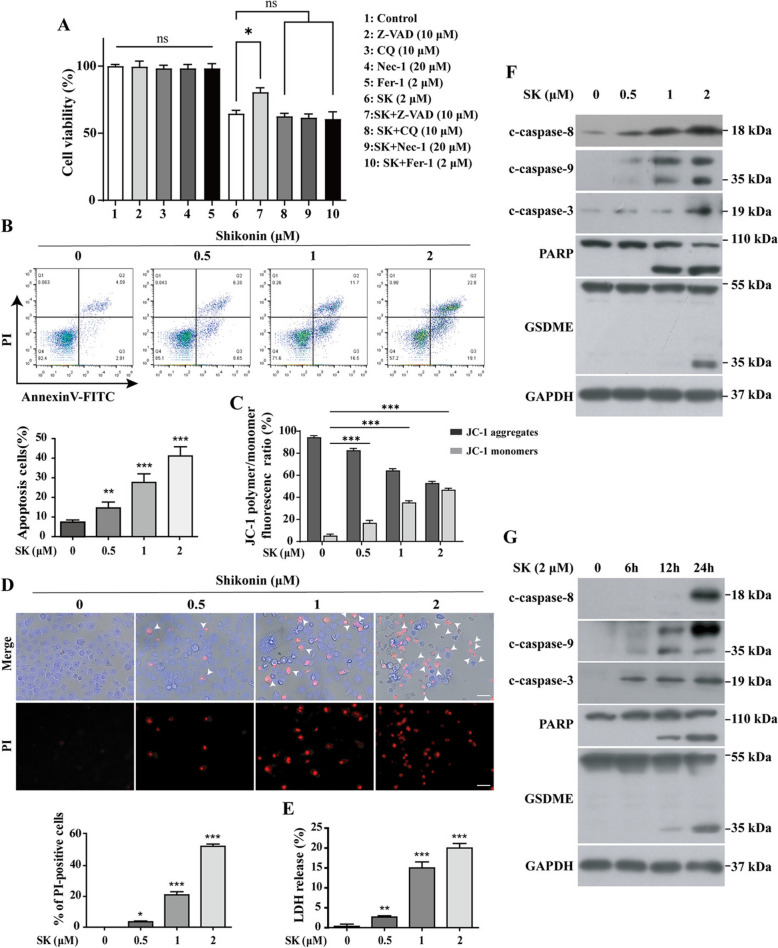
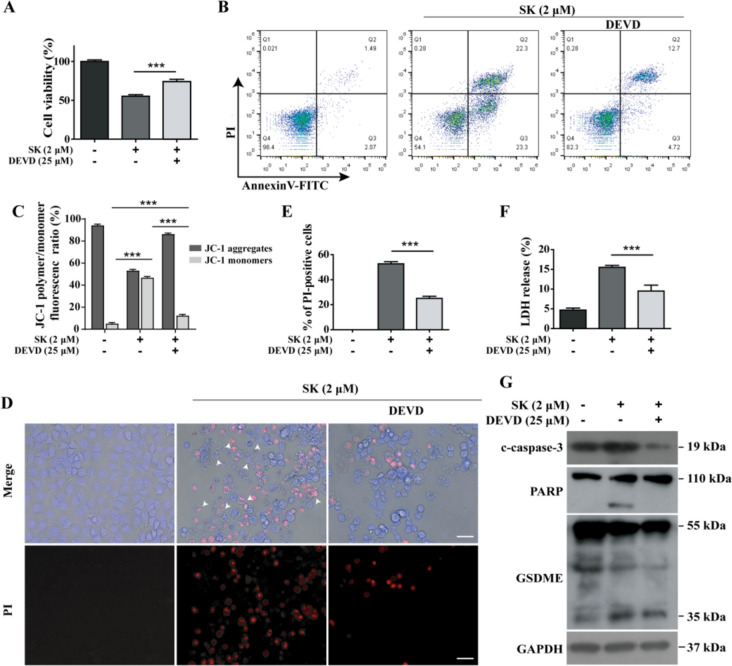
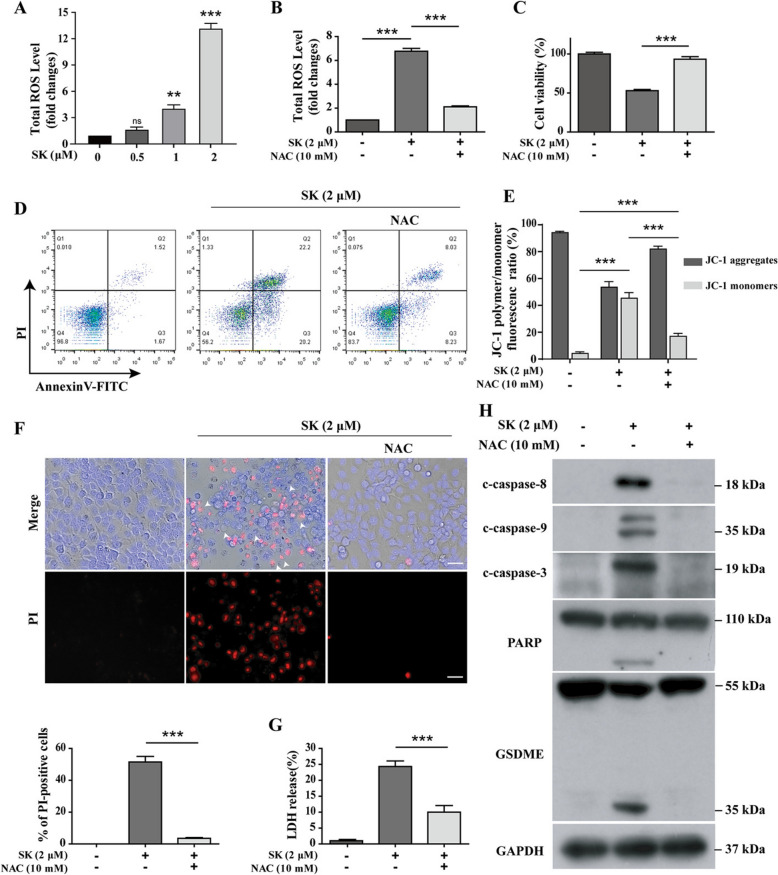
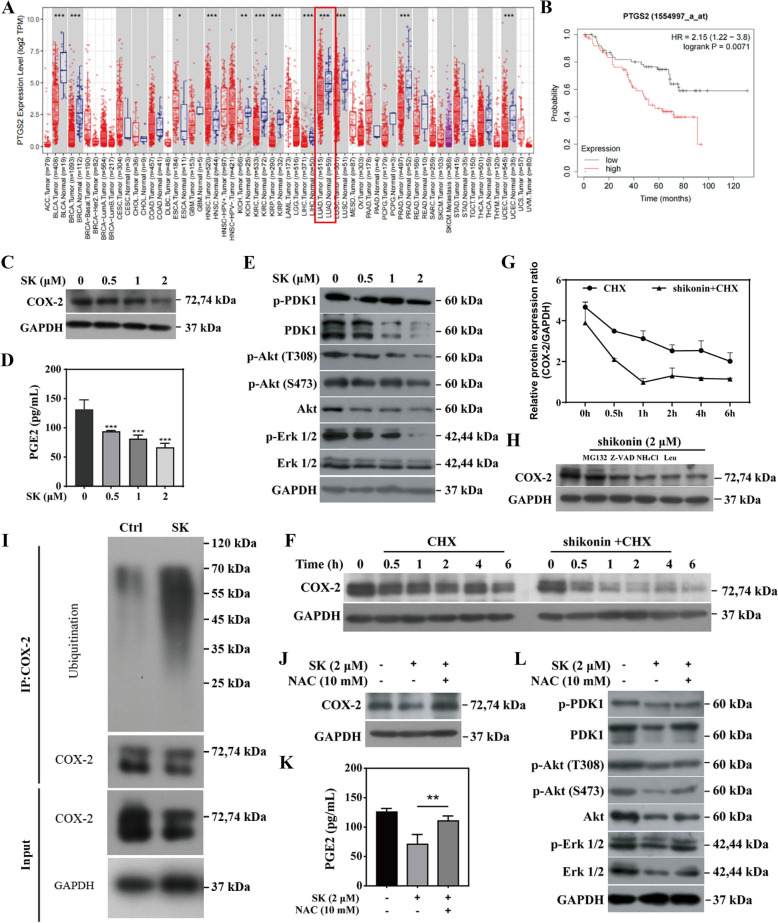
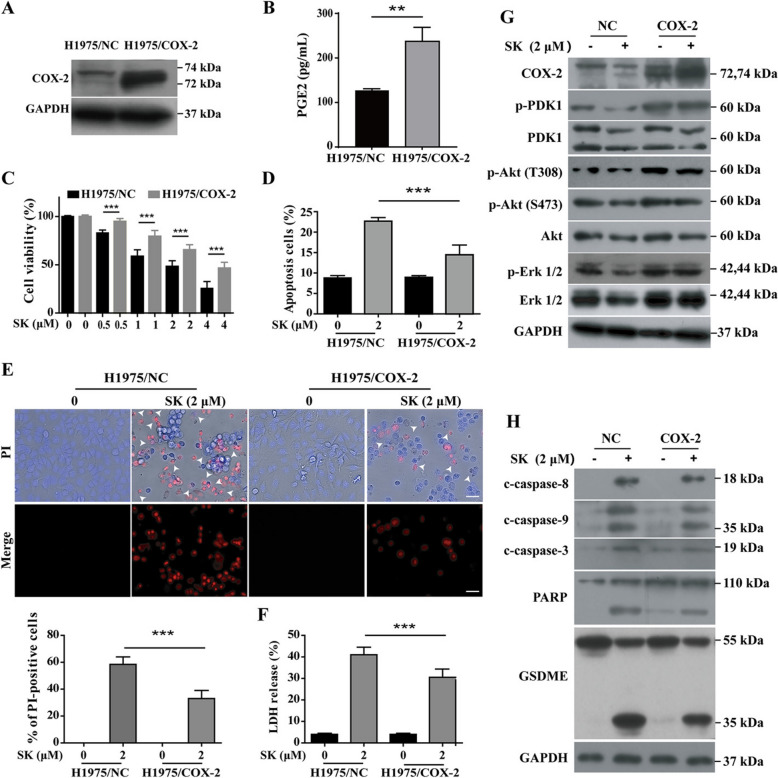
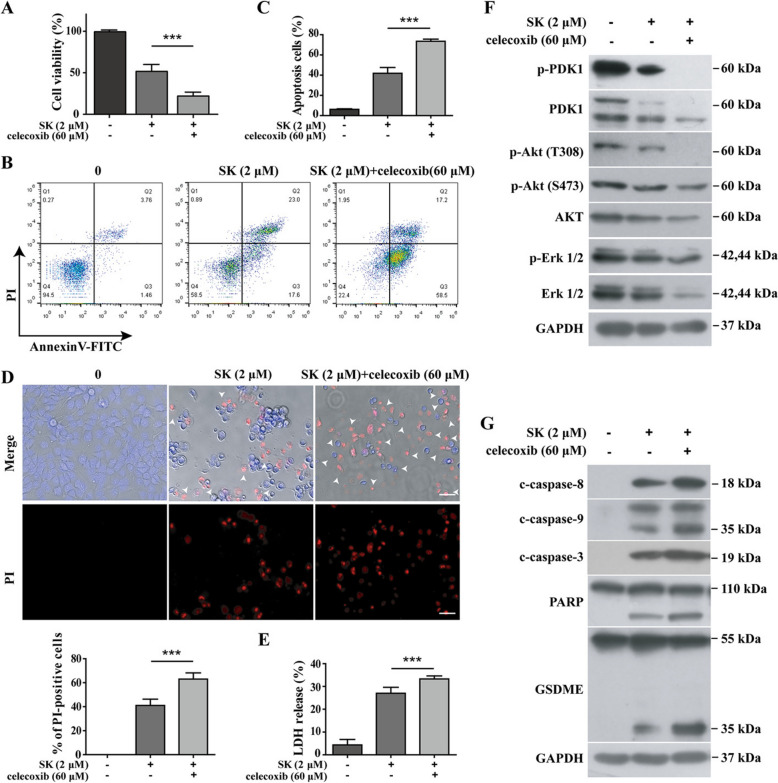
Shikonin was identified as a potent cytotoxic compound against EGFR-T790M-mutant NSCLC cells. Shikonin induced cell apoptosis and pyroptosis by triggering the activation of the caspase cascade and cleavage of poly (ADP-ribose) polymerase and gasdermin E by elevating intracellular ROS levels. Further investigations revealed that shikonin induced the degradation of COX-2 via the proteasome pathway, thereby decreasing COX-2 protein level and enzymatic activity and subsequently inhibiting the downstream PDK1/Akt and Erk1/2 signaling pathways through the induction of ROS production. Notably, COX-2 overexpression attenuated shikonin-induced apoptosis and pyroptosis, whereas COX-2 inhibition with celecoxib enhanced the cytotoxic effects of shikonin.
Combination treatment with shikonin and COX-2 inhibitor may be a suitable therapeutic strategy for EGFR-T790M-mutant NSCLC treatment.
表皮生长因子受体(EGFR)基因中的T790M突变是非小细胞肺癌(NSCLC)患者对EGFR酪氨酸激酶抑制剂(TKI)治疗产生耐药性的主要原因。先前的研究表明,某些中药单体对多种恶性肿瘤具有抗肿瘤作用。本研究旨在探讨从包含1060种单体的中药单体库中筛选出的紫草素对EGFR-T790M耐药NSCLC细胞的杀伤潜力,并阐明其潜在机制。
采用MTT法筛选对携带EGFR-T790M突变的H1975细胞具有显著杀伤作用的中药单体。通过集落形成试验确定所鉴定的单体紫草素对细胞生长的影响。采用Annexin-V/PI染色和JC-1染色检测紫草素对细胞凋亡的影响。通过乳酸脱氢酶(LDH)释放试验检测紫草素对细胞膜完整性的影响。以DCFH-DA为探针分析活性氧(ROS)的产生。使用蛋白质降解途径的特异性抑制剂评估紫草素影响环氧合酶-2(COX-2)稳定性的机制。进行蛋白质印迹分析以评估COX-2表达或酶活性的改变对相关信号通路以及凋亡和焦亡标志物的影响。
紫草素被鉴定为一种对EGFR-T790M突变NSCLC细胞有效的细胞毒性化合物。紫草素通过升高细胞内ROS水平触发半胱天冬酶级联反应的激活以及聚(ADP-核糖)聚合酶和gasdermin E的裂解,从而诱导细胞凋亡和焦亡。进一步研究表明,紫草素通过蛋白酶体途径诱导COX-2降解,从而降低COX-2蛋白水平和酶活性,随后通过诱导ROS产生抑制下游的PDK1/Akt和Erk1/2信号通路。值得注意的是,COX-2过表达减弱了紫草素诱导的凋亡和焦亡,而塞来昔布抑制COX-2增强了紫草素的细胞毒性作用。
紫草素与COX-2抑制剂联合治疗可能是EGFR-T790M突变NSCLC治疗的合适策略。