Bhatnagar Apoorva, Raj Gupta, Das Sandip, Kannihali Arpita, Rajakumara Eerappa, Murray Greg, Ray Sandipan
Department of Biotechnology, Indian Institute of Technology Hyderabad, Sangareddy, Telangana, India.
Centre for Mental Health, Swinburne University of Technology, Melbourne, VIC, Australia.
Front Pharmacol. 2024 Dec 5;15:1444342. doi: 10.3389/fphar.2024.1444342. eCollection 2024.
Robust connections have been identified between the pathophysiology of mental disorders and the functioning of the circadian system. The overarching objective of this study was to investigate the potential for circadian rhythms to be leveraged for therapeutics in mental disorders.
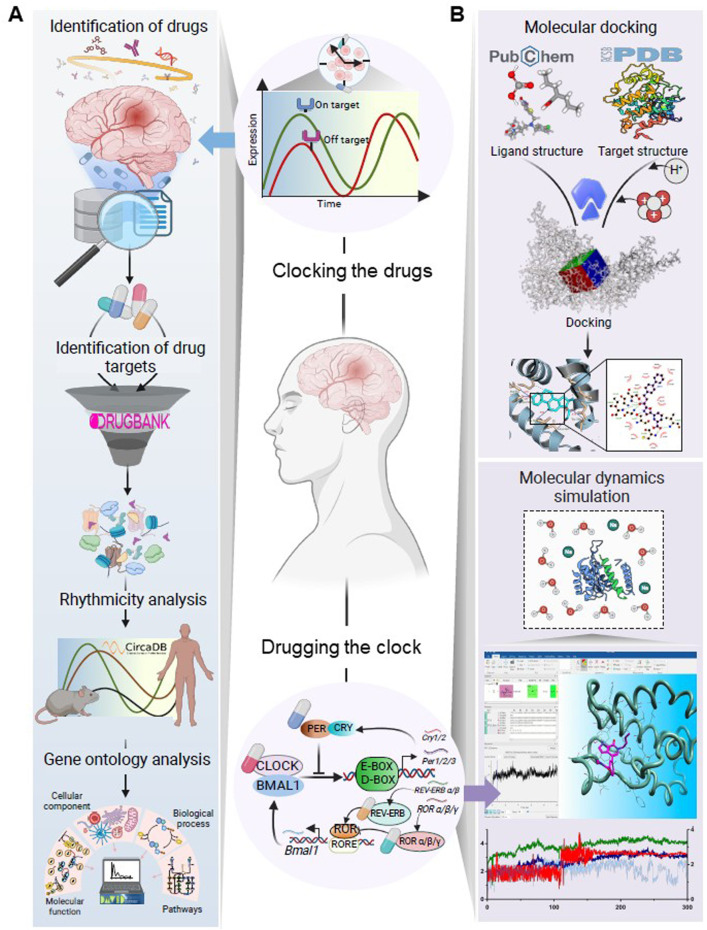
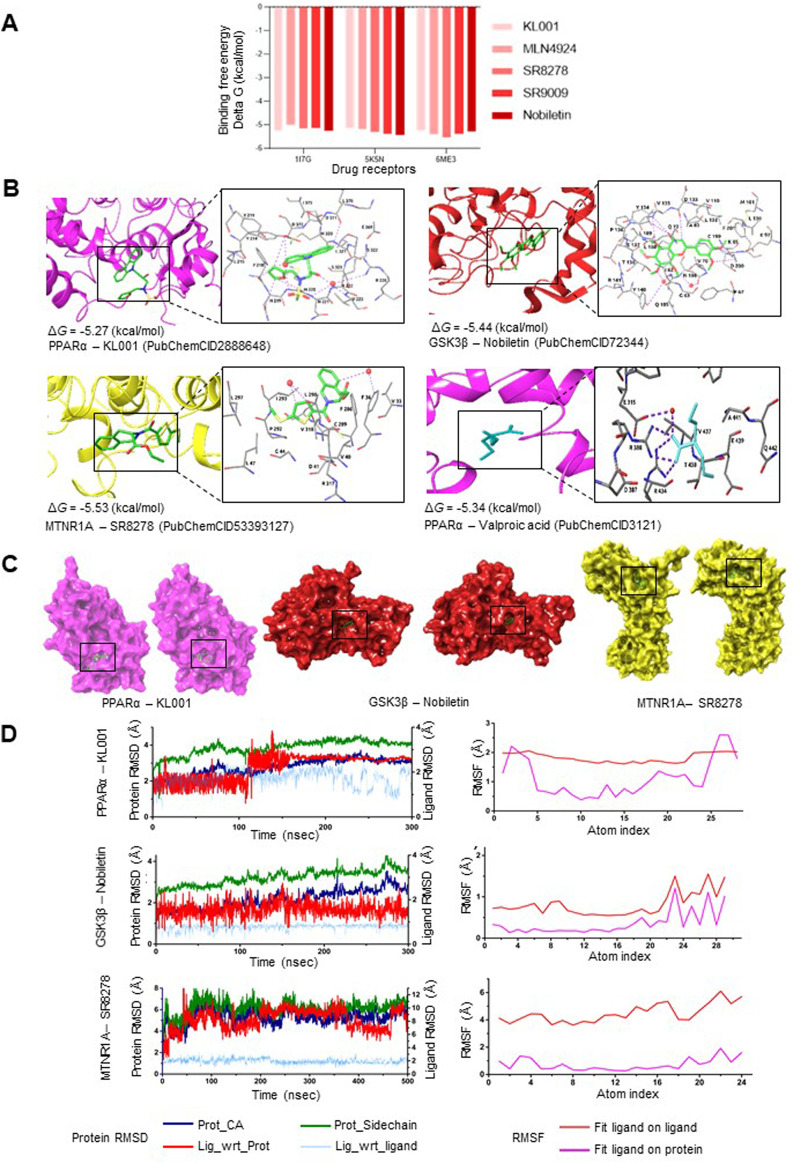
We considered two approaches to chronotherapy-optimal timing of existing medications ("clocking the drugs") and redressing circadian abnormalities with small molecules ("drugging the clock"). We assessed whether circadian rhythm-modulating compounds can interact with the prominent drug targets of mental disorders utilizing computational tools like molecular docking and molecular dynamics simulation analysis.
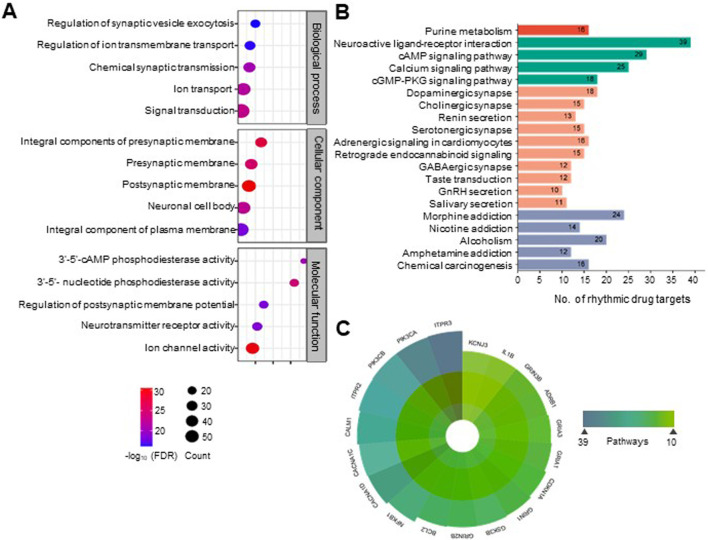
Firstly, an analysis of transcript-level rhythmic patterns in recognized drug targets for mental disorders found that 24-hour rhythmic patterns were measurable in 54.4% of targets in mice and 35.2% in humans. We also identified several drug receptors exhibiting 24-hour rhythmicity involved in critical physiological pathways for neural signaling and communication, such as neuroactive ligand-receptor interaction, calcium signaling pathway, cAMP signaling pathway, and dopaminergic and cholinergic synapses. These findings advocate that further research into the timing of drug administration in mental disorders is urgently required. We observed that many pharmacological modulators of mammalian circadian rhythms, including KL001, SR8278, SR9009, Nobiletin, and MLN4924, exhibit stable binding with psychotropic drug targets.
These findings suggest that circadian clock-modulating pharmacologically active small molecules could be investigated further for repurposing in the treatment of mood disorders. In summary, the present analyses indicate the potential of chronotherapeutic approaches to mental disorder pharmacotherapy and specify the need for future circadian rhythm-oriented clinical research.
精神障碍的病理生理学与昼夜节律系统的功能之间已确定存在紧密联系。本研究的总体目标是探讨利用昼夜节律进行精神障碍治疗的潜力。
我们考虑了两种时间疗法——现有药物的最佳给药时间(“给药物定时”)以及用小分子纠正昼夜节律异常(“调控生物钟”)。我们利用分子对接和分子动力学模拟分析等计算工具,评估昼夜节律调节化合物是否能与精神障碍的主要药物靶点相互作用。
首先,对已确认的精神障碍药物靶点的转录水平节律模式进行分析发现,在小鼠中54.4%的靶点以及人类中35.2%的靶点可检测到24小时节律模式。我们还确定了几种表现出24小时节律性的药物受体,它们参与神经信号传导和交流的关键生理途径,如神经活性配体 - 受体相互作用、钙信号通路、环磷酸腺苷信号通路以及多巴胺能和胆碱能突触。这些发现表明迫切需要进一步研究精神障碍药物给药的时间。我们观察到许多哺乳动物昼夜节律的药理调节剂,包括KL001、SR8278、SR9009、诺必特因和MLN4924,与精神药物靶点表现出稳定结合。
这些发现表明,可进一步研究调节昼夜节律的药理活性小分子用于治疗情绪障碍的重新利用。总之,目前的分析表明时间疗法在精神障碍药物治疗中的潜力,并明确了未来以昼夜节律为导向的临床研究的必要性。