Carrasco-Villanueva Mariela, Wang Chaoxian, Wei Chaochun
School of Life Sciences and Biotechnology, Shanghai Jiao Tong University, 800 Dongchuan Road, Shanghai, 200240, China.
BMC Genomics. 2024 Dec 20;25(1):1227. doi: 10.1186/s12864-024-11124-1.
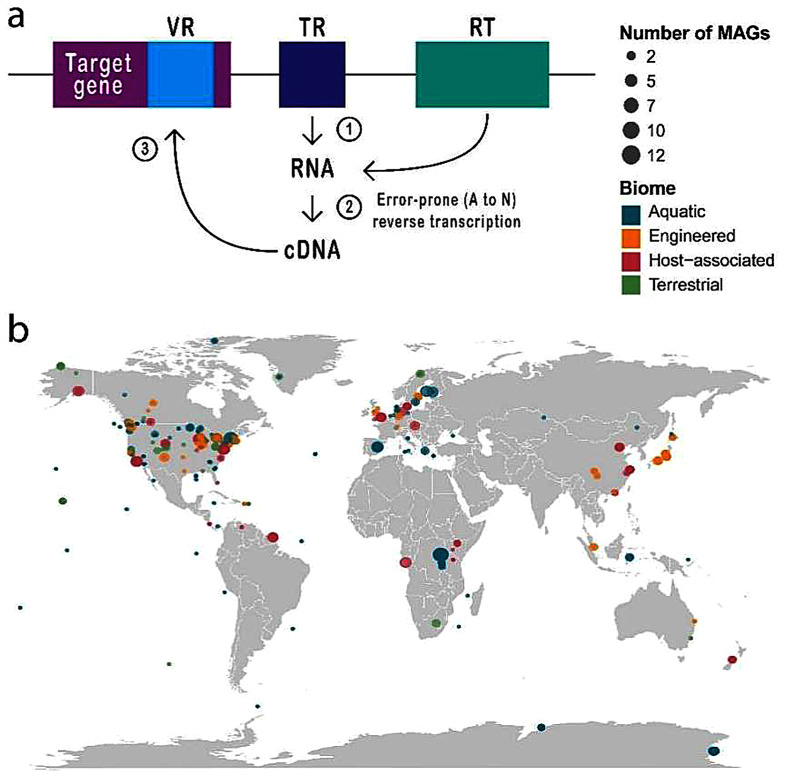
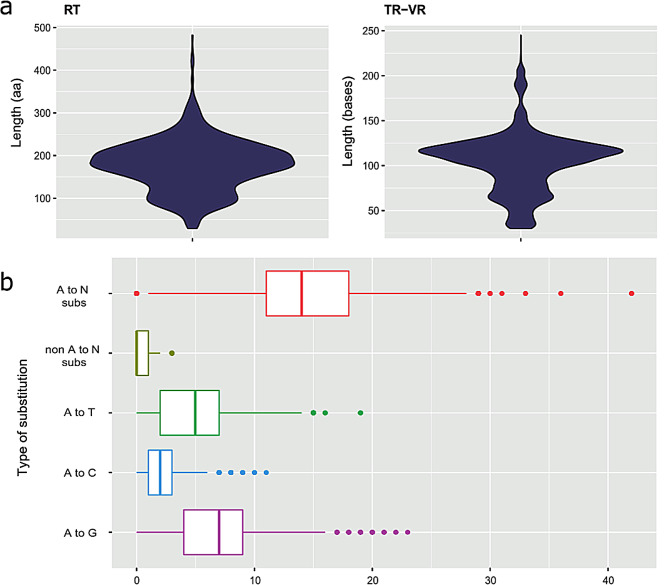
The diversity-generating retroelements (DGRs) are a family of genetic elements that can produce mutations in target genes often related to ligand-binding functions, which possess a C-type lectin (CLec) domain that tolerates massive variations. They were first identified in viruses, then in bacteria and archaea from human-associated and environmental genomes. This DGR mechanism represents a fast adaptation of organisms to ever- changing environments. However, their existence, phylogenetic and structural diversity, and functions in a wide range of environments are largely unknown.
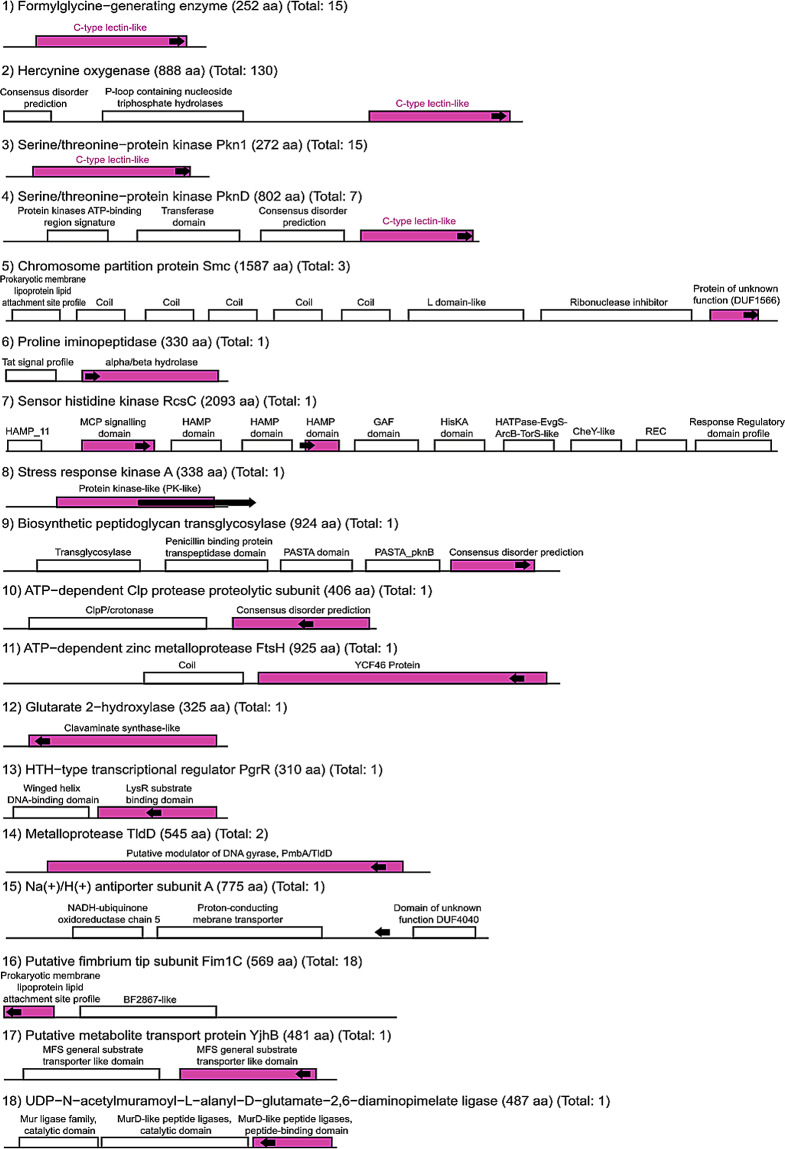
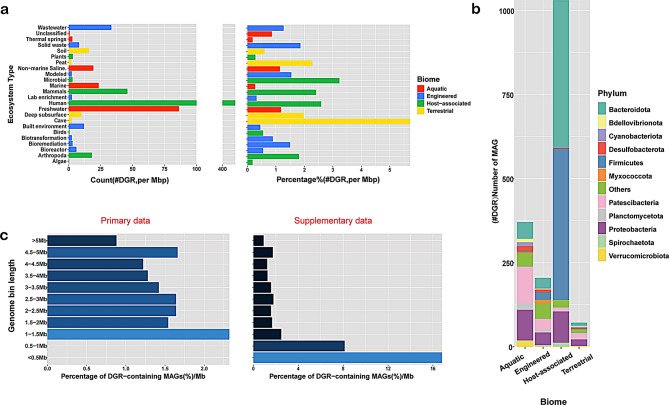
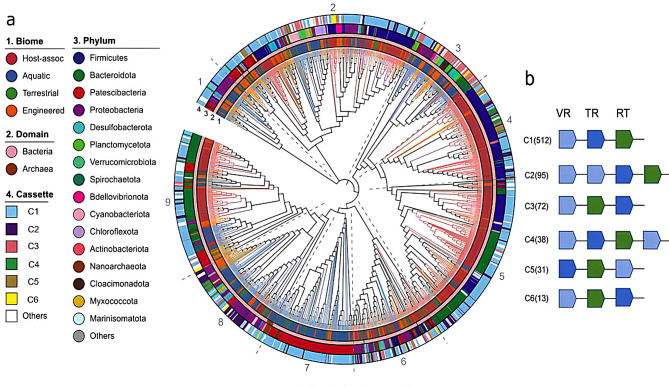
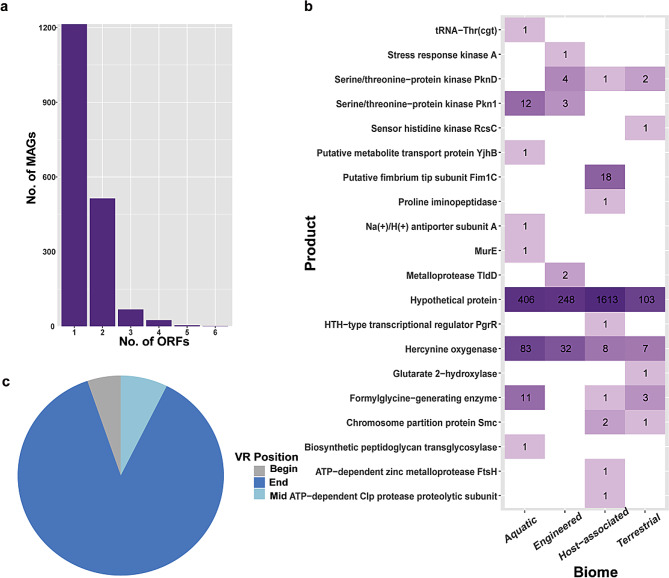
Here we present a study of DGR systems based on metagenome-assembled genomes (MAGs) from host-associated, aquatic, terrestrial and engineered environments. In total, we identified 861 non-redundant DGR-RTs and ~ 5.7% are new. We found that microbes associated with human hosts harbor the highest number of DGRs and also exhibit a higher prevalence of DGRs. After normalizing with genome size and including more genome data, we found that DGRs occur more frequently in organisms with smaller genomes. Overall, we identified nine main clades in the phylogenetic tree of reverse transcriptases (RTs), some comprising specific phyla and cassette architectures. We identified 38 different cassette patterns and 6 of them were shown in at least 10 DGRs, showing differences in terms of the numbers, arrangements, and orientations of their components. Finally, most of the target genes were related to ligand-binding and signaling functions, but we discovered a few cases in which the VRs were situated in domains different from the CLec.
Our research sheds light on the widespread prevalence of DGRs within environments and taxa, and supports the DGR phylogenetic divergence in different organisms. These variations might also occur in their structures since some cassette architectures were common in specific underrepresented phyla. In addition, we suggest that VRs could be found in domains different to the CLec, which should be further explored for organisms in scarcely studied environments.
多样性产生逆转录元件(DGRs)是一类遗传元件家族,可在通常与配体结合功能相关的靶基因中产生突变,这些靶基因具有一个能耐受大量变异的C型凝集素(CLec)结构域。它们最初在病毒中被发现,随后在来自人类相关和环境基因组的细菌和古菌中被发现。这种DGR机制代表了生物体对不断变化的环境的快速适应。然而,它们在广泛环境中的存在、系统发育和结构多样性以及功能在很大程度上尚不清楚。
在此,我们基于来自宿主相关、水生、陆地和工程环境的宏基因组组装基因组(MAGs)对DGR系统进行了研究。我们总共鉴定出861个非冗余的DGR逆转录酶(DGR-RTs),其中约5.7%是新发现的。我们发现与人类宿主相关的微生物携带的DGR数量最多,并且DGR的流行率也更高。在用基因组大小进行标准化并纳入更多基因组数据后,我们发现DGR在基因组较小的生物体中出现得更频繁。总体而言,我们在逆转录酶(RTs)的系统发育树中鉴定出九个主要分支,其中一些分支包含特定的门和盒式结构。我们鉴定出38种不同的盒式模式,其中6种在至少10个DGR中出现,显示出它们在组成部分的数量、排列和方向方面存在差异。最后,大多数靶基因与配体结合和信号传导功能相关,但我们发现了一些案例,其中可变区(VRs)位于与CLec不同的结构域中。
我们的研究揭示了DGRs在环境和分类群中的广泛存在,并支持了不同生物体中DGR的系统发育分化。由于某些盒式结构在特定代表性不足的门中很常见,这些变异也可能发生在它们的结构中。此外,我们建议可变区(VRs)可能存在于与CLec不同的结构域中,对于在研究较少的环境中的生物体,这一点应进一步探索。