Akinsolu Folahanmi Tomiwa, Gbaja-Biamila Titilola Abike, Salako Abideen Olurotimi, Adewole Ifeoluwa Eunice, Olagunju Mobolaji Timothy, Abodunrin Olunike Rebecca, Ola Oluwabukola Mary, Abel Chukwuemeka, Eleje George Uchenna, Ezechi Oliver Chukwujekwu, Tantawi Maha El, Lusher Joanne, Foláyan Morẹ́nikẹ́ Oluwátóyìn
Oral Health Initiative, Center for Reproduction and Population Health Studies, Nigerian Institute of Medical Research, Yaba, Lagos, Nigeria.
Department of Public Health, Faculty of Basic Medical and Health Sciences, Lead City University, Ibadan, Nigeria.
BMC Oral Health. 2024 Dec 21;24(1):1532. doi: 10.1186/s12903-024-05309-z.
There is no national data on the association between sugar intake and caries experience in Nigeria. This systematic review and meta-analysis aimed to assess the association between sugar intake and caries experience in Nigeria.
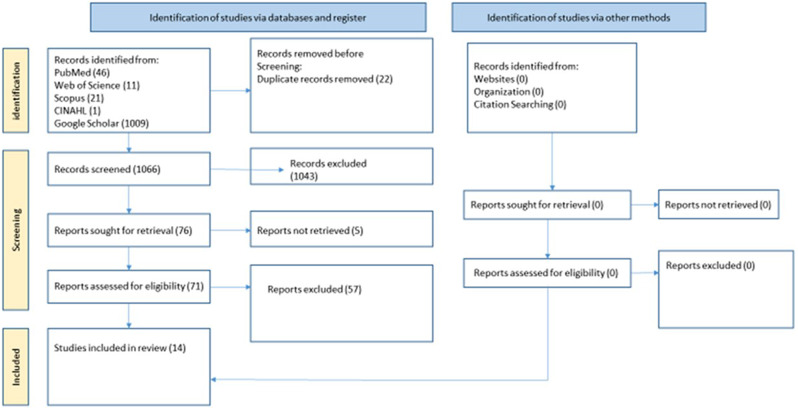
A search was conducted across the PubMed, Web of Science, Scopus, and Embase databases for articles published between January 2001 and March 2023 on the associations between sugar consumption and caries experience. This systematic review and meta-analysis were registered with PROSPERO (CRD42022372689). Data extracted included details of the study design, sample size, age and gender of study participants, and regions/states in Nigeria where the study was conducted. In addition, the types of sugary foods/beverages consumed, frequency and quantity of sugar intake, and periods of high sugar consumption were extracted. The studies' bias risks were also assessed.
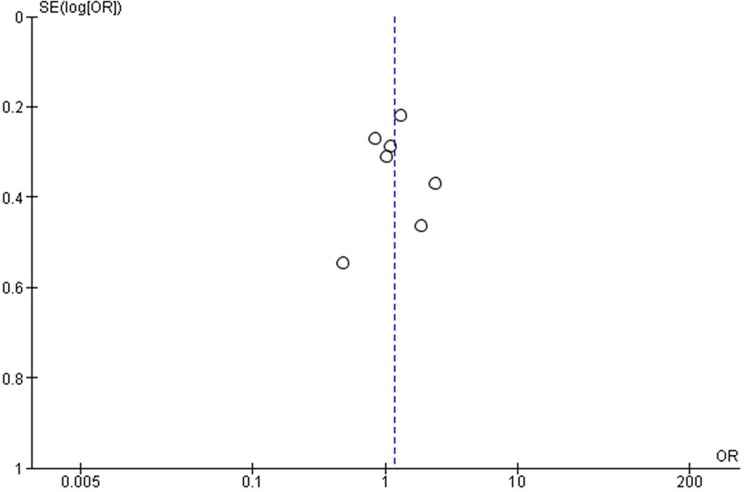
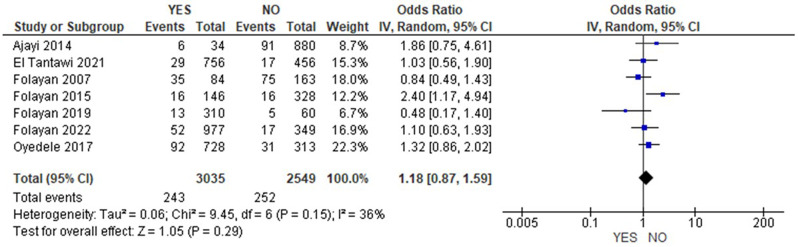
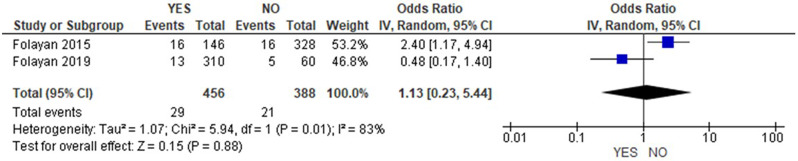
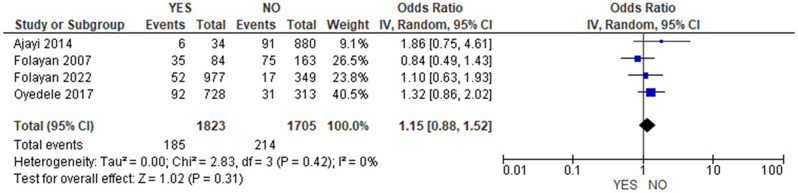
The review included 14 cross-sectional studies conducted between 2007 and 2023. Twelve (85.7%) studies were conducted in Southwest Nigeria. Seven (50.0%) had study participants with primary dentition, while eight (57.1%) had study participants with permanent dentition. The odds of caries are 18% higher in the group that consumes sugar compared to the group with low sugar intake (OR = 1.18, 95% CI: 0.87, 1.59). The odds of caries in primary (OR = 1.13, 95% CI: 0.23, 5.44) and permanent (OR = 1.15, 95% CI: 0.88, 1.52) dentition were higher in the group that consumes sugar compared to the group with low sugar intake. There were no statistical associations between sugar consumption and caries experience. Of the 14 included studies, thirteen (92.8%) were classified as "low risk."
Although a high frequency of sugar intake increased the risk of dental caries, this association did not reach statistical significance in Nigeria's primary and permanent dentitions. Future studies should include longitudinal studies and studies that assess differences in the measures for sugar consumption and its association with the risk of caries.
在尼日利亚,尚无关于糖摄入量与龋齿经历之间关联的全国性数据。本系统评价和荟萃分析旨在评估尼日利亚糖摄入量与龋齿经历之间的关联。
在PubMed、科学网、Scopus和Embase数据库中检索2001年1月至2023年3月期间发表的关于糖消费与龋齿经历之间关联的文章。本系统评价和荟萃分析已在国际系统评价前瞻性注册库(PROSPERO)注册(注册号:CRD42022372689)。提取的数据包括研究设计细节、样本量、研究参与者的年龄和性别,以及研究在尼日利亚开展的地区/州。此外,还提取了所消费的含糖食品/饮料类型、糖摄入量的频率和数量,以及高糖消费期。还评估了这些研究的偏倚风险。
该评价纳入了2007年至2023年期间开展的14项横断面研究。其中12项(85.7%)研究在尼日利亚西南部开展。7项(50.0%)研究的参与者为乳牙列,8项(57.1%)研究的参与者为恒牙列。与低糖摄入组相比,糖消费组的龋齿几率高18%(比值比[OR]=1.18,95%置信区间[CI]:0.87,1.59)。与低糖摄入组相比,糖消费组乳牙列(OR=1.13,95%CI:0.23,5.44)和恒牙列(OR=1.15,95%CI:0.88,1.52)的龋齿几率更高。糖消费与龋齿经历之间无统计学关联。在纳入的14项研究中,13项(92.8%)被归类为“低风险”。
尽管高频率的糖摄入会增加患龋齿的风险,但在尼日利亚的乳牙列和恒牙列中,这种关联未达到统计学显著性。未来的研究应包括纵向研究,以及评估糖消费测量方法差异及其与龋齿风险关联的研究。