Chen Yuhang, Dai Suoyi, Cheng Chien-Shan, Chen Lianyu
Department of Integrative Oncology, Shanghai Cancer Center, Fudan University, Shanghai, 200032, China.
Department of Oncology, Shanghai Medical College, Fudan University, 270 Dong-An Road, Shanghai, 200032, China.
J Hematol Oncol. 2024 Dec 21;17(1):130. doi: 10.1186/s13045-024-01647-1.
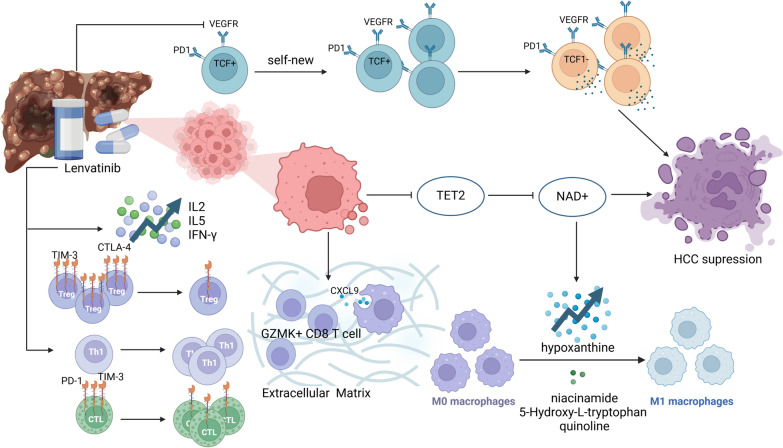
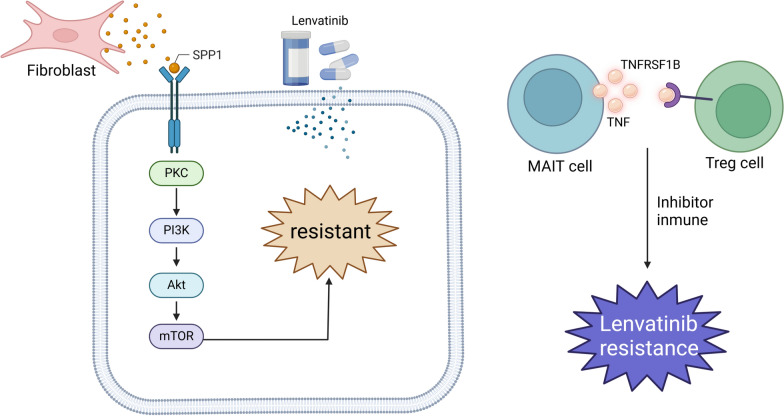
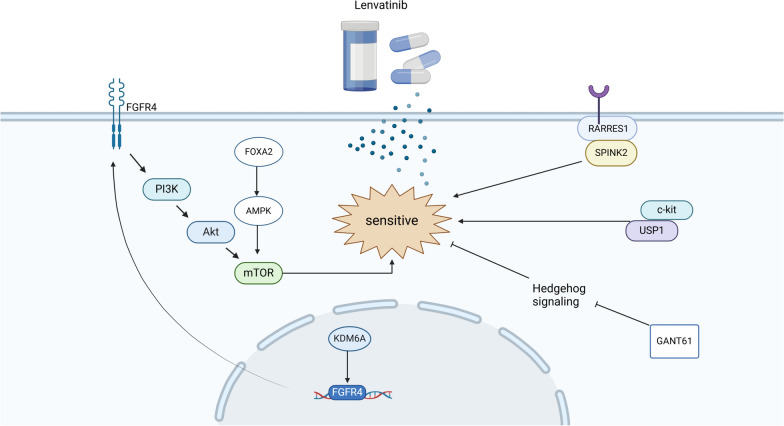
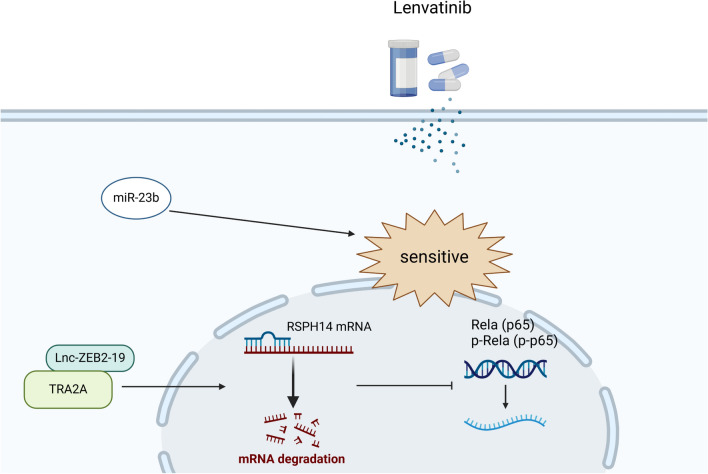
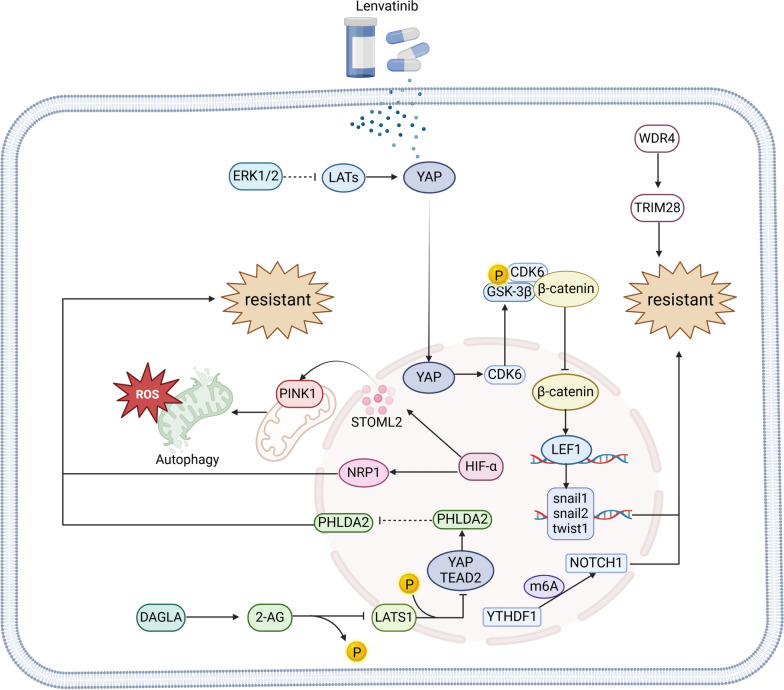
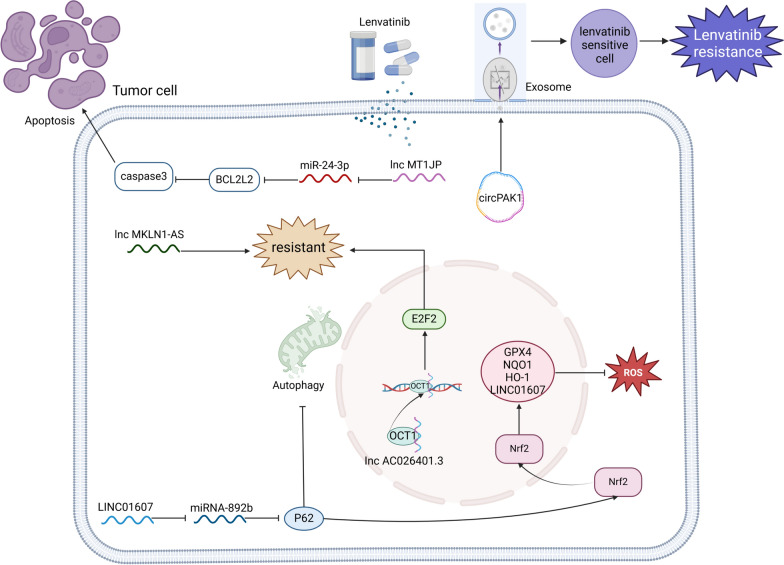
Lenvatinib is a multi-target tyrosine kinase inhibitor widely used in the treatment of hepatocellular carcinoma (HCC). Its primary mechanism of action involves inhibiting signal pathways such as vascular endothelial growth factor receptors (VEGFR) and fibroblast growth factor receptors (FGFR), thereby reducing tumor cell proliferation and angiogenesis and affecting the tumor's immune microenvironment. In the treatment of liver cancer, although lenvatinib monotherapy has shown good clinical effect, the problem of drug resistance is becoming more and more serious. This resistance may be caused by a variety of factors, including genetic mutations, signaling pathway remodeling, and changes in the tumor microenvironment. In order to overcome drug resistance, the combination of lenvatinib and other therapeutic strategies has gradually become a research hotspot, and it is worth noting that the combination of lenvatinib and immune checkpoint inhibitors (ICIs) has shown a good application prospect. This combination not only enhances the anti-tumor immune response but also helps improve therapeutic efficacy. However, combination therapy also faces challenges regarding safety and tolerability. Therefore, studying the mechanisms of resistance and identifying relevant biomarkers is particularly important, as it aids in early diagnosis and personalized treatment. This article reviews the mechanisms of lenvatinib in treating liver cancer, the mechanisms and efficacy of its combination with immune checkpoint inhibitors, the causes of resistance, the exploration of biomarkers, and other novel combination therapy strategies for lenvatinib. We hope to provide insights into the use and research of lenvatinib in clinical and scientific settings, offering new strategies for the treatment of liver cancer.
乐伐替尼是一种广泛用于治疗肝细胞癌(HCC)的多靶点酪氨酸激酶抑制剂。其主要作用机制包括抑制血管内皮生长因子受体(VEGFR)和成纤维细胞生长因子受体(FGFR)等信号通路,从而减少肿瘤细胞增殖和血管生成,并影响肿瘤的免疫微环境。在肝癌治疗中,尽管乐伐替尼单药治疗已显示出良好的临床效果,但耐药问题却日益严重。这种耐药可能由多种因素引起,包括基因突变、信号通路重塑以及肿瘤微环境的变化。为了克服耐药性,乐伐替尼与其他治疗策略的联合逐渐成为研究热点,值得注意的是,乐伐替尼与免疫检查点抑制剂(ICI)的联合已显示出良好的应用前景。这种联合不仅增强了抗肿瘤免疫反应,还有助于提高治疗效果。然而,联合治疗在安全性和耐受性方面也面临挑战。因此,研究耐药机制并识别相关生物标志物尤为重要,因为这有助于早期诊断和个性化治疗。本文综述了乐伐替尼治疗肝癌的机制、其与免疫检查点抑制剂联合的机制和疗效、耐药原因、生物标志物的探索以及乐伐替尼的其他新型联合治疗策略。我们希望为乐伐替尼在临床和科研环境中的应用与研究提供见解,为肝癌治疗提供新策略。