Lin Xi, Lin Jian, Ji Lichun, Zhang Jiaona, Zhang Yezi, Hong Junbin, Li Geng, Lin Xingdong
The Third Clinical Medical College, Guangzhou University of Chinese Medicine, Guangzhou, China.
Guangzhou University of Chinese Medicine, Guangzhou, China.
Front Pharmacol. 2024 Dec 6;15:1449322. doi: 10.3389/fphar.2024.1449322. eCollection 2024.
Haoqin Qingdan decoction (HQQD), composed of eleven herbs, is a traditional Chinese formula widely recognized for its efficacy in treating pulmonary inflammation induced by viral infections. Despite its extensive use, the potential pulmonary and intestinal protective effects of HQQD on influenza viral pneumonia (IVP) and the underlying molecular mechanisms remain unclear.
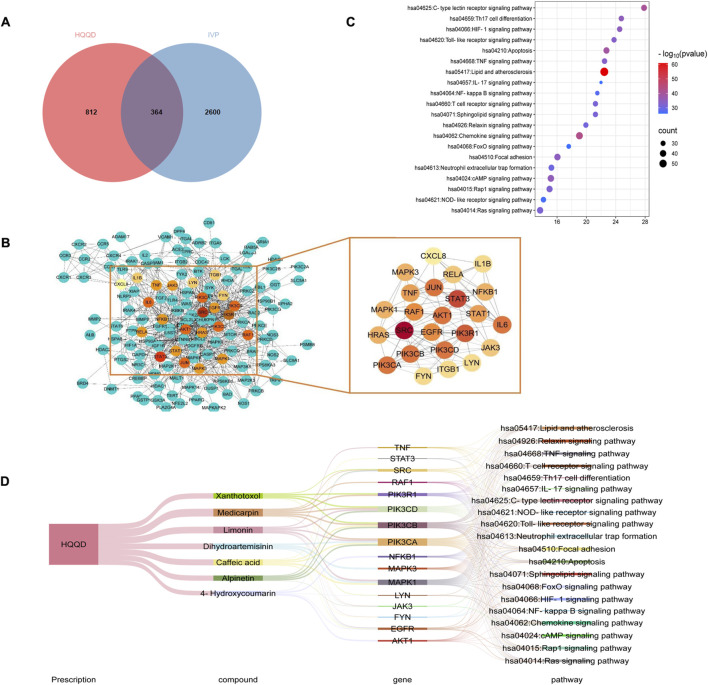
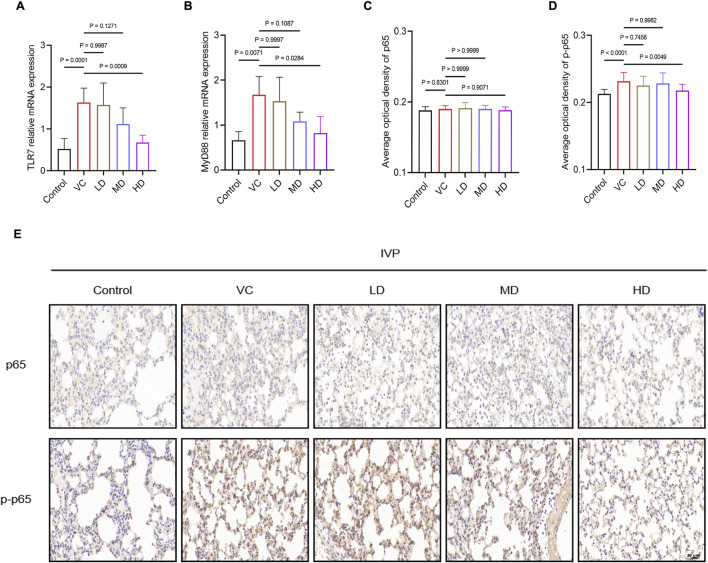
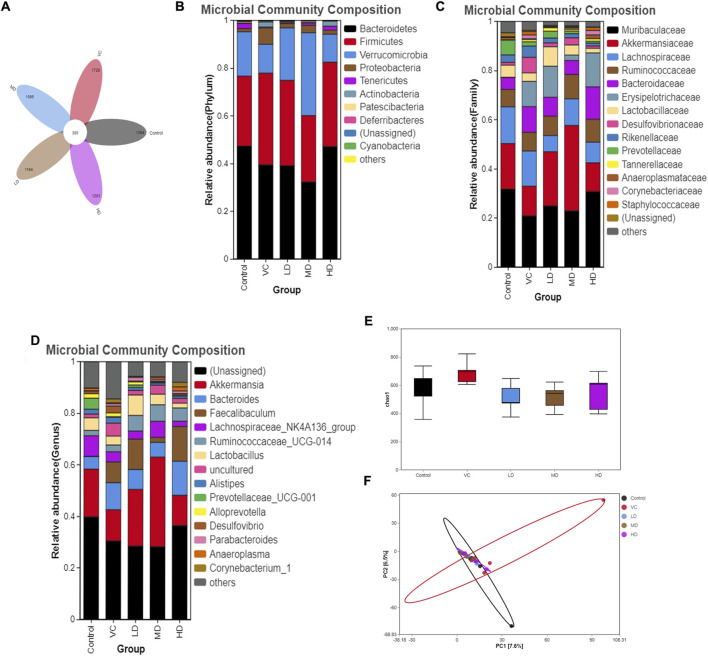
Ultra-high-performance liquid chromatography coupled with mass spectrometry (UHPLC-MS) was employed to identify the major chemical constituents of the prescription. Subsequently, network analysis was conducted to predict the potential therapeutic targets of HQQD in IVP. The mechanisms by which HQQD mitigates lung and intestinal damage were further elucidated by assessing NP protein expression, inflammatory factors, TLR7/MyD88/NF-κB signaling pathway mRNAs and proteins, and through intestinal flora analysis.
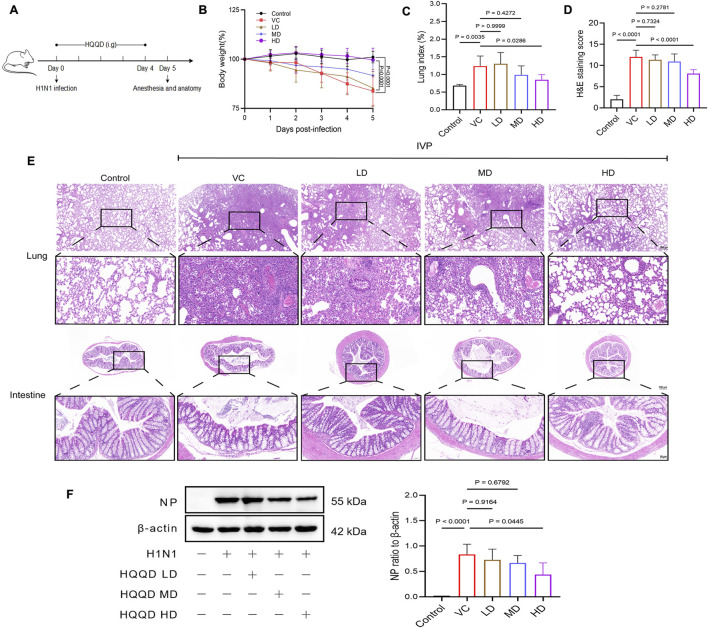
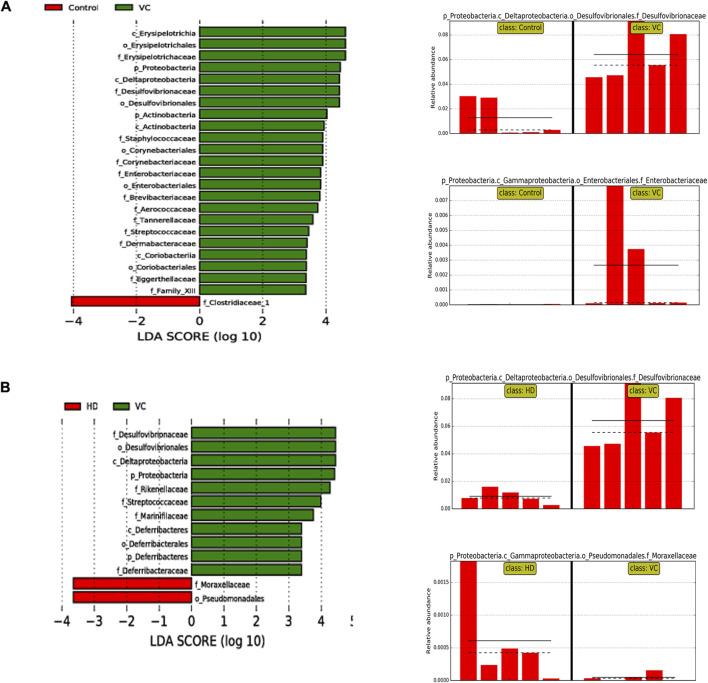
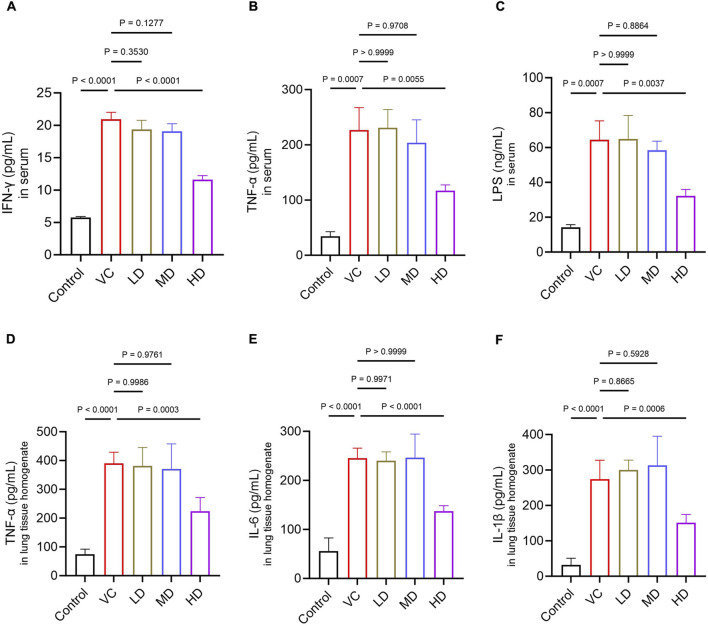
The protective effects of HQQD on pulmonary and intestinal injuries induced by IVP were thoroughly investigated using comprehensive network analysis, signaling pathway validation, and gut microflora analysis. UHPLC-MS analysis identified the primary chemical constituents. Validation experiments demonstrated a significant reduction in NP protein expression in the lungs. HQQD notably alleviated immune damage in the lungs and intestines of mice by inhibiting NP protein expression and the release of inflammatory factors such as interleukin-6 (IL-6), interleukin-1β (IL-1β), tumor necrosis factor-alpha (TNF-α) and interferon-gamma (IFN-γ); downregulating the expression levels of TLR7, MyD88, and phospho-NF-κB p65 (p-p65); lowering serum LPS levels; and reducing the relative abundance of .
HQQD exerts therapeutic effects against influenza viral pneumonia through antiviral and anti-inflammatory mechanisms and by remodeling the intestinal flora. This study provides initial insights into the "gut-lung" axis mechanism of HQQD in combating respiratory influenza virus infection.
蒿芩清胆汤由十一味草药组成,是一种传统中药方剂,因其在治疗病毒感染引起的肺部炎症方面的功效而被广泛认可。尽管其应用广泛,但蒿芩清胆汤对流感病毒性肺炎(IVP)潜在的肺和肠道保护作用及其潜在的分子机制仍不清楚。
采用超高效液相色谱-质谱联用(UHPLC-MS)技术鉴定该方剂的主要化学成分。随后,进行网络分析以预测蒿芩清胆汤在IVP中的潜在治疗靶点。通过评估NP蛋白表达、炎症因子、TLR7/MyD88/NF-κB信号通路的mRNA和蛋白,并通过肠道菌群分析,进一步阐明蒿芩清胆汤减轻肺和肠道损伤的机制。
通过综合网络分析、信号通路验证和肠道微生物群分析,全面研究了蒿芩清胆汤对IVP诱导的肺和肠道损伤的保护作用。UHPLC-MS分析确定了主要化学成分。验证实验表明肺中NP蛋白表达显著降低。蒿芩清胆汤通过抑制NP蛋白表达以及白细胞介素-6(IL-6)、白细胞介素-1β(IL-1β)、肿瘤坏死因子-α(TNF-α)和干扰素-γ(IFN-γ)等炎症因子的释放,显著减轻小鼠肺和肠道的免疫损伤;下调TLR7、MyD88和磷酸化NF-κB p65(p-p65)的表达水平;降低血清LPS水平;并降低……的相对丰度。
蒿芩清胆汤通过抗病毒、抗炎机制以及重塑肠道菌群发挥抗流感病毒性肺炎的治疗作用。本研究为蒿芩清胆汤对抗呼吸道流感病毒感染的“肠-肺”轴机制提供了初步见解。