Ashby Alycia, Murphy Patrick, Jukosky James, Whipple Chery A
Colby-Sawyer College, New London, New Hampshire, United States.
MicroPubl Biol. 2024 Dec 3;2024. doi: 10.17912/micropub.biology.001318. eCollection 2024.
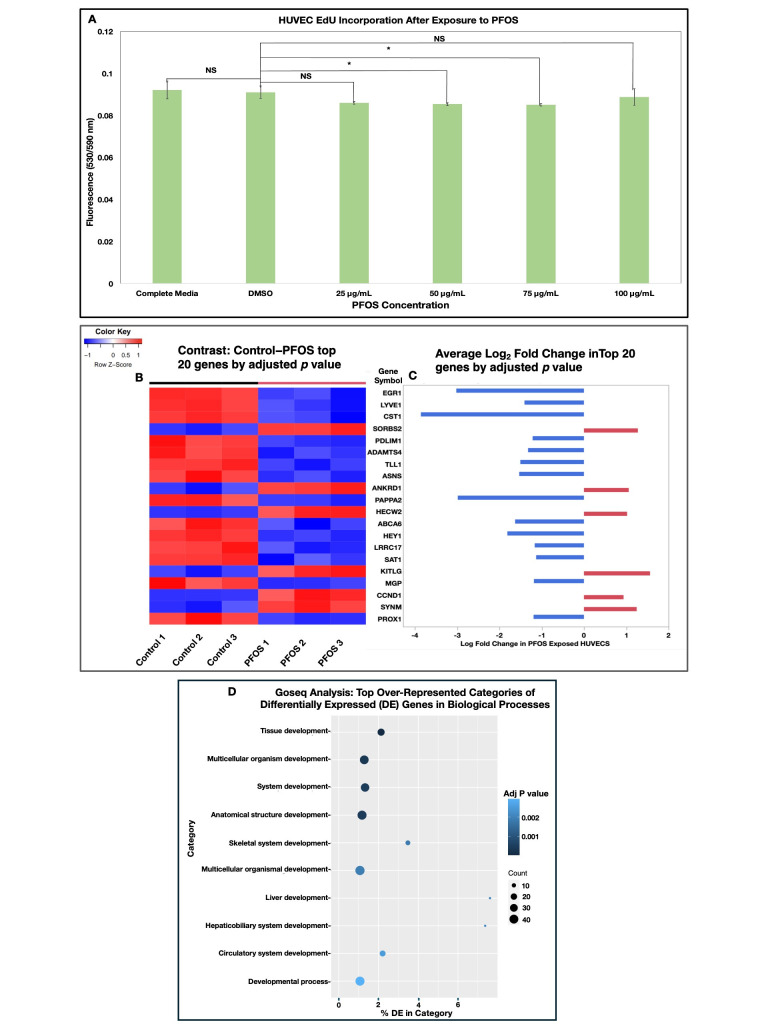
Polyfluoro-alkyl substances (PFAS) are widely distributed environmental contaminants linked to human toxicity and developmental delays, especially low birthweight (LBW). In this study, Human Umbilical Vein Endothelial Cells (HUVECs) were exposed to the PFAS perfluorooctanesulfonic acid (PFOS). After 48-hours, their proliferation, and differential gene expression were assessed. A small, yet significant, reduction in proliferation was seen at 50 μg/mL and 75 μg/mL. RNA sequencing showed that estrogen response and notch signaling pathways were significantly altered. This study increases our understanding of how PFAS may interfere with endothelial cell (HUVECs) functions which may have larger effects on fetal growth, development, and birthweight.
多氟烷基物质(PFAS)是广泛分布的环境污染物,与人体毒性和发育迟缓有关,尤其是低出生体重(LBW)。在本研究中,人脐静脉内皮细胞(HUVECs)暴露于PFAS全氟辛烷磺酸(PFOS)。48小时后,评估其增殖和差异基因表达。在50μg/mL和75μg/mL时观察到增殖有轻微但显著的降低。RNA测序表明雌激素反应和Notch信号通路发生了显著改变。这项研究增进了我们对PFAS如何干扰内皮细胞(HUVECs)功能的理解,而这可能对胎儿生长、发育和出生体重产生更大影响。