Li Naiqi, Sun Yue, Cheng Lin, Feng Chun, Sun Yifan, Yang Saisai, Shao Yuqi, Zhao Xing-Zhong, Zhang Yuanzhen
Department of Obstetrics and Gynecology, Zhongnan Hospital of Wuhan University, Wuhan, Hubei, 430071, People's Republic of China.
Genetics and Prenatal Diagnosis Center, The Third Affiliated Hospital of Zhengzhou University, Zhengzhou, 450000, People's Republic of China.
Int J Nanomedicine. 2024 Dec 17;19:13445-13460. doi: 10.2147/IJN.S479297. eCollection 2024.
Fetal nucleated red blood cells (fNRBCs) in the peripheral blood of pregnant women contain comprehensive fetal genetic information, making them an ideal target for non-invasive prenatal diagnosis (NIPD). However, challenges in identifying, enriching, and detecting fNRBCs limit their diagnostic potential.
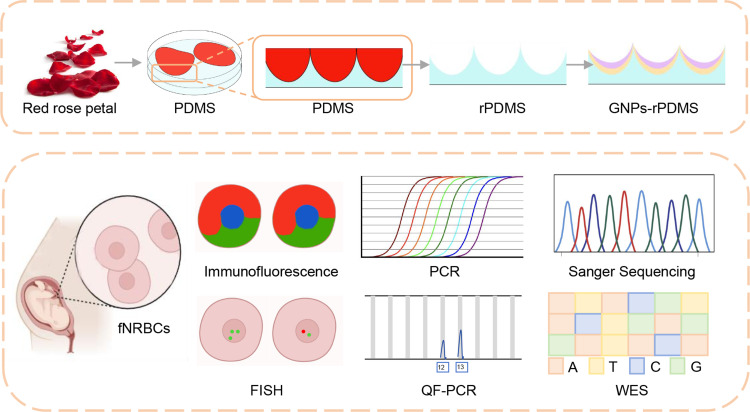
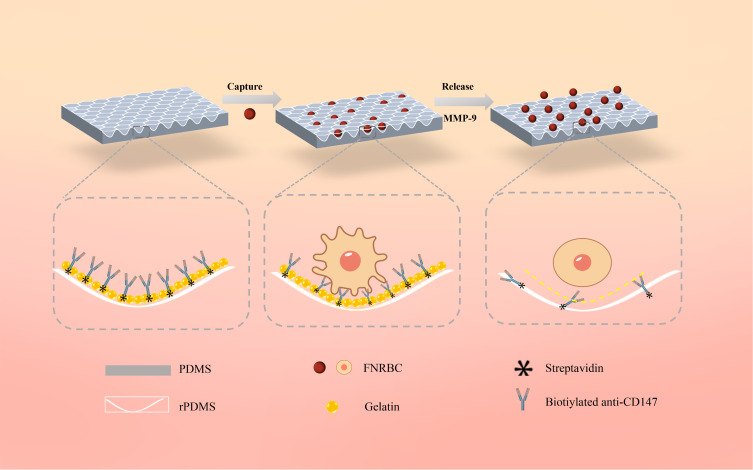
To overcome these obstacles, we developed a novel biomimetic chip, replicating the micro-nano structure of red rose petals on polydimethylsiloxane (PDMS). The surface was modified with gelatin nanoparticles (GNPs) and affinity antibodies to enhance cell adhesion and facilitate specific cell identification. We subsequently investigated the chip's characteristics, along with its in vitro capture and release system, and conducted further experiments using peripheral blood samples from pregnant women.
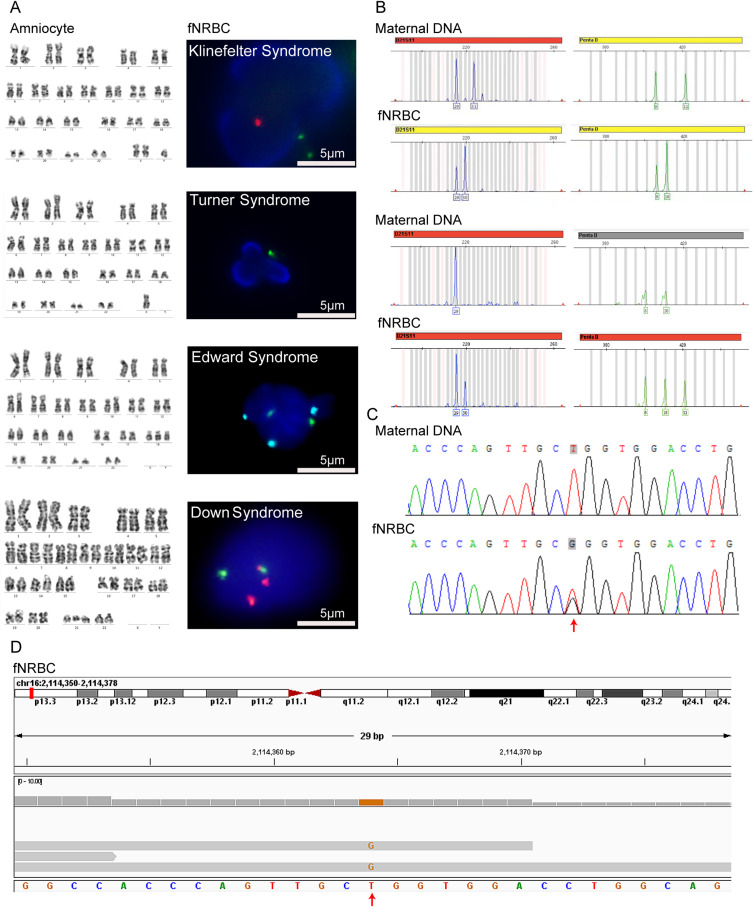
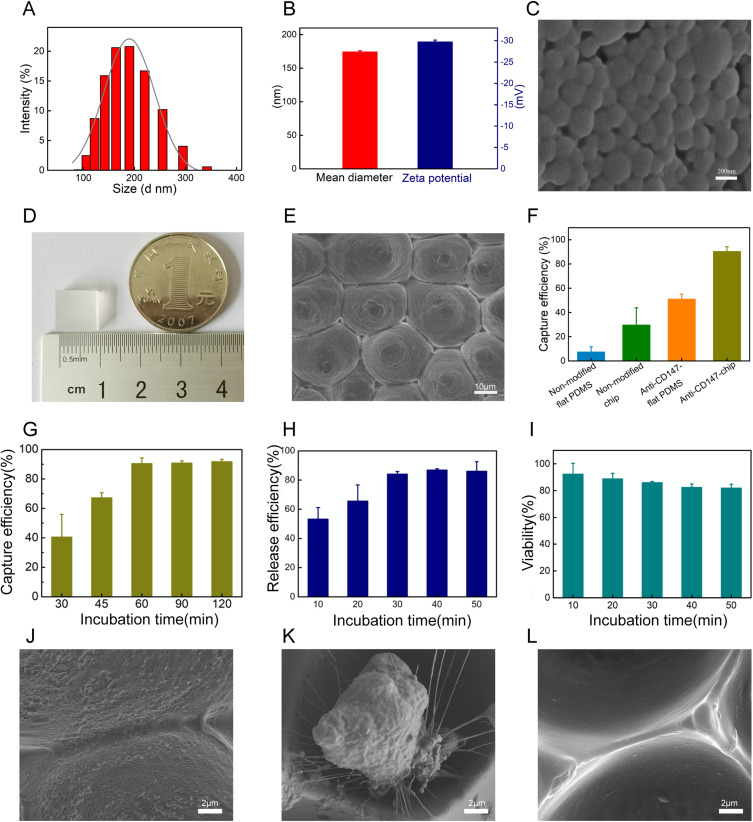
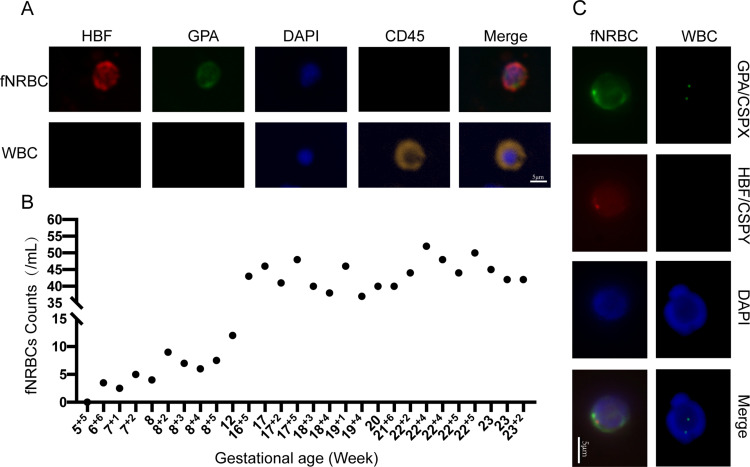
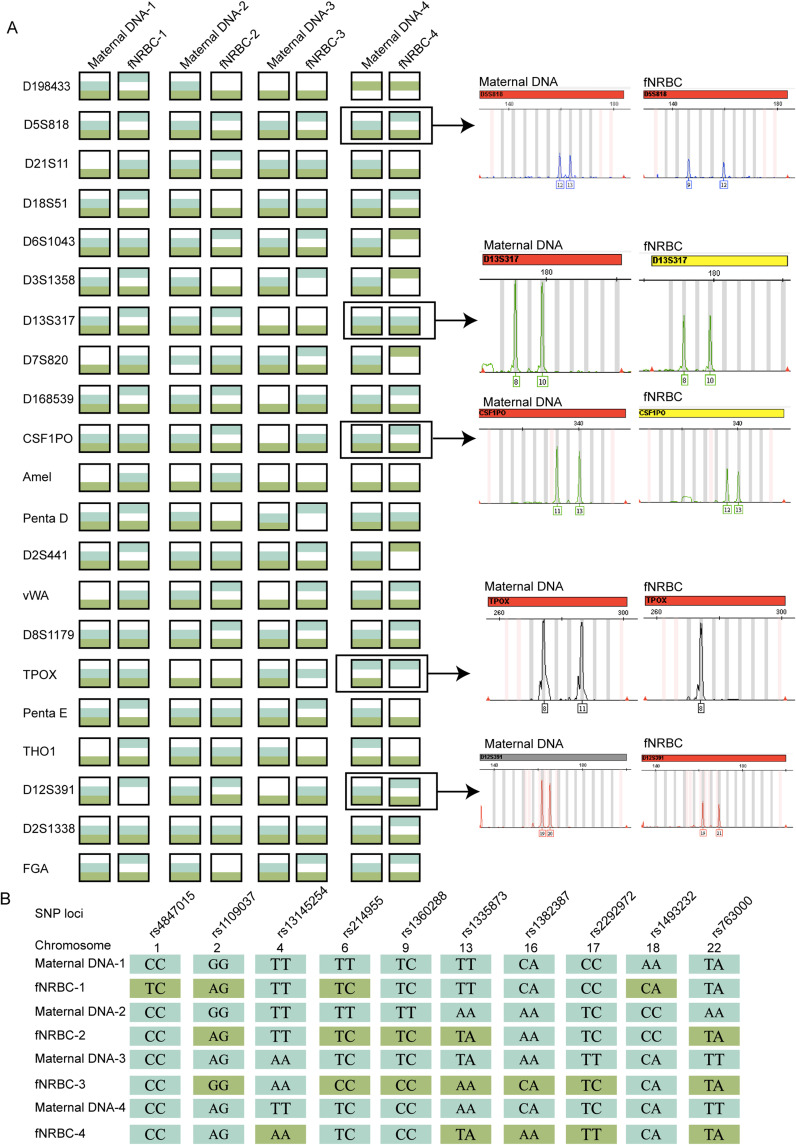
In the cell line capture and release assay, the chip achieved a cell capture efficiency of 90.4%. Following metalloproteinase-9 (MMP-9) enzymatic degradation, the release efficiency was 84.08%, with cell viability at 85.97%. Notably, fNRBCs can be captured from the peripheral blood of pregnant women as early as 7 weeks of gestation. We used these fNRBCs to diagnose a case of single-gene disease and instances of chromosomal aneuploidies, yielding results consistent with those obtained from amniotic fluid punctures.
This novel chip not only enables efficient enrichment of fNRBCs for NIPD but also extends the diagnostic window for genetic and developmental disorders to as early as 7 weeks of gestation, potentially allowing for earlier interventions. By improving the accuracy and reliability of NIPD, this technology could reduce reliance on invasive diagnostic techniques, offering a new pathway for diagnosing fetal genetic conditions in clinical practice.
孕妇外周血中的胎儿有核红细胞(fNRBCs)包含全面的胎儿遗传信息,使其成为无创产前诊断(NIPD)的理想靶点。然而,在识别、富集和检测fNRBCs方面存在的挑战限制了它们的诊断潜力。
为克服这些障碍,我们开发了一种新型仿生芯片,在聚二甲基硅氧烷(PDMS)上复制红玫瑰花瓣的微纳结构。表面用明胶纳米颗粒(GNPs)和亲和抗体进行修饰,以增强细胞黏附并促进特异性细胞识别。我们随后研究了该芯片的特性及其体外捕获和释放系统,并使用孕妇外周血样本进行了进一步实验。
在细胞系捕获和释放试验中,该芯片的细胞捕获效率达到90.4%。经金属蛋白酶-9(MMP-9)酶解后,释放效率为84.08%,细胞活力为85.97%。值得注意的是,早在妊娠7周时就能从孕妇外周血中捕获fNRBCs。我们使用这些fNRBCs诊断了一例单基因疾病和几例染色体非整倍体病例,结果与羊水穿刺获得的结果一致。
这种新型芯片不仅能够有效地富集用于NIPD的fNRBCs,还能将遗传和发育障碍的诊断窗口提前至妊娠7周,有可能实现更早的干预。通过提高NIPD的准确性和可靠性,这项技术可以减少对侵入性诊断技术的依赖,为临床实践中诊断胎儿遗传状况提供一条新途径。