Gu Xuefeng, Wei Yanyan, Lu Mao, Shen Duo, Wu Xin, Huang Jin
Department of Infectious Diseases, Jurong Hospital Affiliated to Jiangsu University, Zhenjiang, Jiangsu 212400, China.
Department of Infectious Diseases, The First Affiliated Hospital of Anhui Medical University, Hefei, Anhui 230022, China.
ACS Omega. 2024 Dec 3;9(50):49986-49999. doi: 10.1021/acsomega.4c09411. eCollection 2024 Dec 17.
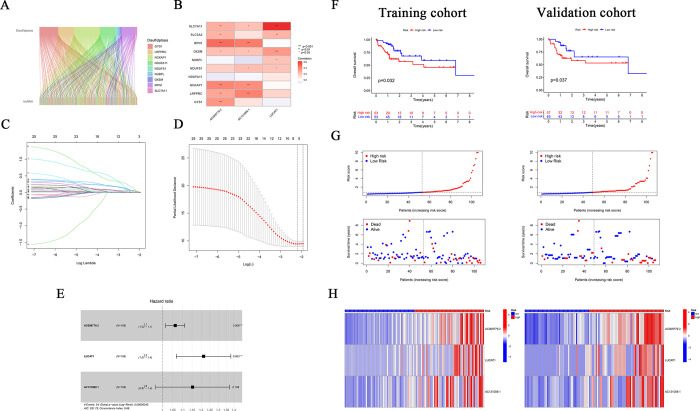
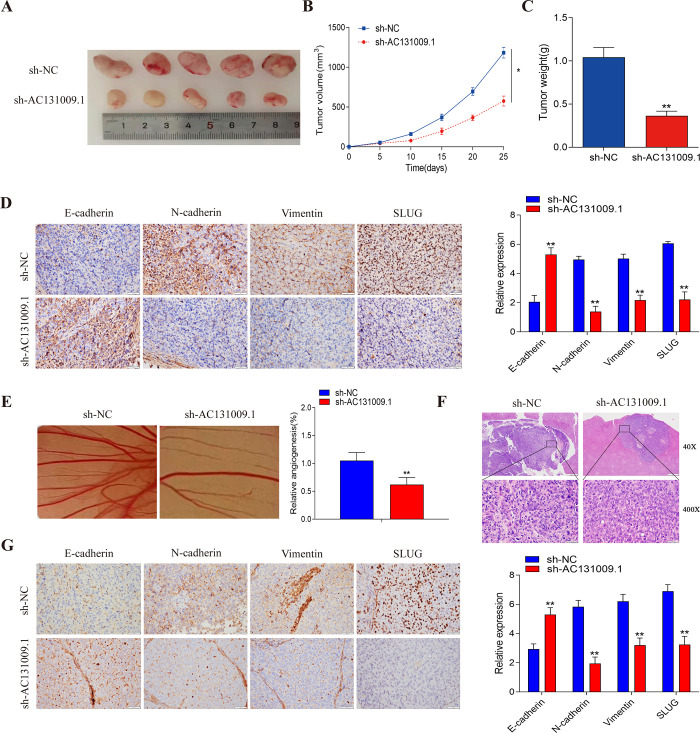
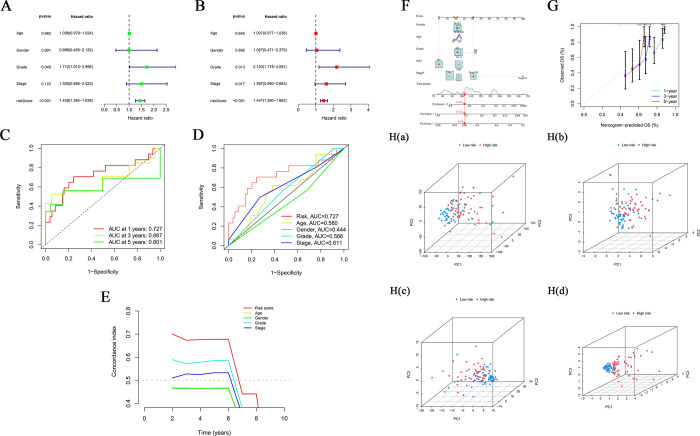
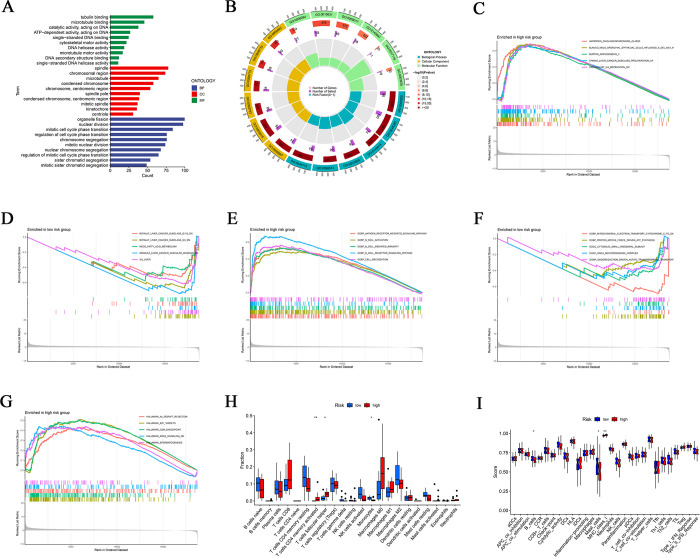
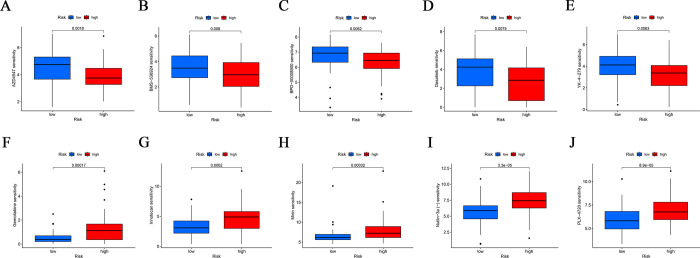
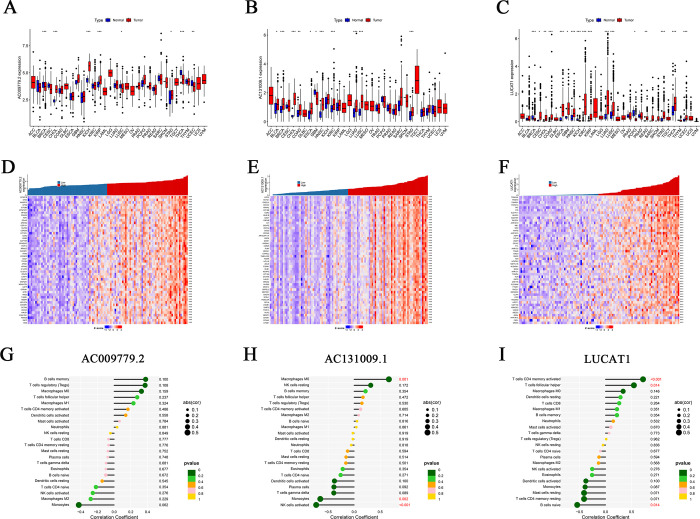
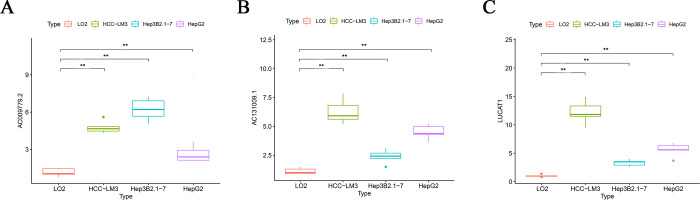
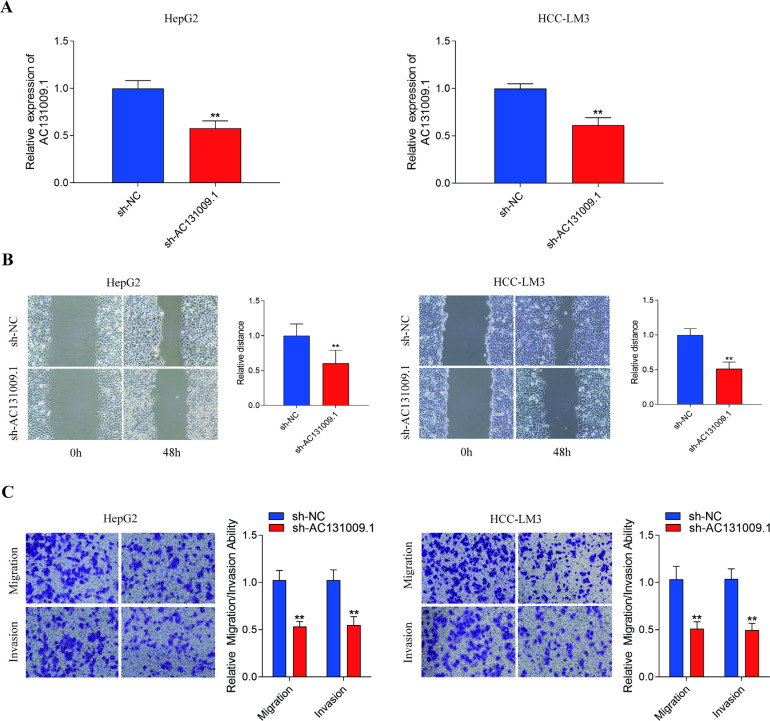
Disulfidptosis, a recently identified pathway of cellular demise, served as the focal point of this research, aiming to pinpoint relevant lncRNAs that differentiate between hepatocellular carcinoma (HCC) with and without vascular invasion while also forecasting survival rates and responses to immunotherapy in patients with vascular invasion (VI+). First, we identified 300 DRLRs in the TCGA database. Subsequently, utilizing univariate analysis, LASSO-Cox proportional hazards modeling, and multivariate analytical approaches, we selected three DRLRs (AC009779.2, AC131009.1, and LUCAT1) with the highest prognostic value to construct a prognostic risk model for VI+ HCC patients. Multivariate Cox regression analysis revealed that this model is an independent prognostic factor for predicting overall survival that outperforms traditional clinicopathological factors. Pathway analysis demonstrated the enrichment of tumor and immune-related pathways in the high-risk group. Immune landscape analysis revealed that immune cell infiltration degrees and immune functions had significant differences. Additionally, we identified valuable chemical drugs (AZD4547, BMS-536924, BPD-00008900, dasatinib, and YK-4-279) for high-risk VI+ HCC patients. In-depth bioinformatics analysis was subsequently conducted to assess immune characteristics, drug susceptibility, and potential biological pathways involving the three hub DRLRs. Furthermore, the abnormally elevated transcriptional levels of the three DRLRs in HCC cell lines were validated through qRT-PCR. Functional cell assays revealed that silencing the expression of lncRNA AC131009.1 can inhibit the migratory and invasive capabilities of HCC cells, a finding further corroborated by the chorioallantoic membrane (CAM) assay. Immunohistochemical analysis and hematoxylin-eosin staining (HE) staining provided preliminary evidence that AC131009.1 may promote the invasion and metastasis of HCC cells by inducing epithelial-mesenchymal transition (EMT) in both subcutaneous xenograft models and orthotopic HCC models within nude mice. To summarize, we developed a risk assessment model founded on DRLRs and explored the potential mechanisms by which hub DRLRs promote HCC invasion and metastasis.
双硫死亡是一种最近发现的细胞死亡途径,是本研究的重点,旨在找出可区分有或无血管侵犯的肝细胞癌(HCC)的相关长链非编码RNA(lncRNA),同时预测有血管侵犯(VI+)患者的生存率及对免疫治疗的反应。首先,我们在TCGA数据库中鉴定出300个双硫死亡相关长链RNA(DRLR)。随后,利用单变量分析、LASSO-Cox比例风险模型和多变量分析方法,我们选择了三个具有最高预后价值的DRLR(AC009779.2、AC131009.1和LUCAT1)来构建VI+ HCC患者的预后风险模型。多变量Cox回归分析表明,该模型是预测总生存期的独立预后因素,优于传统临床病理因素。通路分析显示高风险组中肿瘤和免疫相关通路富集。免疫景观分析表明免疫细胞浸润程度和免疫功能存在显著差异。此外,我们为高风险VI+ HCC患者鉴定出了有价值的化学药物(AZD4547、BMS-536924、BPD-00008900、达沙替尼和YK-4-279)。随后进行了深入的生物信息学分析,以评估涉及三个关键DRLR的免疫特征、药物敏感性和潜在生物学途径。此外,通过qRT-PCR验证了HCC细胞系中三个DRLR的转录水平异常升高。功能性细胞实验表明,沉默lncRNA AC131009.¹的表达可抑制HCC细胞的迁移和侵袭能力,这一发现得到了鸡胚绒毛尿囊膜(CAM)实验的进一步证实。免疫组织化学分析和苏木精-伊红(HE)染色提供了初步证据,表明AC131009.¹可能通过在裸鼠皮下异种移植模型和原位HCC模型中诱导上皮-间质转化(EMT)来促进HCC细胞的侵袭和转移。总之,我们开发了一种基于DRLR的风险评估模型,并探索了关键DRLR促进HCC侵袭和转移的潜在机制。