Floor Evelien, Su Jinyi, Chatterjee Maitrayee, Kuipers Elise S, IJssennagger Noortje, Heidari Faranak, Giordano Laura, Wubbolts Richard W, Mihăilă Silvia M, Stapels Daphne A C, Vercoulen Yvonne, Strijbis Karin
Center for Molecular Medicine, University Medical Center Utrecht, Utrecht University, Utrecht, The Netherlands.
Department of Biomolecular Health Sciences, Division of Infectious Diseases and Immunology, Faculty of Veterinary Medicine, Utrecht University, Utrecht, The Netherlands.
Gut Microbes. 2025 Dec;17(1):2434685. doi: 10.1080/19490976.2024.2434685. Epub 2024 Dec 23.
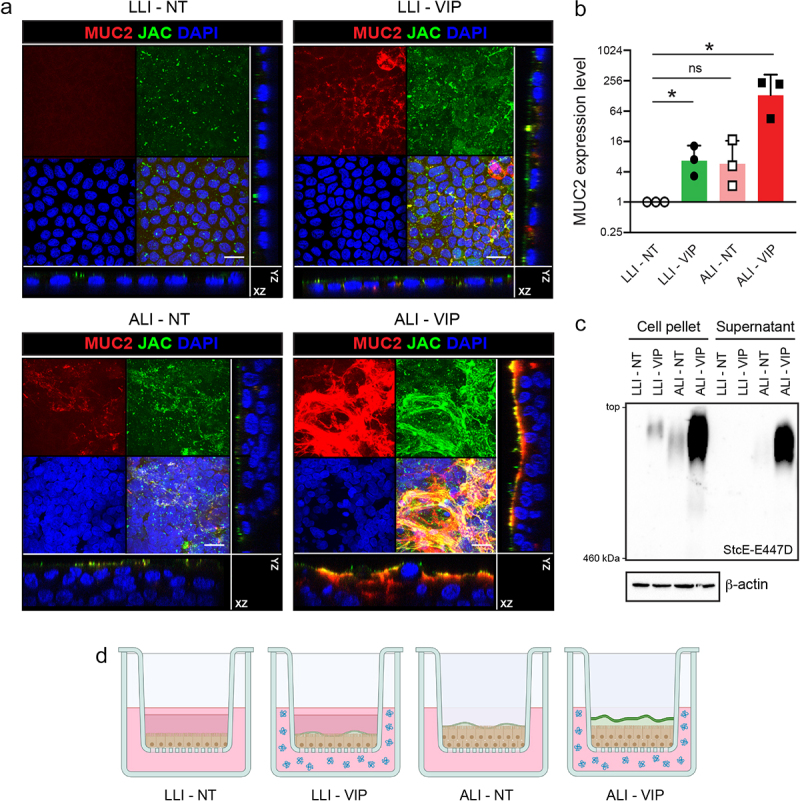
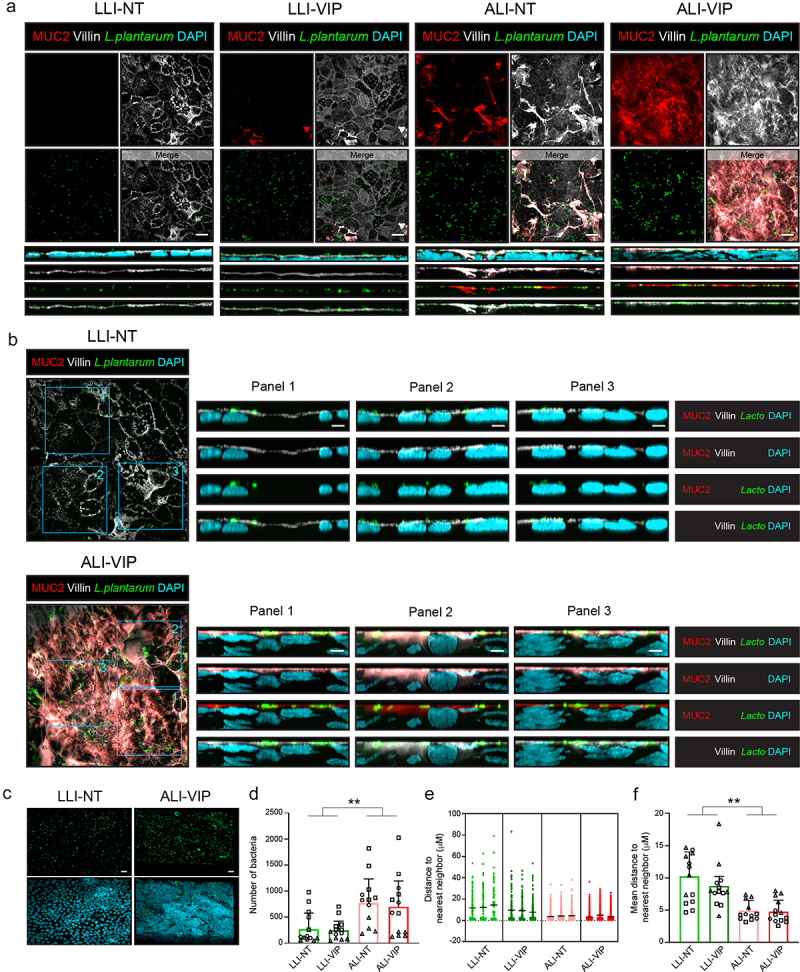
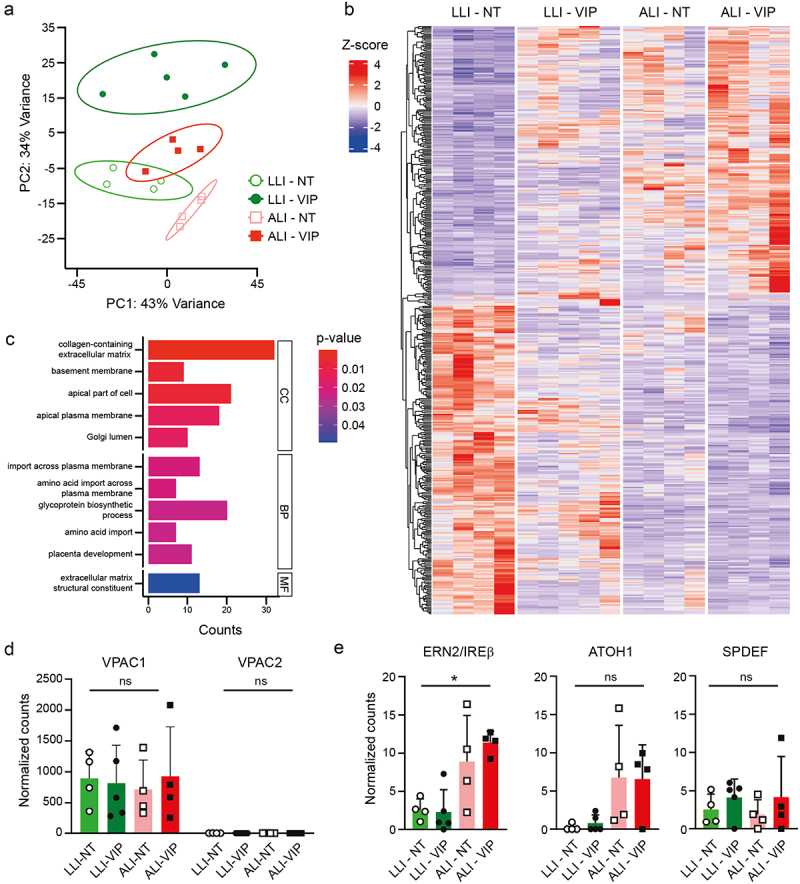
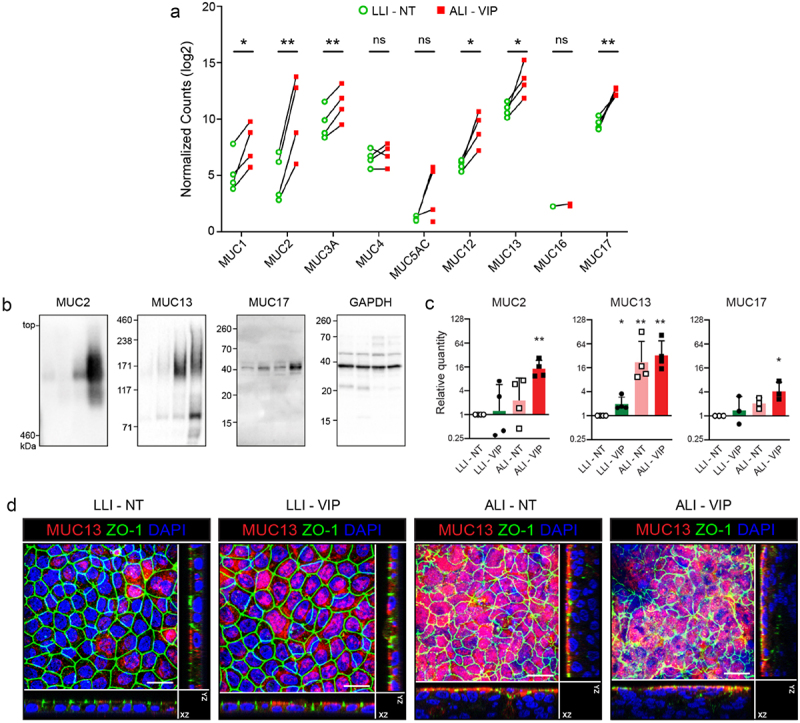
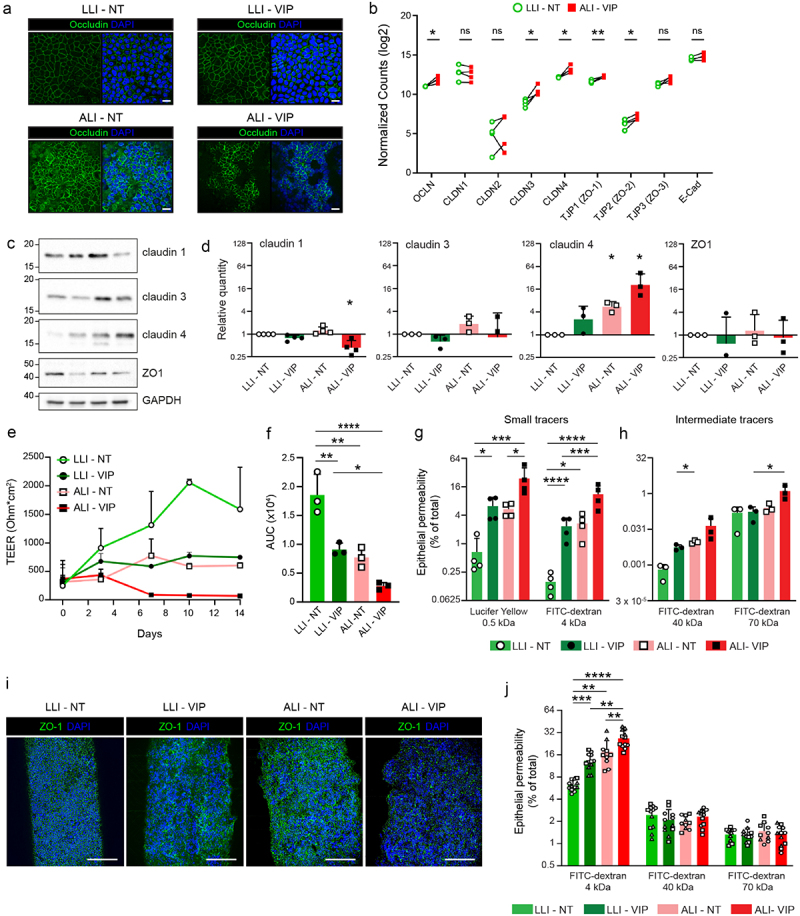
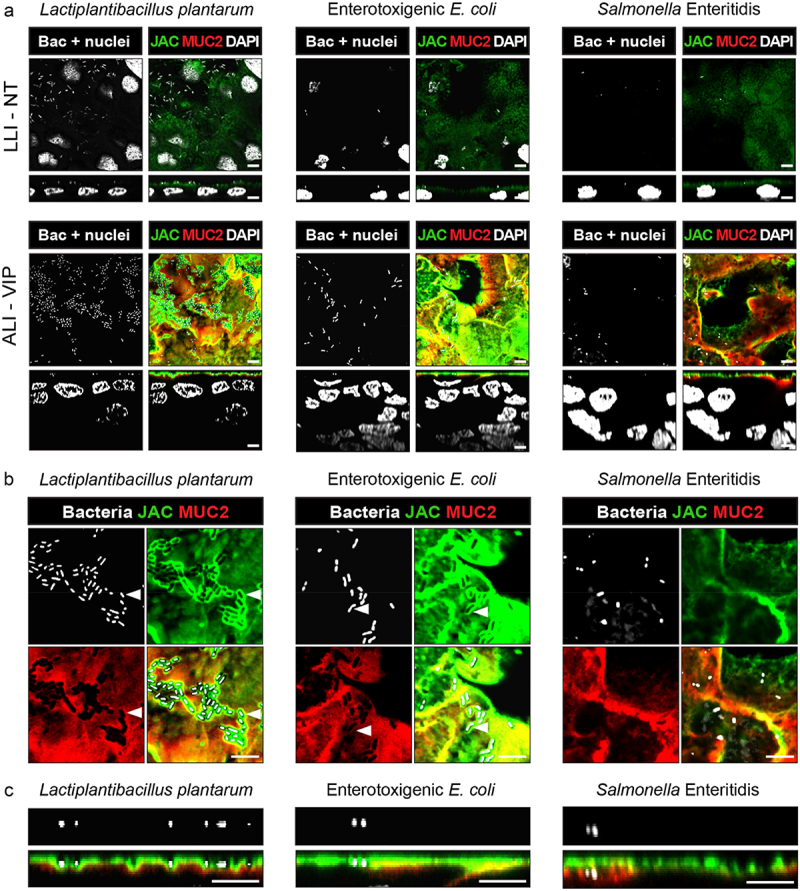
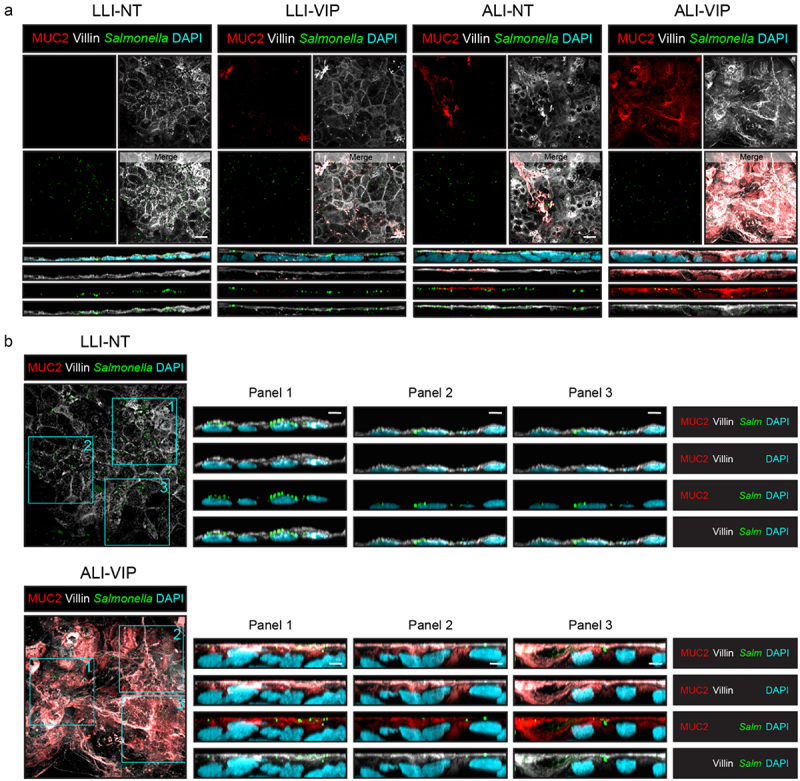
The intestinal mucosal barrier is a dynamic system that allows nutrient uptake, stimulates healthy microbe-host interactions, and prevents invasion by pathogens. The mucosa consists of epithelial cells connected by cellular junctions that regulate the passage of nutrients covered by a mucus layer that plays an important role in host-microbiome interactions. Mimicking the intestinal mucosa for assays, particularly the generation of a mucus layer, has proven to be challenging. The intestinal cell-line Caco-2 is widely used in academic and industrial laboratories due to its capacity to polarize, form an apical brush border, and reproducibly grow into confluent cell layers in different culture systems. However, under normal culture conditions, Caco-2 cultures lack a mucus layer. Here, we demonstrate for the first time that Caco-2 cultures can form a robust mucus layer when cultured under air-liquid interface (ALI) conditions on Transwell inserts with addition of vasointestinal peptide (VIP) in the basolateral compartment. We demonstrate that unique gene clusters are regulated in response to ALI and VIP single stimuli, but the ALI-VIP combination treatment resulted in a significant upregulation of multiple mucin genes and proteins, including secreted MUC2 and transmembrane mucins MUC13 and MUC17. Expression of tight junction proteins was significantly altered in the ALI-VIP condition, leading to increased permeability to small molecules. Commensal bacteria closely associated with the Caco-2 mucus layer and differentially colonized the surface of the ALI cultures. Pathogenic were capable of invading beyond the mucus layer and brush border. In conclusion, Caco-2 ALI-VIP cultures provide an accessible and straightforward way to culture an intestinal mucosal model with improved biomimetic features. This novel intestinal model can facilitate studies into mucus and epithelial barrier functions and in-depth molecular characterization of pathogenic and commensal microbe-mucus interactions.
肠道黏膜屏障是一个动态系统,它允许营养物质的吸收,促进健康的微生物与宿主的相互作用,并防止病原体的入侵。黏膜由通过细胞连接相连的上皮细胞组成,这些连接调节营养物质的通过,其表面覆盖着一层黏液层,该黏液层在宿主与微生物群的相互作用中起着重要作用。事实证明,模仿肠道黏膜进行检测,尤其是生成黏液层,具有挑战性。肠道细胞系Caco-2因其能够极化、形成顶端刷状缘并在不同培养系统中可重复地生长为汇合细胞层,而被广泛应用于学术和工业实验室。然而,在正常培养条件下,Caco-2培养物缺乏黏液层。在此,我们首次证明,当在Transwell小室上的气液界面(ALI)条件下培养,并在基底外侧隔室中添加血管活性肠肽(VIP)时,Caco-2培养物能够形成坚固的黏液层。我们证明,独特的基因簇会响应ALI和VIP单一刺激而受到调节,但ALI-VIP联合处理导致多种黏蛋白基因和蛋白质的显著上调,包括分泌型MUC2以及跨膜黏蛋白MUC13和MUC17。紧密连接蛋白的表达在ALI-VIP条件下发生了显著改变,导致对小分子的通透性增加。共生细菌与Caco-2黏液层紧密相关,并以不同方式定殖于ALI培养物的表面。病原体能够侵入黏液层和刷状缘之外。总之,Caco-2 ALI-VIP培养物提供了一种简便易行的方法来培养具有更好仿生特征的肠道黏膜模型。这种新型肠道模型有助于研究黏液和上皮屏障功能,以及对致病和共生微生物与黏液相互作用进行深入的分子表征。