Schmidt Nina, Kumar Amit, Korf Lukas, Dinh-Fricke Adrian Valentin, Abendroth Frank, Koide Akiko, Linne Uwe, Rakwalska-Bange Magdalena, Koide Shohei, Essen Lars-Oliver, Vázquez Olalla, Hantschel Oliver
Institute of Physiological Chemistry, Faculty of Medicine, Philipps University of Marburg, Marburg, Germany.
Faculty of Chemistry and Unit for Structural Biology, Philipps University of Marburg, Marburg, Germany.
Nat Commun. 2024 Dec 23;15(1):10724. doi: 10.1038/s41467-024-54901-y.
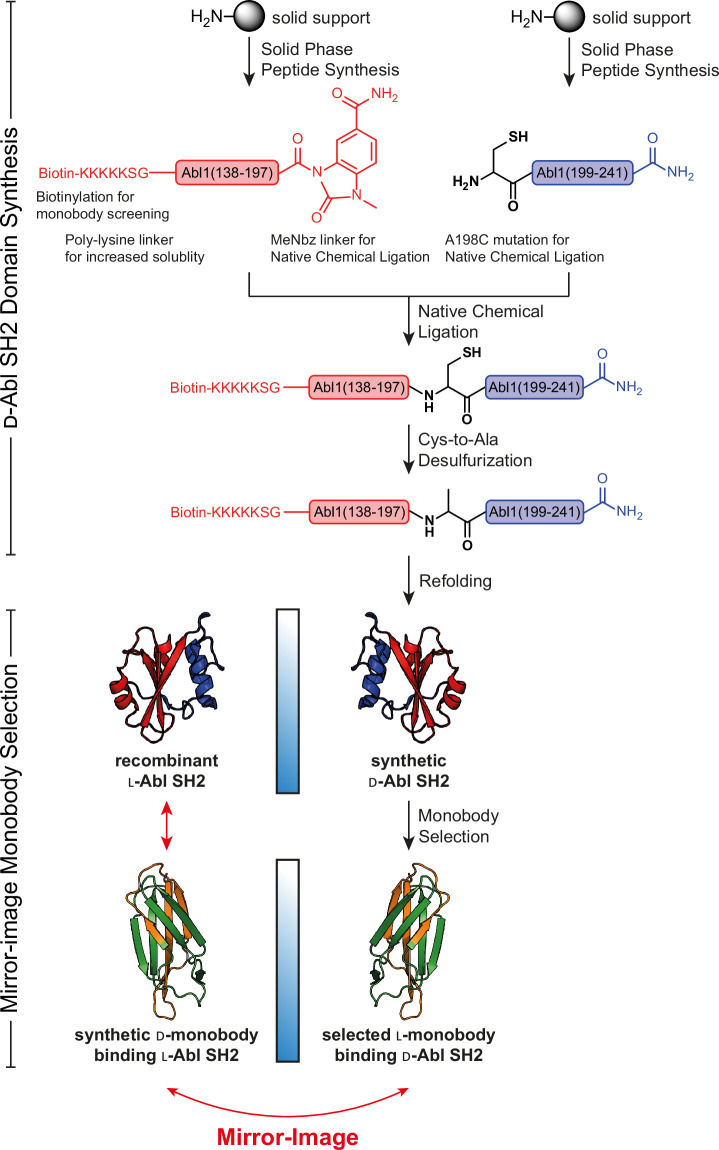
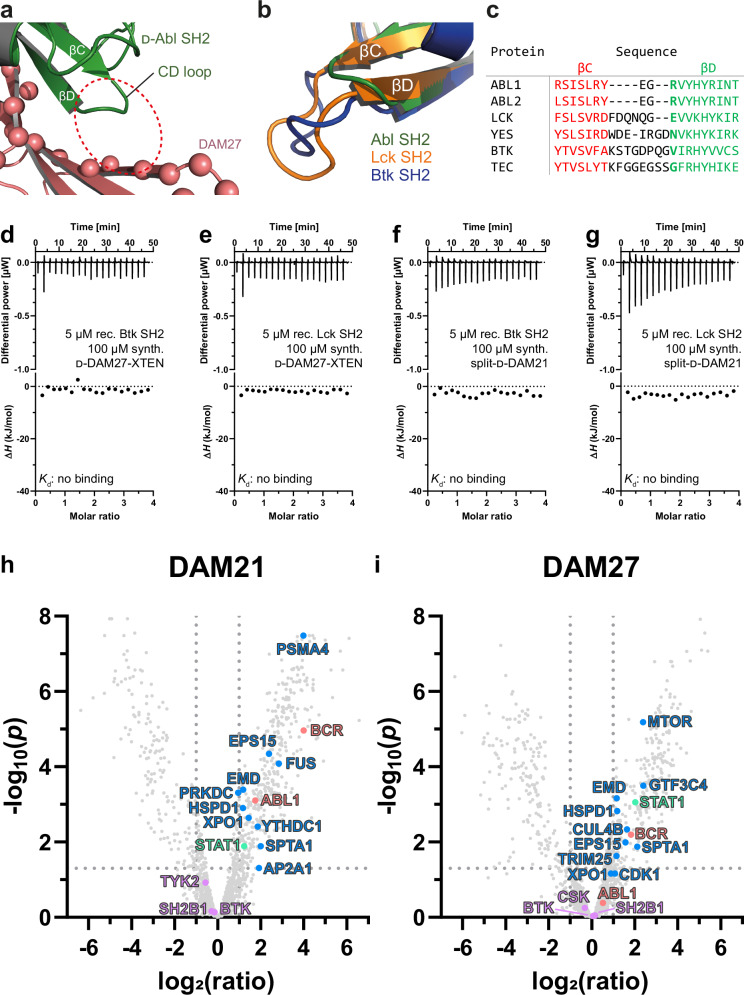
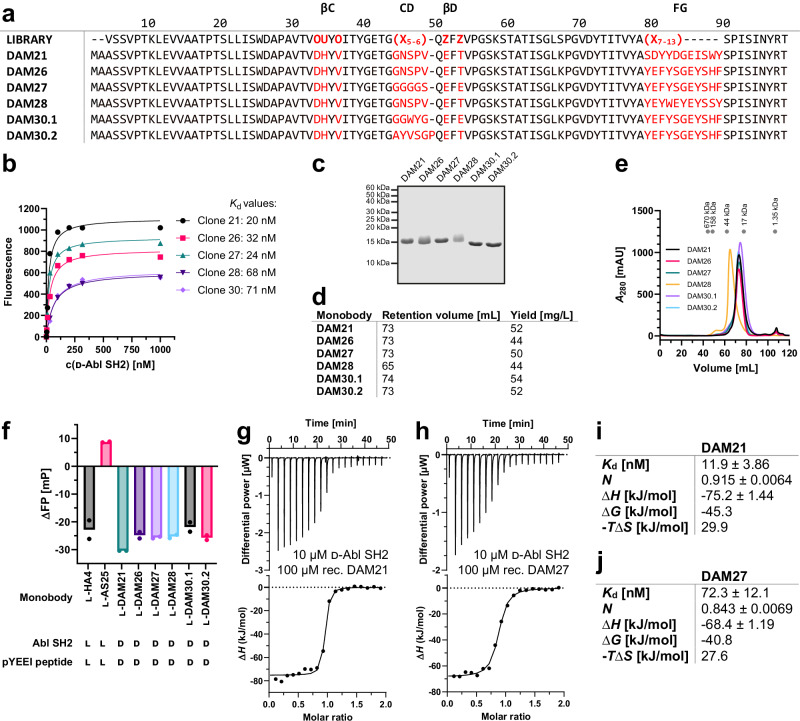
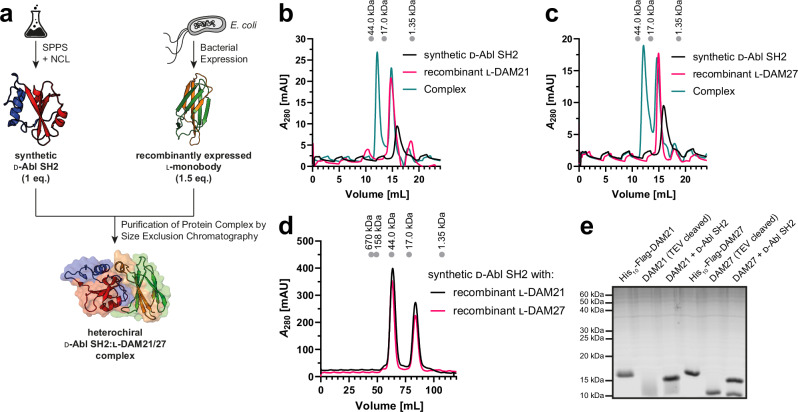
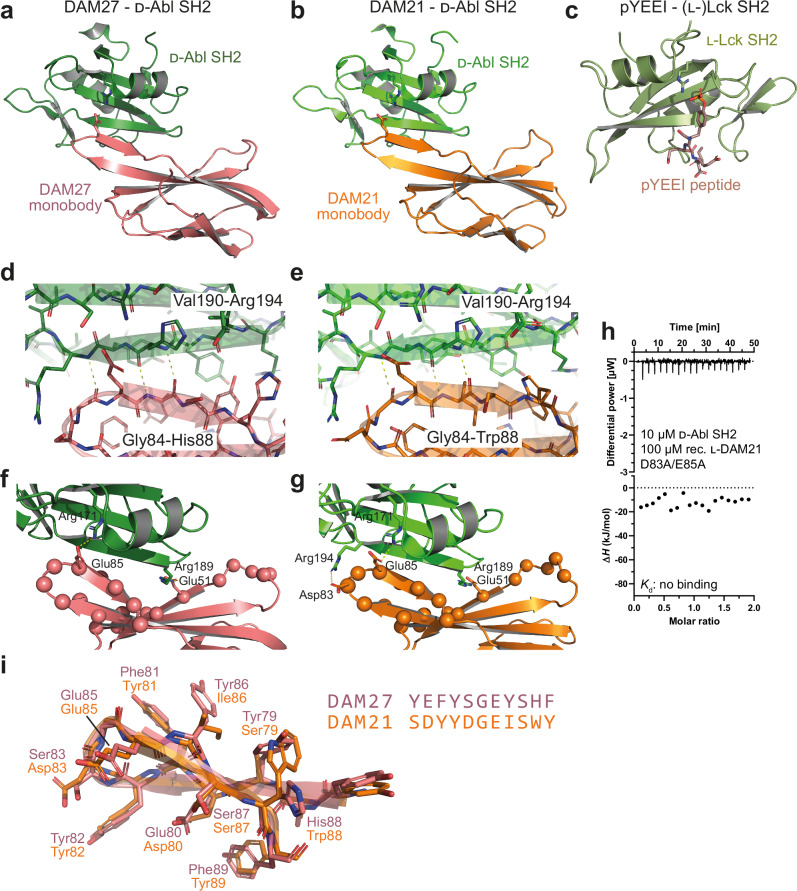
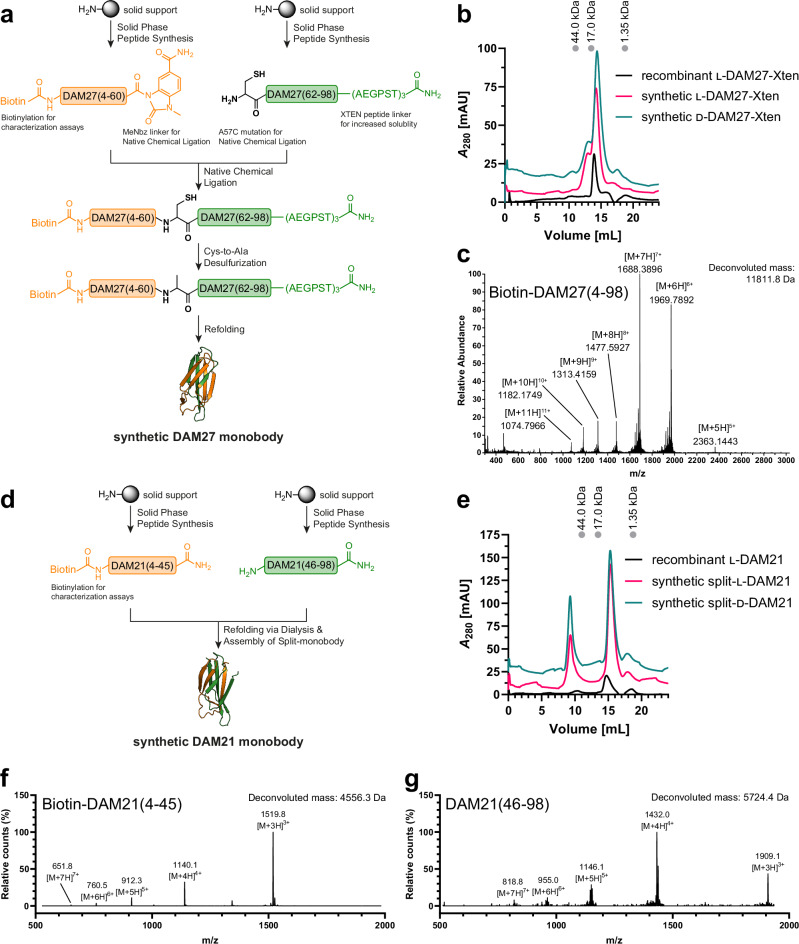
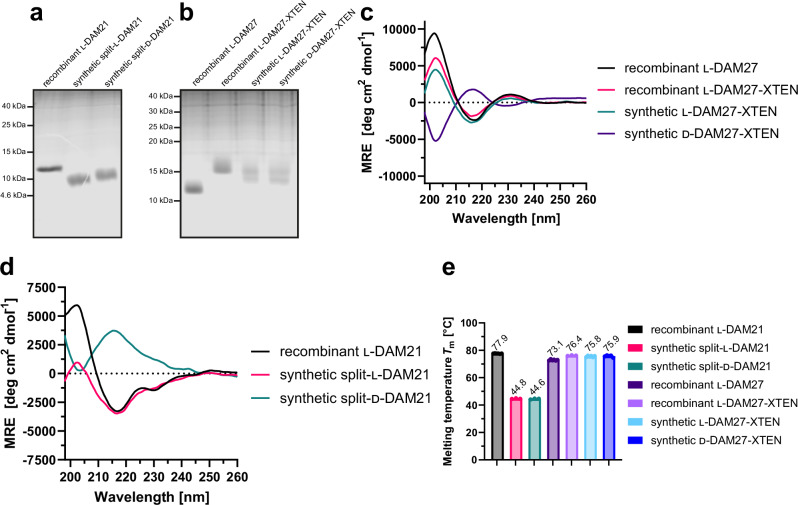
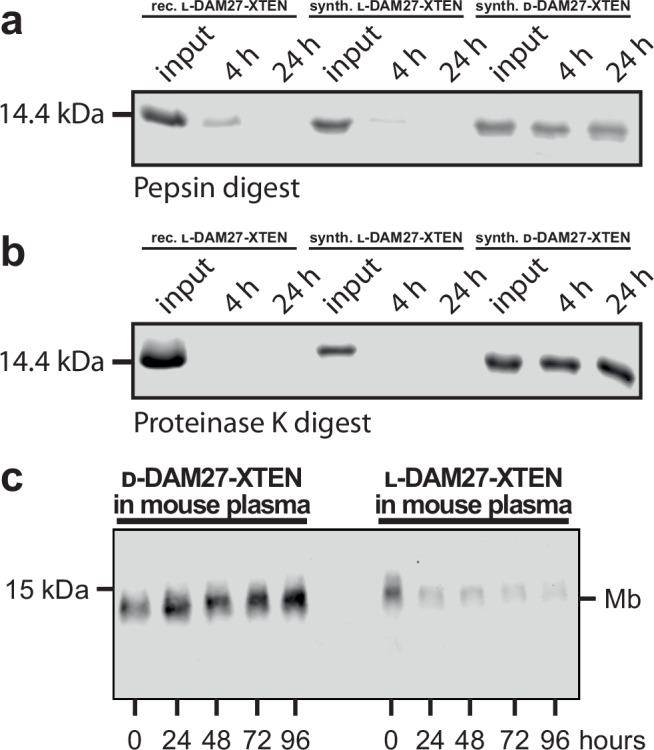
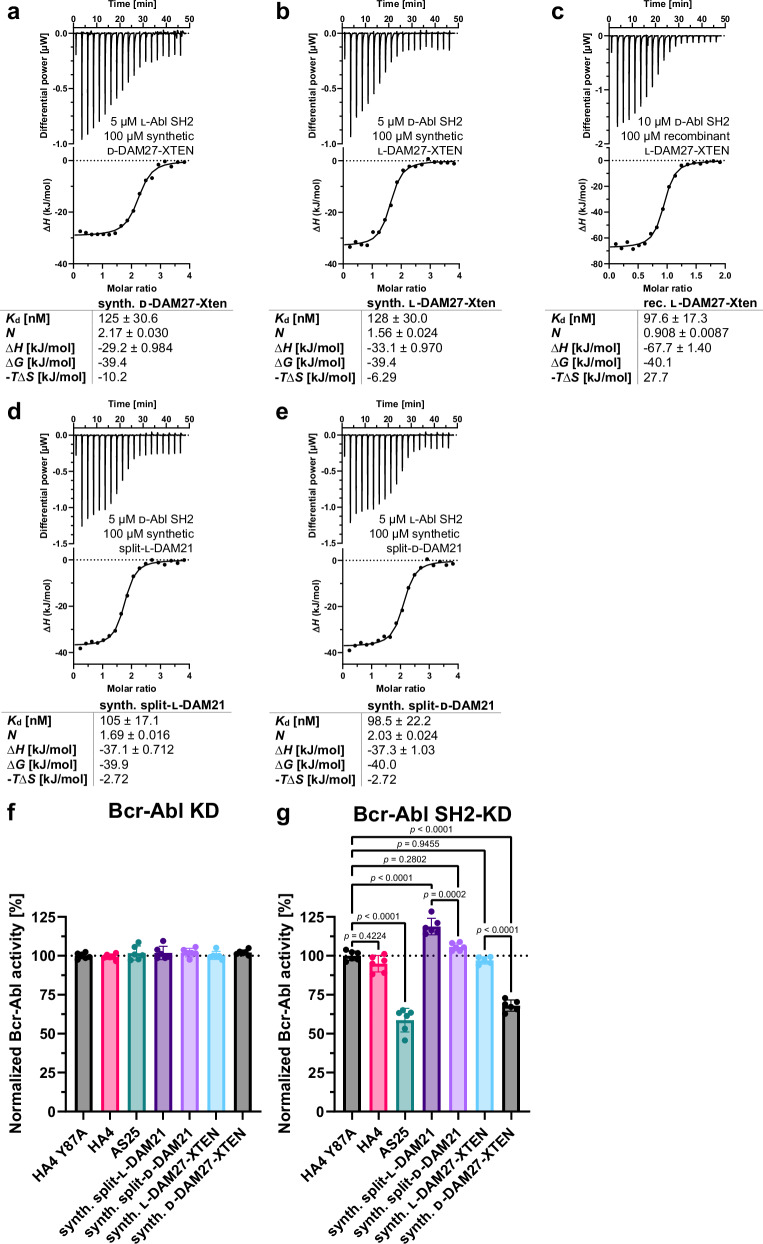
Mirror-image proteins, composed of D-amino acids, are an attractive therapeutic modality, as they exhibit high metabolic stability and lack immunogenicity. Development of mirror-image binding proteins is achieved through chemical synthesis of D-target proteins, phage display library selection of L-binders and chemical synthesis of (mirror-image) D-binders that consequently bind the physiological L-targets. Monobodies are well-established synthetic (L-)binding proteins and their small size (~90 residues) and lack of endogenous cysteine residues make them particularly accessible to chemical synthesis. Here, we develop monobodies with nanomolar binding affinities against the D-SH2 domain of the leukemic tyrosine kinase BCR::ABL1. Two crystal structures of heterochiral monobody-SH2 complexes reveal targeting of the pY binding pocket by an unconventional binding mode. We then prepare potent D-monobodies by either ligating two chemically synthesized D-peptides or by self-assembly without ligation. Their proper folding and stability are determined and high-affinity binding to the L-target is shown. D-monobodies are protease-resistant, show long-term plasma stability, inhibit BCR::ABL1 kinase activity and bind BCR::ABL1 in cell lysates and permeabilized cells. Hence, we demonstrate that functional D-monobodies can be developed readily. Our work represents an important step towards possible future therapeutic use of D-monobodies when combined with emerging methods to enable cytoplasmic delivery of monobodies.
由D-氨基酸组成的镜像蛋白是一种有吸引力的治疗方式,因为它们具有高代谢稳定性且缺乏免疫原性。镜像结合蛋白的开发是通过化学合成D-靶蛋白、噬菌体展示文库筛选L-结合蛋白以及化学合成(镜像)D-结合蛋白来实现的,这些D-结合蛋白随后能结合生理性L-靶标。单域抗体是成熟的合成(L-)结合蛋白,其小尺寸(约90个残基)和缺乏内源性半胱氨酸残基使其特别易于进行化学合成。在这里,我们开发了对白血病酪氨酸激酶BCR::ABL1的D-SH2结构域具有纳摩尔结合亲和力的单域抗体。异手性单域抗体-SH2复合物的两个晶体结构揭示了一种非常规结合模式对pY结合口袋的靶向作用。然后,我们通过连接两个化学合成的D-肽或通过无连接的自组装来制备有效的D-单域抗体。确定了它们的正确折叠和稳定性,并显示出对L-靶标的高亲和力结合。D-单域抗体具有蛋白酶抗性,显示出长期的血浆稳定性,抑制BCR::ABL1激酶活性,并在细胞裂解物和透化细胞中结合BCR::ABL1。因此,我们证明可以很容易地开发出功能性D-单域抗体。我们的工作代表了朝着未来可能将D-单域抗体与使单域抗体能够进行细胞质递送的新兴方法相结合用于治疗迈出的重要一步。