Zhang Lu, Ma Jiangping, Liu Xiaoqing, Jin Aiping, Wang Kai, Yin Xiaobing
Department of Nursing, Shanghai Tenth People's Hospital, Tongji University School of Medicine, Shanghai, China.
Tongji University School of Medicine, Shanghai, China.
J Neuroeng Rehabil. 2024 Dec 23;21(1):227. doi: 10.1186/s12984-024-01507-6.
Cognitive-motor dual-tasking training (CMDT) might improve limb function and motor performance in stroke patients. However, is there enough evidence to prove that it is more effective compared with conventional physical single-task training? This meta-analysis and Trial Sequential Analysis of randomized clinical trials (RCTs) aimed to evaluate the effectiveness of CMDT on balance and gait for treating hemiplegic stroke patients.
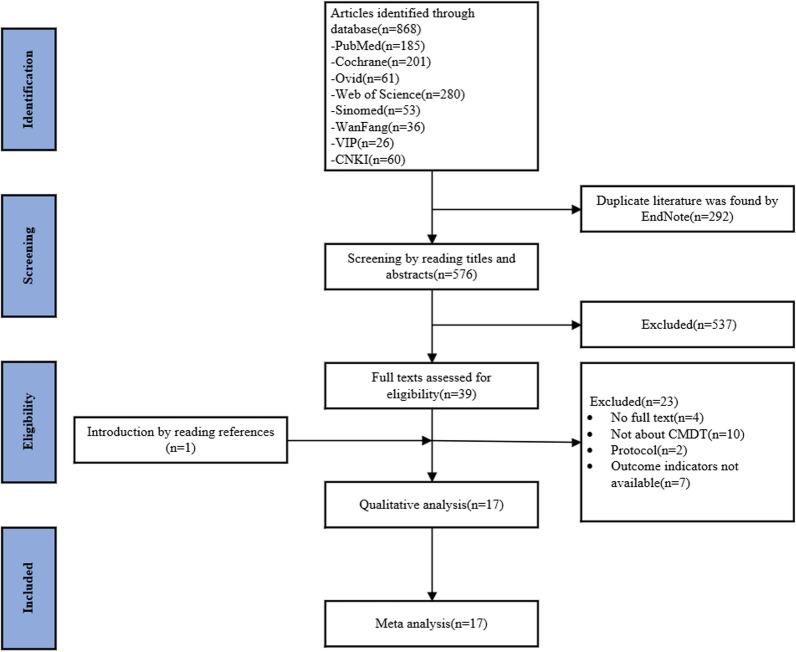
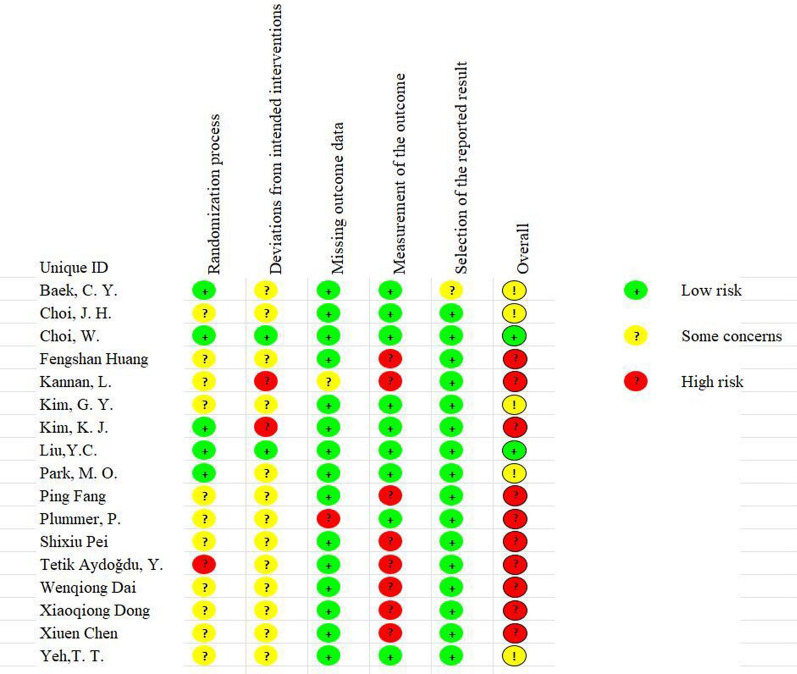
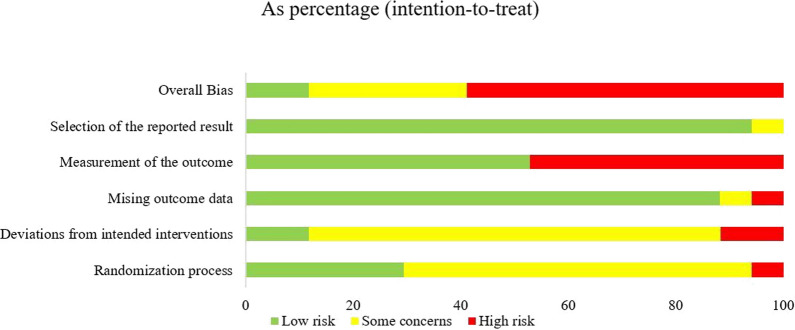
The databases were searched in PubMed, Web of Science, Ovid Database and The Cochrane Library, SinoMed database, Chinese National Knowledge Infrastructure (CNKI), Wan Fang database, and VIP database up to December 8, 2023. The Cochrane-recommended risk of bias (RoB) 2.0 tool was employed to assess risk of bias in trials. The statistical analysis was employed using R version 4.3.2. In addition, subgroup analyses and meta-regression were performed to explore the possible sources of heterogeneity. The evidence for each outcome was evaluated according to the Grading of Recommendations Assessment, Development, and Evaluation (GRADE) Working Group criteria. The Copenhagen Trial Unit's Trial Sequential Analysis (version 0.9.5.10 Beta) was used for sequential analysis.
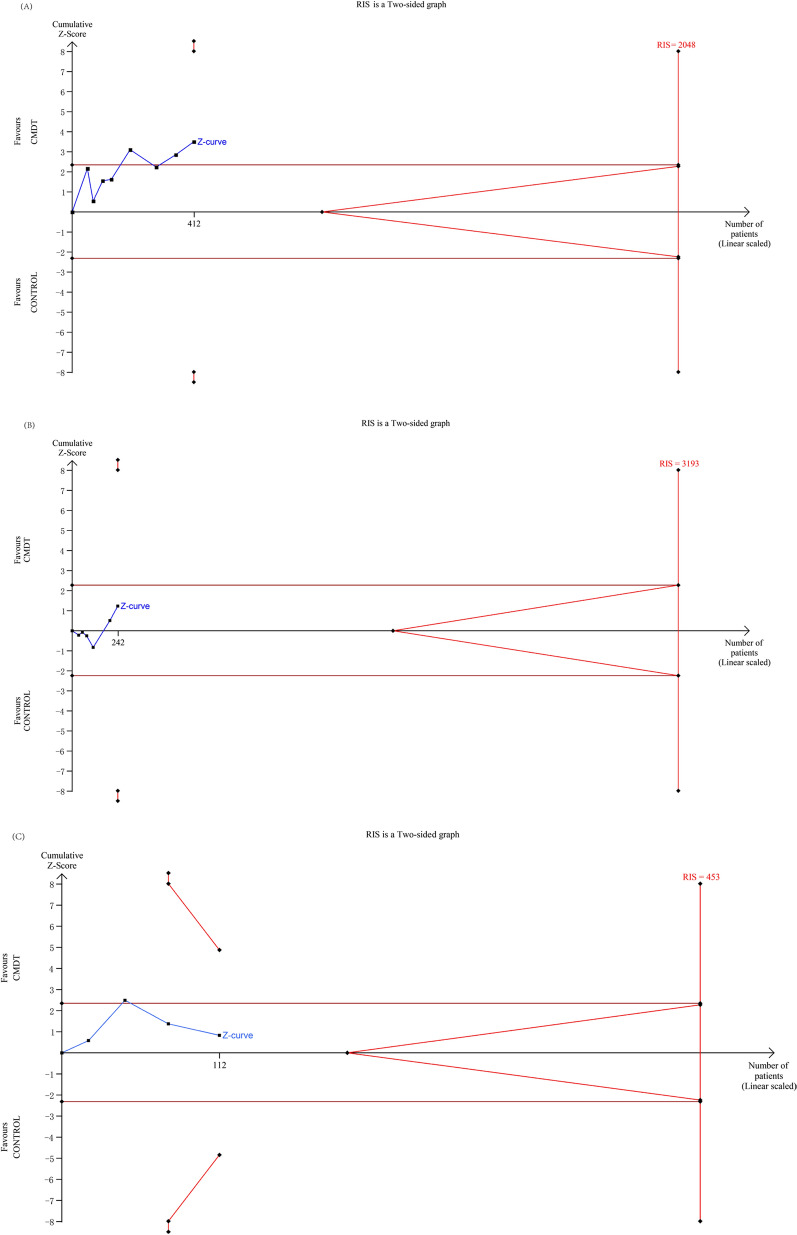
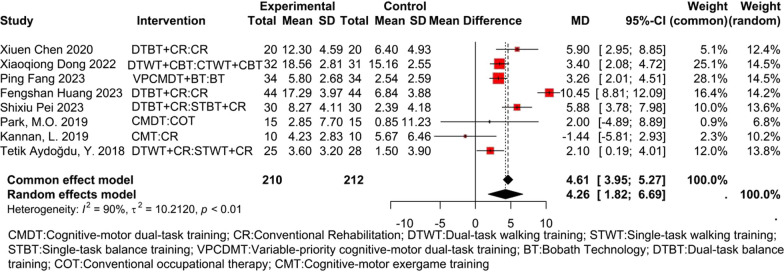
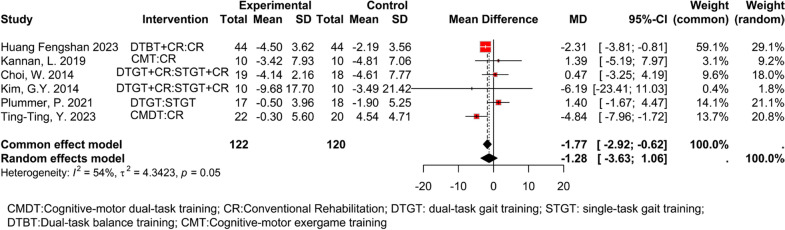
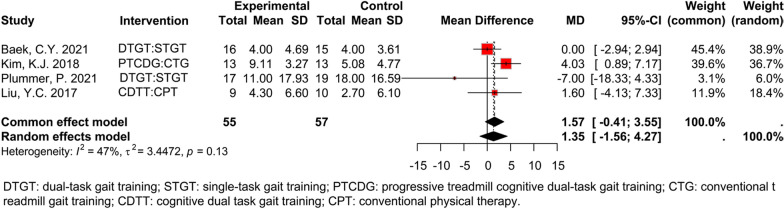
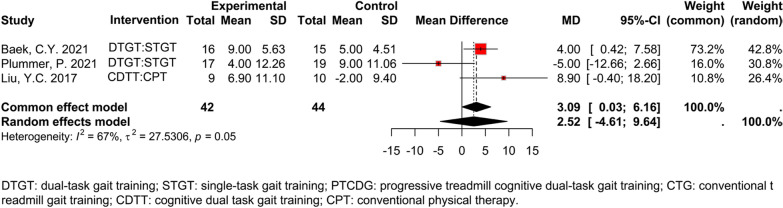
Seventeen randomized clinical trials (RCTs) (n = 751 patients) were included. The results demonstrated that cognitive-motor dual-task training (CMDT) might be beneficial on stroke patients on Berg Balance Scale (BBS) (MD = 4.26, 95% CI 1.82, 6.69, p < 0.0001) (low-quality evidence). However, CMDT might not affect Time Up and Go test (TUG) (MD = -1.28, 95% CI -3.63, 1.06, p = 0.284); and single-task walking speed (MD = 1.35, 95% CI -1.56, 4.27, p = 0.413) in stroke patients (low-quality evidence). The Grading of Recommendations Assessment, Development, and Evaluation (GRADE) results indicated that all findings were very low to low certainty. Trial Sequential Analyses demonstrated larger sample sizes are required for confirming our findings.
Cognitive-motor dual-task training (CMDT) compared with conventional physical single-task training might be an effective intervention for improving static balance function in stroke patients (low-quality evidence), which should be interpreted cautiously due to heterogeneity and potential biases. Nevertheless, further research is required to support the abovementioned findings. Trial Registration This protocol was registered in PROSPERO (CRD42023490530).
认知-运动双任务训练(CMDT)可能改善中风患者的肢体功能和运动表现。然而,是否有足够的证据证明它比传统的物理单任务训练更有效?这项随机临床试验(RCT)的荟萃分析和试验序贯分析旨在评估CMDT对偏瘫中风患者平衡和步态的有效性。
检索了截至2023年12月8日的PubMed、科学网、Ovid数据库、Cochrane图书馆、中国生物医学文献数据库、中国知网、万方数据库和维普数据库。采用Cochrane推荐的偏倚风险(RoB)2.0工具评估试验中的偏倚风险。使用R版本4.3.2进行统计分析。此外,进行亚组分析和meta回归以探索异质性的可能来源。根据推荐分级评估、制定和评价(GRADE)工作组标准评估每个结果的证据。使用哥本哈根试验单位的试验序贯分析(版本0.9.5.10 Beta)进行序贯分析。
纳入了17项随机临床试验(RCT)(n = 751例患者)。结果表明,认知-运动双任务训练(CMDT)可能对中风患者的伯格平衡量表(BBS)有益(MD = 4.26,95%CI 1.82,6.69,p < 0.0001)(低质量证据)。然而,CMDT可能不会影响中风患者的起立行走试验(TUG)(MD = -1.28,95%CI -3.63,1.06,p = 0.284);以及单任务步行速度(MD = 1.35,95%CI -1.56,4.27,p = 0.413)(低质量证据)。推荐分级评估、制定和评价(GRADE)结果表明,所有结果的确定性都非常低到低。试验序贯分析表明,需要更大的样本量来证实我们的发现。
与传统的物理单任务训练相比,认知-运动双任务训练(CMDT)可能是改善中风患者静态平衡功能的有效干预措施(低质量证据),由于存在异质性和潜在偏倚,应谨慎解释。尽管如此,仍需要进一步的研究来支持上述发现。试验注册本方案已在PROSPERO(CRD42023490530)注册。