Augustin Beulah, Wu Dongyuan, Black Lauren Page, Bertrand Andrew, Sulaiman Dawoud, Hopson Charlotte, Jacob Vinitha, Shavit Jordan A, Hofmaenner Daniel A, Labilloy Guillaume, Smith Leslie, Cagmat Emilio, Graim Kiley, Datta Susmita, Reddy Srinivasa T, Guirgis Faheem W
Department of Emergency Medicine, University of Florida College of Medicine, 1329 SW 16thStreet, Gainesville, FL, 32610, USA.
Department of Biostatistics, University of Florida, Gainesville, FL, USA.
Crit Care. 2024 Dec 24;28(1):431. doi: 10.1186/s13054-024-05216-3.
Lipids play a critical role in defense against sepsis. We sought to investigate gene expression and lipidomic patterns of lipid dysregulation in sepsis.
Data from four adult sepsis studies were analyzed and findings were investigated in two external datasets. Previously characterized lipid dysregulation subphenotypes of hypolipoprotein (HYPO; low lipoproteins, increased mortality) and normolipoprotein (NORMO; higher lipoproteins, lower mortality) were studied. Leukocytes collected within 24 h of sepsis underwent RNA sequencing (RNAseq) and shotgun plasma lipidomics was performed.
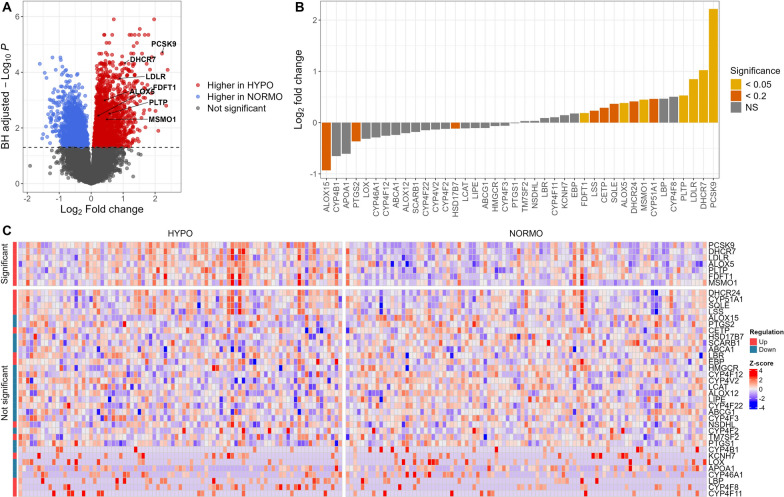
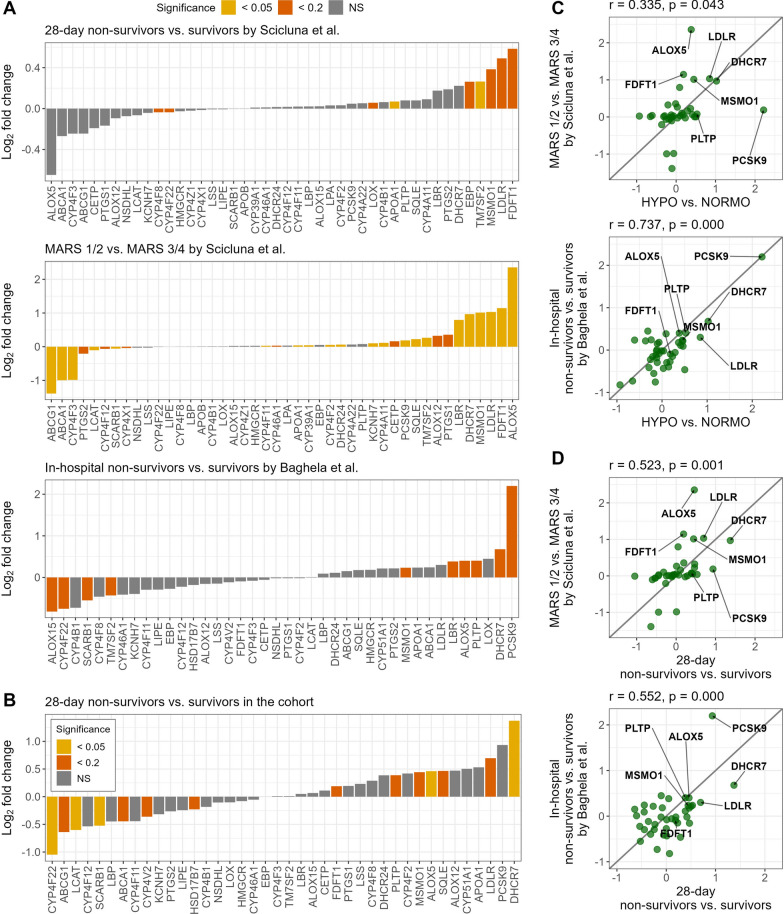
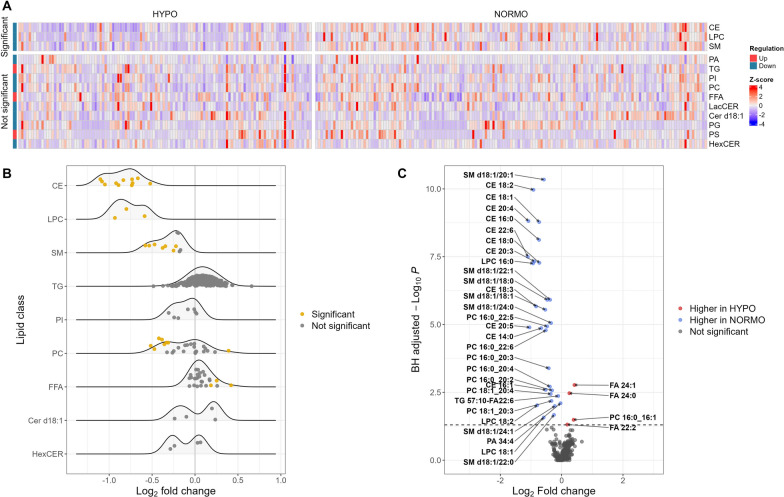
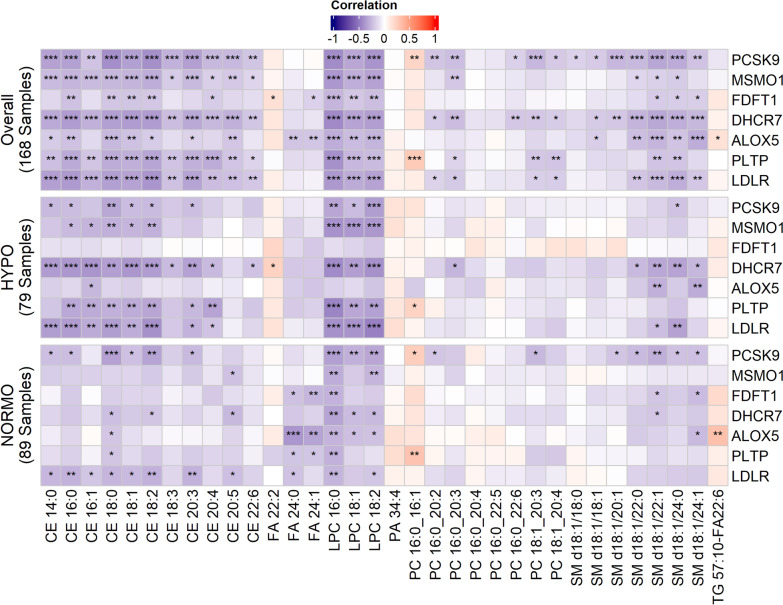
Of 288 included patients, 43% were HYPO and 57% were NORMO. HYPO patients exhibited higher median SOFA scores (9 vs 5, p = < 0.001), vasopressor use (67% vs 34%, p = < 0.001), and 28-day mortality (30% vs 16%, p = 0.004). Leukocyte RNAseq identified seven upregulated lipid metabolism genes in HYPO (PCSK9, DHCR7, LDLR, ALOX5, PLTP, FDFT1, and MSMO1) vs. NORMO patients. Lipidomics revealed lower cholesterol esters (CE, adjusted p = < 0.001), lysophosphatidylcholines (LPC, adjusted p = 0.001), and sphingomyelins (SM, adjusted p = < 0.001) in HYPO patients. In HYPO patients, DHCR7 expression strongly correlated with reductions in CE, LPC, and SM (p < 0.01), while PCSK9, MSMO1, DHCR7, PLTP, and LDLR upregulation were correlated with low LPC (p < 0.05). DHCR7, ALOX5, and LDLR correlated with reductions in SM (p < 0.05). Mortality and phenotype comparisons in two external datasets (N = 824 combined patients) corroborated six of the seven upregulated lipid genes (PCSK9, DHCR7, ALOX5, PLTP, LDLR, and MSMO1).
We identified a genetic lipid dysregulation signature characterized by seven lipid metabolism genes. Five genes in HYPO sepsis patients most strongly correlated with low CE, LPC, and SMs that mediate cholesterol storage and innate immunity.
脂质在脓毒症防御中起关键作用。我们试图研究脓毒症中脂质代谢失调的基因表达和脂质组学模式。
分析了来自四项成人脓毒症研究的数据,并在两个外部数据集中进行了研究。研究了先前已鉴定的低脂蛋白血症(HYPO;低脂蛋白,死亡率增加)和正常脂蛋白血症(NORMO;较高脂蛋白,较低死亡率)的脂质代谢失调亚表型。在脓毒症发生后24小时内收集的白细胞进行RNA测序(RNAseq),并进行鸟枪法血浆脂质组学分析。
在纳入的288例患者中,43%为HYPO,57%为NORMO。HYPO患者的SOFA评分中位数较高(9比5,p = <0.001),血管升压药使用比例较高(67%比34%,p = <0.001),28天死亡率较高(30%比16%,p = 0.004)。白细胞RNAseq鉴定出与NORMO患者相比,HYPO患者中有7个脂质代谢基因上调(PCSK9、DHCR7、LDLR、ALOX5、PLTP、FDFT1和MSMO1)。脂质组学显示HYPO患者的胆固醇酯(CE,校正p = <0.001)、溶血磷脂酰胆碱(LPC,校正p = 0.001)和鞘磷脂(SM,校正p = <0.001)含量较低。在HYPO患者中,DHCR7表达与CE、LPC和SM的降低密切相关(p <0.01),而PCSK9、MSMO1、DHCR7、PLTP和LDLR的上调与低LPC相关(p <0.05)。DHCR7、ALOX5和LDLR与SM的降低相关(p <0.05)。两个外部数据集(共824例患者)的死亡率和表型比较证实了七个上调的脂质基因中的六个(PCSK9、DHCR7、ALOX5、PLTP、LDLR和MSMO1)。
我们鉴定出一个以七个脂质代谢基因特征的遗传脂质代谢失调特征。HYPO脓毒症患者中的五个基因与介导胆固醇储存和先天免疫的低CE、LPC和SMs最密切相关。