Peng Hua-Bin, Liu Ying, Hou Fei, Zhao Shuang, Zhang Yi-Zhi, He Zhi-Ying, Liu Jing-Yi, Xiong Hao-Feng, Sun Li-Ying
Department of Critical Liver Diseases, Beijing Friendship Hospital, Capital Medical University, Beijing, People's Republic of China.
Laboratory for Clinical Medicine, Capital Medical University, Beijing, People's Republic of China.
Infect Drug Resist. 2024 Dec 19;17:5685-5698. doi: 10.2147/IDR.S483684. eCollection 2024.
To examine the clinical utility of metagenomic next-generation sequencing (mNGS) in individuals with early pulmonary infection following liver transplantation.
mNGS and traditional detection results were retrospectively collected from 99 patients with pulmonary infection within one week following liver transplantation. These patients were admitted to the Department of Critical Liver Diseases at Beijing Friendship Hospital from February 2022 to February 2024, along with their general clinical data.
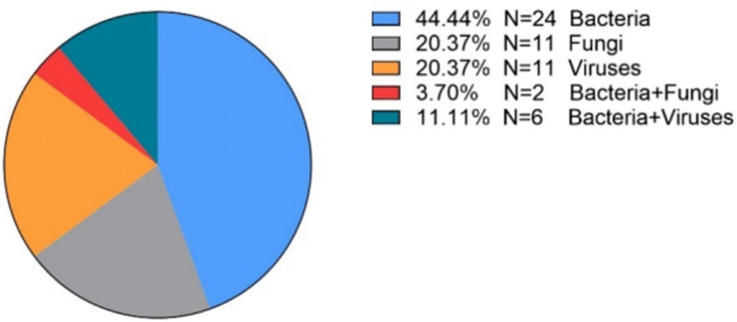
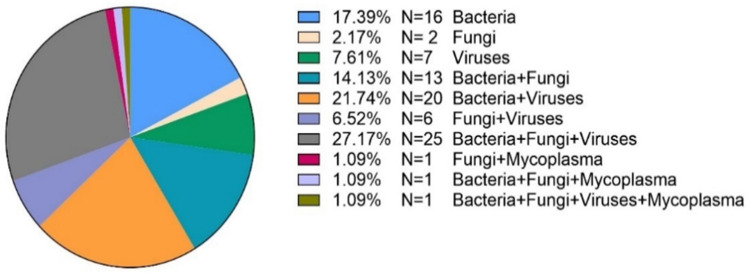
mNGS exhibited a significantly higher detection rate than traditional methods (92.93% vs 54.55%, P < 0.05) and was more effective in identifying mixed infections (67.68% vs 14.81%, P < 0.05). mNGS identified 303 pathogens in 92 patients, with , and human herpesvirus types 5 and 7 being the most prevalent bacteria, fungi, and viruses. A total of 26 positive cases were identified through traditional culture methods (sputum and bronchoalveolar lavage fluid), with 18 cases consistent with mNGS detection results, representing 69.23% consistency. Among the three drug-resistant bacteria that showed positivity in mNGS and traditional culture, the presence of drug-resistance genes- in in ; and and in reliably predicted drug-resistance phenotype. The treatment regimen for 76 of the 92 patients with positive mNGS relied on these results; 74 exhibited significant symptom improvement, yielding a 97.37% recovery rate. The overall prognosis was favorable.
mNGS offers rapid detection, a high positivity rate, insensitivity to antibiotics, and a superior ability to detect mixed infections in patients with early post-transplant pulmonary infections. Additionally, mNGS shows good consistency with traditional culture and can predict drug-resistant phenotypes to guide targeted antibiotic therapy for early-stage post-transplant pulmonary infection after liver transplantation. Patients whose antibiotic therapy is based on mNGS results have experienced decreased mortality rates and overall improved prognosis.
探讨宏基因组下一代测序(mNGS)在肝移植后早期肺部感染患者中的临床应用价值。
回顾性收集2022年2月至2024年2月在北京友谊医院重症肝病科住院的99例肝移植后1周内发生肺部感染患者的mNGS检测结果和传统检测结果,并收集其一般临床资料。
mNGS检测率显著高于传统方法(92.93%比54.55%,P<0.05),在识别混合感染方面更有效(67.68%比14.81%,P<0.05)。mNGS在92例患者中鉴定出303种病原体,其中 、人疱疹病毒5型和7型是最常见的细菌、真菌和病毒。通过传统培养方法(痰和支气管肺泡灌洗液)共鉴定出26例阳性病例,其中18例与mNGS检测结果一致,一致性为69.23%。在mNGS和传统培养均呈阳性的3种耐药菌中, 中的耐药基因 ; 中的 和 以及 中的 可靠地预测了耐药表型。92例mNGS阳性患者中有76例的治疗方案依赖于这些结果;74例症状明显改善,恢复率为97.37%。总体预后良好。
mNGS在肝移植后早期肺部感染患者中具有检测快速、阳性率高、对抗生素不敏感以及检测混合感染能力强等优势。此外,mNGS与传统培养具有良好的一致性,并且能够预测耐药表型,以指导肝移植后早期肺部感染的靶向抗生素治疗。基于mNGS结果进行抗生素治疗的患者死亡率降低,总体预后改善。