Galli Mauro, Liu Lillian Chia-Yi, Sim Kae Hwan, Kok Yee Jiun, Wongtrakul-Kish Katherine, Nguyen-Khuong Terry, Tate Stephen, Bi Xuezhi
Bioprocessing Technology Institute (BTI), Agency for Science, Technology and Research (A*STAR), 20 Biopolis Way, #06-01 Centros, Singapore, 138668, Singapore.
SCIEX, Concord, ON, Canada.
AMB Express. 2024 Dec 24;14(1):140. doi: 10.1186/s13568-024-01807-z.
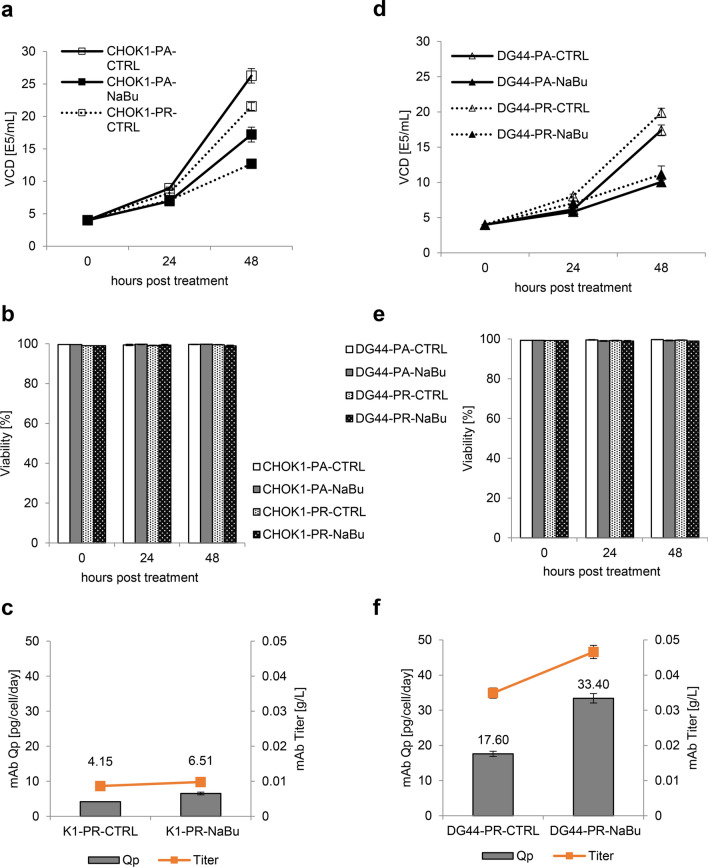
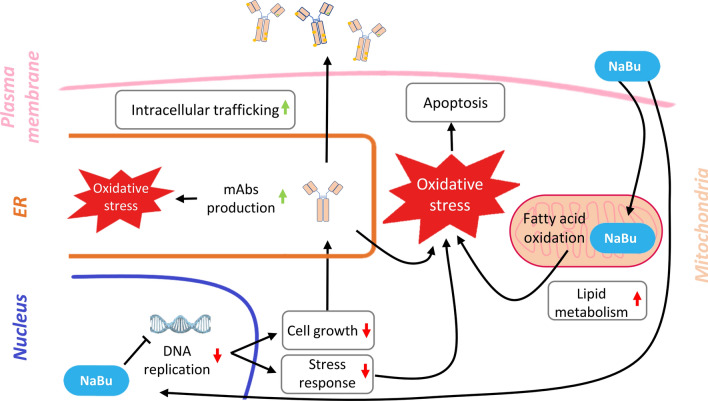
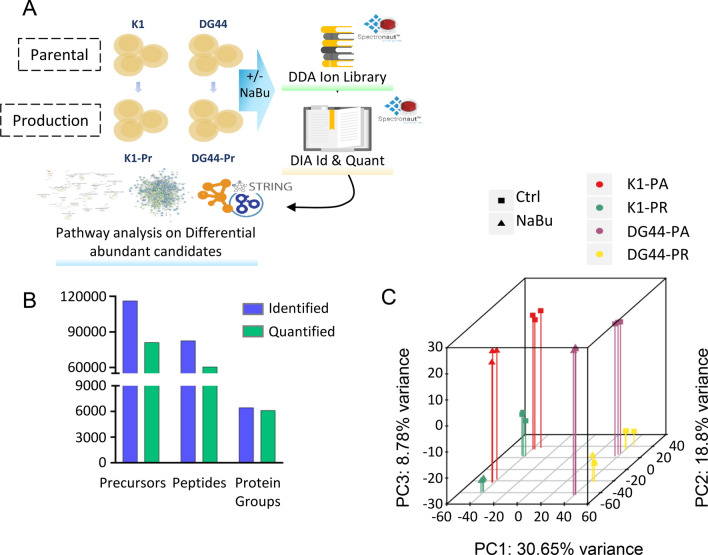
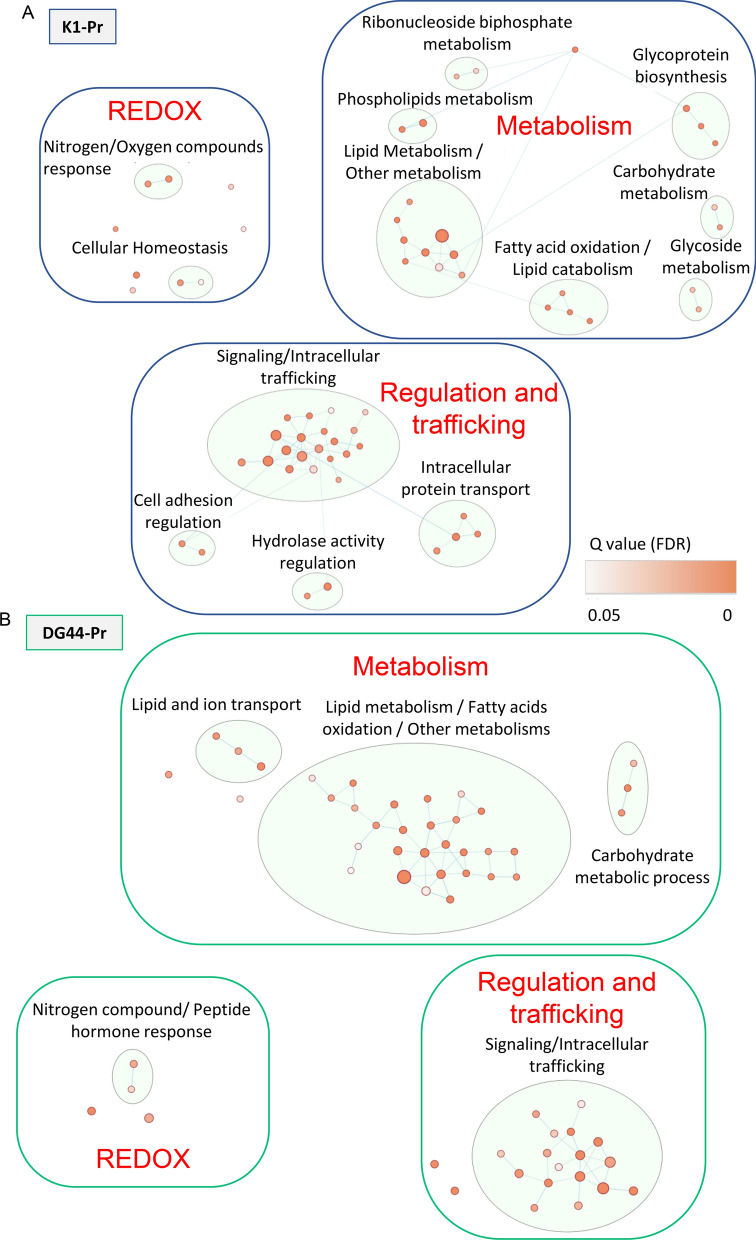
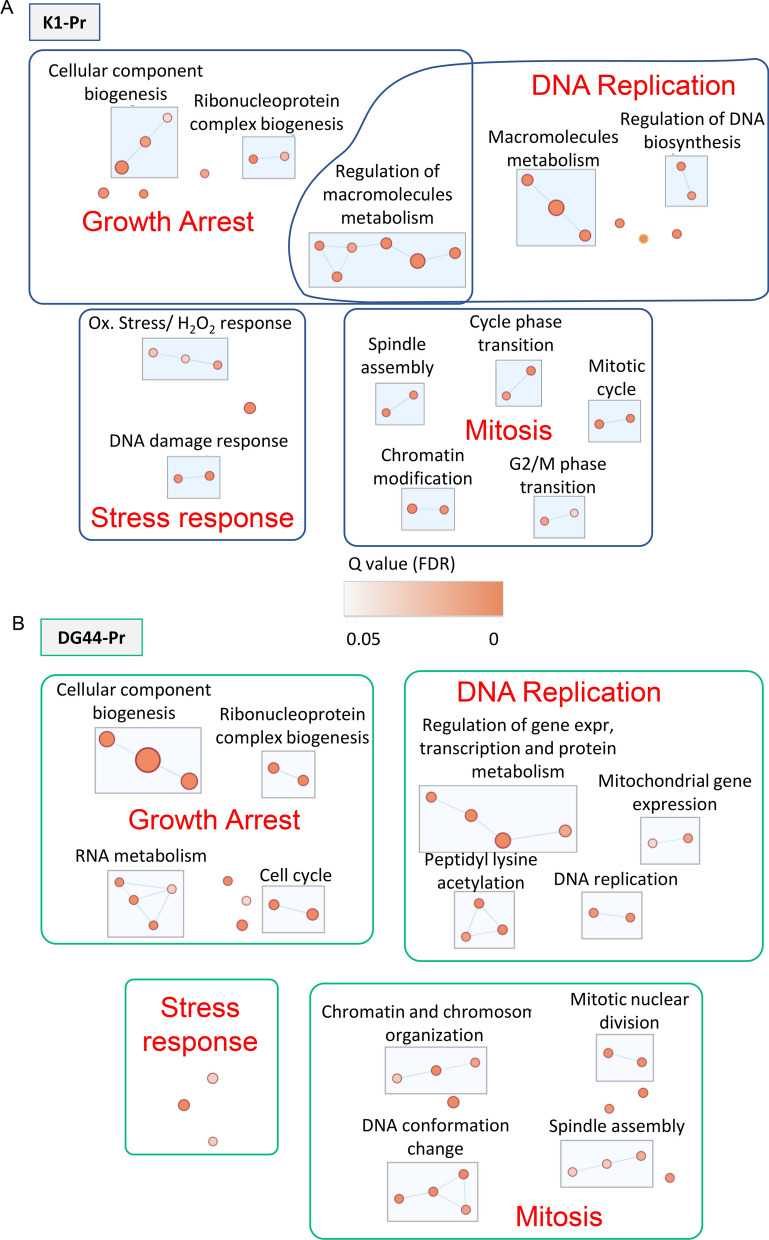
Sodium butyrate (NaBu), well-known as a histone deacetylase inhibitor and for its capacity to impede cell growth, can enhance the production of a specific protein, such as an antibody, in recombinant Chinese hamster ovary (CHO) cell cultures. In this study, two CHO cell lines, namely K1 and DG44, along with their corresponding mAb-producing lines, K1-Pr and DG44-Pr, were cultivated with or without NaBu. A SWATH-based profiling method was employed to analyze the proteome. Cells cultured in the presence of NaBu exhibited a reduction in mitosis and gene expression, supported by their culture data demonstrating growth inhibition. The presence of NaBu corresponded to upregulation of intracellular trafficking and secretion pathways, aligned with an observed increase in mAb production, and was associated with an elevated glycosylation pathway and a slight alteration in the glycosylation profile of the mAbs. Increased fatty acid oxidation, redox interactions, and lipid biosynthesis were also observed and are likely attributable to the metabolism of NaBu. A comprehensive understanding of the systemic effects of NaBu will facilitate the discovery of strategies to enhance or prolong the productivity of CHO cells.
丁酸钠(NaBu)作为一种组蛋白脱乙酰酶抑制剂,以其阻碍细胞生长的能力而闻名,它可以提高重组中国仓鼠卵巢(CHO)细胞培养物中特定蛋白质(如抗体)的产量。在本研究中,两种CHO细胞系,即K1和DG44,以及它们相应的产生单克隆抗体的细胞系K1-Pr和DG44-Pr,在添加或不添加NaBu的情况下进行培养。采用基于SWATH的分析方法对蛋白质组进行分析。在添加NaBu的情况下培养的细胞表现出有丝分裂和基因表达的减少,其培养数据表明生长受到抑制。NaBu的存在对应于细胞内运输和分泌途径的上调,这与观察到的单克隆抗体产量增加一致,并且与糖基化途径的增强以及单克隆抗体糖基化谱的轻微改变有关。还观察到脂肪酸氧化、氧化还原相互作用和脂质生物合成增加,这可能归因于NaBu的代谢。对NaBu的系统效应的全面了解将有助于发现提高或延长CHO细胞生产力的策略。