Osborne Augustus, Sesay Umaru, Tommy Alieu, Bai-Sesay Alpha Umaru, Bangura Camilla, Kangbai Jia B
Department of Biological Sciences, School of Basic Sciences, Njala University, PMB, Freetown, Sierra Leone.
Ministry of Health and Sanitation, Freetown, Sierra Leone.
BMC Infect Dis. 2024 Dec 24;24(1):1461. doi: 10.1186/s12879-024-10381-5.
Polio, a debeilitating and potentially life-threatening disease, continues to pose a risk to young children globally. While vaccination offers a powerful shield, its reach is not always equal. This study explores socioeconomic and geographical inequalities in polio immunisation coverage among two-year-olds in Sierra Leone between 2008 and 2019.
The study utilised data from the Sierra Leone Demographic Health Survey rounds conducted in 2008, 2013, and 2019 to examine polio immunization coverage among two-year-olds. The World Health Organisation Health Equity Assessment Toolkit software calculated various inequality measures, including simple difference, ratio, population-attributable risk, and population-attributable fraction. An inequality assessment was conducted for six stratifiers: maternal age, maternal economic status, maternal level of education, place of residence, sex of the child, and sub-national region.
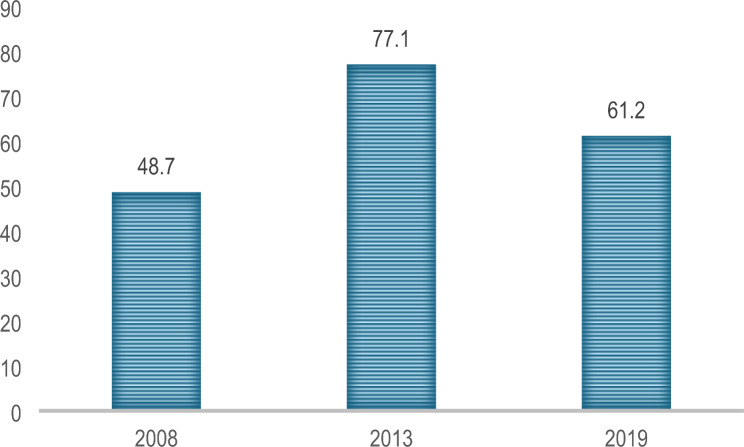
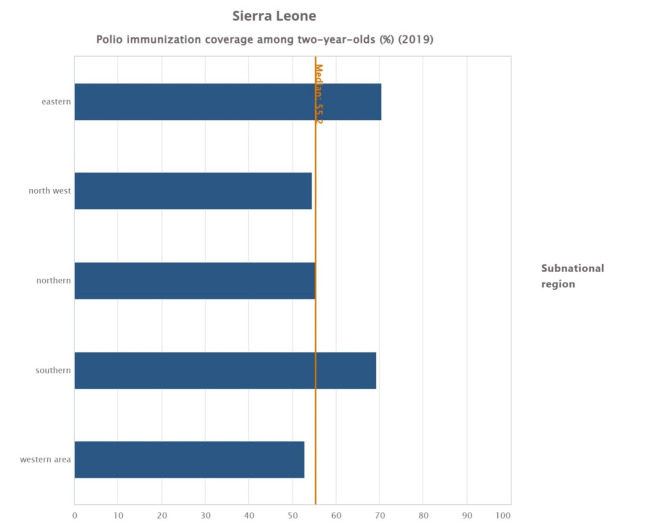
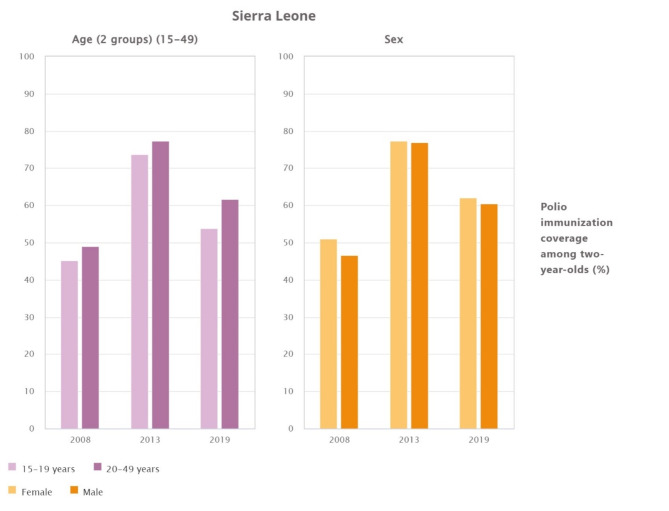
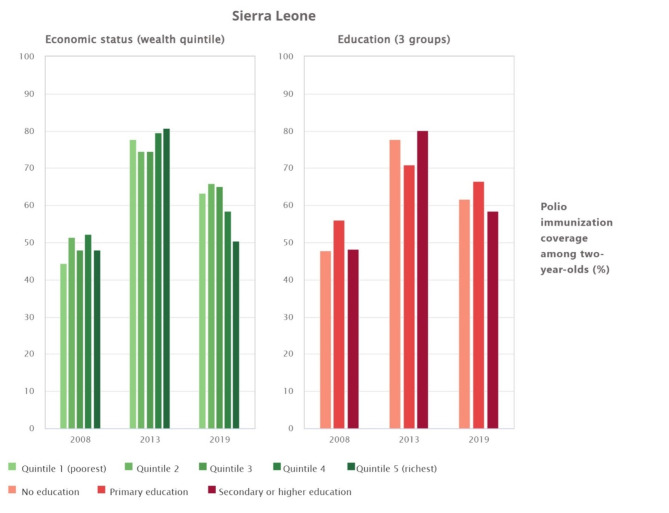
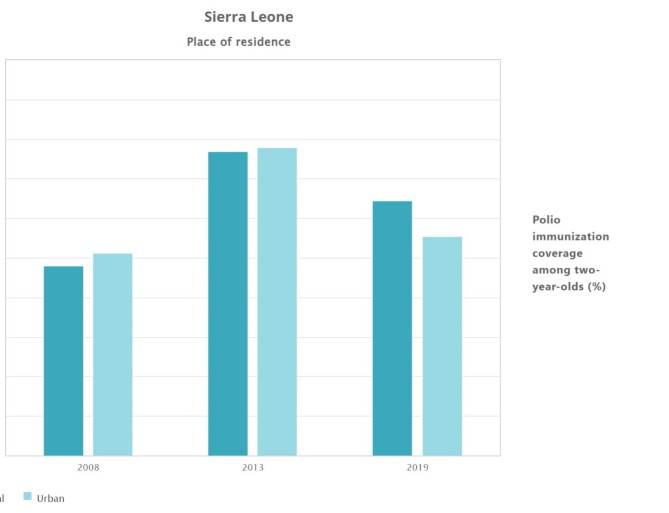
Polio immunization coverage among two-year-olds in Sierra Leone increased from 48.7% in 2008 to 77.1% in 2013, then declined to 61.2% in 2019. No significant inequalities were observed based on maternal age, child's sex or maternal educational level. Coverage was higher among children of mothers from the poorest households, and in rural areas. However, the main inequality identified was subnational inequality.
The initial increase in coverage followed by a decline underscores the need for sustained efforts to maintain and improve immunization rates, particularly in the Western, Northwestern, and Northern provinces, where significant subnational inequalities exist. The absence of disparities related to maternal age, child sex, and education suggests that traditional demographic factors may not be the primary barriers to immunization; instead, geographic and socioeconomic contexts play a more pivotal role. This indicates that targeted interventions should focus on improving access to vaccination services in underserved areas, potentially through community outreach and mobile vaccination units. Additionally, the better coverage among children of poorer mothers and those in rural areas highlights the importance of understanding local dynamics and leveraging community strengths to enhance immunization uptake.
脊髓灰质炎是一种使人衰弱且可能危及生命的疾病,在全球范围内仍对幼儿构成风险。虽然疫苗接种提供了强大的防护,但它的覆盖范围并不总是相同的。本研究探讨了2008年至2019年间塞拉利昂两岁儿童脊髓灰质炎免疫接种覆盖率方面的社会经济和地理不平等情况。
该研究利用了2008年、2013年和2019年进行的塞拉利昂人口与健康调查轮次的数据,以检查两岁儿童的脊髓灰质炎免疫接种覆盖率。世界卫生组织健康公平评估工具包软件计算了各种不平等指标,包括简单差异、比率、人群归因风险和人群归因分数。对六个分层因素进行了不平等评估:母亲年龄、母亲经济状况、母亲教育水平、居住地点、儿童性别和国家以下地区。
塞拉利昂两岁儿童的脊髓灰质炎免疫接种覆盖率从2008年的48.7%上升到2013年的77.1%,然后在2019年降至61.2%。在母亲年龄、儿童性别或母亲教育水平方面未观察到显著不平等。最贫困家庭母亲的孩子以及农村地区的孩子的覆盖率更高。然而,确定的主要不平等是国家以下地区的不平等。
覆盖率先上升后下降,这凸显了持续努力维持和提高免疫接种率的必要性,特别是在西部、西北部和北部省份,这些地区存在重大的国家以下地区不平等。与母亲年龄、儿童性别和教育无关的差异不存在,这表明传统人口因素可能不是免疫接种的主要障碍;相反,地理和社会经济背景起着更关键的作用。这表明有针对性的干预措施应侧重于改善服务不足地区的疫苗接种服务可及性,可能通过社区外展和流动疫苗接种单位来实现。此外,贫困母亲的孩子和农村地区孩子的覆盖率更高,这凸显了了解当地动态并利用社区优势来提高免疫接种率的重要性。