Petchiappan Anushya, Majdalani Nadim, Wall Erin, Gottesman Susan
Laboratory of Molecular Biology, Center for Cancer Research, National Cancer Institute, Bethesda, Maryland, United States of America.
PLoS Genet. 2024 Dec 26;20(12):e1011408. doi: 10.1371/journal.pgen.1011408. eCollection 2024 Dec.
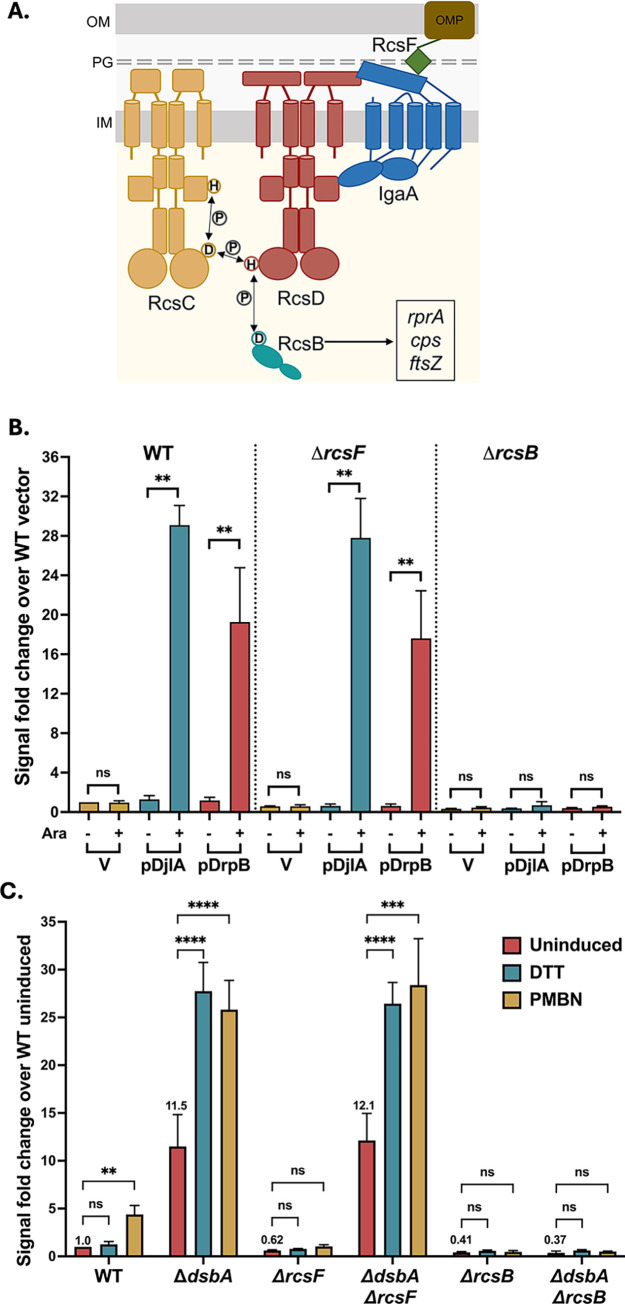
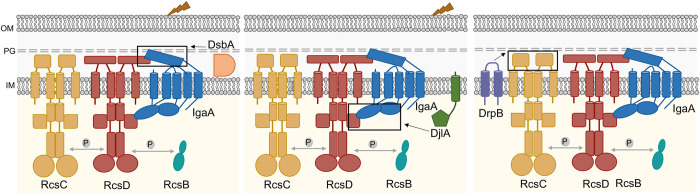
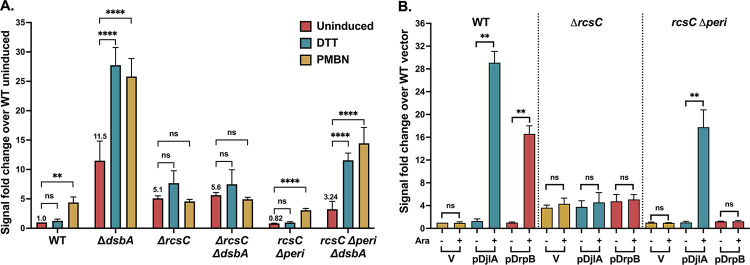
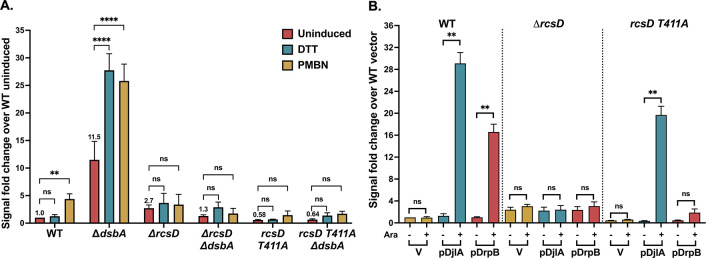
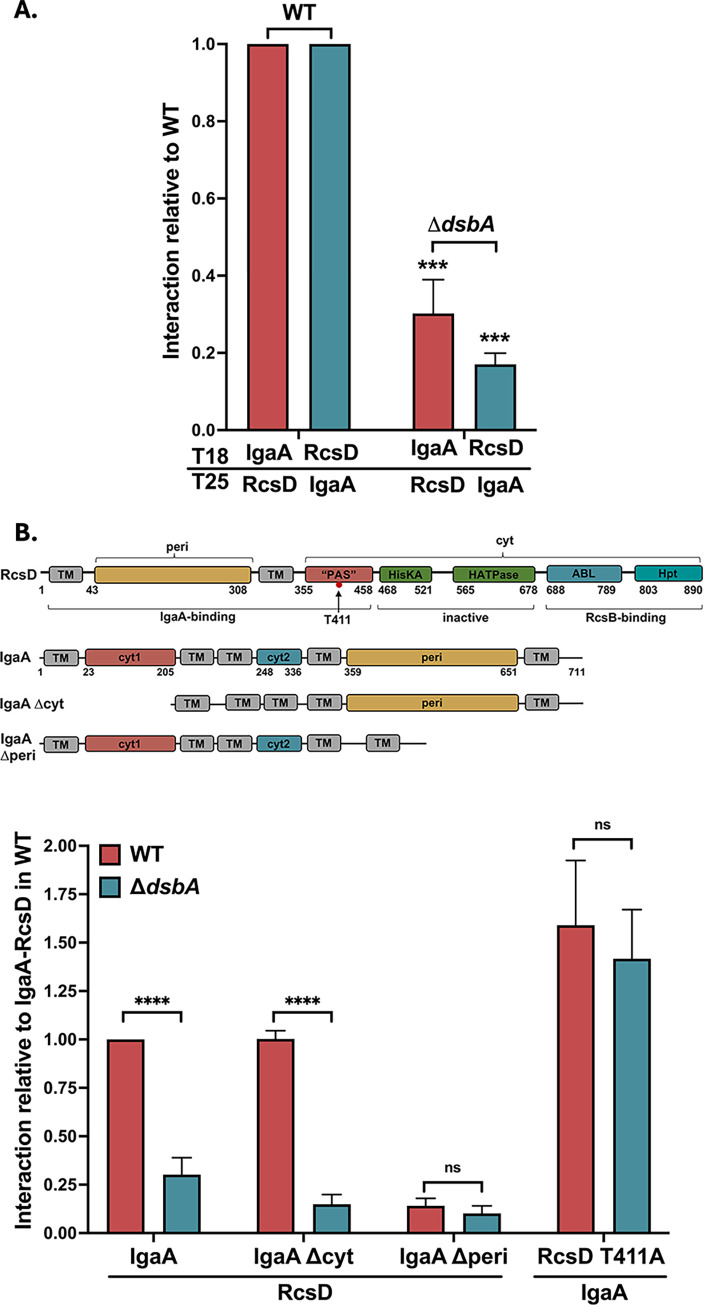
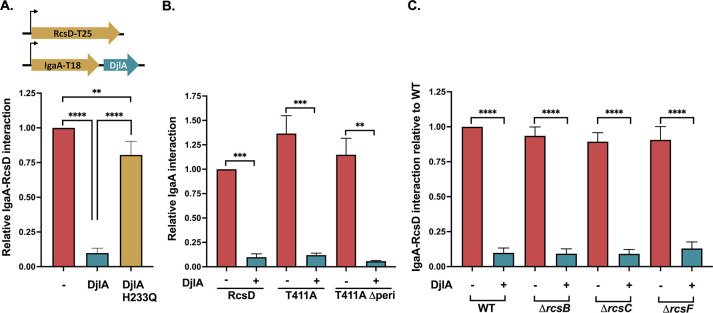
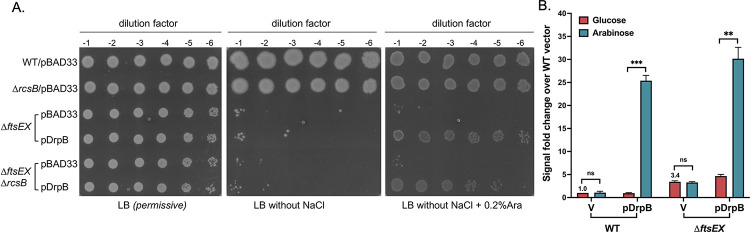
The Rcs (regulator of capsule synthesis) phosphorelay is a conserved cell envelope stress response mechanism in enterobacteria. It responds to perturbations at the cell surface and the peptidoglycan layer from a variety of sources, including antimicrobial peptides, beta-lactams, and changes in osmolarity. RcsF, an outer membrane lipoprotein, is the sensor for this pathway and activates the phosphorelay by interacting with an inner membrane protein IgaA. IgaA is essential; it negatively regulates the signaling by interacting with the phosphotransferase RcsD. We previously showed that RcsF-dependent signaling does not require the periplasmic domain of the histidine kinase RcsC and identified a dominant negative mutant of RcsD that can block signaling via increased interactions with IgaA. However, how the inducing signals are sensed and how signal is transduced to activate the transcription of the Rcs regulon remains unclear. In this study, we investigated how the Rcs cascade functions without its only known sensor, RcsF, and characterized the underlying mechanisms for three distinct RcsF-independent inducers. Previous reports showed that Rcs activity can be induced in the absence of RcsF by a loss of function mutation in the periplasmic oxidoreductase DsbA or by overexpression of the DnaK cochaperone DjlA. We identified an inner membrane protein, DrpB, as a multicopy RcsF-independent Rcs activator in E. coli. The loss of the periplasmic oxidoreductase DsbA and the overexpression of the DnaK cochaperone DjlA each trigger the Rcs cascade in the absence of RcsF by weakening IgaA-RcsD interactions in different ways. In contrast, the cell-division associated protein DrpB uniquely requires the RcsC periplasmic domain for activation; this domain is not needed for RcsF-dependent signaling. This suggests the possibility that the RcsC periplasmic domain acts as a sensor for some Rcs signals. Overall, the results add new understanding to how this complex phosphorelay can be activated by diverse mechanisms.
Rcs(荚膜合成调节因子)磷酸化信号转导途径是肠杆菌中一种保守的细胞包膜应激反应机制。它能对来自多种来源的细胞表面和肽聚糖层的干扰做出反应,这些来源包括抗菌肽、β-内酰胺以及渗透压的变化。外膜脂蛋白RcsF是该途径的传感器,通过与内膜蛋白IgaA相互作用来激活磷酸化信号转导途径。IgaA是必不可少的;它通过与磷酸转移酶RcsD相互作用来负向调节信号传导。我们之前表明,RcsF依赖性信号传导不需要组氨酸激酶RcsC的周质结构域,并鉴定出一种RcsD的显性负性突变体,它可以通过增加与IgaA的相互作用来阻断信号传导。然而,诱导信号是如何被感知的以及信号是如何转导以激活Rcs调节子的转录仍不清楚。在这项研究中,我们研究了Rcs级联在没有其唯一已知传感器RcsF的情况下是如何发挥作用的,并对三种不同的非RcsF依赖性诱导物的潜在机制进行了表征。先前的报道表明,在没有RcsF的情况下,周质氧化还原酶DsbA的功能丧失或DnaK辅助伴侣DjlA的过表达可以诱导Rcs活性。我们鉴定出一种内膜蛋白DrpB,它是大肠杆菌中一种多拷贝的非RcsF依赖性Rcs激活剂。周质氧化还原酶DsbA的缺失和DnaK辅助伴侣DjlA的过表达分别通过以不同方式削弱IgaA-RcsD相互作用,在没有RcsF的情况下触发Rcs级联反应。相比之下,与细胞分裂相关的蛋白DrpB独特地需要RcsC周质结构域来激活;该结构域对于RcsF依赖性信号传导不是必需的。这表明RcsC周质结构域可能作为某些Rcs信号的传感器。总体而言,这些结果为这个复杂的磷酸化信号转导途径如何通过多种机制被激活增添了新的认识。