Mashima Akifumi, Furutani Kenta, Baba Hiroshi
Department of Anesthesiology, Niigata University Medical and Dental Hospital, 1-754 Asahimachi-Dori, Chuo-Ku, Niigata, 951-8520, Japan.
JA Clin Rep. 2024 Dec 27;10(1):79. doi: 10.1186/s40981-024-00762-9.
Non-ketotic hyperglycinemia (NKH) is a rare autosomal recessive disorder caused by defects in the glycine cleavage system, leading to elevated glycine levels in the central nervous system. NKH manifests in various forms, with the neonatal type being the most severe and often associated with high mortality and significant neurological impairment. This case report highlights the successful uses of desflurane and nitrous oxide for anesthetic management in a patient with NKH.
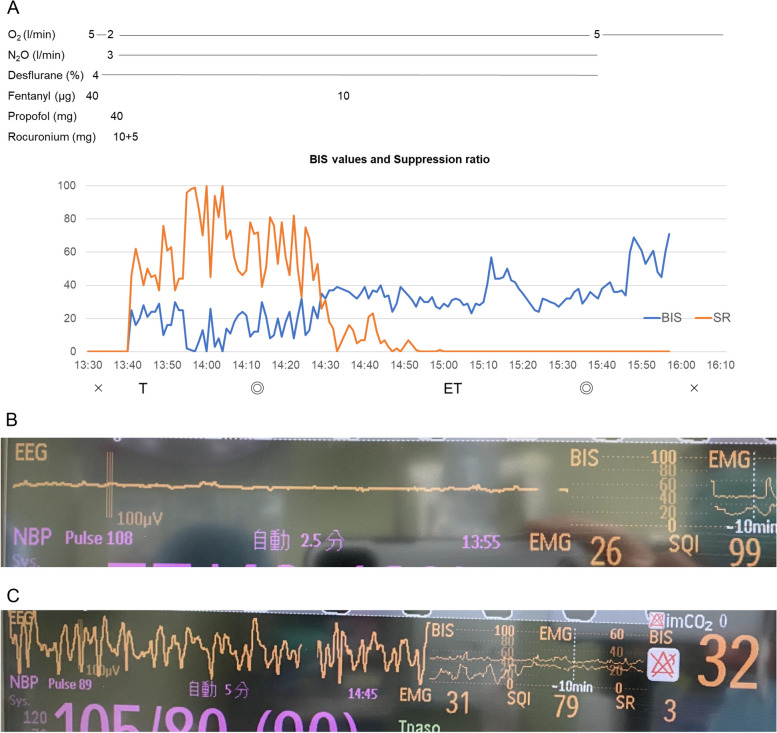
A 6-year-old girl with severe NKH, who had a history of delayed emergence from sevoflurane anesthesia, underwent tracheostomy for recurrent upper airway obstruction and severe obstructive sleep apnea. To address the previous issues with sevoflurane, general anesthesia was induced with propofol and fentanyl and maintained with 4% desflurane and 60% nitrous oxide. The electroencephalogram (EEG) showed near-complete suppression upon induction, which gradually resolved. Following cessation of desflurane and nitrous oxide, the patient exhibited early recovery, with eyes opening 3 min later and spontaneous breathing restored 19 min later. The patient experienced no postoperative complications and was discharged on the 14th postoperative day.
This case suggests that desflurane, with its favorable pharmacological profile, may offer a superior alternative to sevoflurane for anesthetic management in NKH patients, particularly those with a history of delayed emergence. The observed EEG suppression may indicate heightened sensitivity to anesthetics in NKH, highlighting the need for tailored anesthetic strategies in this population.
非酮症高甘氨酸血症(NKH)是一种罕见的常染色体隐性疾病,由甘氨酸裂解系统缺陷引起,导致中枢神经系统中甘氨酸水平升高。NKH有多种表现形式,其中新生儿型最为严重,常伴有高死亡率和严重的神经功能损害。本病例报告强调了地氟醚和氧化亚氮在一名NKH患者麻醉管理中的成功应用。
一名6岁重度NKH女孩,有七氟醚麻醉后苏醒延迟病史,因反复上呼吸道梗阻和严重阻塞性睡眠呼吸暂停接受了气管切开术。为解决先前七氟醚的问题,采用丙泊酚和芬太尼诱导全身麻醉,并用4%地氟醚和60%氧化亚氮维持。脑电图(EEG)在诱导时显示近乎完全抑制,随后逐渐恢复。停用七氟醚和氧化亚氮后,患者恢复较早,3分钟后睁眼,19分钟后恢复自主呼吸。患者无术后并发症,术后第14天出院。
本病例表明,地氟醚具有良好的药理学特性,对于NKH患者,尤其是有苏醒延迟病史的患者,可能是七氟醚麻醉管理的更好替代方案。观察到的脑电图抑制可能表明NKH患者对麻醉药的敏感性增加,突出了该人群需要量身定制的麻醉策略。