• 文献检索
  • 文档翻译
  • 深度研究
  • 学术资讯
  • Suppr Zotero 插件Zotero 插件
  • 邀请有礼
  • 套餐&价格
  • 历史记录
应用&插件
Suppr Zotero 插件Zotero 插件浏览器插件Mac 客户端Windows 客户端微信小程序
定价
高级版会员购买积分包购买API积分包
服务
文献检索文档翻译深度研究API 文档MCP 服务
关于我们
关于 Suppr公司介绍联系我们用户协议隐私条款
关注我们

Suppr 超能文献

核心技术专利:CN118964589B侵权必究
粤ICP备2023148730 号-1Suppr @ 2026

文献检索

告别复杂PubMed语法,用中文像聊天一样搜索,搜遍4000万医学文献。AI智能推荐,让科研检索更轻松。

立即免费搜索

文件翻译

保留排版,准确专业,支持PDF/Word/PPT等文件格式,支持 12+语言互译。

免费翻译文档

深度研究

AI帮你快速写综述,25分钟生成高质量综述,智能提取关键信息,辅助科研写作。

立即免费体验

通过人机应用中协作智能标准提高数据质量的路线图。

A roadmap for improving data quality through standards for collaborative intelligence in human-robot applications.

作者信息

Mehak Shakra, Ramos Inês F, Sagar Keerthi, Ramasubramanian Aswin, Kelleher John D, Guilfoyle Michael, Gianini Gabriele, Damiani Ernesto, Leva Maria Chiara

机构信息

Pilz Ireland Industrial Automation, Cork, Ireland.

School of Food Science and Environmental Health, Technological University Dublin, Dublin, Ireland.

出版信息

Front Robot AI. 2024 Dec 12;11:1434351. doi: 10.3389/frobt.2024.1434351. eCollection 2024.

DOI:10.3389/frobt.2024.1434351
PMID:39726729
原文链接:https://pmc.ncbi.nlm.nih.gov/articles/PMC11669550/
Abstract

Collaborative intelligence (CI) involves human-machine interactions and is deemed safety-critical because their reliable interactions are crucial in preventing severe injuries and environmental damage. As these applications become increasingly data-driven, the reliability of CI applications depends on the quality of data, shaping the system's ability to interpret and respond in diverse and often unpredictable environments. In this regard, it is important to adhere to data quality standards and guidelines, thus facilitating the advancement of these collaborative systems in industry. This study presents the challenges of data quality in CI applications within industrial environments, with two use cases that focus on the collection of data in Human-Robot Interaction (HRI). The first use case involves a framework for quantifying human and robot performance within the context of naturalistic robot learning, wherein humans teach robots using intuitive programming methods within the domain of HRI. The second use case presents real-time user state monitoring for adaptive multi-modal teleoperation, that allows for a dynamic adaptation of the system's interface, interaction modality and automation level based on user needs. The article proposes a hybrid standardization derived from established data quality-related ISO standards and addresses the unique challenges associated with multi-modal HRI data acquisition. The use cases presented in this study were carried out as part of an EU-funded project, Collaborative Intelligence for Safety-Critical Systems (CISC).

摘要

协作智能(CI)涉及人机交互,因其可靠的交互对于防止严重伤害和环境破坏至关重要,所以被视为安全关键型。随着这些应用越来越以数据为驱动,CI应用的可靠性取决于数据质量,这决定了系统在多样且往往不可预测的环境中进行解释和响应的能力。在这方面,遵守数据质量标准和指南很重要,从而推动这些协作系统在行业中的发展。本研究呈现了工业环境中CI应用的数据质量挑战,并通过两个用例聚焦于人机交互(HRI)中的数据收集。第一个用例涉及一个在自然主义机器人学习背景下量化人类和机器人性能的框架,其中人类在HRI领域使用直观编程方法教导机器人。第二个用例展示了用于自适应多模态远程操作的实时用户状态监测,它允许根据用户需求动态调整系统的界面、交互方式和自动化水平。本文提出了一种源自既定数据质量相关ISO标准的混合标准化方法,并解决了与多模态HRI数据采集相关的独特挑战。本研究中呈现的用例是作为欧盟资助项目“安全关键系统协作智能”(CISC)的一部分开展的。
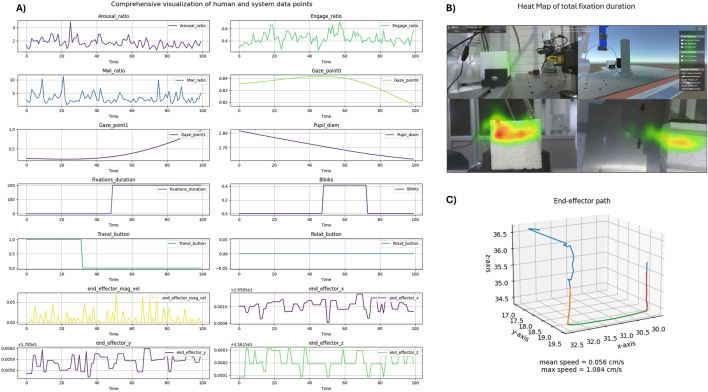
https://cdn.ncbi.nlm.nih.gov/pmc/blobs/7b8d/11669550/9081276c15ea/frobt-11-1434351-g005.jpg
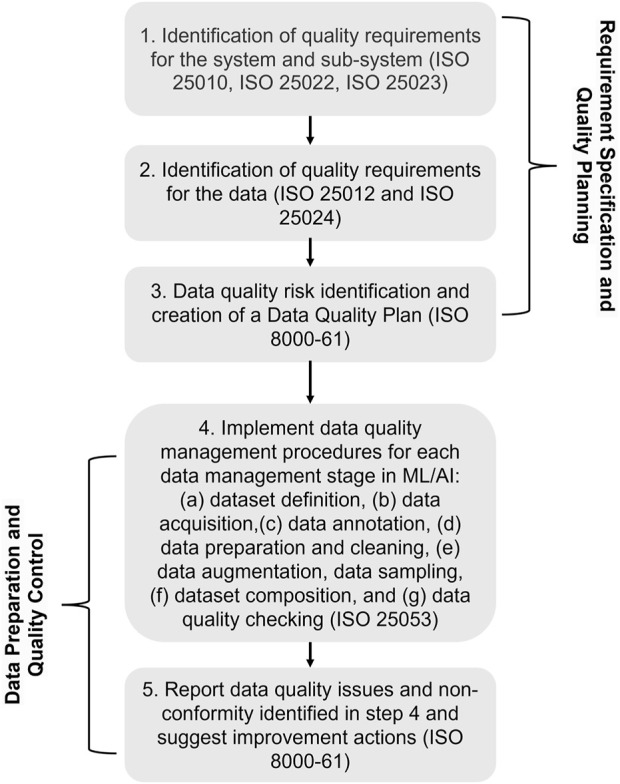
https://cdn.ncbi.nlm.nih.gov/pmc/blobs/7b8d/11669550/01f9e761dcbf/frobt-11-1434351-g001.jpg
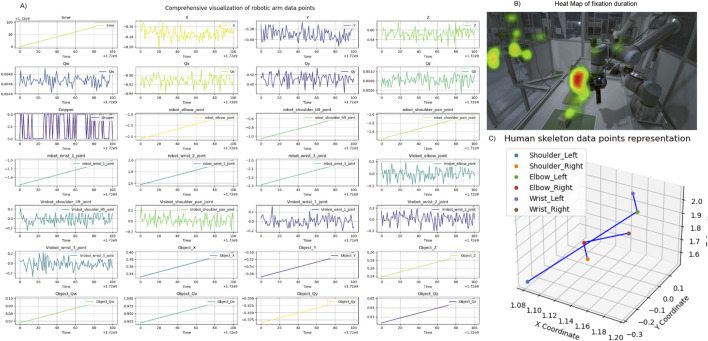
https://cdn.ncbi.nlm.nih.gov/pmc/blobs/7b8d/11669550/3bd9f5ac626d/frobt-11-1434351-g002.jpg
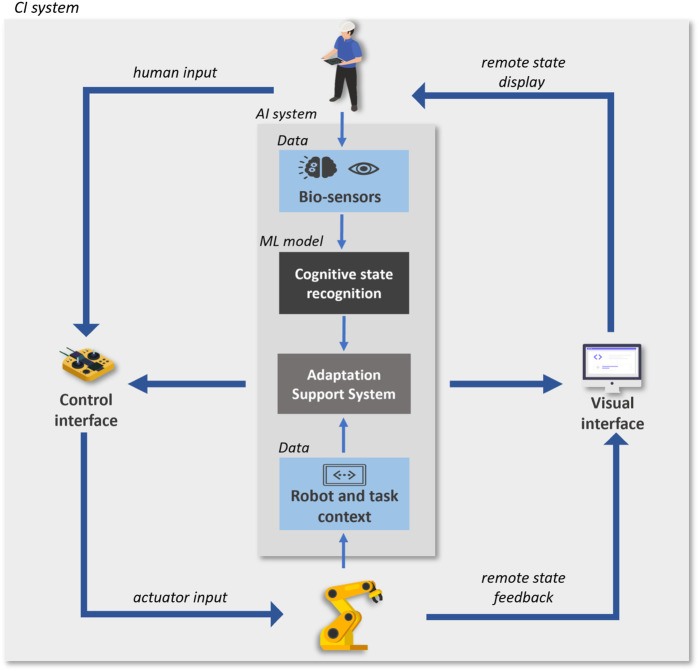
https://cdn.ncbi.nlm.nih.gov/pmc/blobs/7b8d/11669550/c426cb1f7f28/frobt-11-1434351-g003.jpg
https://cdn.ncbi.nlm.nih.gov/pmc/blobs/7b8d/11669550/f6fd32f31816/frobt-11-1434351-g004.jpg
https://cdn.ncbi.nlm.nih.gov/pmc/blobs/7b8d/11669550/9081276c15ea/frobt-11-1434351-g005.jpg
https://cdn.ncbi.nlm.nih.gov/pmc/blobs/7b8d/11669550/01f9e761dcbf/frobt-11-1434351-g001.jpg
https://cdn.ncbi.nlm.nih.gov/pmc/blobs/7b8d/11669550/3bd9f5ac626d/frobt-11-1434351-g002.jpg
https://cdn.ncbi.nlm.nih.gov/pmc/blobs/7b8d/11669550/c426cb1f7f28/frobt-11-1434351-g003.jpg
https://cdn.ncbi.nlm.nih.gov/pmc/blobs/7b8d/11669550/f6fd32f31816/frobt-11-1434351-g004.jpg
https://cdn.ncbi.nlm.nih.gov/pmc/blobs/7b8d/11669550/9081276c15ea/frobt-11-1434351-g005.jpg

相似文献

1
A roadmap for improving data quality through standards for collaborative intelligence in human-robot applications.通过人机应用中协作智能标准提高数据质量的路线图。
Front Robot AI. 2024 Dec 12;11:1434351. doi: 10.3389/frobt.2024.1434351. eCollection 2024.
2
Teleoperator-Robot-Human Interaction in Manufacturing: Perspectives from Industry, Robot Manufacturers, and Researchers.制造中的遥操作机器人-人类交互:来自工业界、机器人制造商和研究人员的观点。
IISE Trans Occup Ergon Hum Factors. 2024 Jan-Jun;12(1-2):28-40. doi: 10.1080/24725838.2024.2310301. Epub 2024 Feb 8.
3
Human-Robot Perception in Industrial Environments: A Survey.工业环境中的人机感知:调查研究。
Sensors (Basel). 2021 Feb 24;21(5):1571. doi: 10.3390/s21051571.
4
Toward a framework for levels of robot autonomy in human-robot interaction.迈向人机交互中机器人自主水平的框架。
J Hum Robot Interact. 2014 Jul;3(2):74-99. doi: 10.5898/JHRI.3.2.Beer.
5
Human-Robot Interaction: Status and Challenges.人机交互:现状与挑战。
Hum Factors. 2016 Jun;58(4):525-32. doi: 10.1177/0018720816644364. Epub 2016 Apr 20.
6
Towards a Safe Human-Robot Collaboration Using Information on Human Worker Activity.迈向安全的人机协作:利用人类工人活动信息。
Sensors (Basel). 2023 Jan 22;23(3):1283. doi: 10.3390/s23031283.
7
Integration of Tracking, Re-Identification, and Gesture Recognition for Facilitating Human-Robot Interaction.用于促进人机交互的跟踪、重新识别和手势识别的集成。
Sensors (Basel). 2024 Jul 25;24(15):4850. doi: 10.3390/s24154850.
8
Socially intelligent robots: dimensions of human-robot interaction.具备社交智能的机器人:人机交互的维度
Philos Trans R Soc Lond B Biol Sci. 2007 Apr 29;362(1480):679-704. doi: 10.1098/rstb.2006.2004.
9
Digital Twin for Human-Robot Interactions by Means of Industry 4.0 Enabling Technologies.数字孪生在人机交互中的应用研究——基于工业 4.0 使能技术
Sensors (Basel). 2022 Jun 30;22(13):4950. doi: 10.3390/s22134950.
10
CARE: towards customized assistive robot-based education.关爱:迈向基于定制辅助机器人的教育
Front Robot AI. 2025 Feb 21;12:1474741. doi: 10.3389/frobt.2025.1474741. eCollection 2025.

引用本文的文献

1
Collaborative Intelligence in Metabolic and Bariatric Surgery: Integrating Human Expertise and Artificial Intelligence for Better Outcomes.代谢与减重手术中的协作智能:整合人类专业知识与人工智能以实现更好的治疗效果。
Obes Surg. 2025 Jun 24. doi: 10.1007/s11695-025-07999-y.

本文引用的文献

1
Physiological data for affective computing in HRI with anthropomorphic service robots: the AFFECT-HRI data set.用于拟人服务机器人的 HRI 中的情感计算的生理数据:AFFECT-HRI 数据集。
Sci Data. 2024 Apr 4;11(1):333. doi: 10.1038/s41597-024-03128-z.
2
Trustworthy artificial intelligence and the European Union AI act: On the conflation of trustworthiness and acceptability of risk.可信人工智能与欧盟人工智能法案:论可信度与风险可接受性的 conflation(此处conflation可结合语境意译为“混淆”等,因无更多背景较难准确翻译,保留英文供进一步理解)
Regul Gov. 2024 Jan;18(1):3-32. doi: 10.1111/rego.12512. Epub 2023 Feb 6.
3
A Survey of Data Quality Measurement and Monitoring Tools.
数据质量测量与监测工具调查
Front Big Data. 2022 Mar 31;5:850611. doi: 10.3389/fdata.2022.850611. eCollection 2022.
4
A Cooperative Shared Control Scheme Based on Intention Recognition for Flexible Assembly Manufacturing.一种基于意图识别的柔性装配制造协同共享控制方案。
Front Neurorobot. 2022 Mar 16;16:850211. doi: 10.3389/fnbot.2022.850211. eCollection 2022.
5
Coordinating Shared Tasks in Human-Robot Collaboration by Commands.通过指令协调人机协作中的共享任务。
Front Robot AI. 2021 Oct 19;8:734548. doi: 10.3389/frobt.2021.734548. eCollection 2021.
6
Review of Eye Tracking Metrics Involved in Emotional and Cognitive Processes.眼动追踪指标在情感和认知过程中的研究综述。
IEEE Rev Biomed Eng. 2023;16:260-277. doi: 10.1109/RBME.2021.3066072. Epub 2023 Jan 5.
7
Errors in Human-Robot Interactions and Their Effects on Robot Learning.人机交互中的错误及其对机器人学习的影响。
Front Robot AI. 2020 Oct 15;7:558531. doi: 10.3389/frobt.2020.558531. eCollection 2020.
8
An Artificial Intelligence-Based Collaboration Approach in Industrial IoT Manufacturing: Key Concepts, Architectural Extensions and Potential Applications.基于人工智能的工业物联网制造协作方法:关键概念、架构扩展和潜在应用。
Sensors (Basel). 2020 Sep 24;20(19):5480. doi: 10.3390/s20195480.
9
A Neuroergonomics Approach to Mental Workload, Engagement and Human Performance.一种针对心理负荷、参与度和人类绩效的神经工效学方法。
Front Neurosci. 2020 Apr 7;14:268. doi: 10.3389/fnins.2020.00268. eCollection 2020.
10
A Human⁻Machine Interface Based on Eye Tracking for Controlling and Monitoring a Smart Home Using the Internet of Things.基于眼动追踪的人机界面,用于通过物联网控制和监测智能家居。
Sensors (Basel). 2019 Feb 19;19(4):859. doi: 10.3390/s19040859.