Ebrahimi Rasoul, Farsi Yeganeh, Nejadghaderi Seyed Aria
School of Medicine, Shahid Beheshti University of Medical Sciences, Tehran, Iran.
HIV/STI Surveillance Research Center, and WHO Collaborating Center for HIV Surveillance, Institute for Futures Studies in Health, Kerman University of Medical Sciences, Kerman, Iran.
Curr Res Microb Sci. 2024 Nov 13;7:100314. doi: 10.1016/j.crmicr.2024.100314. eCollection 2024.
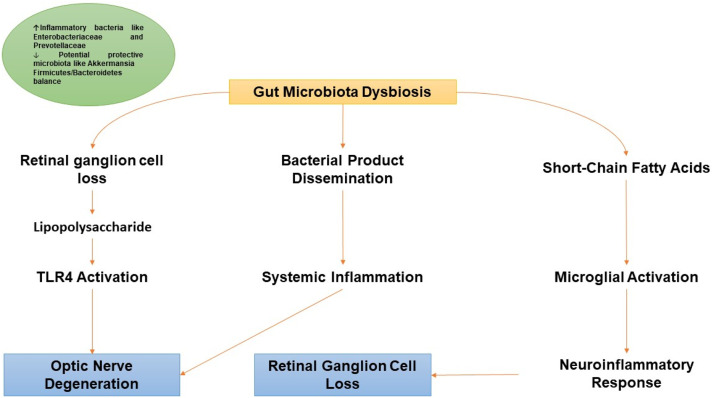
Glaucoma is the primary cause of irreversible blindness globally. Different glaucoma subtypes are identified by their underlying mechanisms, and treatment options differ by its pathogenesis. Current management includes topical medications to lower intraocular pressure and surgical procedures like trabeculoplasty and glaucoma drainage implants. Fecal microbiota transplantation (FMT) is an almost effective and safe treatment option for recurrent Clostridium difficile infection. The relationship between bacterial populations, metabolites, and inflammatory pathways in retinal diseases indicates possible therapeutic strategies. Thus, incorporating host microbiota-based therapies could offer an additional treatment option for glaucoma patients. Here, we propose that combining FMT with standard glaucoma treatments may benefit those affected by this condition. Also, the potential safety, efficacy, cost-effectiveness and clinical applications are discussed.
青光眼是全球不可逆失明的主要原因。不同的青光眼亚型通过其潜在机制来识别,治疗方案因其发病机制而异。目前的治疗方法包括降低眼压的局部药物治疗以及小梁成形术和青光眼引流植入物等手术操作。粪便微生物群移植(FMT)是复发性艰难梭菌感染几乎有效且安全的治疗选择。视网膜疾病中细菌群体、代谢物和炎症途径之间的关系表明了可能的治疗策略。因此,采用基于宿主微生物群的疗法可为青光眼患者提供额外的治疗选择。在此,我们提出将FMT与标准青光眼治疗相结合可能会使受该疾病影响的患者受益。此外,还讨论了潜在的安全性、有效性、成本效益和临床应用。