• 文献检索
  • 文档翻译
  • 深度研究
  • 学术资讯
  • Suppr Zotero 插件Zotero 插件
  • 邀请有礼
  • 套餐&价格
  • 历史记录
应用&插件
Suppr Zotero 插件Zotero 插件浏览器插件Mac 客户端Windows 客户端微信小程序
定价
高级版会员购买积分包购买API积分包
服务
文献检索文档翻译深度研究API 文档MCP 服务
关于我们
关于 Suppr公司介绍联系我们用户协议隐私条款
关注我们

Suppr 超能文献

核心技术专利:CN118964589B侵权必究
粤ICP备2023148730 号-1Suppr @ 2026

文献检索

告别复杂PubMed语法,用中文像聊天一样搜索,搜遍4000万医学文献。AI智能推荐,让科研检索更轻松。

立即免费搜索

文件翻译

保留排版,准确专业,支持PDF/Word/PPT等文件格式,支持 12+语言互译。

免费翻译文档

深度研究

AI帮你快速写综述,25分钟生成高质量综述,智能提取关键信息,辅助科研写作。

立即免费体验

Mechanisms of Low Temperature Thickening of Different Materials for Deepwater Water-Based Drilling Fluids.

作者信息

Wang Zhongyi, Sun Jinsheng, Lv Kaihe, Huang Xianbin, Yuan Zhenhang, Zhang Yang

机构信息

School of Petroleum Engineering, China University of Petroleum (East China), Qingdao 266580, China.

CNPC Engineering Technology R&D Co., Ltd., Beijing 102206, China.

出版信息

Gels. 2024 Dec 2;10(12):789. doi: 10.3390/gels10120789.

DOI:10.3390/gels10120789
PMID:39727547
原文链接:https://pmc.ncbi.nlm.nih.gov/articles/PMC11675199/
Abstract

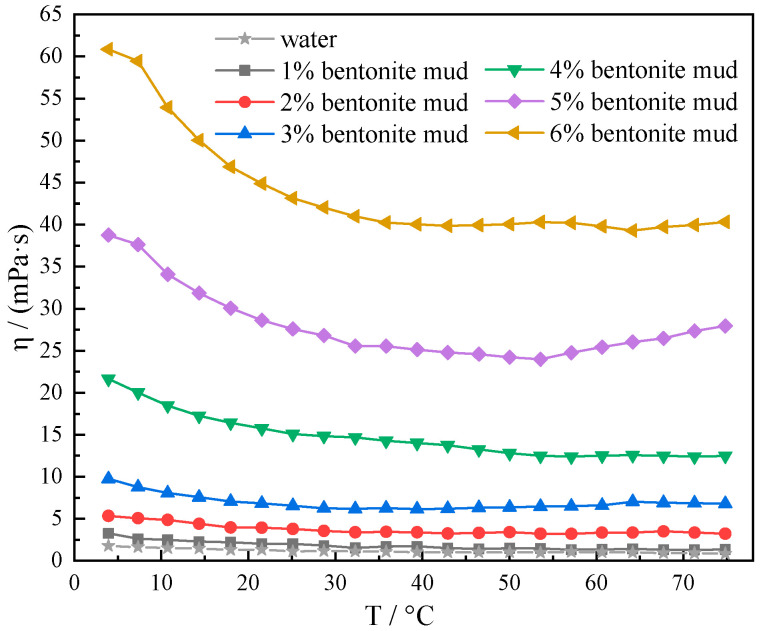
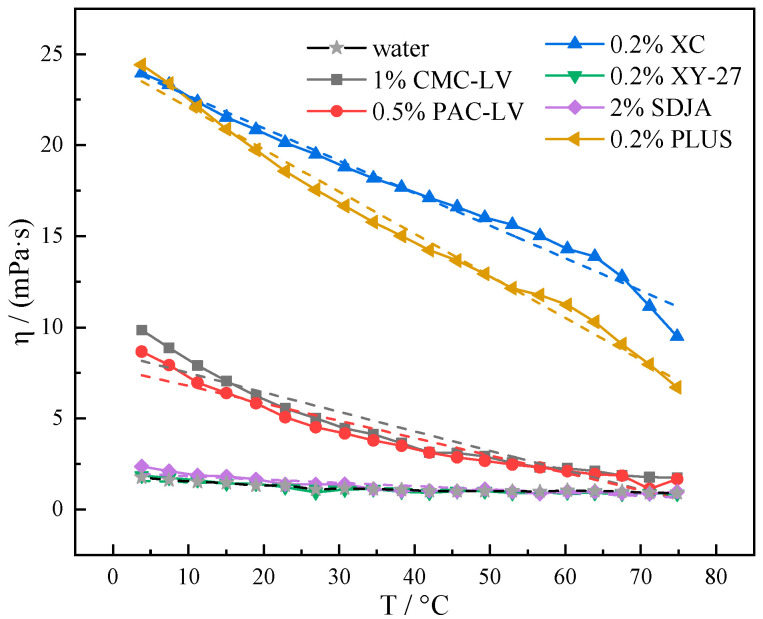
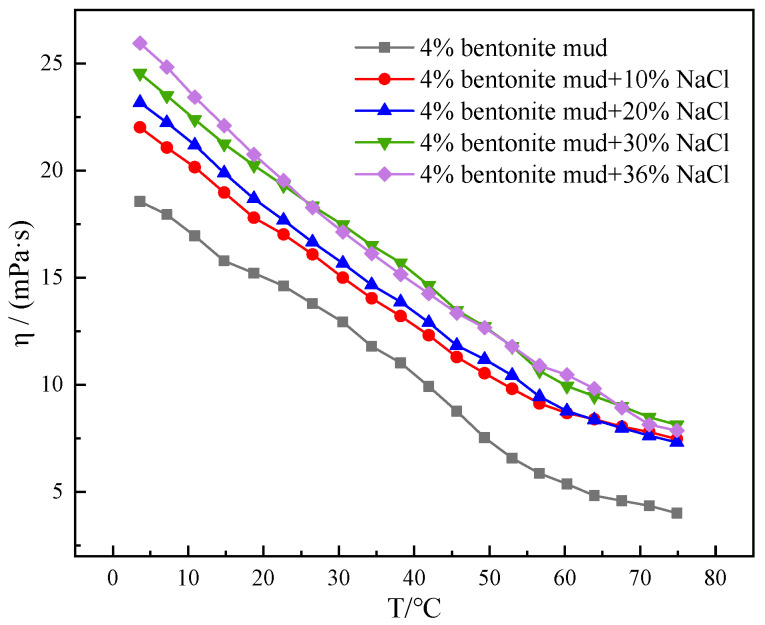
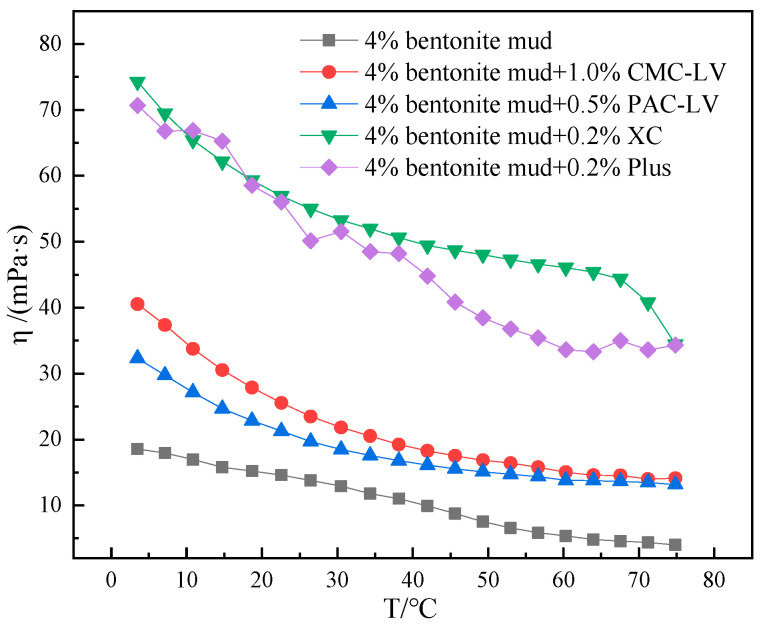
During deepwater drilling, the low mudline temperatures and narrow safe density window pose serious challenges to the safe and efficient performance of deepwater water-based drilling fluids. Low temperatures can lead to physical and chemical changes in the components of water-based drilling fluids and the behavior of low temperature gelation. As a coarse dispersion system, water-based drilling fluid has a complex composition of dispersed phase and dispersing medium. Further clarification of low temperature gelation would be helpful in developing technical approaches to enhance the flat rheology performance of deepwater water-based drilling fluids. In this paper, different components are separated in order to comprehensively analyze the gelation behavior of different materials in water-based drilling fluids at low temperatures. In the first place, the rheological and hydrodynamic radius alterations of inorganic salts, bentonite, and additives in aqueous solutions were examined at low temperatures. The effects of inorganic salts, bentonite, and additives on the purified water system were investigated at low (4 °C)-normal (25 °C)-high (75 °C) temperatures. The low temperature gelation of different materials in pure water systems are fully clarified. The mud containing 4% bentonite with weak low temperature gelation commonly used in deepwater water-based drilling fluids was selected as the basic test system. Inorganic salts, additives, and solid-phase materials were added to the mud containing 4% bentonite. The effects of the interactions between different materials and bentonite particles on the low temperature gelation behavior of mud were analyzed. The higher the bentonite dosage, the stronger the low temperature gelation behavior of mud. The higher the addition of inorganic salts, the more serious the low temperature gelation behavior of mud. Inorganic salts should be avoided as much as possible to add too much. The low temperature gelation behavior of mud with low-viscosity additives is weak. However, the viscosity of mud with high-viscosity additives has a small change in viscosity with increasing temperature. The low temperature gelation of mud with the addition of solid-phase particulate materials with reactive groups on the surface is strong, and the low temperature gelation with the addition of inert particles is weak. This paper elucidates the low temperature gelation mechanism of bentonite, inorganic salts, additives, and solid-phase materials in deepwater water-based drilling fluids. The conclusion can also be used to guide the construction of a drilling fluid system, which is of great significance for the research and development of deepwater water-based drilling fluid additives and the safe and efficient performance of deepwater drilling fluids.
摘要
https://cdn.ncbi.nlm.nih.gov/pmc/blobs/528b/11675199/15fe7acc4201/gels-10-00789-g012.jpg
https://cdn.ncbi.nlm.nih.gov/pmc/blobs/528b/11675199/1a0c90aa55c0/gels-10-00789-g001.jpg
https://cdn.ncbi.nlm.nih.gov/pmc/blobs/528b/11675199/db494883a7cb/gels-10-00789-g002.jpg
https://cdn.ncbi.nlm.nih.gov/pmc/blobs/528b/11675199/6a88083161a2/gels-10-00789-g003.jpg
https://cdn.ncbi.nlm.nih.gov/pmc/blobs/528b/11675199/101e0e035905/gels-10-00789-g004.jpg
https://cdn.ncbi.nlm.nih.gov/pmc/blobs/528b/11675199/85cb51e85b6c/gels-10-00789-g005.jpg
https://cdn.ncbi.nlm.nih.gov/pmc/blobs/528b/11675199/bd27acbfb8a7/gels-10-00789-g006.jpg
https://cdn.ncbi.nlm.nih.gov/pmc/blobs/528b/11675199/1b6694f92c8f/gels-10-00789-g007.jpg
https://cdn.ncbi.nlm.nih.gov/pmc/blobs/528b/11675199/aa52383c4df3/gels-10-00789-g008.jpg
https://cdn.ncbi.nlm.nih.gov/pmc/blobs/528b/11675199/37bac48ed45f/gels-10-00789-g009.jpg
https://cdn.ncbi.nlm.nih.gov/pmc/blobs/528b/11675199/772624949866/gels-10-00789-g010.jpg
https://cdn.ncbi.nlm.nih.gov/pmc/blobs/528b/11675199/b8349f08142d/gels-10-00789-g011.jpg
https://cdn.ncbi.nlm.nih.gov/pmc/blobs/528b/11675199/15fe7acc4201/gels-10-00789-g012.jpg
https://cdn.ncbi.nlm.nih.gov/pmc/blobs/528b/11675199/1a0c90aa55c0/gels-10-00789-g001.jpg
https://cdn.ncbi.nlm.nih.gov/pmc/blobs/528b/11675199/db494883a7cb/gels-10-00789-g002.jpg
https://cdn.ncbi.nlm.nih.gov/pmc/blobs/528b/11675199/6a88083161a2/gels-10-00789-g003.jpg
https://cdn.ncbi.nlm.nih.gov/pmc/blobs/528b/11675199/101e0e035905/gels-10-00789-g004.jpg
https://cdn.ncbi.nlm.nih.gov/pmc/blobs/528b/11675199/85cb51e85b6c/gels-10-00789-g005.jpg
https://cdn.ncbi.nlm.nih.gov/pmc/blobs/528b/11675199/bd27acbfb8a7/gels-10-00789-g006.jpg
https://cdn.ncbi.nlm.nih.gov/pmc/blobs/528b/11675199/1b6694f92c8f/gels-10-00789-g007.jpg
https://cdn.ncbi.nlm.nih.gov/pmc/blobs/528b/11675199/aa52383c4df3/gels-10-00789-g008.jpg
https://cdn.ncbi.nlm.nih.gov/pmc/blobs/528b/11675199/37bac48ed45f/gels-10-00789-g009.jpg
https://cdn.ncbi.nlm.nih.gov/pmc/blobs/528b/11675199/772624949866/gels-10-00789-g010.jpg
https://cdn.ncbi.nlm.nih.gov/pmc/blobs/528b/11675199/b8349f08142d/gels-10-00789-g011.jpg
https://cdn.ncbi.nlm.nih.gov/pmc/blobs/528b/11675199/15fe7acc4201/gels-10-00789-g012.jpg

相似文献

1
Mechanisms of Low Temperature Thickening of Different Materials for Deepwater Water-Based Drilling Fluids.
Gels. 2024 Dec 2;10(12):789. doi: 10.3390/gels10120789.
2
A Temperature-Sensitive Polymeric Rheology Modifier Used in Water-Based Drilling Fluid for Deepwater Drilling.一种用于深水钻井水基钻井液的温度敏感型聚合物流变改性剂。
Gels. 2022 May 30;8(6):338. doi: 10.3390/gels8060338.
3
Thermoresponsive Bentonite for Water-Based Drilling Fluids.用于水基钻井液的热响应性膨润土
Materials (Basel). 2019 Jun 30;12(13):2115. doi: 10.3390/ma12132115.
4
Rice husk ash as a sustainable and economical alternative to chemical additives for enhanced rheology in drilling fluids.稻壳灰作为一种可持续且经济的替代化学添加剂,用于改善钻井液的流变性能。
Environ Sci Pollut Res Int. 2023 Oct;30(48):105614-105626. doi: 10.1007/s11356-023-29856-0. Epub 2023 Sep 16.
5
Properties of Bentonite Slurry Drilling Fluid in Shallow Formations of Deepwater Wells and the Optimization of Its Wellbore Strengthening Ability While Drilling.深水浅层地层中膨润土浆钻井液性能及其随钻井筒强化能力优化
ACS Omega. 2022 Oct 27;7(44):39860-39874. doi: 10.1021/acsomega.2c03986. eCollection 2022 Nov 8.
6
The Effect of Biopolymer Chitosan on the Rheology and Stability of Na-Bentonite Drilling Mud.生物聚合物壳聚糖对钠基膨润土钻井泥浆流变学和稳定性的影响。
Polymers (Basel). 2021 Sep 30;13(19):3361. doi: 10.3390/polym13193361.
7
High energy dissipation-based process to improve the rheological properties of bentonite drilling muds by reducing the particle size.基于高能量耗散的工艺,通过减小颗粒尺寸来改善膨润土钻井泥浆的流变性。
Ultrason Sonochem. 2023 Jan;92:106246. doi: 10.1016/j.ultsonch.2022.106246. Epub 2022 Nov 28.
8
Innovative Applications of Red Mud: Converting an Environmental Challenge to a Drilling Asset.赤泥的创新应用:将环境挑战转化为钻井资产
ACS Omega. 2022 Dec 26;8(1):614-625. doi: 10.1021/acsomega.2c05755. eCollection 2023 Jan 10.
9
Gel Stability of Calcium Bentonite Suspension in Brine and Its Application in Water-Based Drilling Fluids.钙基膨润土悬浮液在盐水中的凝胶稳定性及其在水基钻井液中的应用
Gels. 2022 Oct 10;8(10):643. doi: 10.3390/gels8100643.
10
Application of Tea Polyphenols as a Biodegradable Fluid Loss Additive and Study of the Filtration Mechanism.
ACS Omega. 2020 Feb 11;5(7):3453-3461. doi: 10.1021/acsomega.9b03712. eCollection 2020 Feb 25.

本文引用的文献

1
Influence of HEM Drilling Fluid on Organic Geochemical Characteristics of Deep-Water Source Rocks in the Qiongdongnan Basin.HEM钻井液对琼东南盆地深水烃源岩有机地球化学特征的影响
ACS Omega. 2024 Apr 24;9(18):20582-20592. doi: 10.1021/acsomega.4c02311. eCollection 2024 May 7.
2
[Not Available].[无可用内容]。
Small. 2025 Jul;21(28):e2309286. doi: 10.1002/smll.202309286. Epub 2024 Mar 7.
3
Electron transfer. Exploiting thermal motion.电子转移。利用热运动。
Science. 2000 Oct 6;290(5489):61-2. doi: 10.1126/science.290.5489.61.