Alvira Margarita, Mondini Alessio, Puleo Gian Luigi, Tahirbegi Islam Bogachan, Beccai Lucia, Sadeghi Ali, Mazzolai Barbara, Mir Mònica, Samitier Josep
Nanobioengineering Group, Institute for Bioengineering of Catalonia (IBEC), Barcelona Institute of Science and Technology (BIST), 12 Baldiri Reixac 15-21, 08028 Barcelona, Spain.
Bioinspired Soft Robotics Laboratory, Istituto Italiano di Tecnologia, 16163 Genova, Italy.
Biosensors (Basel). 2024 Nov 22;14(12):565. doi: 10.3390/bios14120565.
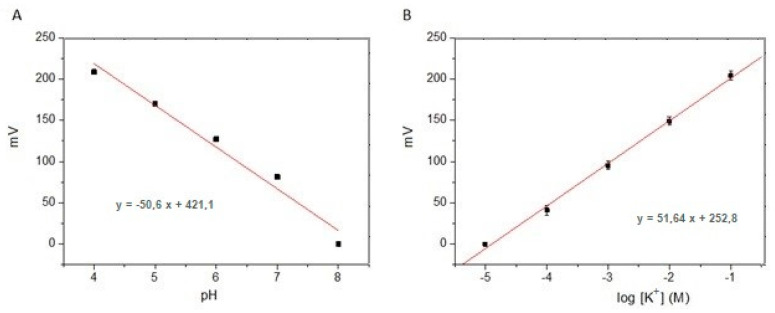
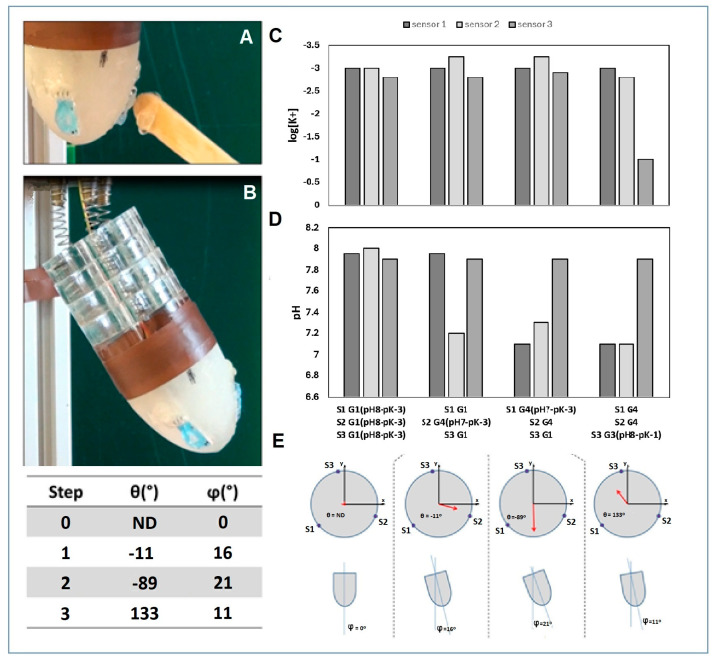
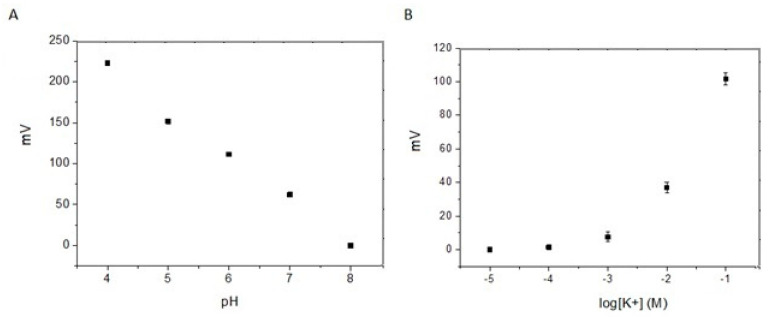
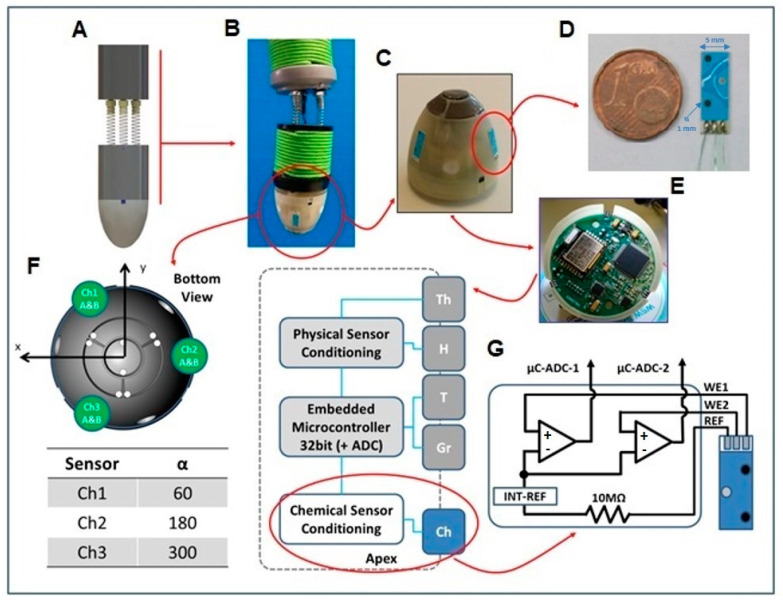
There are many examples in nature in which the ability to detect is combined with decision-making, such as the basic survival instinct of plants and animals to search for food. We can technically translate this innate function via the use of robotics with integrated sensors and artificial intelligence. However, the integration of sensing capabilities into robotics has traditionally been neglected due to the significant associated technical challenges. Inspired by plant-root chemotropism, we present a miniaturized electrochemical array integrated into a robotic tip, embedding a customized micro-potentiometer. The system contains solid-state sensors fitted to the tip of the robotic root to three-dimensionally monitor potassium and pH changes in a moist, soil-like environment, providing an integrated electronic readout. The sensors measure a range of parameters compatible with realistic soil conditions. The sensors' response can trigger the movement of the robotic root with a control algorithm inspired by the behavior of the plant root that determines the optimal path toward root growth, simulating the decision-making process of a plant. This nature-inspired technology may lead, in the future, to the realization of robotic devices with the potential for monitoring and exploring the soil autonomously.
自然界中有许多将探测能力与决策能力相结合的例子,比如动植物寻找食物的基本生存本能。从技术层面讲,我们可以通过使用集成传感器和人工智能的机器人技术来转化这种先天功能。然而,由于相关技术挑战巨大,传感能力在机器人技术中的整合传统上一直被忽视。受植物根系向化性启发,我们展示了一种集成到机器人尖端的小型化电化学阵列,其中嵌入了定制的微电位计。该系统包含安装在机器人根部尖端的固态传感器,用于在类似潮湿土壤的环境中三维监测钾和pH值的变化,并提供集成的电子读数。这些传感器可测量一系列与实际土壤条件相符的参数。传感器的响应能够通过一种受植物根系行为启发的控制算法触发机器人根部的移动,该算法可确定根部生长的最佳路径,从而模拟植物的决策过程。这种受自然启发的技术未来可能会促成具备自主监测和探索土壤潜力的机器人设备的实现。