Ma Yu, Jia Rui, Xu Zhen-Liang, Aibulatova Aida, Jin Xiao-Gang, Fang Yin-Xin, Zhang Ming-Xiao, Xu Sun-Jie
State Key Laboratory of Chemical Engineering, Membrane Science and Engineering R&D Lab, Chemical Engineering Research Center, School of Chemical Engineering, East China University of Science and Technology, 130 Meilong Road, Shanghai 200237, China.
Shanghai Electronic Chemicals Innovation Institute, East China University of Science and Technology, Shanghai 200237, China.
Membranes (Basel). 2024 Dec 16;14(12):272. doi: 10.3390/membranes14120272.
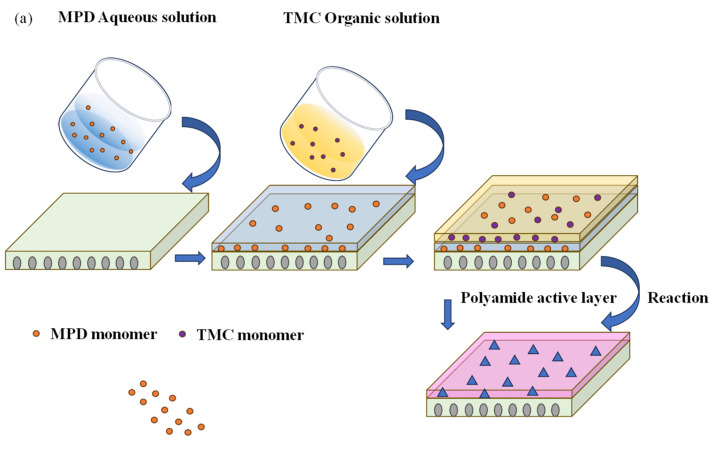
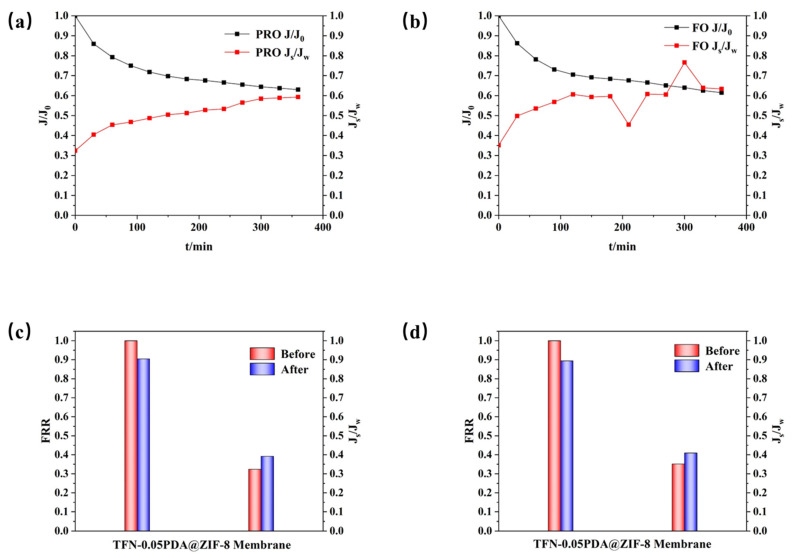
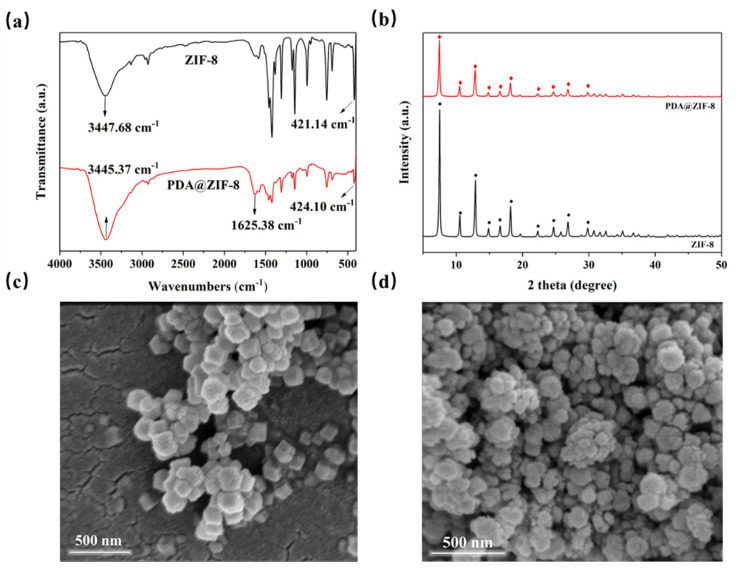
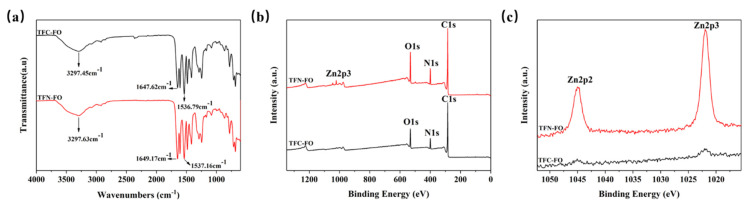
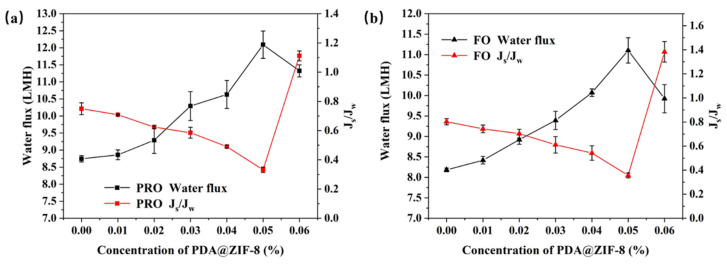
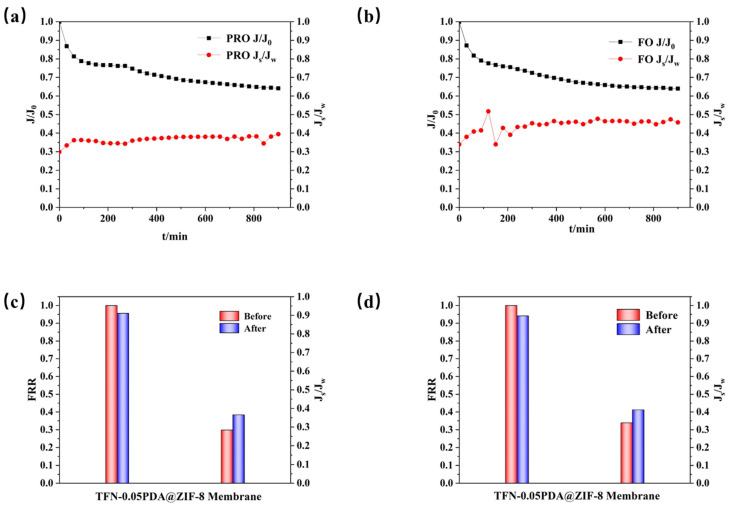
Forward osmosis (FO) technology, known for its minimal energy requirements, excellent resistance to fouling, and significant commercial potential, shows enormous promise in the development of sustainable technologies, especially with regard to seawater desalination and wastewater. In this study, we improved the performance of the FO membrane in terms of its mechanical strength and hydrophilic properties. Generally, the water flux () of polyisophenylbenzamide (PMIA) thin-film composite (TFC)-FO membranes is still inadequate for industrial applications. Here, hydrophilic polydopamine (PDA)@ zeolitic imidazolate frameworks-8 (ZIF-8) nanomaterials and their integration into PMIA membranes using the interfacial polymerization (IP) method were investigated. The impact of PDA@ZIF-8 on membrane performance in both pressure-retarded osmosis (PRO) and forward osmosis (FO) modes was analyzed. The durability and fouling resistance of these membranes were evaluated over the long term. When the amount of ZIF-8@PDA incorporated in the membrane reached 0.05 wt% in the aqueous phase in the IP reaction, the values for the PRO mode and FO mode were 12.09 LMH and 11.10 LMH, respectively. The reverse salt flux ( values for both modes decreased from 0.75 and 0.80 to 0.33 and 0.35, respectively. At the same time, the PRO and FO modes' properties were stable in a 15 h test. The incorporation of PDA@ZIF-8 facilitated the formation of water channels within the nanoparticle pores. Furthermore, the / ratio decreased significantly, and the FO membranes containing PDA@ZIF-8 exhibited high flux recovery rates and superior resistance to membrane fouling. Therefore, PDA@ZIF-8-modified FO membranes have the potential for use in industrial applications in seawater desalination.
正向渗透(FO)技术以其极低的能量需求、出色的抗污染能力和巨大的商业潜力而闻名,在可持续技术的发展中展现出巨大前景,尤其是在海水淡化和废水处理方面。在本研究中,我们从机械强度和亲水性能方面改进了FO膜的性能。一般来说,聚间苯二甲酰间苯二胺(PMIA)复合薄膜(TFC)-FO膜的水通量( )对于工业应用而言仍显不足。在此,我们研究了亲水性聚多巴胺(PDA)@沸石咪唑酯骨架-8(ZIF-8)纳米材料及其通过界面聚合(IP)法集成到PMIA膜中的情况。分析了PDA@ZIF-8对压力延迟渗透(PRO)和正向渗透(FO)模式下膜性能的影响。对这些膜的耐久性和抗污染性进行了长期评估。当IP反应水相中膜中掺入的ZIF-8@PDA量达到0.05 wt%时,PRO模式和FO模式下的 值分别为12.09 LMH和11.10 LMH。两种模式下的反向盐通量( 值分别从0.75和0.80降至0.33和0.35。同时,在15小时的测试中,PRO和FO模式的性能保持稳定。PDA@ZIF-8的掺入促进了纳米颗粒孔隙内水通道的形成。此外, / 比值显著降低,含有PDA@ZIF-8的FO膜表现出高通量回收率和卓越的抗膜污染能力。因此,PDA@ZIF-8改性的FO膜具有用于海水淡化工业应用的潜力。