Bastow Samantha S, Borrelli Eric P, Lucaci Julia D, Nelkin Heather, Graves April, Hays Amanda
Department of Medical Affairs, Becton Dickinson and Company, Franklin Lakes, NJ 07417, USA.
Department of Health Economic and Outcomes Research, Becton Dickinson and Company, Franklin Lakes, NJ 07417, USA.
Pharmacy (Basel). 2024 Dec 4;12(6):183. doi: 10.3390/pharmacy12060183.
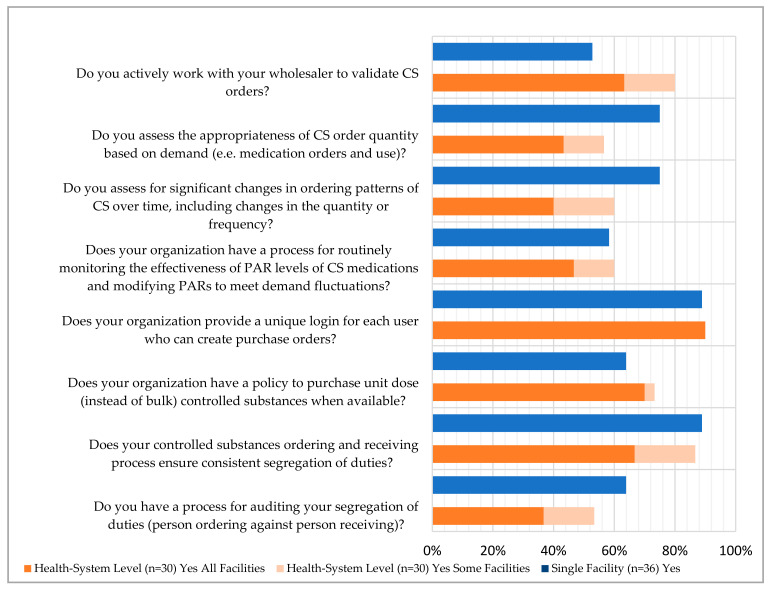
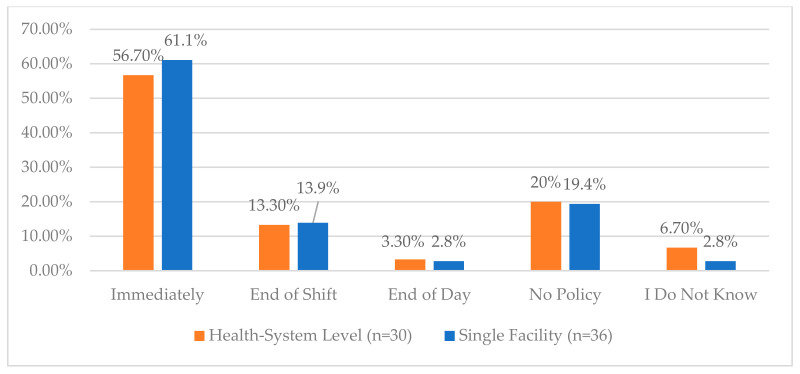
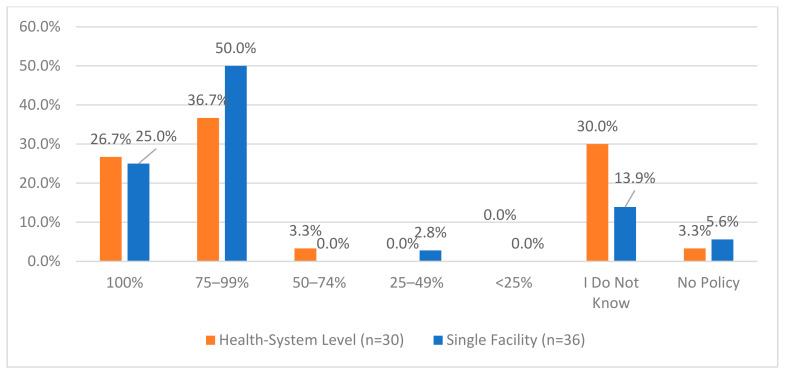
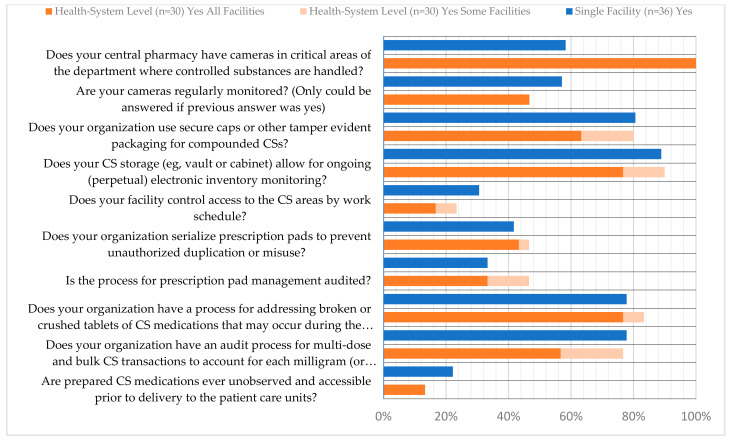
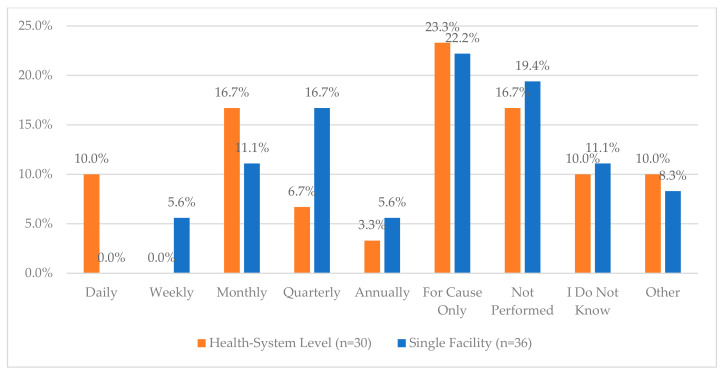
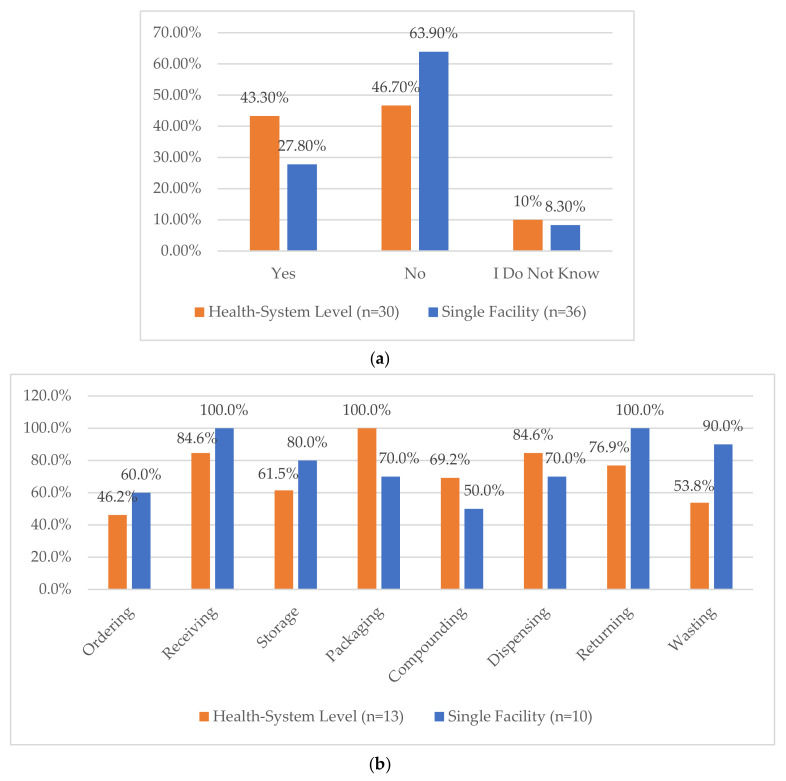
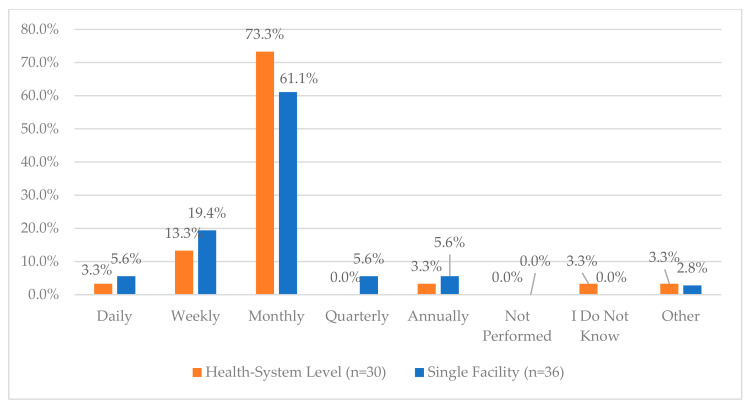
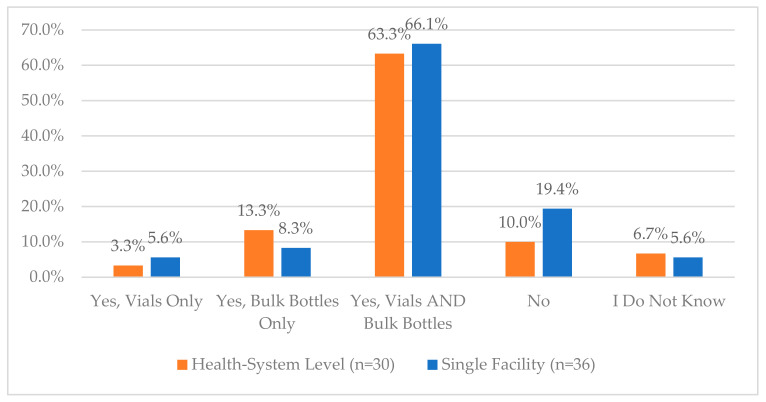
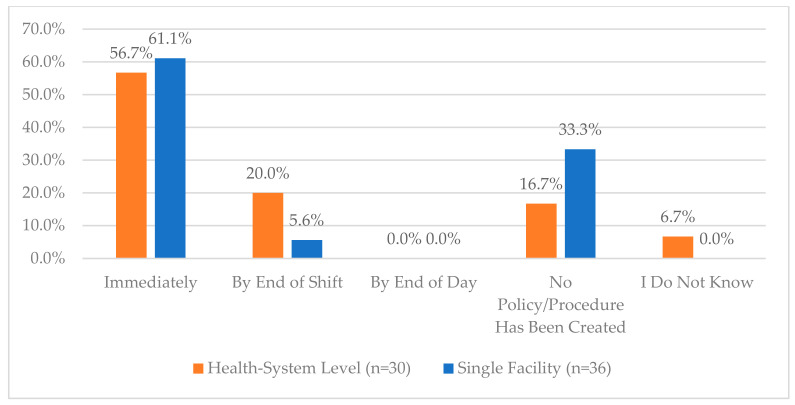
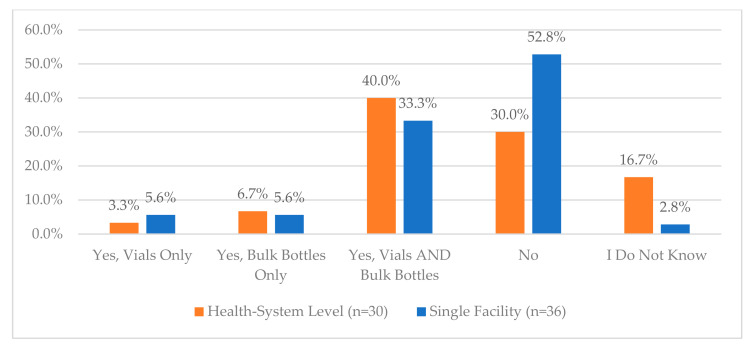
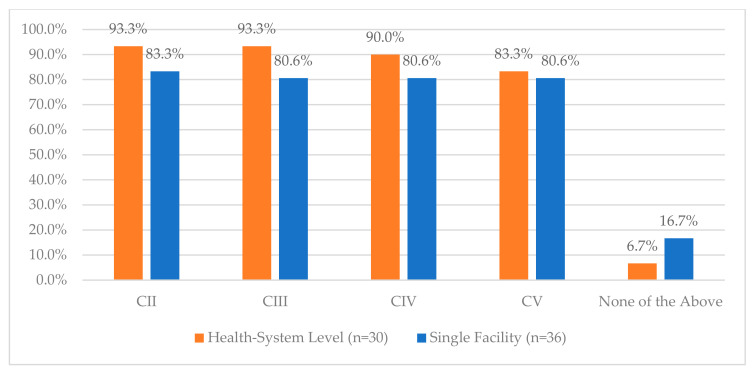
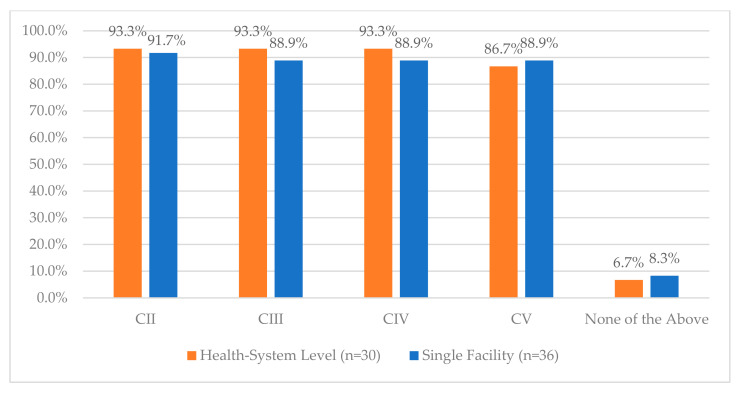
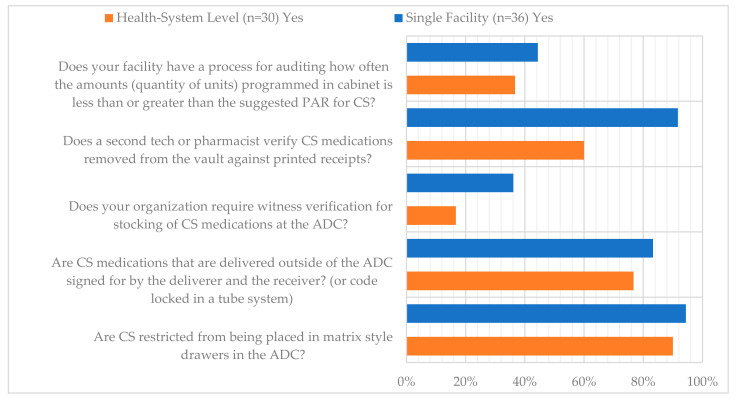
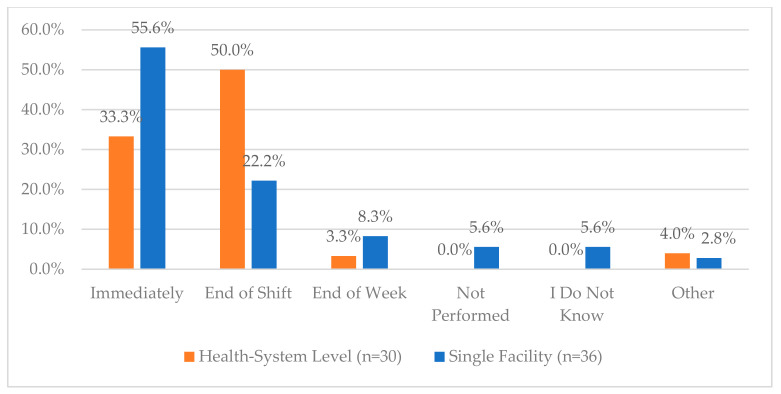
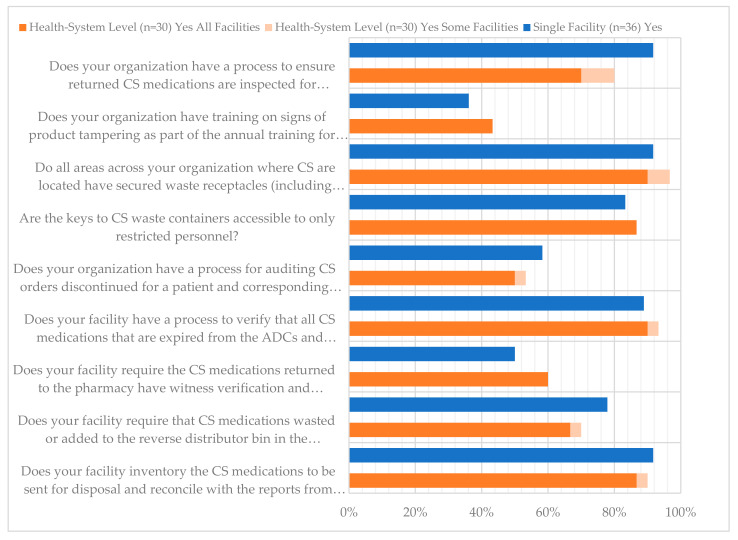
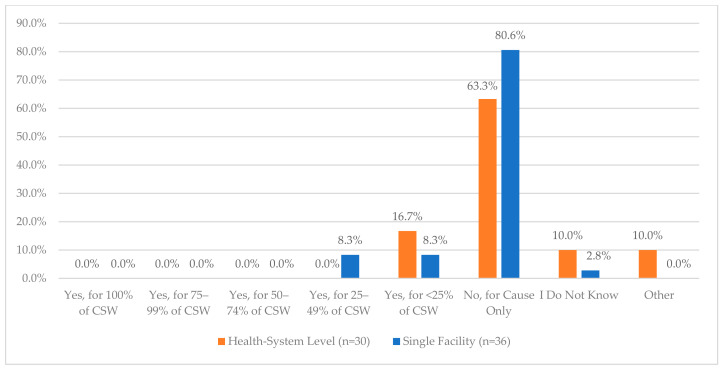
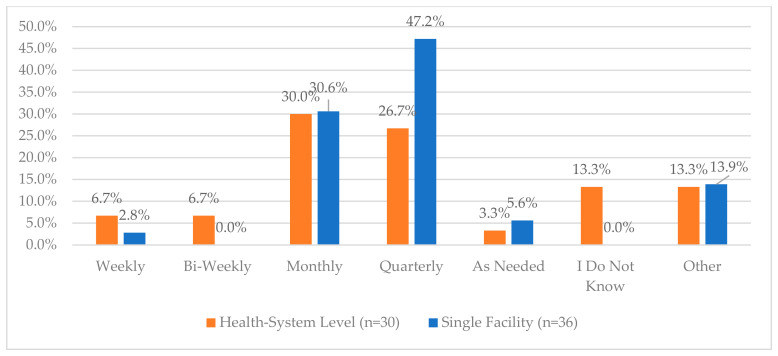
This study explored controlled substance (CS) diversion surveillance practices within hospital pharmacies across the United States. A survey with questions based on published CS diversion risk points was conducted in May 2024. A total of 66 participants from 31 states responded, with 54.5% from single facilities and the remaining from health systems. Most respondents were pharmacy directors, managers, or those in dedicated drug diversion roles. Over 70% have dedicated surveillance teams and use drug diversion software. Results highlight variation in practices, with larger institutions generally showing better compliance. Compliance in procurement and receiving was high for access measures; however, auditing of processes was lower. The lowest procurement compliance was in monitoring periodic automatic replacement (PAR) levels and validating orders with wholesalers. Storage practices showed high compliance in deploying cameras, but low compliance in monitoring them. Dispensing practices had high compliance for restricting CS in automated dispensing cabinets, but low incidence of witness verification during stocking. Waste and disposal practices were well-followed, but training on detecting potential signs of medication tampering was less common. The survey highlights that while strategies to prevent CS diversion exist, their implementation varies. Enhancing monitoring, auditing, and training is essential to strengthen diversion prevention efforts in hospital pharmacies.
本研究探讨了美国各地医院药房内的管制药品(CS)转移监测做法。2024年5月进行了一项基于已发表的CS转移风险点设置问题的调查。来自31个州的66名参与者做出了回应,其中54.5%来自单一机构,其余来自医疗系统。大多数受访者是药房主任、经理或担任专门药品转移工作的人员。超过70%的受访者拥有专门的监测团队并使用药品转移软件。结果凸显了做法上的差异,较大的机构通常合规性更好。在准入措施方面,采购和接收环节的合规性较高;然而,流程审计的合规性较低。采购合规性最低的是监测定期自动补货(PAR)水平以及与批发商核实订单。储存做法在安装摄像头方面合规性较高,但在监控摄像头方面合规性较低。调配做法在自动调配柜中限制CS方面合规性较高,但在备货期间见证核实的发生率较低。废物和处置做法得到了很好的遵循,但关于检测药品篡改潜在迹象的培训不太常见。该调查强调,虽然存在预防CS转移的策略,但其实施情况各不相同。加强监测、审计和培训对于加强医院药房的转移预防工作至关重要。