Chen Suhong, Zhou Chuanjie, Huang Jiahui, Qiao Yunlong, Wang Ning, Huang Yuzhen, Li Bo, Xu Wanfeng, He Xinglishang, Wang Kungen, Zhi Yihui, Lv Guiyuan, Shen Shuhua
Collaborative Innovation Center of Yangtze River Delta Region Green Pharmaceuticals, Zhejiang University of Technology, No. 18, Chaowang Road, Gongshu District, Hangzhou, 310014, Zhejiang, China.
Zhejiang Provincial Key Laboratory of TCM for Innovative R & D and Digital Intelligent Manufacturing of TCM Great Health Products. Huzhou, Zhejiang, 313200, China.
Mol Med. 2024 Dec 27;30(1):278. doi: 10.1186/s10020-024-01022-3.
Nonalcoholic fatty liver disease (NAFLD) has developed as a leading public wellness challenge as a result of changes in dietary patterns. Unfortunately, there is still a lack of effective pharmacotherapy methods for NAFLD. Wang's empirical formula (WSF) has demonstrated considerable clinical efficacy in treating metabolic disorders for years. Nevertheless, the protective effect of WSF against NAFLD and its underlying mechanism remains poorly understood.
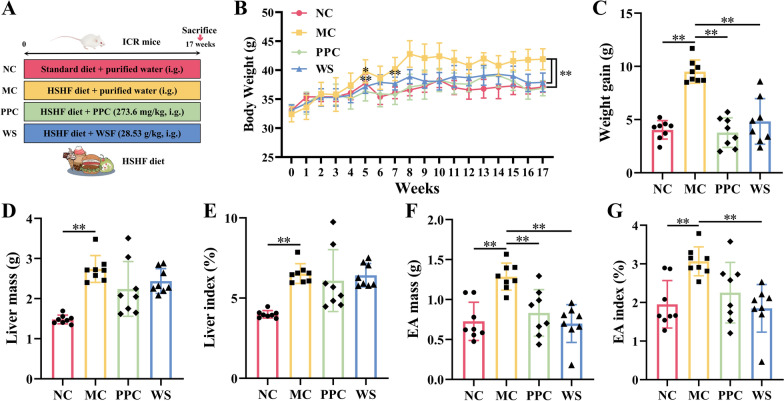
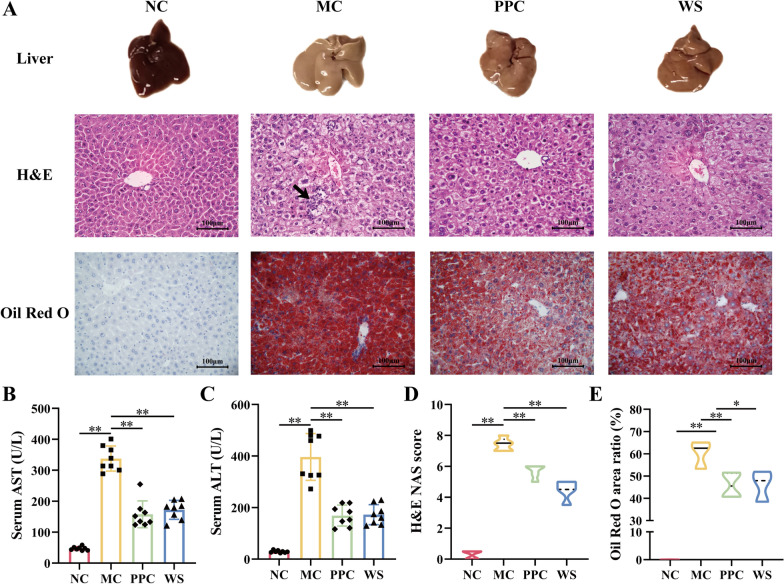
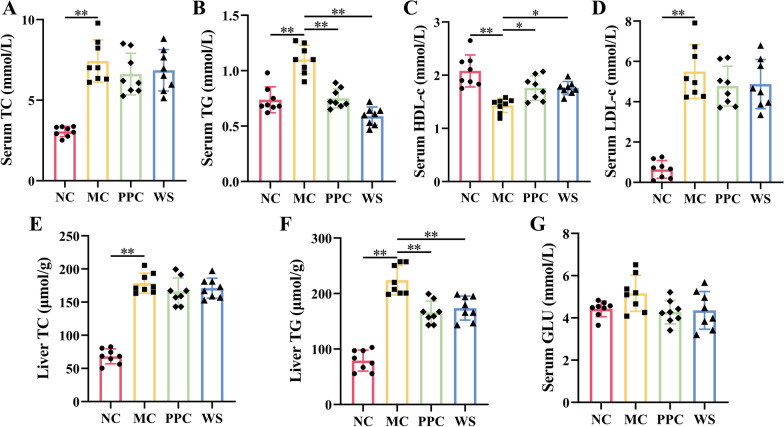
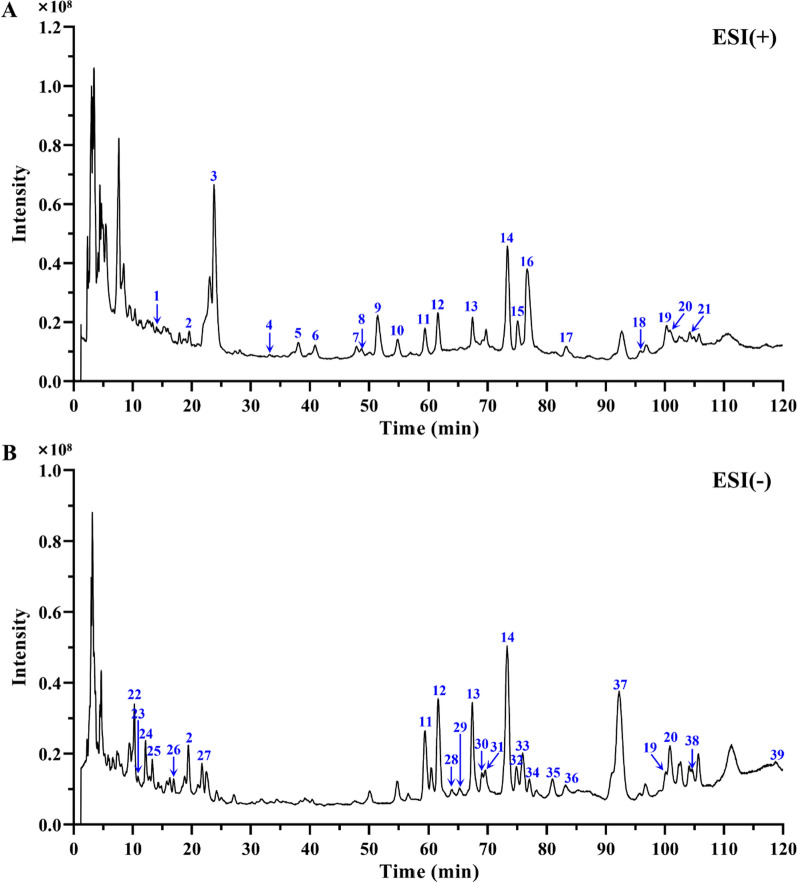
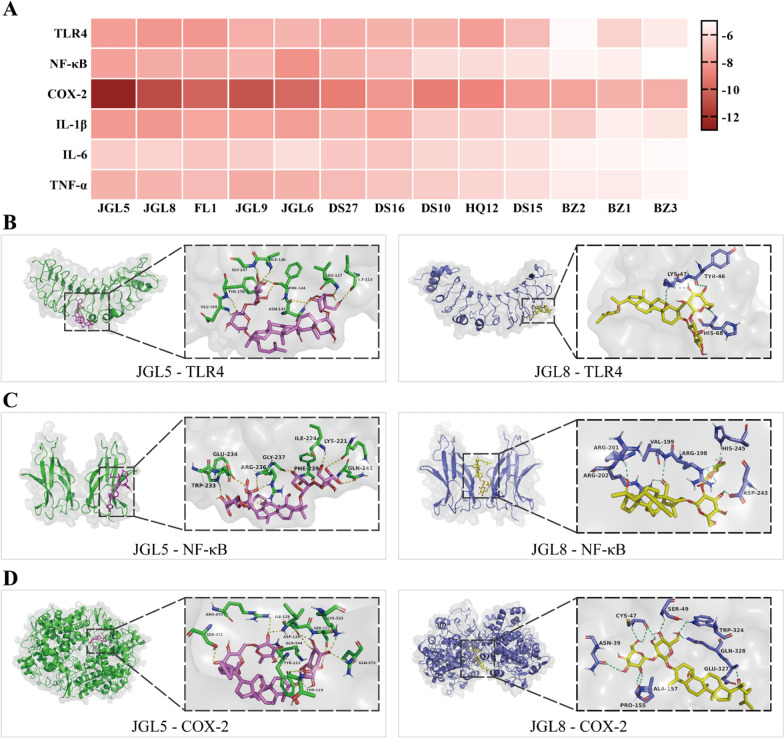
The NAFLD model was established using a 17-week high-sucrose and high-fat (HSHF) diet with 32 ICR mice. In assessing the therapeutic efficacy of WSF on NAFLD, we detected changes in body weight, viscera weight, biomarkers of glycolipid metabolism in serum and liver, transaminase levels and histopathology of liver with H&E and Oil Red O staining after oral administration. The chemical components in WSF were extensively identified and gathered utilizing the HPLC-Q-TOF/MS system, database mining from HMDB, MassBank, and TCMSP databases, alongside literature searches from CNKI, Wanfang and VIP databases. The forecast of network pharmacology approach was then utilized to investigate the probable mechanisms by which WSF improves NAFLD based on the performance of prospective target identification and pathway enrichment analysis. Besides, molecular docking was also conducted for the verification of combination activities between active components of WSF and core proteins related to NAFLD. In final, validation experiments of obtained pathways were conducted through ELISA, immunohistochemistry (IHC), and western blot (WB) analysis.
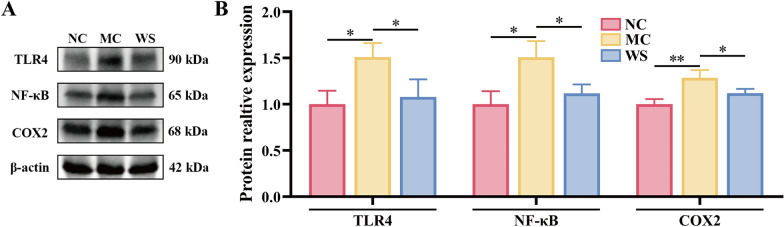
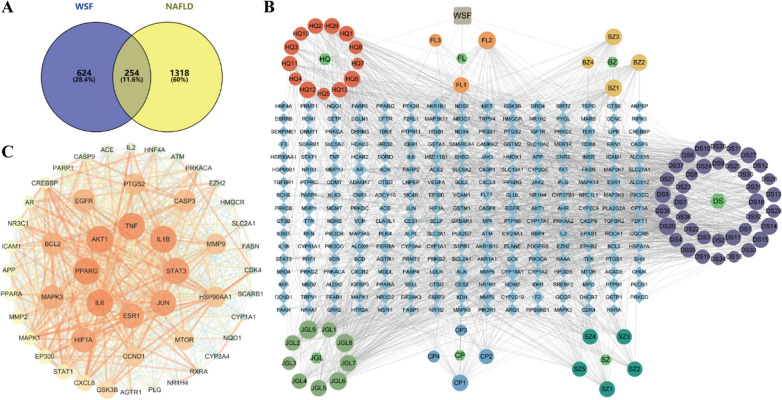
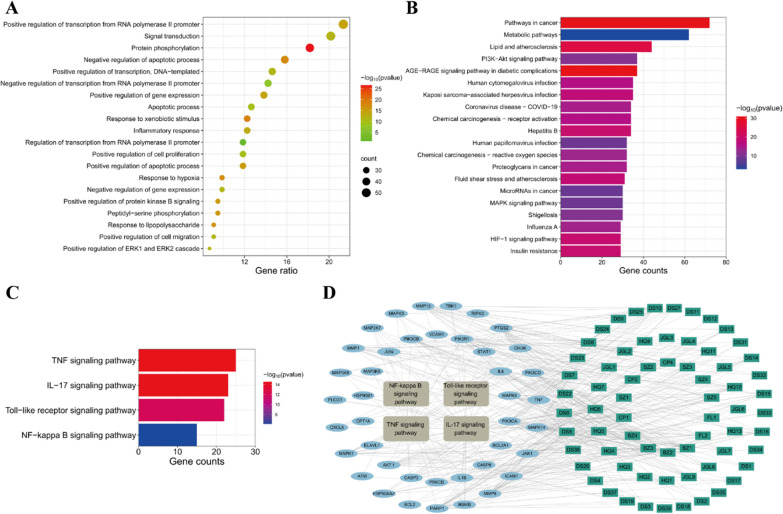
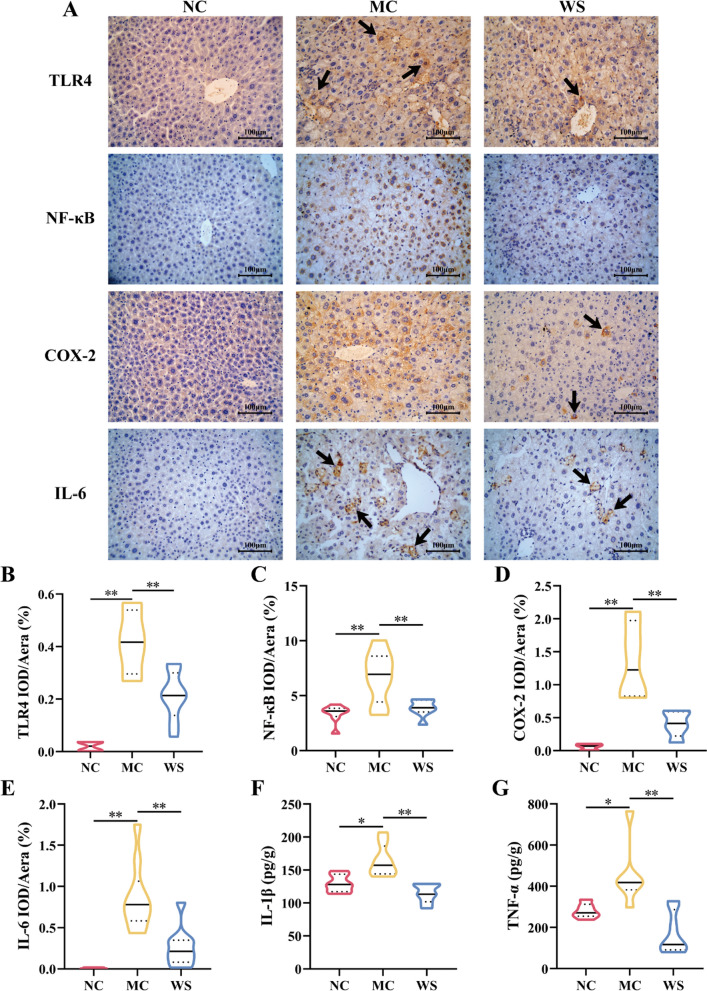
Pharmacodynamic outcomes indicated that WSF intervention effectively mitigated obesity, fat accumulation in organs, lipid metabolism disorders, abnormal transaminase levels and liver pathology injury in NAFLD mice (P < 0.05, 0.01). A total of 72 existent ingredients of WSF were acquired by HPLC-Q-TOF/MS and database, and 254 common targets (11.6% in total targets) of NAFLD and WSF were identified. Network pharmacology revealed that WSF presses NAFLD via modulating TNF, IL6, AKT1, IL1B, PTGS2 (COX2), and other targets, and the probable pathways were primarily inflammatory signaling pathways, as confirmed by molecular docking. Molecular biology experiments further conformed that WSF could decrease levels of inflammatory factors like IL-1β, IL-6 and TNF-α (P < 0.01) and expression of TLR4, NF-κB and COX-2 (P < 0.05, 0.01) in the liver.
WSF treatment effectively protects against lipid metabolism disorders and liver inflammation injury in HSHF diet-induced NAFLD mice, and its molecular mechanism might be via suppressing the TLR4/NF-κB/COX-2 inflammatory pathway to reduce the release of inflammatory cytokines in the liver.
由于饮食模式的改变,非酒精性脂肪性肝病(NAFLD)已成为一项主要的公共健康挑战。遗憾的是,目前仍缺乏针对NAFLD的有效药物治疗方法。多年来,王式经验方(WSF)在治疗代谢紊乱方面已显示出相当可观的临床疗效。然而,WSF对NAFLD的保护作用及其潜在机制仍知之甚少。
采用17周高糖高脂(HSHF)饮食建立32只ICR小鼠的NAFLD模型。在评估WSF对NAFLD的治疗效果时,我们在口服给药后检测了体重、内脏重量、血清和肝脏中糖脂代谢生物标志物、转氨酶水平以及肝脏的组织病理学变化(采用苏木精-伊红染色和油红O染色)。利用HPLC-Q-TOF/MS系统、从HMDB、MassBank和TCMSP数据库进行数据库挖掘以及从中国知网、万方和维普数据库进行文献检索,广泛鉴定和收集了WSF中的化学成分。然后利用网络药理学预测方法,基于潜在靶点识别和通路富集分析的结果,研究WSF改善NAFLD的可能机制。此外,还进行了分子对接,以验证WSF活性成分与NAFLD相关核心蛋白之间的结合活性。最后,通过酶联免疫吸附测定(ELISA)、免疫组织化学(IHC)和蛋白质免疫印迹(WB)分析对获得的通路进行验证实验。
药效学结果表明,WSF干预可有效减轻NAFLD小鼠的肥胖、器官脂肪堆积、脂质代谢紊乱、转氨酶水平异常和肝脏病理损伤(P<0.05,0.01)。通过HPLC-Q-TOF/MS和数据库共获得WSF的72种现有成分,并鉴定出NAFLD和WSF的254个共同靶点(占总靶点的11.6%)。网络药理学显示,WSF通过调节肿瘤坏死因子(TNF)、白细胞介素6(IL6)、蛋白激酶B1(AKT1)、白细胞介素1β(IL1B)、前列腺素内过氧化物合酶2(PTGS2,即COX2)等靶点来抑制NAFLD,分子对接证实其可能的通路主要是炎症信号通路。分子生物学实验进一步证实,WSF可降低肝脏中白细胞介素1β、白细胞介素6和肿瘤坏死因子-α等炎症因子的水平(P<0.01)以及Toll样受体4(TLR4)、核因子κB(NF-κB)和COX-2的表达(P<0.05,0.01)。
WSF治疗可有效预防HSHF饮食诱导的NAFLD小鼠的脂质代谢紊乱和肝脏炎症损伤,其分子机制可能是通过抑制TLR4/NF-κB/COX-2炎症通路来减少肝脏中炎症细胞因子的释放。