Lotz Dominik, Rössner Le Han, Ehlers Katrin, Kong Doudou, Rössner Clemens, Rupp Oliver, Becker Annette
Institute of Botany, Justus-Liebig-University, Heinrich-Buff-Ring 38, 35392, Giessen, Germany.
Bioinformatics and Systems Biology, Justus-Liebig-University, Heinrich-Buff-Ring 58, 35392, Giessen, Germany.
Evodevo. 2024 Dec 27;15(1):16. doi: 10.1186/s13227-024-00236-0.
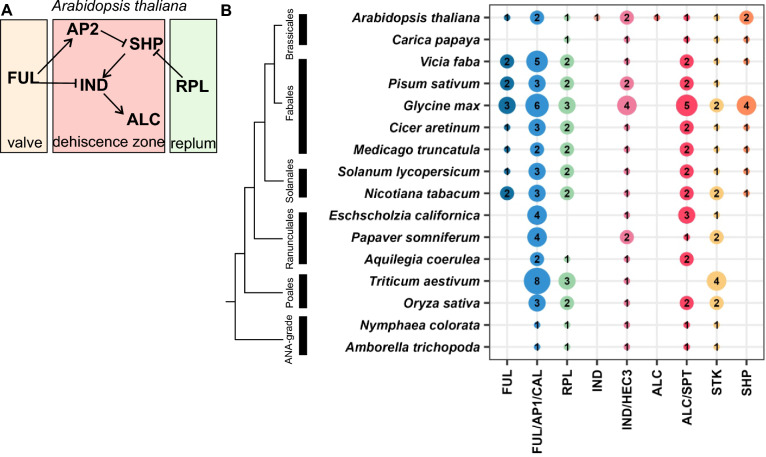
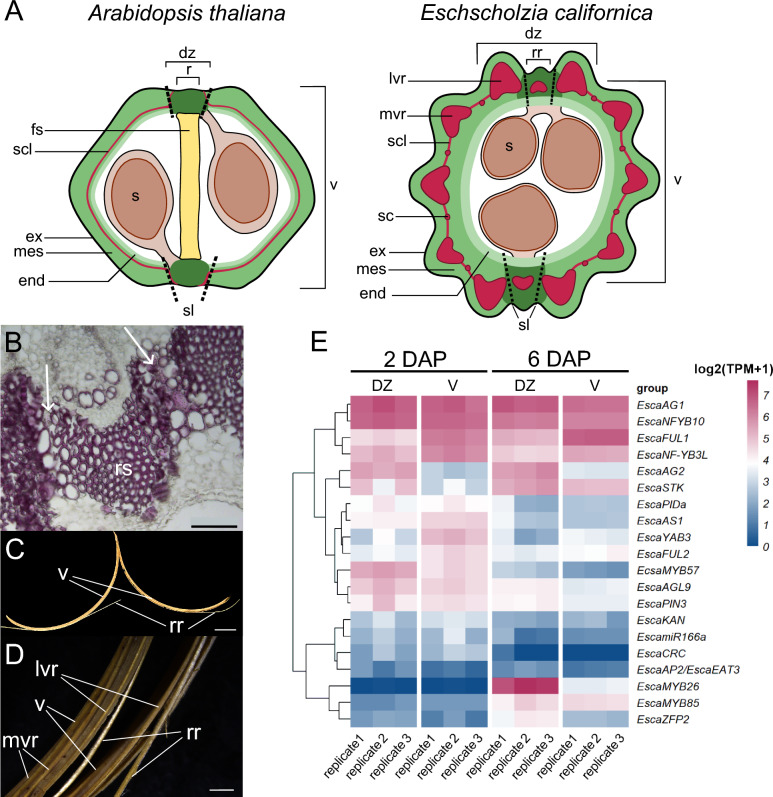
Fruits, with their diverse shapes, colors, and flavors, represent a fascinating aspect of plant evolution and have played a significant role in human history and nutrition. Understanding the origins and evolutionary pathways of fruits offers valuable insights into plant diversity, ecological relationships, and the development of agricultural systems. Arabidopsis thaliana (Brassicaceae, core eudicot) and Eschscholzia californica (California poppy, Papaveraceae, sister group to core eudicots) both develop dry dehiscent fruits, with two valves separating explosively from the replum-like region upon maturation. This led to the hypothesis, that homologous gene regulatory networks direct fruit development and dehiscence in both species.
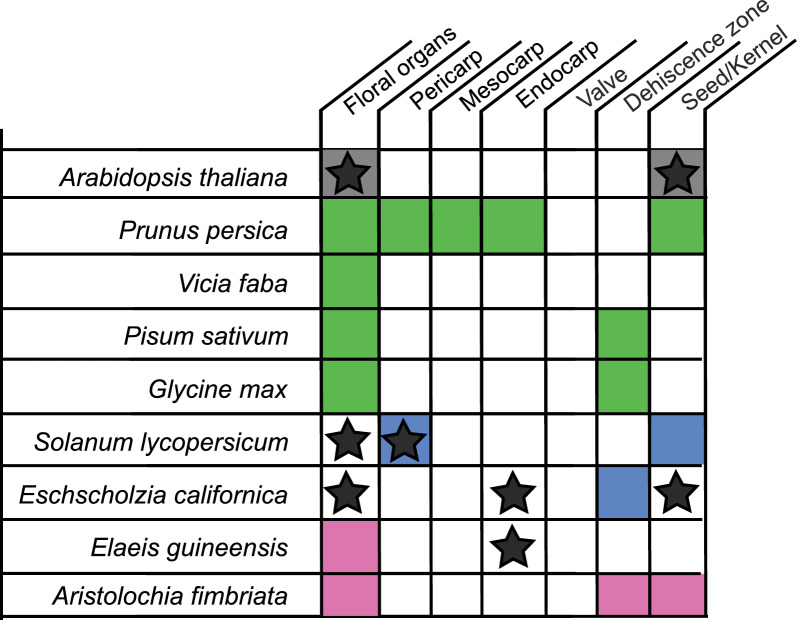
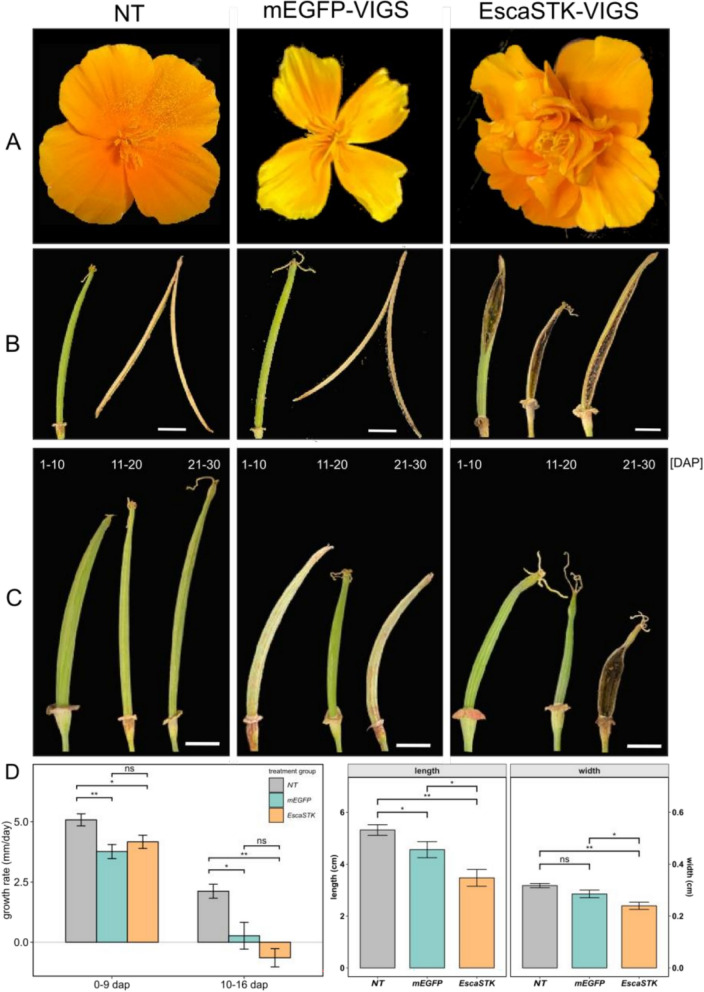
Transcriptome analysis of separately collected valve and replum-like tissue of California poppy yielded the SEEDSTICK (STK) ortholog as candidate for dehiscence zone regulation. Expression analysis of STK orthologs from dry dehiscing fruits of legumes (Vicia faba, Glycine max and Pisum sativum) shows their involvement in fruit development. Functional analysis using Virus-Induced Gene Silencing (VIGS) showed premature rupture of fruits and clarified the roles of EscaSTK: an evolutionary conserved role in seed filling and seed coat development, and a novel role in restricting cell divisions in the inner cell layer of the valve.
Our analysis shows that the gene regulatory network described in Arabidopsis is significantly different in other dicots, even if their fruits form a dehiscence zone at the valve margins. The ortholog of STK, known to be involved in ovule development and seed abscission in Arabidopsis, was recruited to a network regulating fruit wall proliferation in California poppy. There, EscaSTK allows fruit maturation without premature capsule rupture, highlighting the importance of proper endocarp development for successful seed dispersal.
果实具有多样的形状、颜色和风味,是植物进化中一个引人入胜的方面,在人类历史和营养方面发挥了重要作用。了解果实的起源和进化途径有助于深入了解植物多样性、生态关系以及农业系统的发展。拟南芥(十字花科,核心真双子叶植物)和花菱草(加利福尼亚罂粟,罂粟科,核心真双子叶植物的姐妹类群)都发育出干燥开裂的果实,成熟时两个果瓣从类似假隔膜的区域爆炸性分离。这引发了一个假设,即同源基因调控网络指导这两个物种的果实发育和开裂。
对单独收集的花菱草果瓣和类似假隔膜组织进行转录组分析,得到了种子柄(STK)直系同源基因作为开裂区调控的候选基因。对豆科植物(蚕豆、大豆和豌豆)干燥开裂果实中STK直系同源基因的表达分析表明它们参与果实发育。使用病毒诱导基因沉默(VIGS)进行功能分析,结果显示果实过早破裂,并阐明了花菱草STK的作用:在种子充实和种皮发育中具有进化保守作用,在限制果瓣内细胞层的细胞分裂方面具有新作用。
我们的分析表明,拟南芥中描述的基因调控网络在其他双子叶植物中存在显著差异,即使它们的果实在果瓣边缘形成开裂区。已知在拟南芥中参与胚珠发育和种子脱落的STK直系同源基因,在花菱草中被招募到一个调控果壁增殖的网络中。在花菱草中,花菱草STK使果实成熟而不会过早裂开蒴果,突出了适当的内果皮发育对成功种子传播的重要性。