Wang Hanli, Li Shirong, Ji Haoyu, Hu Yixin, Zhou Susheng, Chen Xingwu, Lu Zhiwei, You Qinghai, Cheng Yusheng, Zha Lei
Department of Respiratory Medicine, The First Affiliated Hospital of Wannan Medical College, No 2 Zheshan West Road, Wuhu, 241000, Anhui, China.
Pulmonary and Critical Care Department, The Second People's Hospital of Wuhu, No. 259 Jiuhua Middle Road, Wuhu, 241000, Anhui, China.
Infect Dis Ther. 2025 Jan;14(1):261-274. doi: 10.1007/s40121-024-01099-7. Epub 2024 Dec 28.
Stenotrophomonas maltophilia is an opportunistic pathogen associated with various nosocomial infections and is known for its intrinsic multidrug resistance. This study aims to provide a comprehensive overview of the epidemiology and resistance patterns of S. maltophilia in China from 2014 to 2021.
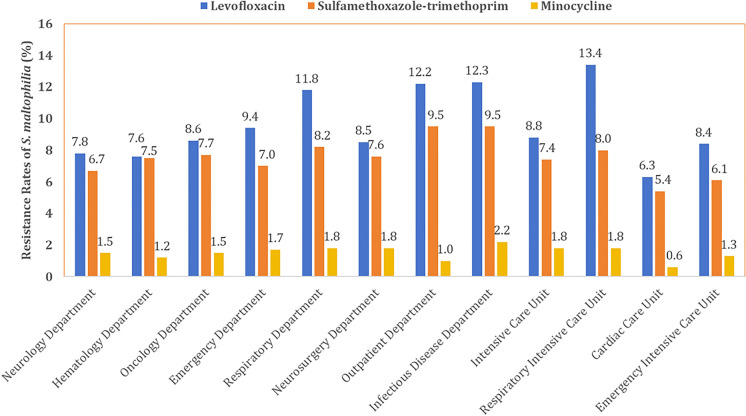
Data were extracted from the China Antimicrobial Resistance Surveillance System (CARSS) and the Blood Bacterial Resistance Investigation Collaborative System (BRICS), encompassing 1412 medical institutions across 31 provinces in China. We analyzed the prevalence of S. maltophilia in clinical isolates, focusing on specific patient populations and departments, as well as resistance profiles to recommended first-line antibiotics, including sulfamethoxazole-trimethoprim, levofloxacin, and minocycline.
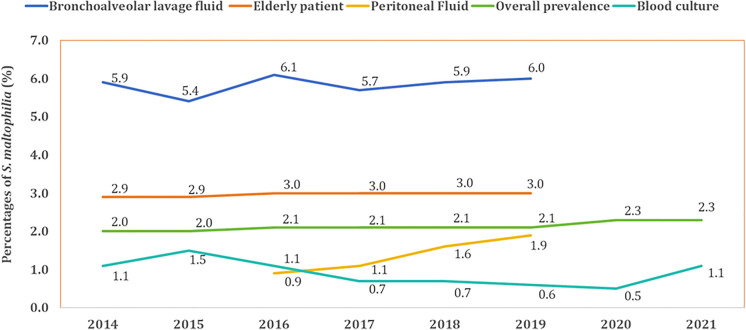
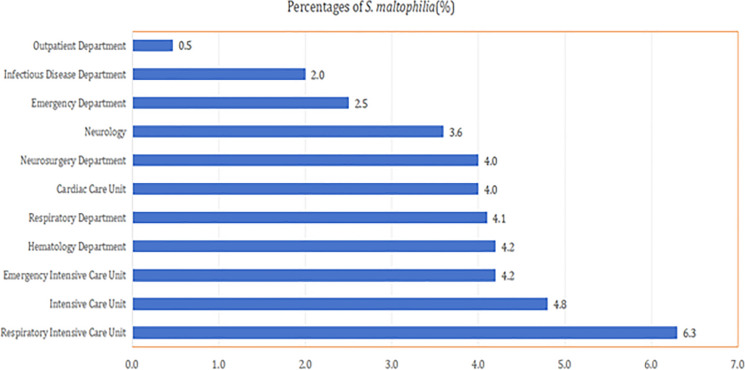
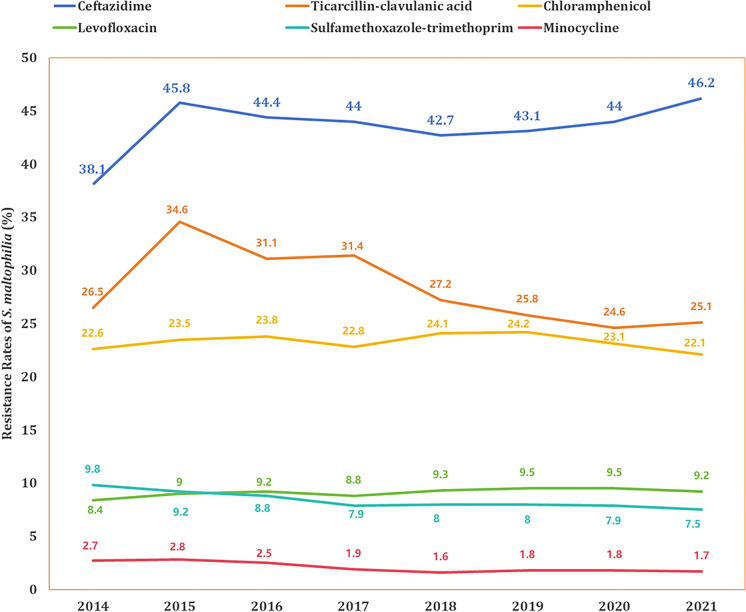
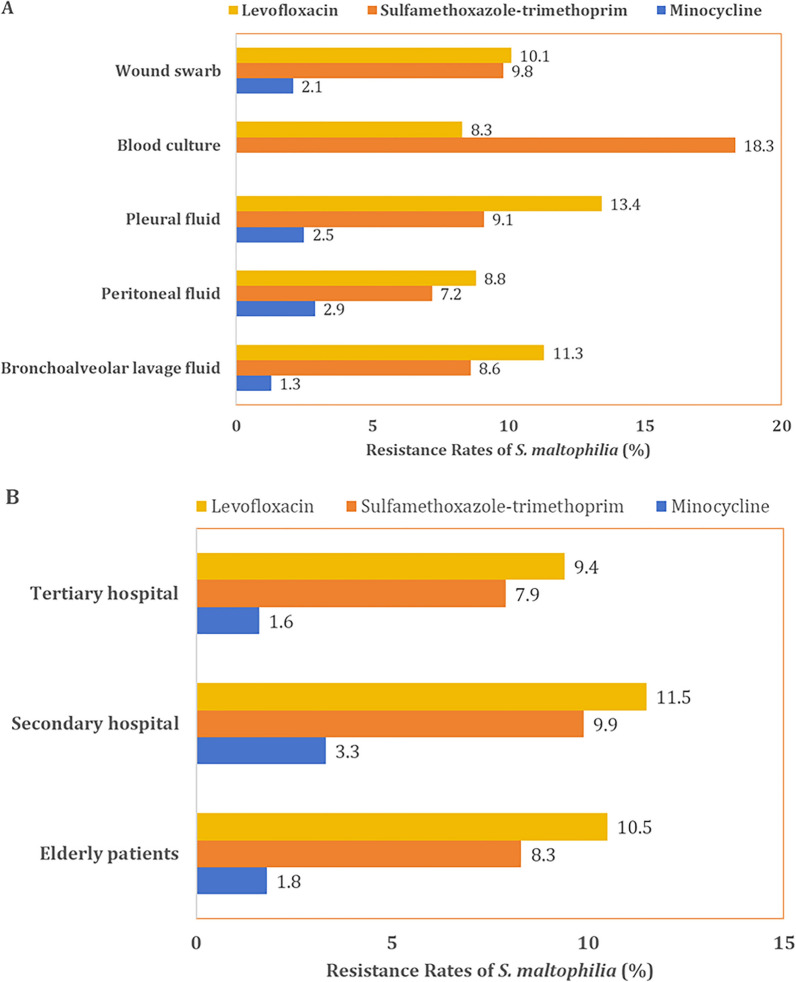
A total of 514,768 S. maltophilia strains were analyzed. The overall prevalence of S. maltophilia among all clinical bacterial isolates remained stable at approximately 2.1%, with higher rates observed in intensive care units and elderly patients. Resistance rates to sulfamethoxazole-trimethoprim decreased from 9.8% in 2014 to 7.5% in 2021. In contrast, resistance to levofloxacin showed a slight upward trend, increasing from 8.5% in 2014 to 9.5% in 2021. Meanwhile, minocycline resistance remained low, fluctuating marginally from 2.7% in 2014 to 1.7% in 2021.
This study highlights the stable prevalence of S. maltophilia in clinical settings in China and the overall low resistance rates to recommended first-line antibiotics. However, alarmingly high resistance rates were observed in specific specimen types, particularly in blood cultures, suggesting that minocycline may be the only reliable therapeutic option among the six tested antibiotics for treating such infections in China. Continuous surveillance and effective infection control measures are essential to manage S. maltophilia infections, particularly in vulnerable populations. Future research should focus on measuring the true burden of these infections and monitoring the susceptibility of the newly introduced antibiotics, such as cefiderocol.
嗜麦芽窄食单胞菌是一种与多种医院感染相关的机会致病菌,以其固有的多重耐药性而闻名。本研究旨在全面概述2014年至2021年中国嗜麦芽窄食单胞菌的流行病学和耐药模式。
数据取自中国抗菌药物耐药监测系统(CARSS)和血源细菌耐药监测协作系统(BRICS),涵盖中国31个省份的1412家医疗机构。我们分析了嗜麦芽窄食单胞菌在临床分离株中的流行情况,重点关注特定患者群体和科室,以及对推荐一线抗生素的耐药谱,包括复方磺胺甲恶唑、左氧氟沙星和米诺环素。
共分析了514,768株嗜麦芽窄食单胞菌菌株。嗜麦芽窄食单胞菌在所有临床细菌分离株中的总体流行率保持稳定,约为2.1%,在重症监护病房和老年患者中观察到更高的比率。复方磺胺甲恶唑的耐药率从2014年的9.8%降至2021年的7.5%。相比之下,左氧氟沙星的耐药率呈轻微上升趋势,从2014年的8.5%升至2021年的9.5%。同时,米诺环素耐药率仍然较低,从2014年的2.7%到2021年的1.7%略有波动。
本研究突出了嗜麦芽窄食单胞菌在中国临床环境中的稳定流行率以及对推荐一线抗生素的总体低耐药率。然而,在特定标本类型中观察到惊人的高耐药率,特别是在血培养中,这表明米诺环素可能是中国六种测试抗生素中治疗此类感染的唯一可靠治疗选择。持续监测和有效的感染控制措施对于管理嗜麦芽窄食单胞菌感染至关重要,特别是在易感人群中。未来的研究应侧重于衡量这些感染的真实负担,并监测新引入抗生素(如头孢地尔)的敏感性。