Yu Lumin, Zhao Yuzhong, Zhang Shanpeng, Xu Linan, Tang Su, Geng Yuxuan, Xue Cong, Zhang Xinglin
College of Agriculture and Forestry, Linyi University, Linyi, 276005, Shandong, China.
College of Animal Science and Veterinary Medicine, Shandong Agricultural University, Tai'an, 271018, Shandong, China.
BMC Microbiol. 2024 Dec 28;24(1):544. doi: 10.1186/s12866-024-03715-5.
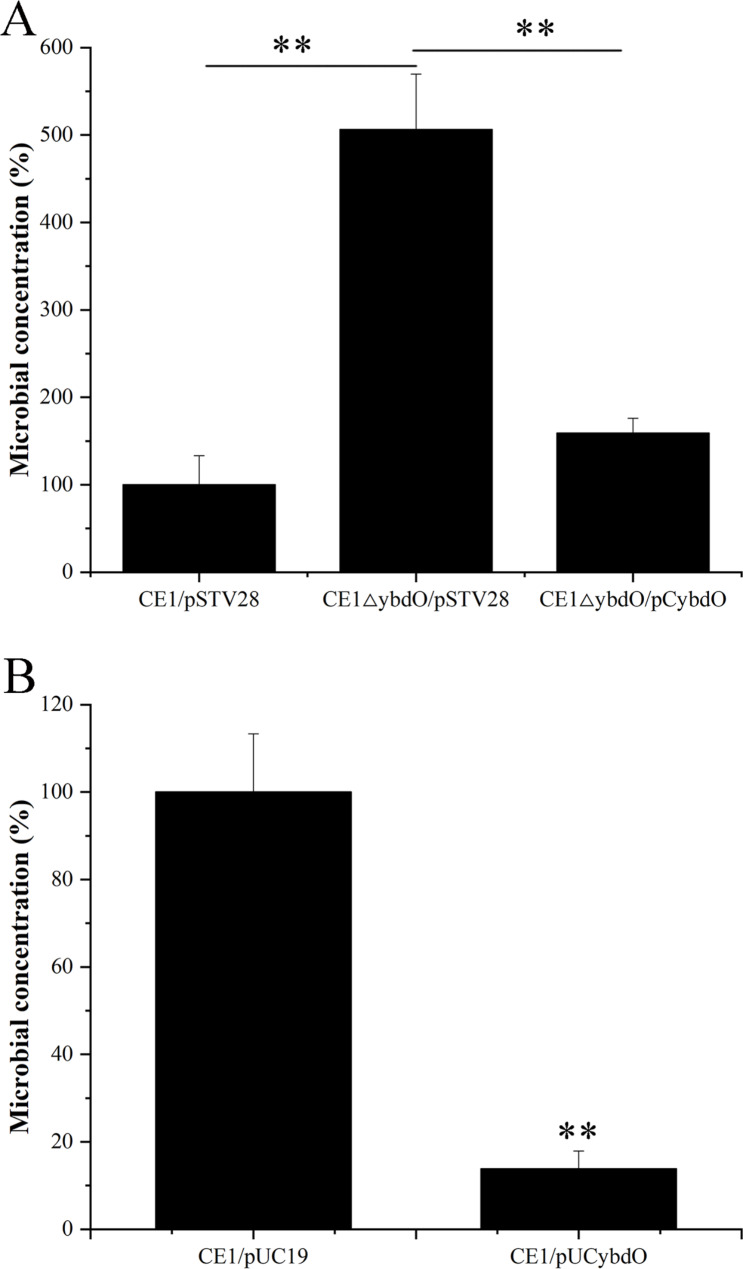
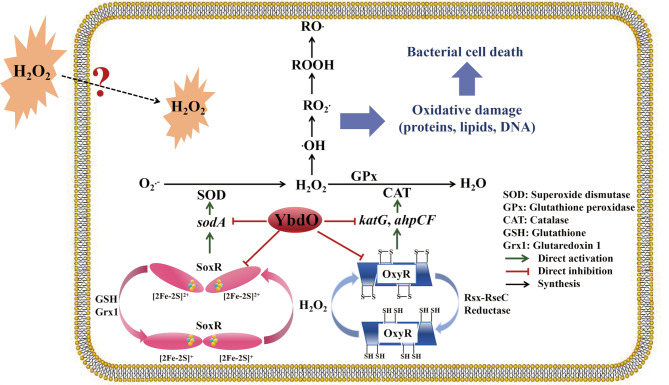
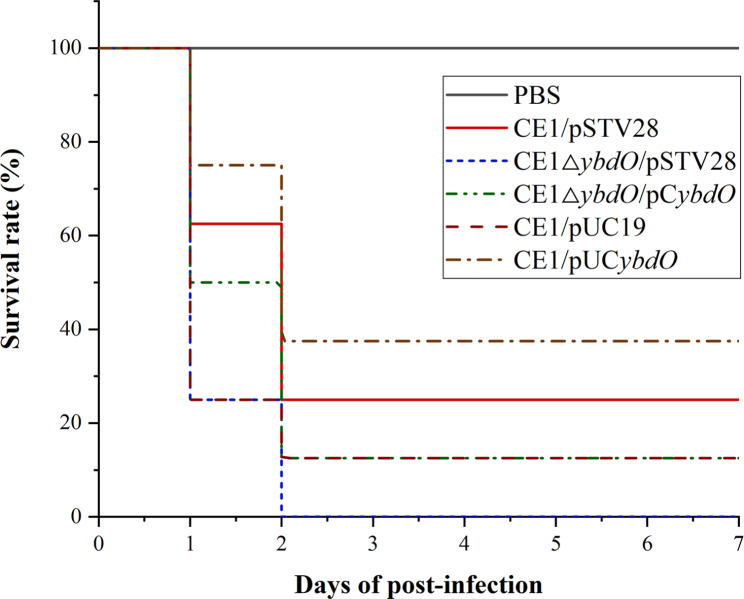
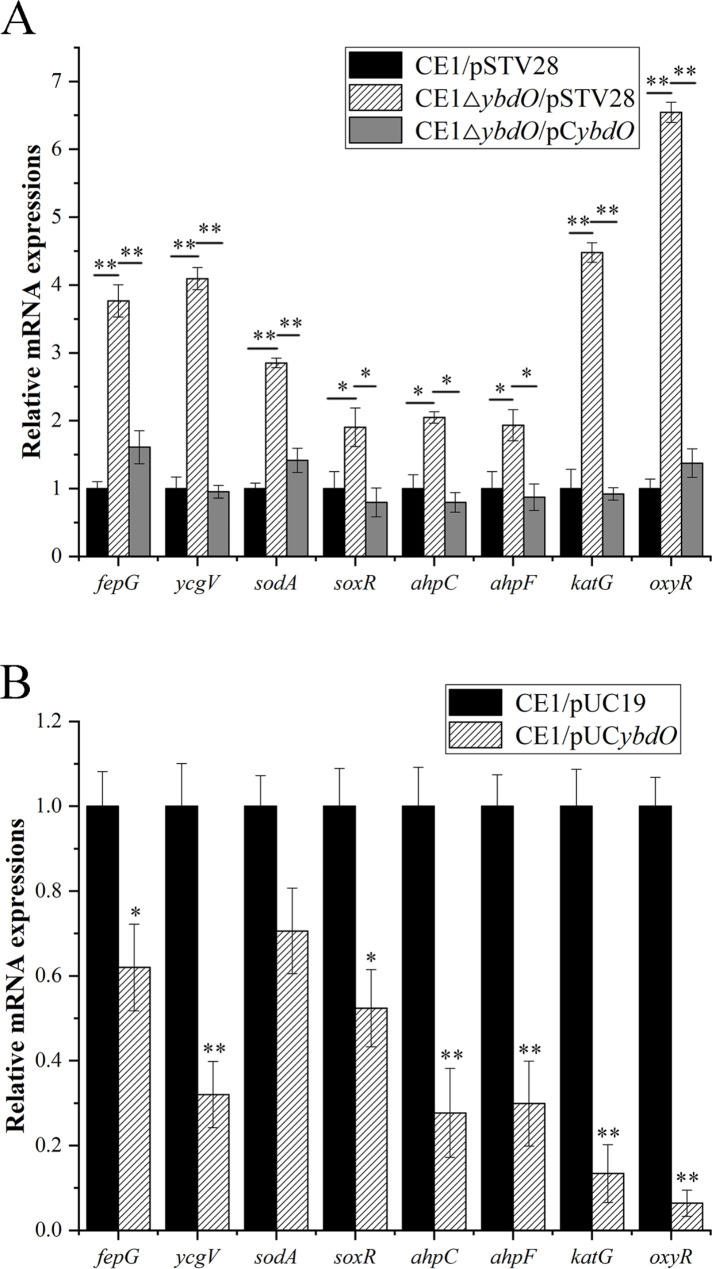
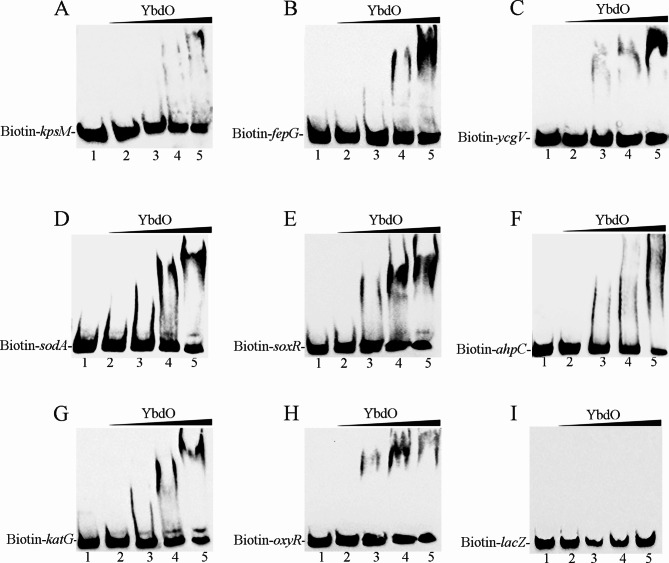
Avian pathogenic Escherichia coli (APEC) is a significant pathogen infecting poultry that is responsible for high mortality, morbidity and severe economic losses to the poultry industry globally, posing a substantial risk to the health of poultry. APEC encounters reactive oxygen species (ROS) during the infection process and thus has evolved antioxidant defense mechanisms to protect against oxidative damage. The imbalance of ROS production and antioxidant defenses is known as oxidative stress, which results in oxidative damage to proteins, lipids and DNA, and even bacterial cell death. APEC uses transcription factors (TFs) to handle oxidative stress. While many TFs in E. coli have been well characterized, the mechanism of the YbdO TF on protecting against oxidative damage and regulating the virulence and pathogenicity of APEC has not been clarified. Here we focus on the regulatory mechanism of YbdO on the pathogenicity of APEC. The results from this study showed that YbdO attenuated the pathogenicity of APEC in chicks infection models by inhibiting the expression of virulence genes fepG and ycgV using quantitative real-time reverse transcription PCR (RT-qPCR) experiments. The electrophoretic mobility shift assays (EMSA) confirmed that YbdO specifically bound to the promoters of fepG and ycgV. Additionally, YbdO increases HO-induced oxidative damage to APEC via repressing the expression of oxidative stress response genes sodA, soxR, ahpC, ahpF, katG, and oxyR by binding to their promoter regions. The repression effect facilitates host immune response to eliminate APEC and to generate beneficial immune protection to the body, thereby indirectly attenuating the pathogenicity of APEC. These findings might provide further insights into the mechanism of oxidative damage to APEC and offer new perspectives for further studies on the prevention and control of APEC infections.
禽致病性大肠杆菌(APEC)是一种感染家禽的重要病原体,它导致全球家禽业的高死亡率、高发病率和严重的经济损失,对家禽健康构成重大风险。APEC在感染过程中会遇到活性氧(ROS),因此进化出了抗氧化防御机制以抵御氧化损伤。ROS产生与抗氧化防御之间的失衡被称为氧化应激,这会导致蛋白质、脂质和DNA的氧化损伤,甚至细菌细胞死亡。APEC利用转录因子(TFs)来应对氧化应激。虽然大肠杆菌中的许多转录因子已得到充分表征,但YbdO转录因子在保护APEC免受氧化损伤以及调节其毒力和致病性方面的机制尚未阐明。在此,我们聚焦于YbdO对APEC致病性的调控机制。本研究结果表明,在雏鸡感染模型中,YbdO通过定量实时逆转录PCR(RT-qPCR)实验抑制毒力基因fepG和ycgV的表达,从而减弱了APEC的致病性。电泳迁移率变动分析(EMSA)证实YbdO特异性结合fepG和ycgV的启动子。此外,YbdO通过结合氧化应激反应基因sodA、soxR、ahpC、ahpF、katG和oxyR的启动子区域来抑制其表达,从而增加HO诱导的对APEC的氧化损伤。这种抑制作用有助于宿主免疫反应清除APEC并对机体产生有益的免疫保护,从而间接减弱APEC的致病性。这些发现可能为深入了解APEC氧化损伤机制提供进一步的见解,并为APEC感染的预防和控制研究提供新的视角。