Reis B, Arenas F, Sánchez-Gallego Á, Marques A F S, Sousa-Pinto I, Franco J N
CIIMAR/CIMAR-LA ‑Interdisciplinary Centre of Marine and Environmental Research, University of Porto, Avenida General Norton de Matos, S/N, 4450‑208, Matosinhos, Portugal.
Faculty of Sciences, Department of Biology, University of Porto, Rua do Campo Alegre 1021 1055, Porto, 4169-007, Portugal.
Sci Rep. 2024 Dec 28;14(1):31217. doi: 10.1038/s41598-024-82557-7.
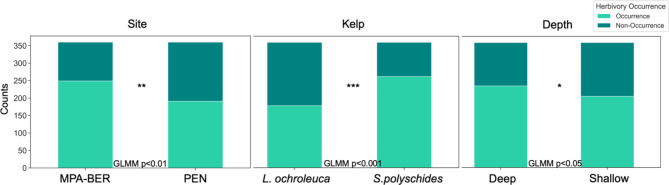
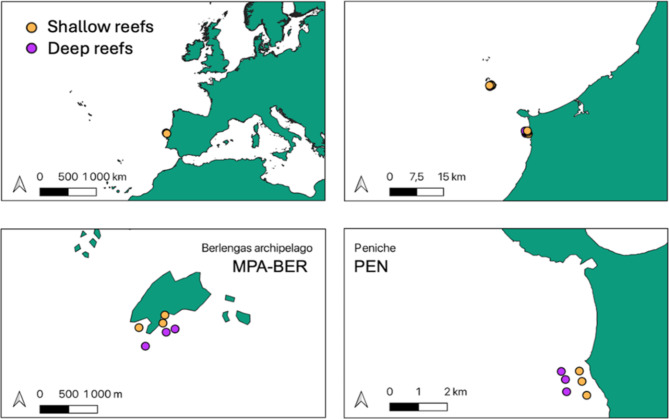
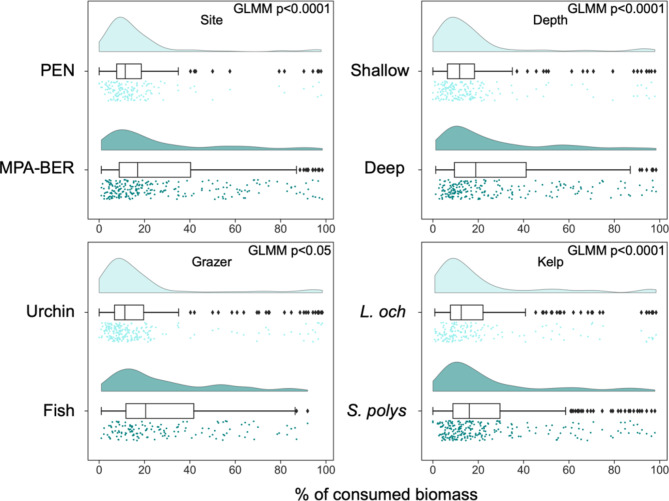
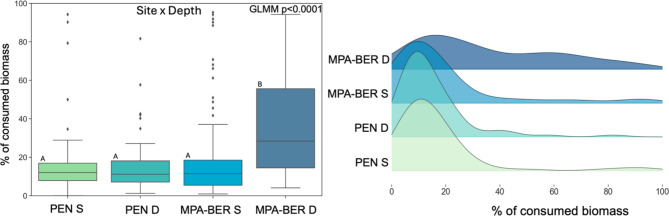
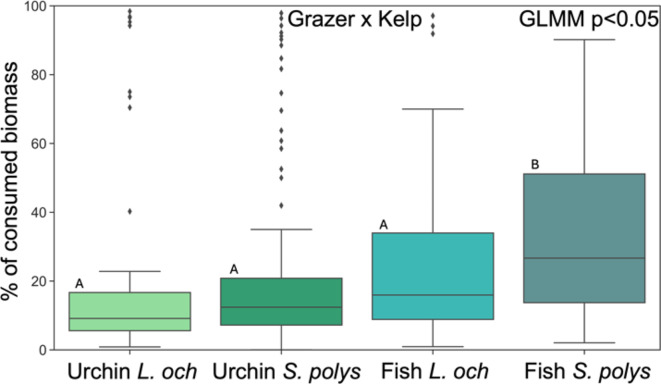
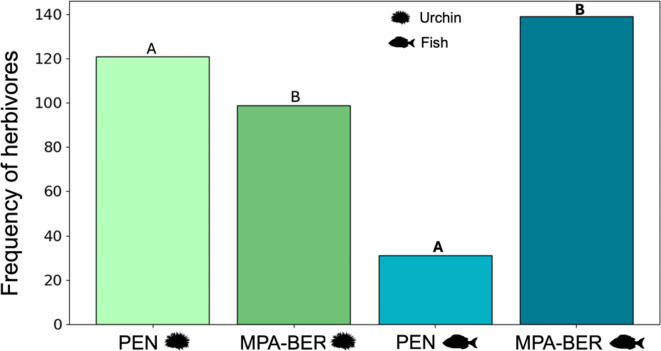
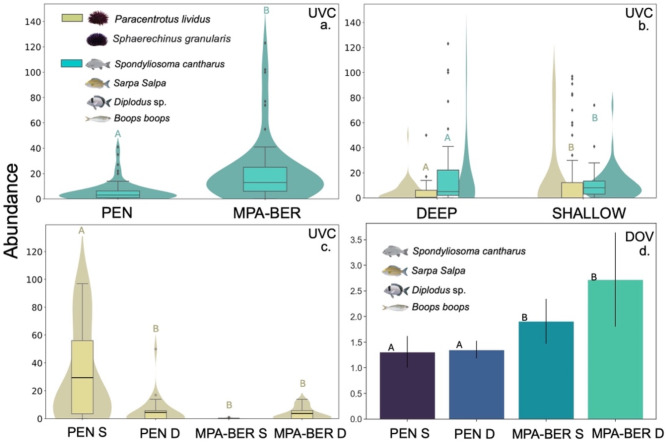
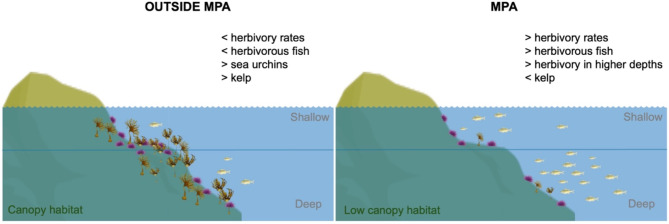
The management and creation of Marine Protected Areas (MPAs) is currently under great focus, with international organisations aiming to protect 30% of our oceans by 2030. The success of MPAs depends on a nuanced understanding of local ecological dynamics and threats, which can significantly influence ecosystem balance. Herbivory can be a stressor for foundation species, namely kelp forests, contributing to their decline in several regions of the globe. However, the dynamics inherent to herbivory and MPA's implementation are still poorly understood. Here, the impact of protection status, depth, kelp species, and grazer type on herbivory (occurrence, rate, and grazer frequency) was assessed through a comprehensive experimental approach involving tethering experiments and faunal characterisation of macro-herbivores. The research was conducted in habitats off the central coast of Portugal: Peniche (PEN) and the MPA Berlengas Archipelago (MPA-BER). Our findings revealed that herbivory occurrence and rate are higher within the MPA, especially at greater depths. Instead of urchins, fish are the significant contributors to kelp consumption, showing a preference for the kelp S. polyschides. Results provide the first experimental evidence in the Atlantic region identifying fish as the dominant herbivores driving increased kelp biomass loss, a relationship potentially magnified by MPA implementation. Hence, protection status may not benefit all ecosystem components, enhancing the need for robust MPA management to balance trophic interactions and support biodiversity and ecosystem resilience.
海洋保护区(MPA)的管理与创建目前备受关注,国际组织的目标是到2030年保护30%的海洋。海洋保护区的成功取决于对当地生态动态和威胁的细致理解,这些因素会显著影响生态系统平衡。食草作用可能会给基础物种(即海带森林)带来压力,导致其在全球多个地区数量减少。然而,食草作用和海洋保护区实施所固有的动态变化仍未得到充分理解。在此,通过一项综合实验方法评估了保护状态、深度、海带种类和食草动物类型对食草作用(发生率、速率和食草动物频率)的影响,该方法包括系留实验和大型食草动物的动物区系特征分析。研究在葡萄牙中部海岸的栖息地进行:佩尼切(PEN)和海洋保护区贝伦加斯群岛(MPA - BER)。我们的研究结果表明,在海洋保护区内,尤其是在更深的深度,食草作用的发生率和速率更高。鱼类而非海胆是海带消耗的主要贡献者,它们表现出对多叶海带的偏好。研究结果提供了大西洋地区首个实验证据,确定鱼类是导致海带生物量损失增加的主要食草动物,这种关系可能因海洋保护区的实施而被放大。因此,保护状态可能并非对所有生态系统组成部分都有益,这凸显了加强海洋保护区管理以平衡营养相互作用、支持生物多样性和生态系统恢复力的必要性。