Shrivastava Sarika, Khalid Saifullah, Nishad Dinesh Kumar
Ashoka Institute of Technology & Management, Varanasi, India.
IBM Multi Activities Co. Ltd., Khartoum, Sudan.
Sci Rep. 2024 Dec 28;14(1):31514. doi: 10.1038/s41598-024-83309-3.
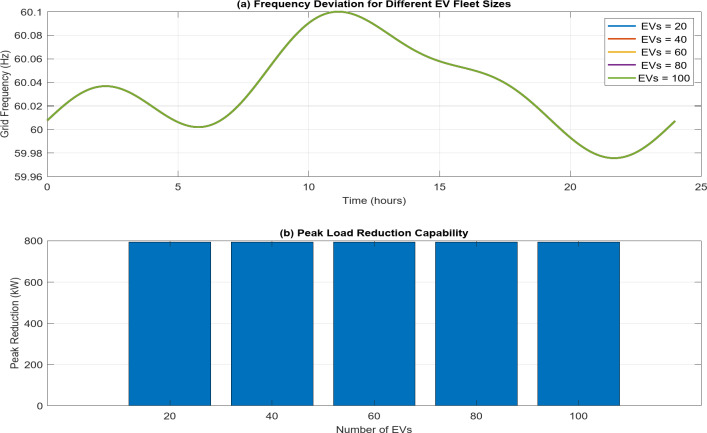
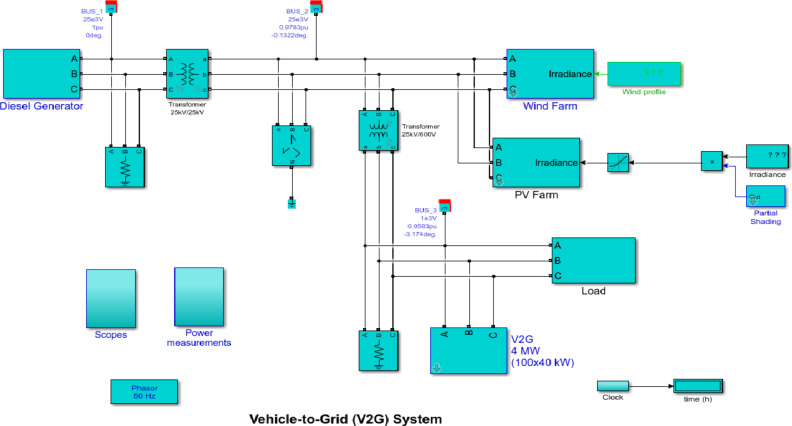
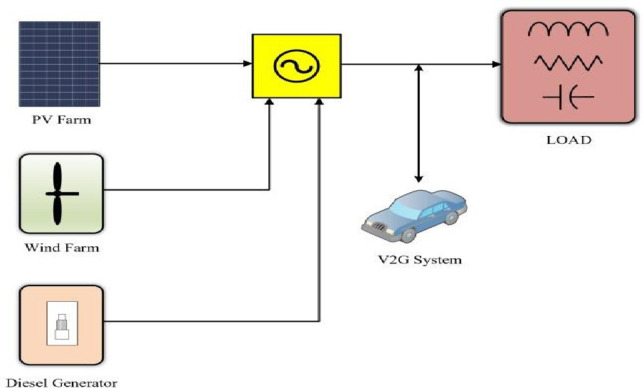
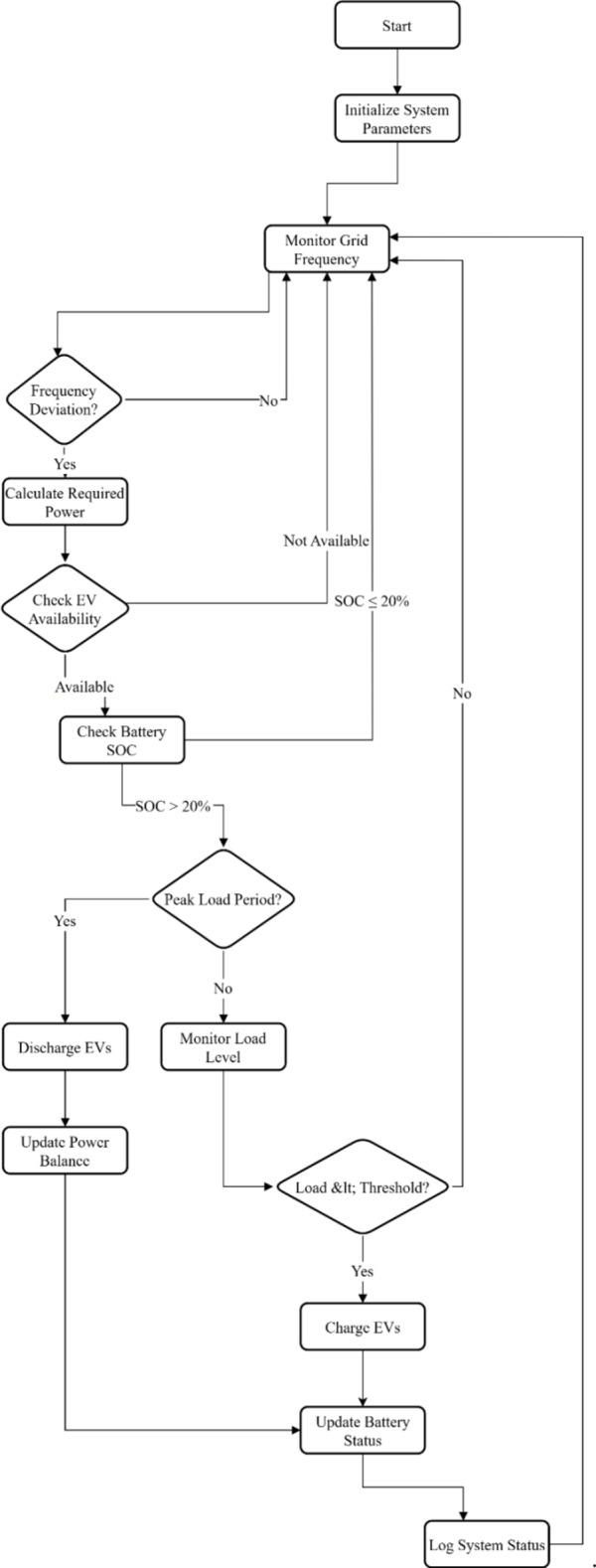
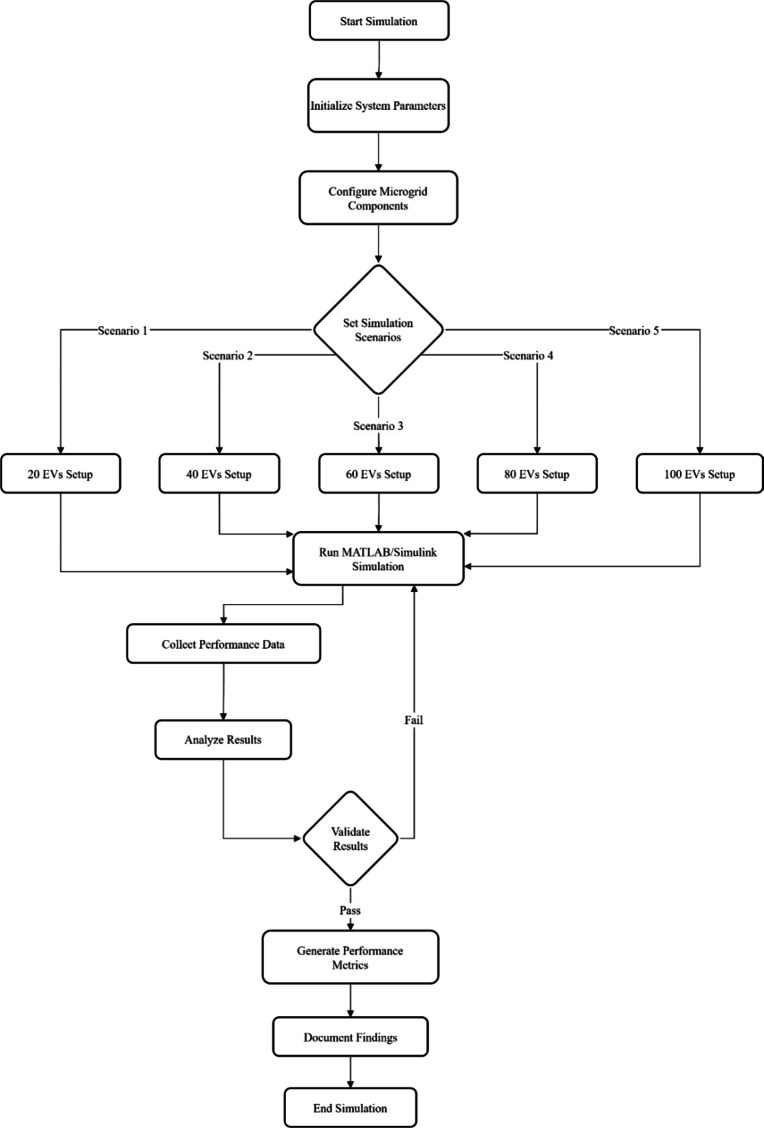
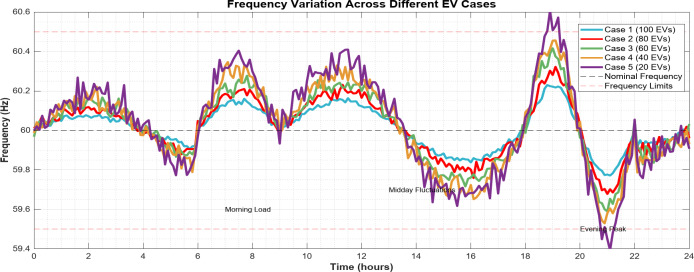
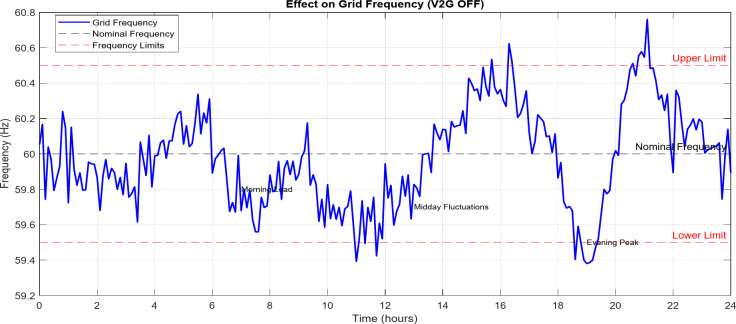
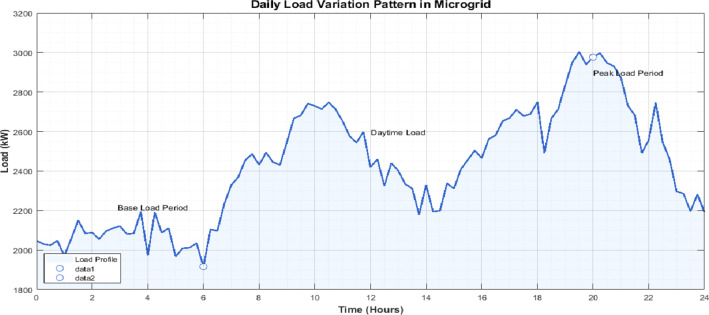
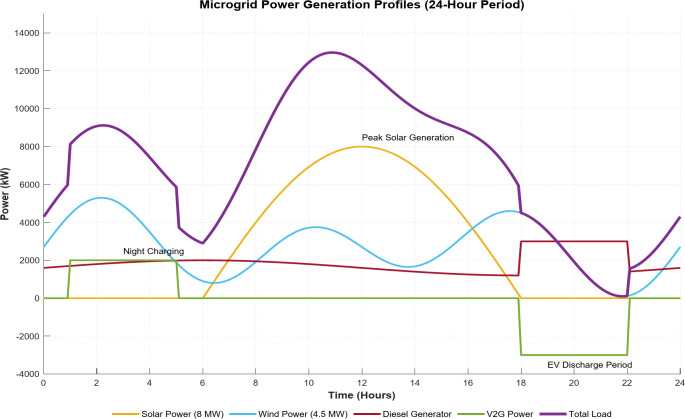
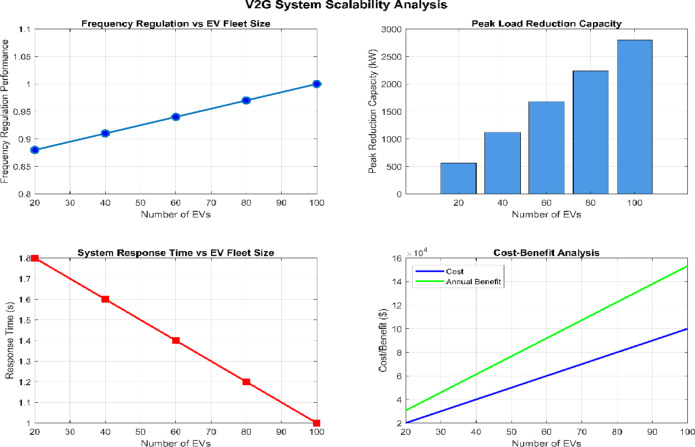
A vehicle-to-grid (V2G) technology enables bidirectional power exchange between electric vehicles (EVs) and the power grid, presenting enhanced grid stability and load management opportunities. This study investigates a comprehensive microgrid system integrating EVs with solar (8 MW), wind (4.5 MW), and diesel generation sources, focusing on peak load reduction and frequency regulation capabilities. Through MATLAB/Simulink simulations using a Phasor model, we analyze five distinct scenarios with varying EV fleet sizes (20-100 vehicles, 40 kW each). Results demonstrate that V2G integration effectively maintains grid frequency within 59.5-60.5 Hz across all test cases, achieving optimal performance using 100 EVs. Through strategic EV discharge scheduling, the system successfully reduces evening peak loads from 3000 to 2200 kW. Economic analysis reveals decreasing payback periods from 5.2 to 2.8 years as fleet size increases, with ROI improving from 12.5 to 23.1%. These findings establish quantitative benchmarks for V2G implementation in microgrids and demonstrate its viability for grid stability enhancement and load management applications.
车辆到电网(V2G)技术实现了电动汽车(EV)与电网之间的双向电力交换,为增强电网稳定性和负荷管理提供了机遇。本研究调查了一个将电动汽车与太阳能(8兆瓦)、风能(4.5兆瓦)和柴油发电来源整合在一起的综合微电网系统,重点关注峰值负荷降低和频率调节能力。通过使用相量模型的MATLAB/Simulink模拟,我们分析了五种不同的场景,电动汽车车队规模各不相同(20 - 100辆,每辆40千瓦)。结果表明,在所有测试案例中,V2G整合有效地将电网频率维持在59.5 - 60.5赫兹之间,使用100辆电动汽车可实现最佳性能。通过战略性的电动汽车放电调度,该系统成功地将晚间峰值负荷从3000千瓦降至2200千瓦。经济分析表明,随着车队规模的增加,投资回收期从5.2年缩短至2.8年,投资回报率从12.5%提高至23.1%。这些发现为微电网中V2G的实施建立了定量基准,并证明了其在增强电网稳定性和负荷管理应用方面的可行性。