Jackson Joseph W, Kaldhone Pravin R, Stewart Caitlin, Anderson John, MacGregor Scott, Maclean Michelle, Major Marian, Atreya Chintamani D
Division of Blood Components and Devices, Center for Biologics Evaluation and Research, FDA, Silver Spring, MD, 20993, USA.
Congressional Research Service, Library of Congress, Washington, DC, 20540, USA.
Sci Rep. 2024 Dec 28;14(1):31540. doi: 10.1038/s41598-024-83171-3.
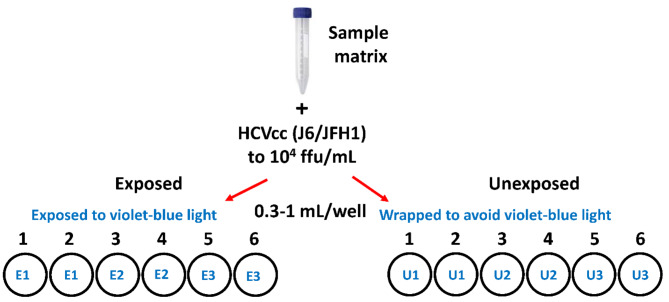
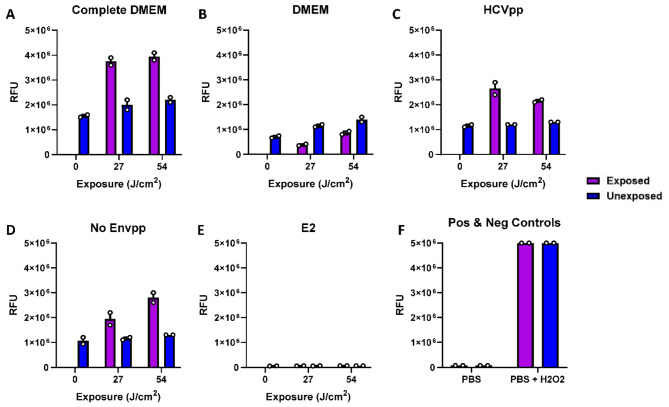
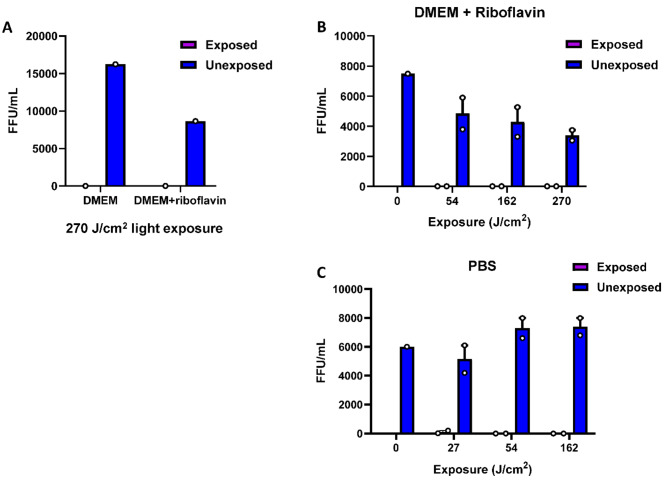
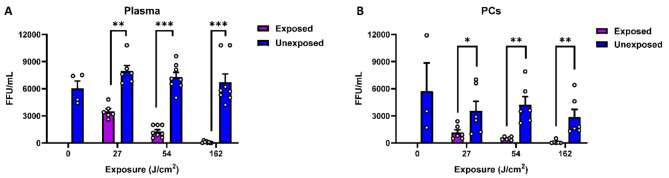
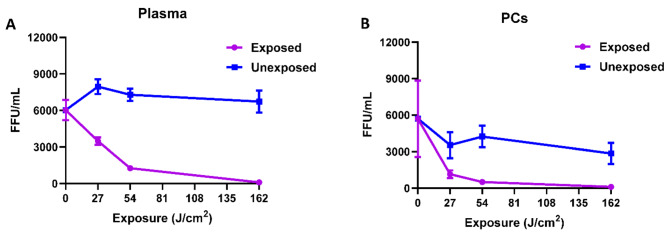
Added safety measures coupled with the development and use of pathogen reduction technologies (PRT) significantly reduces the risk of transfusion-transmitted infections (TTIs) from blood products. Current approved PRTs utilize chemical and/or UV-light based inactivation methods. While the effectiveness of these PRTs in reducing pathogens are well documented, these can cause tolerable yet unintended consequences on the quality and efficacy of the transfusion products. As an alternative to UV-based approaches, we have previously demonstrated that 405 nm violet-blue light exposure successfully inactivates a variety of pathogens, including bacteria, parasites, and viruses, in both platelet concentrates (PCs) and plasma. Herein, we show that 405 nm light treatment effectively inactivates hepatitis C cell culture virus (HCVcc) by up to ~ 3.8 log10 in small volumes of a variety of matrices, such as cell culture media, PBS, plasma, and PCs with 27 J/cm of light exposure, and total inactivation of HCVcc after 162 J/cm light exposure. Furthermore, we demonstrate that carry-over of media supplemented with fetal bovine serum enhances the production of reactive oxygen species (ROS), providing mechanistic insights to 405 nm light-mediated viral inactivation. Overall, 405 nm light successfully inactivates HCVcc, further strengthening this method as a novel PRT for platelets and plasma.
额外的安全措施,再加上病原体灭活技术(PRT)的开发和使用,显著降低了血液制品输血传播感染(TTI)的风险。目前获批的PRT采用基于化学和/或紫外线的灭活方法。虽然这些PRT在减少病原体方面的有效性已有充分记录,但它们可能会对输血产品的质量和功效造成可容忍但意外的后果。作为基于紫外线方法的替代方案,我们之前已经证明,405纳米的紫蓝光照射能够成功灭活浓缩血小板(PC)和血浆中的多种病原体,包括细菌、寄生虫和病毒。在此,我们表明,405纳米光处理在27焦耳/平方厘米的光照下,能有效灭活小体积多种基质(如细胞培养基、磷酸盐缓冲液、血浆和浓缩血小板)中的丙型肝炎细胞培养病毒(HCVcc),灭活程度高达约3.8个对数10,在162焦耳/平方厘米的光照后可完全灭活HCVcc。此外,我们证明补充胎牛血清的培养基残留会增强活性氧(ROS)的产生,为405纳米光介导的病毒灭活提供了机制上的见解。总体而言,405纳米光成功灭活了HCVcc,进一步巩固了这种方法作为一种用于血小板和血浆的新型PRT的地位。