Iskov Nina Braad, Olsen Anders Stevnhoved, Madsen Kristoffer Hougaard, Mørup Morten
Department of Applied Mathematics and Computer Science, Technical University of Denmark, Lyngby, Denmark.
Danish Research Centre for Magnetic Resonance, Centre for Functional and Diagnostic Imaging and Research, Copenhagen University Hospital - Amager and Hvidovre, Copenhagen, Denmark.
Netw Neurosci. 2024 Dec 10;8(4):1243-1264. doi: 10.1162/netn_a_00399. eCollection 2024.
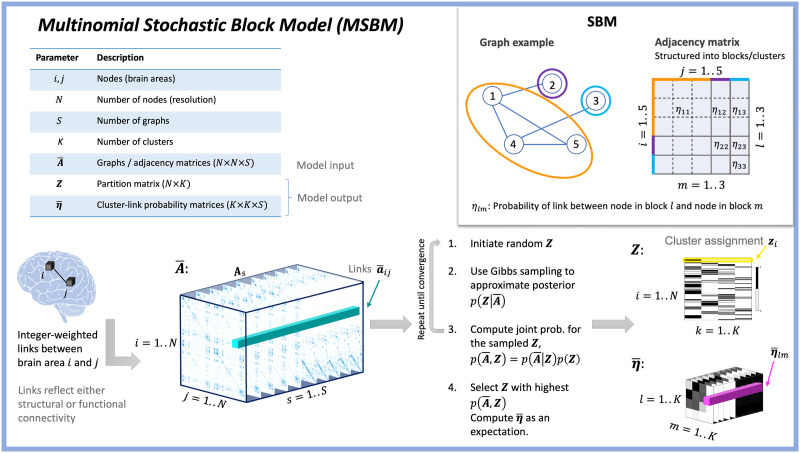
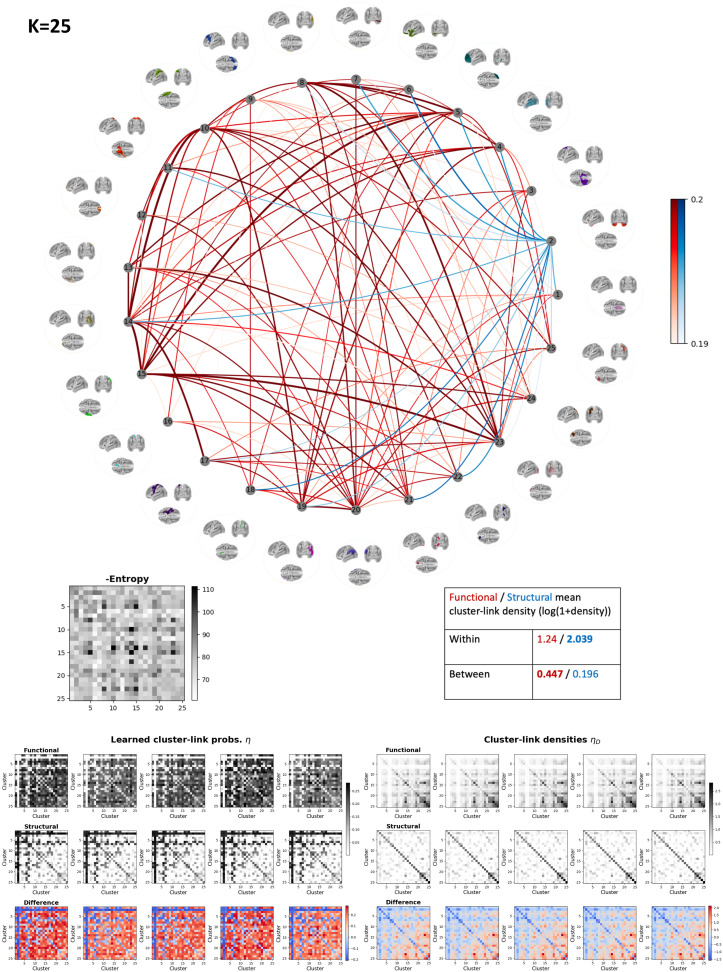
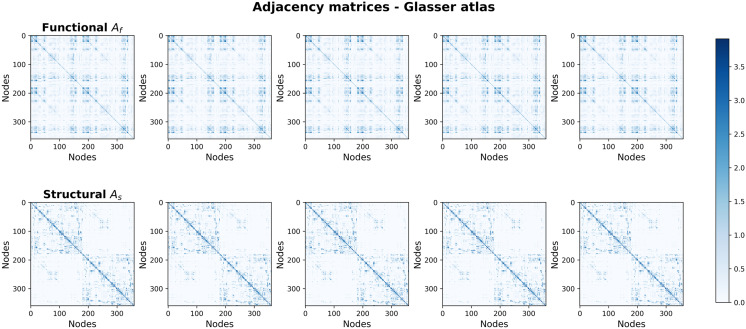
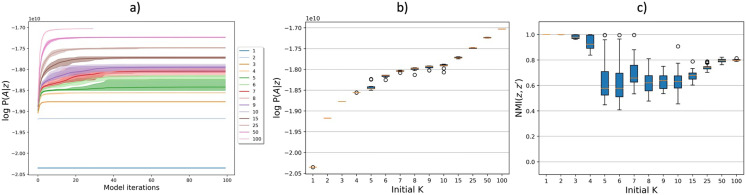
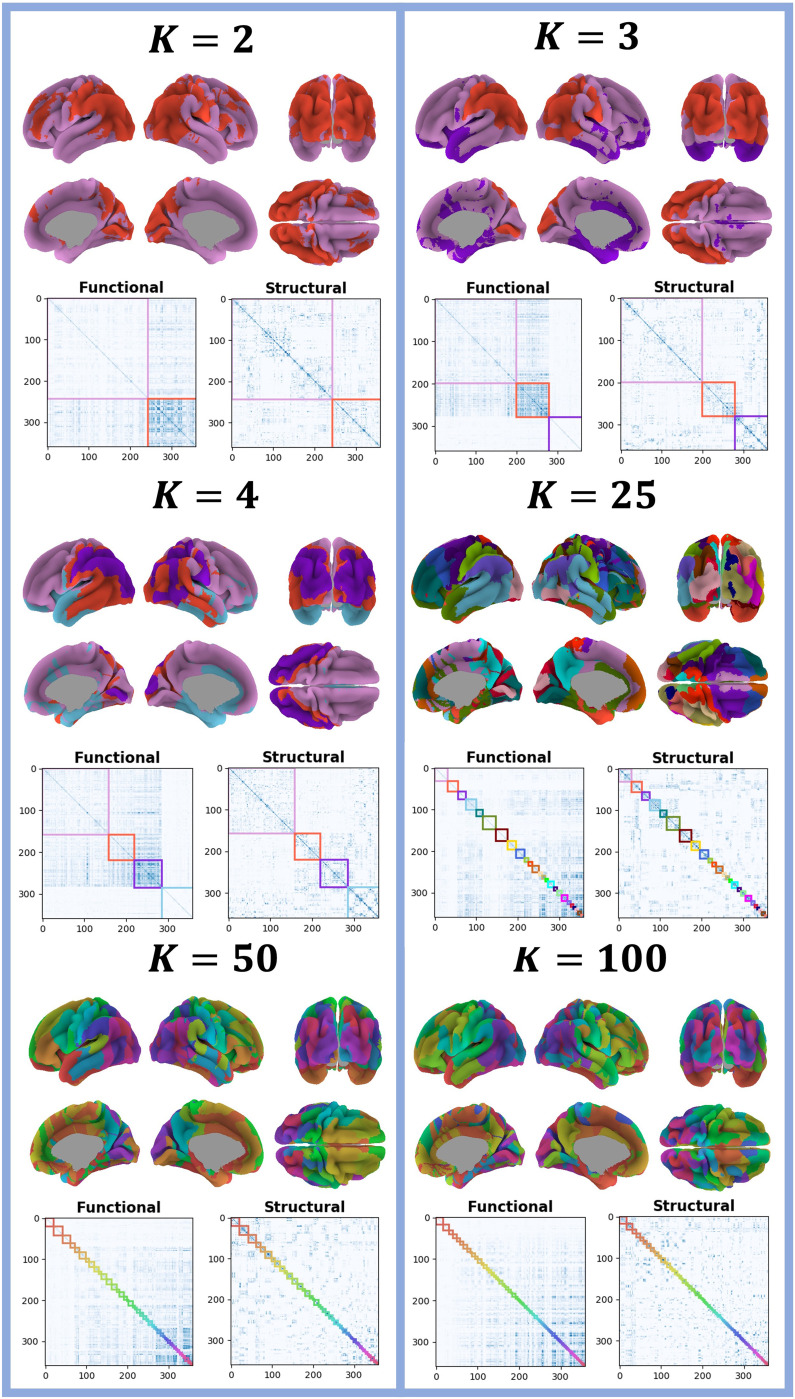
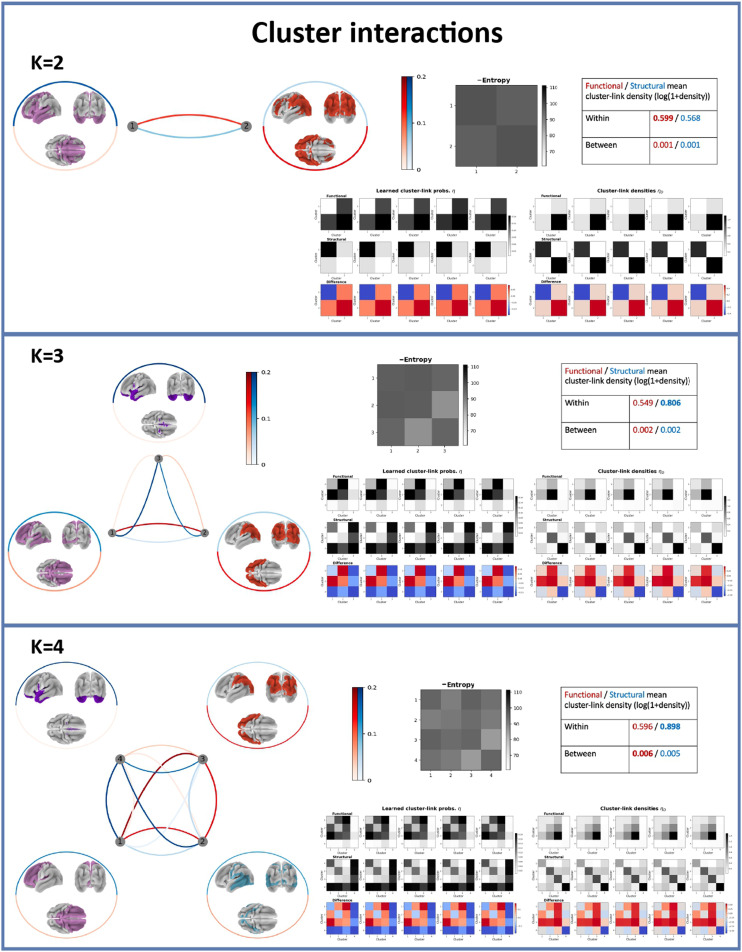
Understanding the differences between functional and structural human brain connectivity has been a focus of an extensive amount of neuroscience research. We employ a novel approach using the multinomial stochastic block model (MSBM) to explicitly extract components that characterize prominent differences across graphs. We analyze structural and functional connectomes derived from high-resolution diffusion-weighted MRI and fMRI scans of 250 Human Connectome Project subjects, analyzed at group connectivity level across 50 subjects. The inferred brain partitions revealed consistent, spatially homogeneous clustering patterns across inferred resolutions demonstrating the MSBM's reliability in identifying brain areas with prominent structure-function differences. Prominent differences in low-resolution brain maps ( = {3, 4} clusters) were attributed to weak functional connectivity in the bilateral anterior temporal lobes, while higher resolution results ( ≥ 25) revealed stronger interhemispheric functional than structural connectivity. Our findings emphasize significant differences in high-resolution functional and structural connectomes, revealing challenges in extracting meaningful connectivity measurements from both modalities, including tracking fibers through the corpus callosum and attenuated functional connectivity in anterior temporal lobe fMRI data, which we attribute to increased noise levels. The MSBM emerges as a valuable tool for understanding differences across graphs, with potential future applications and avenues beyond the current focus on characterizing modality-specific distinctions in connectomics data.
理解人类大脑功能连接和结构连接之间的差异一直是大量神经科学研究的重点。我们采用一种新颖的方法,即多项式随机块模型(MSBM),来明确提取表征不同图形之间显著差异的成分。我们分析了来自250名人类连接组计划受试者的高分辨率扩散加权磁共振成像(MRI)和功能磁共振成像(fMRI)扫描得出的结构和功能连接组,并在50名受试者的群体连接水平上进行了分析。推断出的脑部分区在不同推断分辨率下显示出一致的、空间上均匀的聚类模式,证明了MSBM在识别具有显著结构 - 功能差异的脑区方面的可靠性。低分辨率脑图谱( = {3, 4}个聚类)中的显著差异归因于双侧前颞叶的弱功能连接,而高分辨率结果(≥ 25)显示半球间功能连接比结构连接更强。我们的研究结果强调了高分辨率功能连接组和结构连接组之间的显著差异,揭示了从这两种模式中提取有意义的连接测量值所面临的挑战,包括追踪穿过胼胝体的纤维以及前颞叶fMRI数据中减弱的功能连接,我们将其归因于噪声水平的增加。MSBM成为理解不同图形之间差异的有价值工具,在未来可能有超出当前连接组学数据中特定模式差异表征重点的应用和途径。