Li Jin, Ma Yuhong, Wu Qixuemeng, Ping Pengbin, Li Juan, Xu Xiaoying
Department of Radiotherapy Oncology, The Second Affiliated Hospital of Dalian Medical University, Dalian, China.
Front Oncol. 2024 Dec 13;14:1488730. doi: 10.3389/fonc.2024.1488730. eCollection 2024.
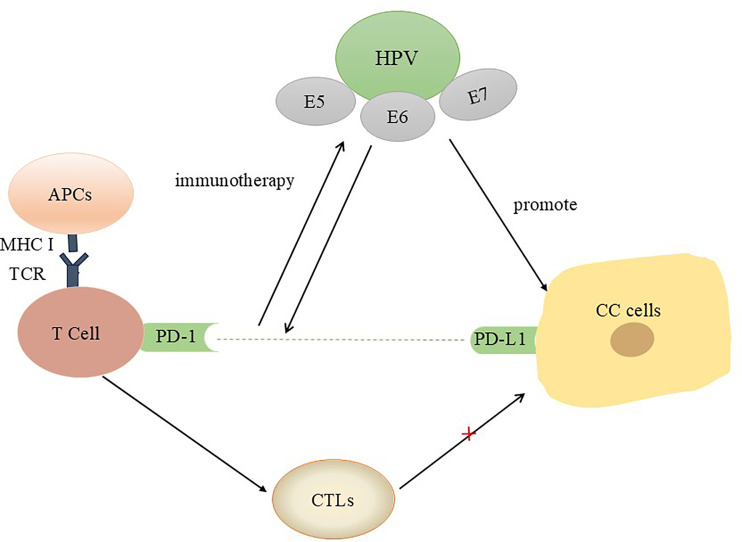
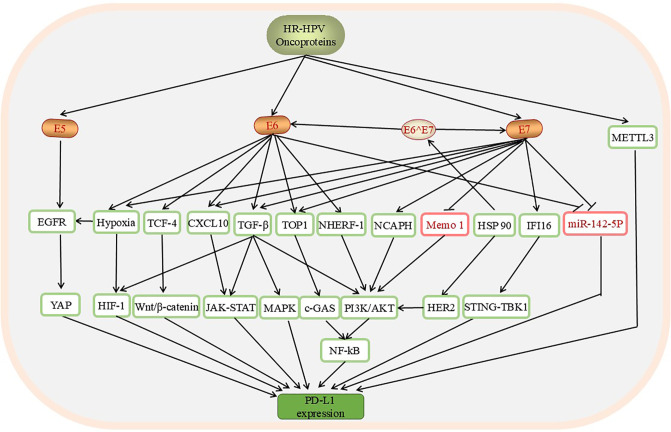
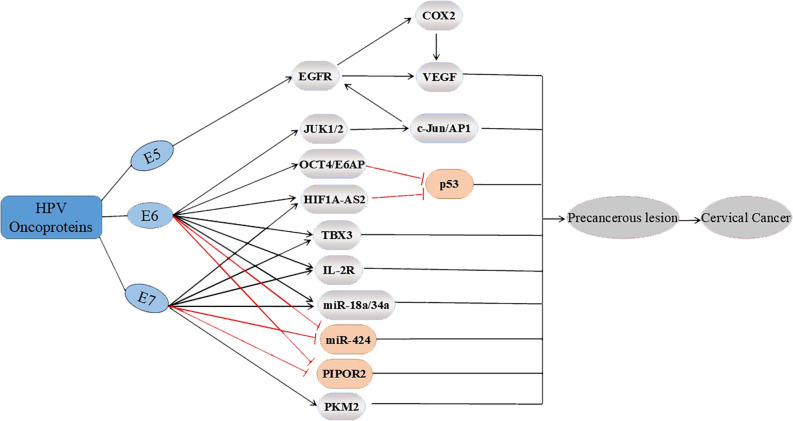
Cervical cancer (CC) is a common malignant tumour of the female reproductive system that is highly harmful to women's health. The efficacy of traditional surgery, radiotherapy and chemotherapy is limited, especially for recurrent and metastatic CC. With continuous progress in diagnostic and treatment technology, immunotherapy has become a new approach for treating CC and has become a new therapy for recurrent and metastatic CC. However, immunotherapy is not effective for all patients with CC. Therefore, factors related to immunotherapy efficacy in CC patients have become the focus of researchers. High-risk human papillomavirus (HPV) infection is an important factor that drives CC development and affects its progression and prognosis. Increasing attention has been given to the mechanism of the E5, E6 and E7 proteins, which are encoded by the HPV gene, in the occurrence and development of CC and their interaction with programmed cell death ligand-1/programmed cell death-1 (PD-L1/PD-1). Although some preliminary studies have been conducted on these topics, a comprehensive and systematic review of these topics is not available. This review comprehensively summarizes related articles from journals with impact factors greater than 3 and published in the past 5 years; it also reviews studies on the mechanism of HPV and CC, the mechanism of PD-L1/PD-1 axis regulation in CC, and the mechanism by which the interaction between HPV-related oncoproteins and the PD-L1/PD-1 pathway affects the development and prognosis of CC. This study provides theoretical support for the use of immunotherapies for CC, provides a basis for the selection of specific medications that target different HPV-related proteins, and provides a new perspective for the discovery of new immunotherapy targets for CC.
宫颈癌(CC)是女性生殖系统常见的恶性肿瘤,对女性健康危害极大。传统手术、放疗和化疗的疗效有限,尤其是对于复发和转移性宫颈癌。随着诊断和治疗技术的不断进步,免疫疗法已成为治疗宫颈癌的新方法,并已成为复发和转移性宫颈癌的新疗法。然而,免疫疗法并非对所有宫颈癌患者都有效。因此,与宫颈癌患者免疫治疗疗效相关的因素已成为研究人员关注的焦点。高危型人乳头瘤病毒(HPV)感染是驱动宫颈癌发生发展、影响其进程和预后的重要因素。HPV基因编码的E5、E6和E7蛋白在宫颈癌发生发展中的作用机制及其与程序性细胞死亡配体1/程序性细胞死亡蛋白1(PD-L1/PD-1)的相互作用越来越受到关注。尽管已经针对这些主题开展了一些初步研究,但尚未有对这些主题全面而系统的综述。本综述全面总结了过去5年发表在影响因子大于3的期刊上的相关文章;还综述了HPV与宫颈癌的机制、宫颈癌中PD-L1/PD-1轴调控机制,以及HPV相关癌蛋白与PD-L1/PD-1通路之间的相互作用影响宫颈癌发生发展和预后的机制。本研究为宫颈癌免疫治疗的应用提供了理论支持,为针对不同HPV相关蛋白的特异性药物选择提供了依据,并为发现宫颈癌新的免疫治疗靶点提供了新的视角。