Zhang Wei, Wang Weicheng, Wang Rui, Han Xiao, Zhu Lijun, Guo Wenjie, Gu Yanhong
Department of Oncology, The First Affiliated Hospital of Nanjing Medical University, Nanjing, 210029, China.
Department of Oncology, The Affiliated Taizhou People's Hospital of Nanjing Medical University, Taizhou, 225300, China.
Oncol Res. 2024 Dec 20;33(1):225-234. doi: 10.32604/or.2024.050047. eCollection 2025.
As a novel blocker of vascular endothelial growth factor receptor (VEGFR), fruquintinib has been approved for treating colorectal cancer (CRC). However, its dosage and therapeutic efficacy are limited by its widespread adverse reactions. Venetoclax, recognized as the initial inhibitor of B-cell lymphoma protein 2 (BCL2), has shown potential in boosting the effectiveness of immunotherapy against CRC. This study investigated the efficacy and mechanisms of fruquintinib combined with venetoclax in treating CRC.
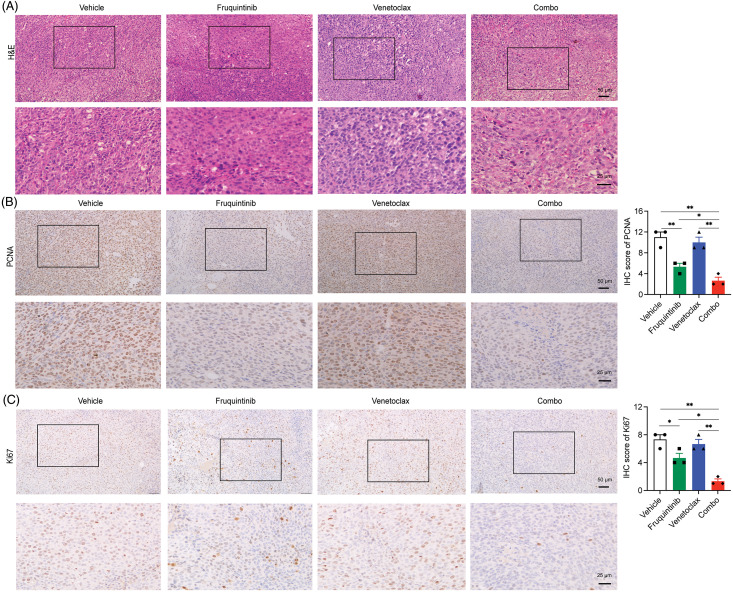
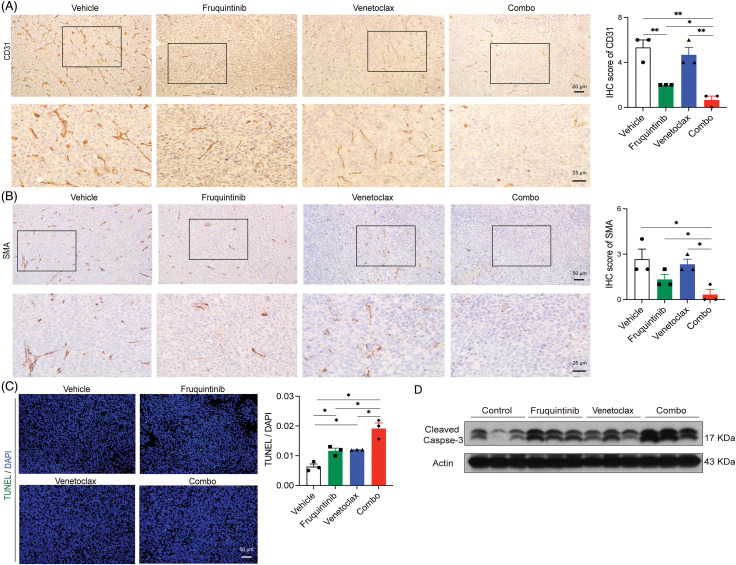
We developed a colon cancer mouse model with the CT26 colon cell line to demonstrate fruquintinib and venetoclax's efficacy against tumors. Then we employed various techniques to evaluate different aspects of the experimental outcomes. Immunohistochemistry was used to detect cell proliferation and angiogenesis in tumor tissues. Western blot analysis was utilized to examine the occurrence of cell apoptosis, and flow cytometry to quantitate immune cells within the tumor tissues. Moreover, immunofluorescence was employed to measure cytokine levels.
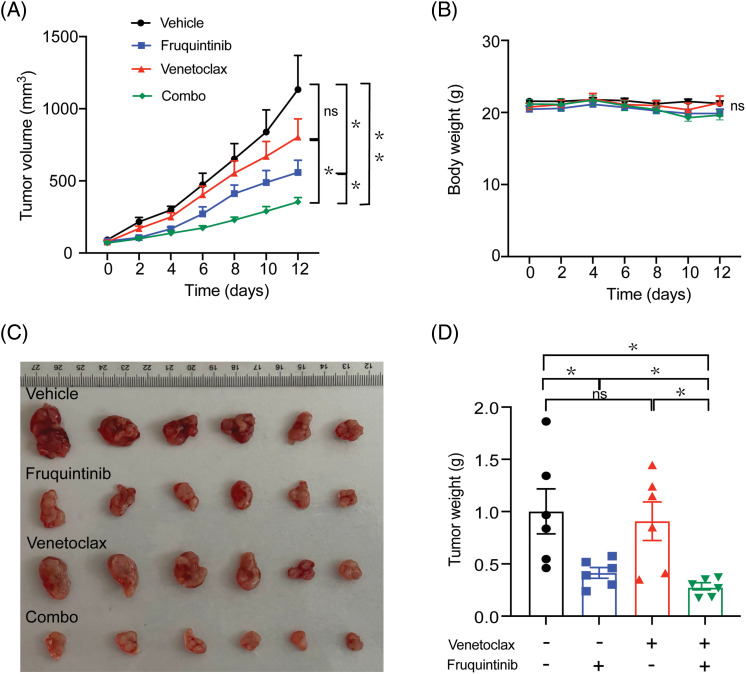
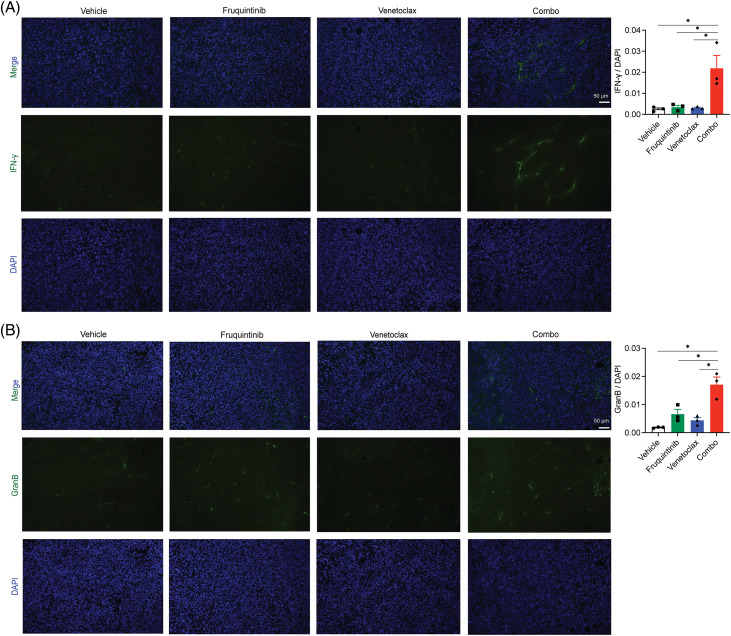
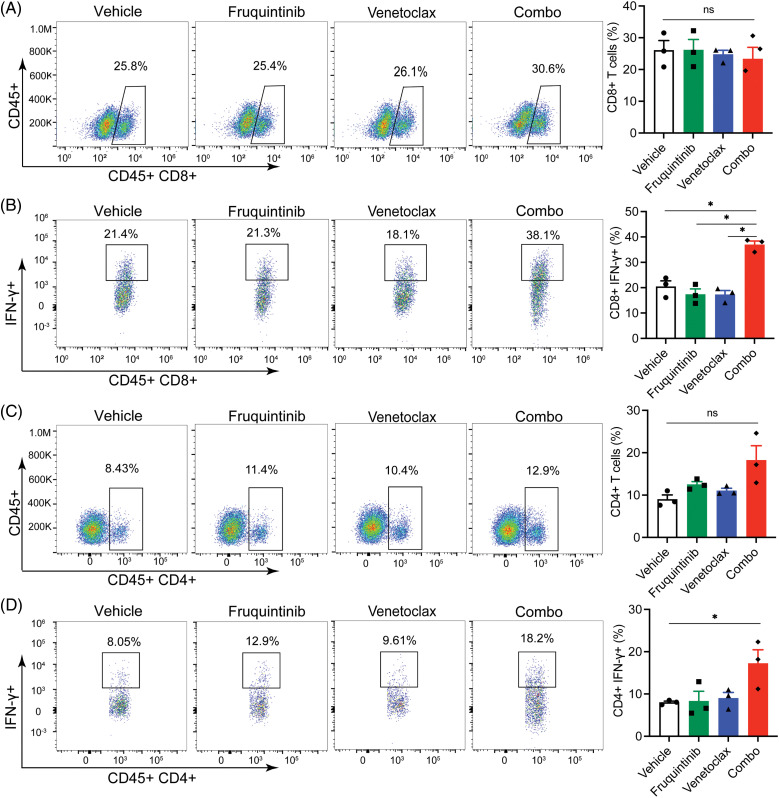
The strongest inhibition on tumor growth was achieved by the combination of fruquintinib with venetoclax, as opposed to individual drug use. Venetoclax was found to amplify the impact of fruquintinib, leading to decreased cancer cell proliferation, increased cancer cell apoptosis, lowered angiogenesis, better vascular structure normalization, and improved immune cell infiltration.
Our findings indicate that the addition of venetoclax enhances the impact of fruquintinib on vascular normalization and modulation of the tumor immune microenvironment. Our study presents the justification for utilizing the fruquintinib and venetoclax combination in treating CRC. Venetoclax holds promise in being assimilated into anticancer medications for CRC.
作为一种新型血管内皮生长因子受体(VEGFR)阻滞剂,呋喹替尼已被批准用于治疗结直肠癌(CRC)。然而,其广泛的不良反应限制了其剂量和治疗效果。维奈克拉被认为是B细胞淋巴瘤蛋白2(BCL2)的初始抑制剂,在提高CRC免疫治疗效果方面显示出潜力。本研究调查了呋喹替尼联合维奈克拉治疗CRC的疗效和机制。
我们用CT26结肠癌细胞系建立了结肠癌小鼠模型,以证明呋喹替尼和维奈克拉对肿瘤的疗效。然后我们采用各种技术来评估实验结果的不同方面。免疫组织化学用于检测肿瘤组织中的细胞增殖和血管生成。蛋白质免疫印迹分析用于检查细胞凋亡的发生情况,流式细胞术用于定量肿瘤组织内的免疫细胞。此外,免疫荧光用于测量细胞因子水平。
与单独使用药物相比,呋喹替尼与维奈克拉联合使用对肿瘤生长的抑制作用最强。发现维奈克拉可增强呋喹替尼的作用,导致癌细胞增殖减少、癌细胞凋亡增加、血管生成降低、血管结构更好地正常化以及免疫细胞浸润改善。
我们的研究结果表明,添加维奈克拉可增强呋喹替尼对血管正常化和肿瘤免疫微环境调节的作用。我们的研究为使用呋喹替尼和维奈克拉联合治疗CRC提供了依据。维奈克拉有望被纳入CRC的抗癌药物中。