Jiang Chunjie, Lao Guojuan, Ran Jianmin, Zhu Ping
Institute of Disease-Oriented Nutritional Research, Guangzhou Red Cross Hospital, Jinan University, Guangzhou, China.
Department of Endocrinology and Metabolism, Sun Yat-sen Memorial Hospital, Sun Yat-sen University, Guangzhou, China.
Exp Biol Med (Maywood). 2024 Dec 13;249:10280. doi: 10.3389/ebm.2024.10280. eCollection 2024.
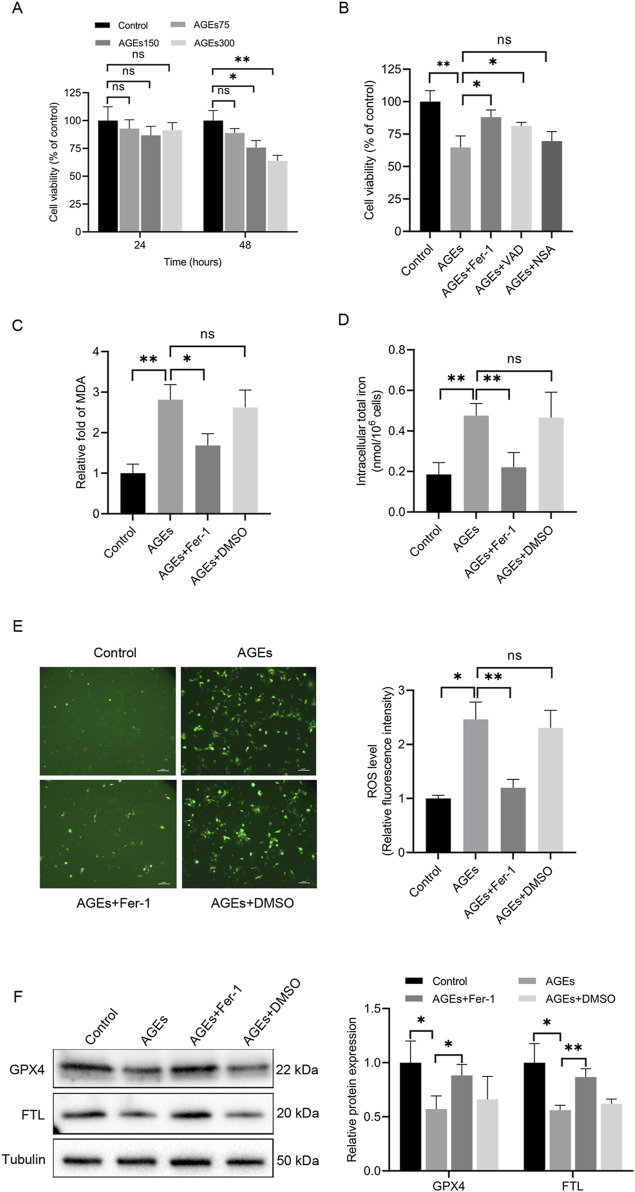
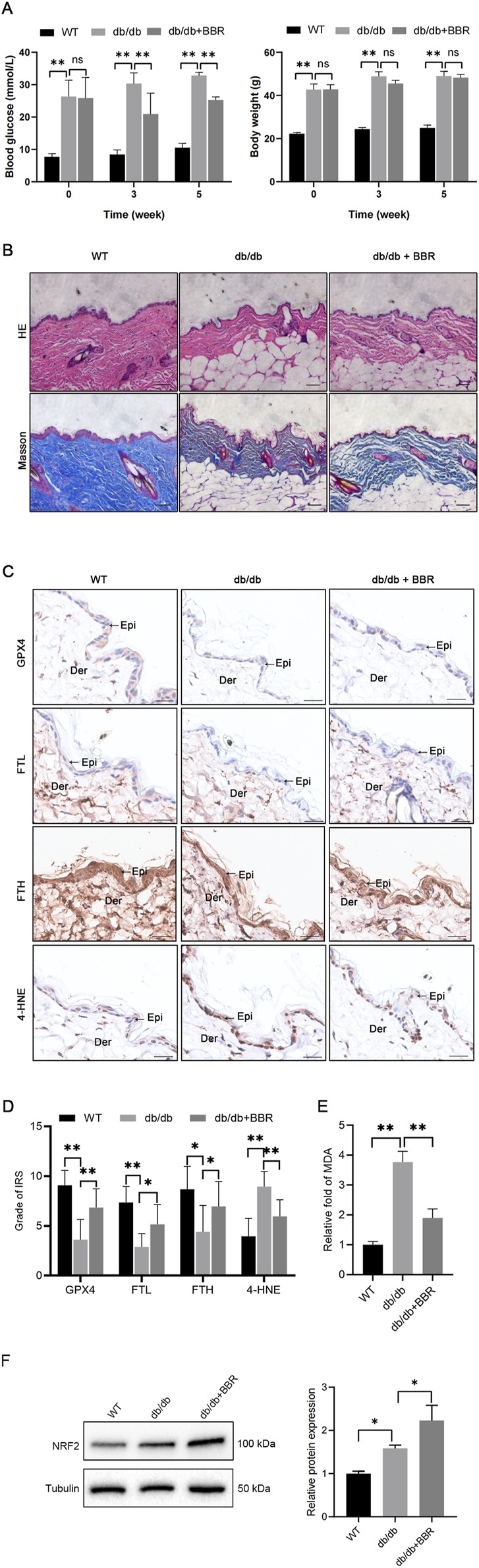
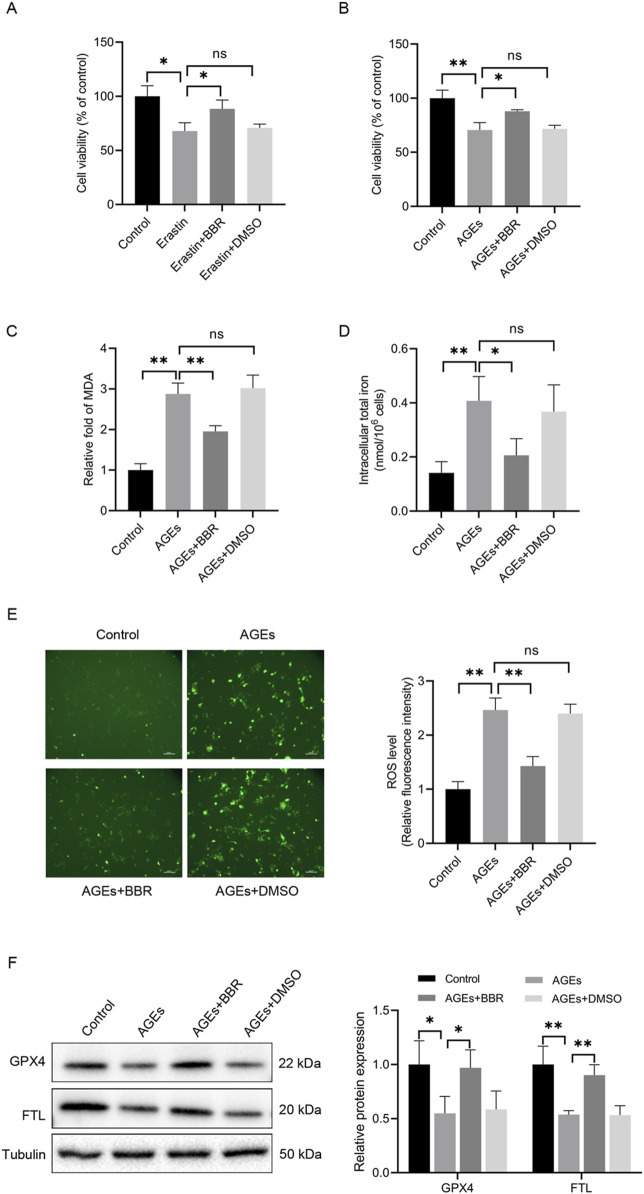
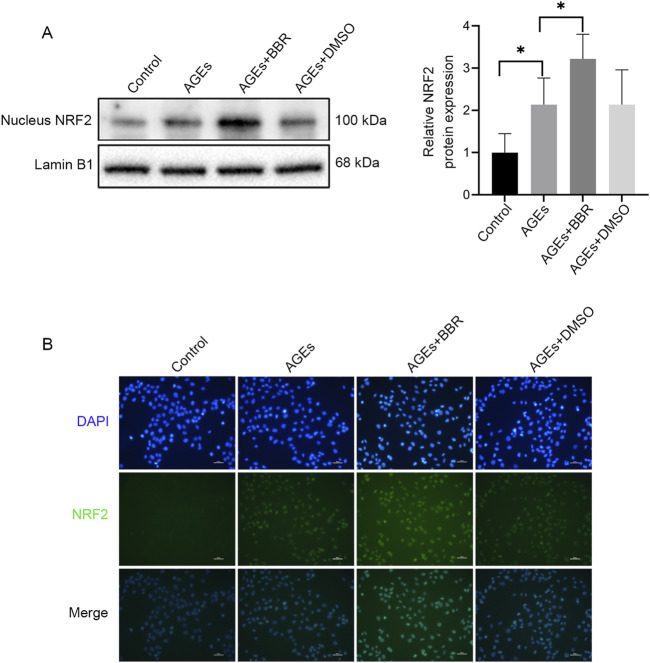
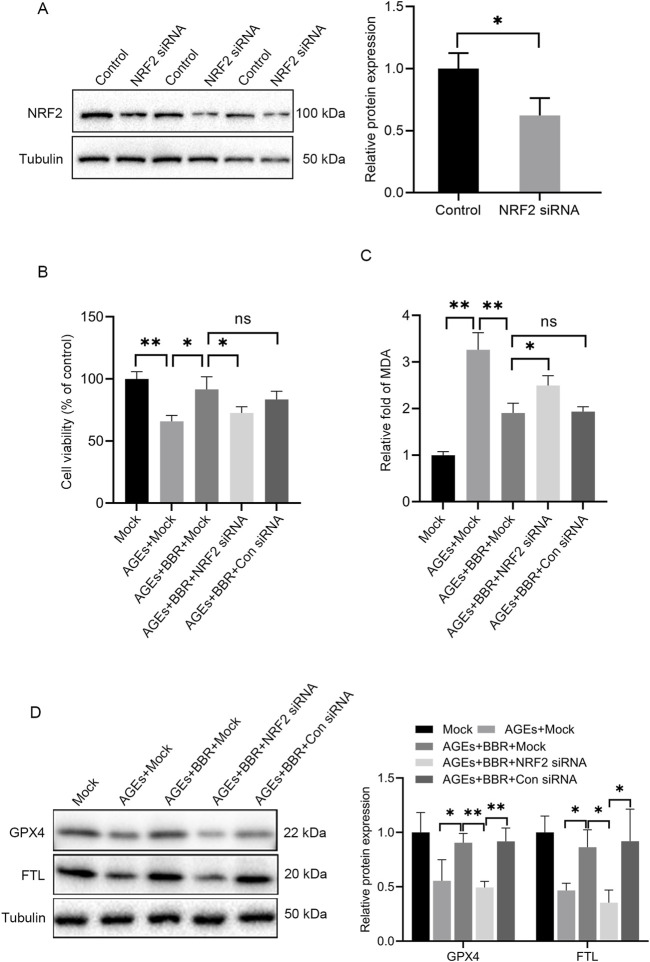
Advanced glycation end products (AGEs) have adverse effects on the development of diabetic complications. Berberine (BBR), a natural alkaloid, has demonstrated its ability to promote the delayed healing of skin wounds. However, the impact of BBR on AGEs-induced ferroptosis in skin cells and the underlying molecular mechanisms remains unexplored. This study investigated the involvement of ferroptosis in AGEs-induced keratinocyte death, and the impact of BBR on ferroptosis in a db/db mouse model with long-term hyperglycemia was elucidated. A remarkable reduction in cell viability was observed along with increased malondialdehyde (MDA) production in AGEs-induced HaCaT cells. Intracellular reactive oxygen species (ROS) and iron levels were elevated in cells exposed to AGEs. Meanwhile, the protein expression of glutathione peroxidase 4 (GPX4) and ferritin light chain (FTL) was significantly decreased in AGEs-treated cells. However, pretreatment with BBR markedly protected cell viability and inhibited MDA levels, attenuating the intracellular ROS and iron levels and increased expression of GPX4 and FTL . Significantly diminished antiferroptotic effects of BBR on AGEs-treated keratinocytes were observed upon the knockdown of the nuclear factor E2-related factor 2 () gene. , GPX4, FTL, and FTH expression in the epidermis of diabetic mice was significantly reduced, accompanied by enhanced lipid peroxidation. Treatment with BBR effectively rescued lipid peroxidation accumulation and upregulated GPX4, FTL, FTH, and NRF2 levels in diabetic skin. Collectively, the findings indicate that ferroptosis may play a significant role in AGEs-induced keratinocyte death. BBR protects diabetic keratinocytes against ferroptosis, partly by activating NRF2.
晚期糖基化终末产物(AGEs)对糖尿病并发症的发展具有不良影响。黄连素(BBR)是一种天然生物碱,已证明其具有促进皮肤伤口延迟愈合的能力。然而,BBR对AGEs诱导的皮肤细胞铁死亡的影响及其潜在分子机制仍未得到探索。本研究调查了铁死亡在AGEs诱导的角质形成细胞死亡中的作用,并阐明了BBR对长期高血糖db/db小鼠模型中铁死亡的影响。在AGEs诱导的HaCaT细胞中观察到细胞活力显著降低,同时丙二醛(MDA)生成增加。暴露于AGEs的细胞内活性氧(ROS)和铁水平升高。同时,在AGEs处理的细胞中,谷胱甘肽过氧化物酶4(GPX4)和铁蛋白轻链(FTL)的蛋白表达显著降低。然而,用BBR预处理可显著保护细胞活力并抑制MDA水平,减轻细胞内ROS和铁水平,并增加GPX4和FTL的表达。在敲低核因子E2相关因子2(NRF2)基因后,观察到BBR对AGEs处理的角质形成细胞的抗铁死亡作用显著减弱。糖尿病小鼠表皮中的NRF2、GPX4、FTL和FTH表达显著降低,同时脂质过氧化增强。用BBR治疗可有效挽救脂质过氧化积累,并上调糖尿病皮肤中GPX4、FTL、FTH和NRF2的水平。总的来说,这些发现表明铁死亡可能在AGEs诱导的角质形成细胞死亡中起重要作用。BBR通过部分激活NRF2保护糖尿病角质形成细胞免受铁死亡。