Wang Shouhong, Fu Liezhen, Wang Bin, Cai Yanmei, Jiang Jianping, Shi Yun-Bo
Chengdu Institute of Biology, Chinese Academy of Sciences, Chengdu, 610041, China.
Section On Molecular Morphogenesis, Eunice Kennedy Shriver National Institute of Child Health and Human Development, National Institutes of Health, Bethesda, MD, 20892, USA.
BMC Genomics. 2024 Dec 31;25(1):1260. doi: 10.1186/s12864-024-11175-4.
Thyroid hormone (T3) has an inhibitory effect on tissue/organ regeneration. It is still elusive how T3 regulates this process. It is well established that the developmental effects of T3 are primarily mediated through transcriptional regulation by thyroid hormone receptors (TRs). Here we have taken advantage of mutant tadpoles lacking both TRα and TRβ (TRDKO), the only receptor genes in vertebrates, for RNA-seq analyses to investigate the transcriptome changes underlying the initiation of tail regeneration, i.e., wound healing and blastema formation, because this crucial initial step determines the extent of the functional regeneration in the later phase of tissue regrowth.
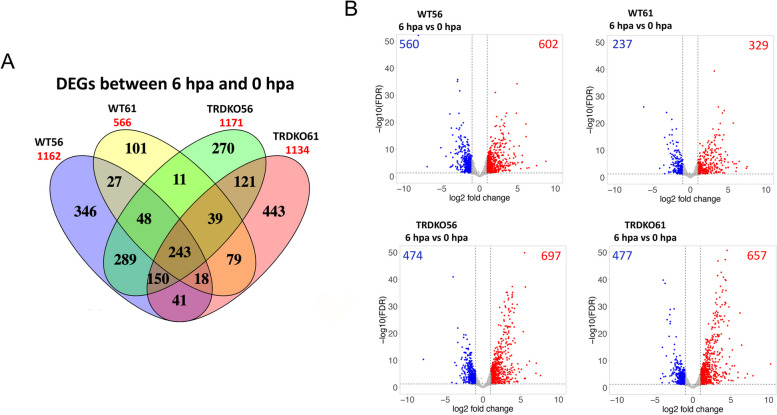
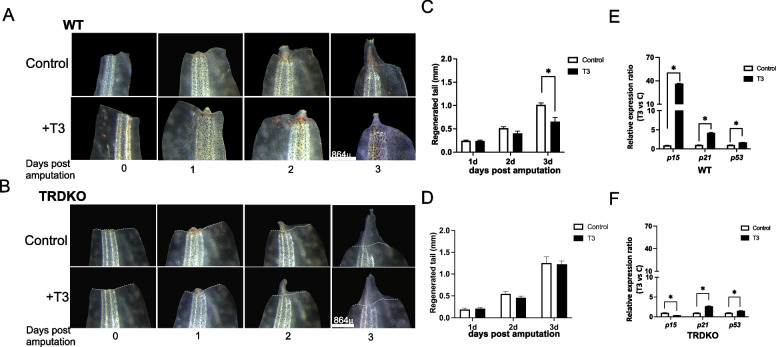
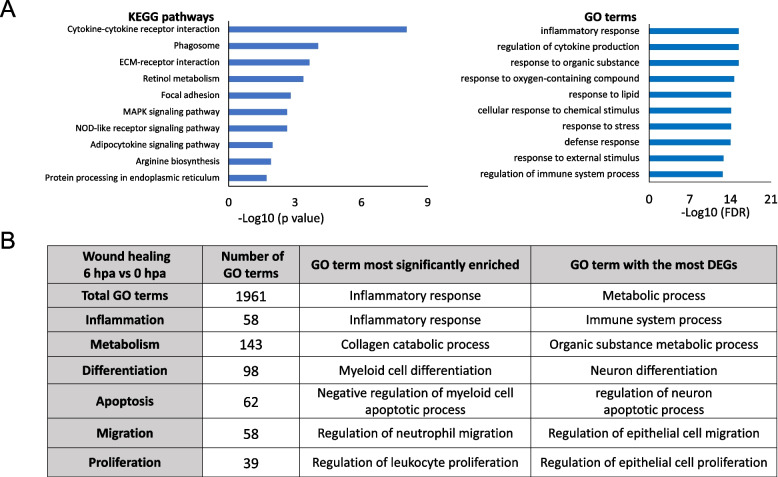
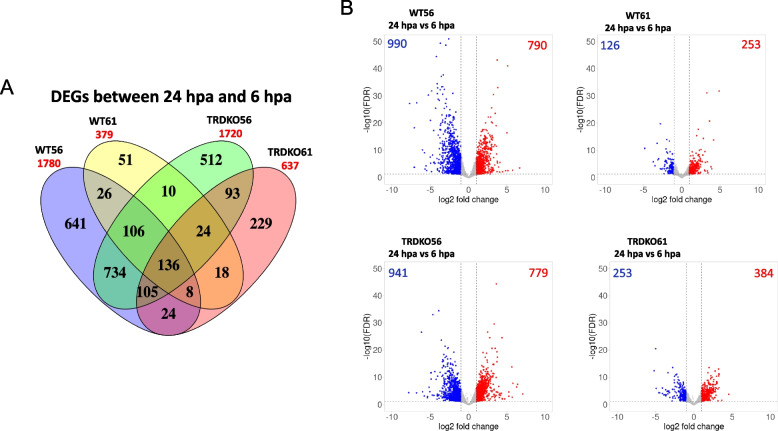
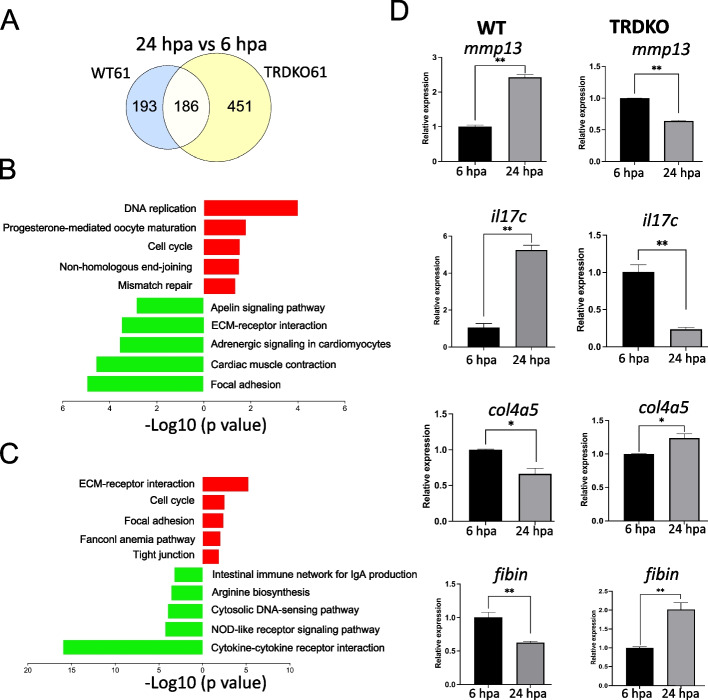
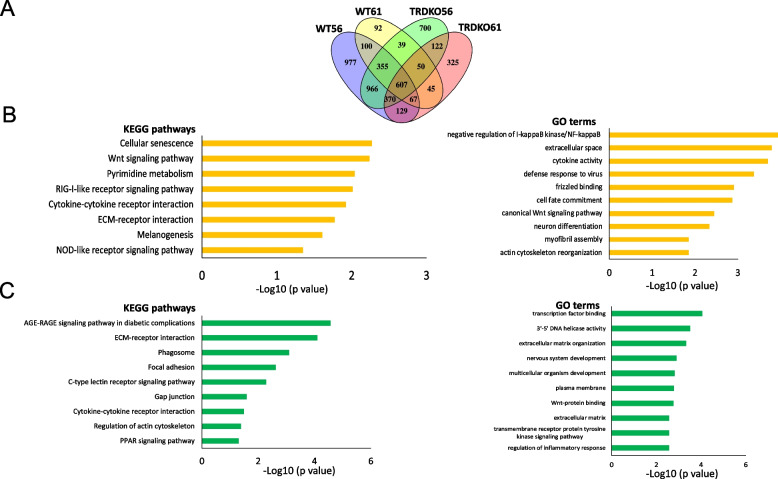
We discovered that GO (gene ontology) terms related to inflammatory response, metabolic process, cell apoptosis, and epithelial cell migration were highly enriched among commonly regulated genes during wound healing at either stage 56 or 61 or with either wild type (WT) or TRDKO tadpoles, consistent with the morphological changes associated with wound healing occurring in both regenerative (WT stage 56, TRDKO stage 56, TRDKO stage 61) and nonregenerative (WT stage 61) animals. Interestingly, ECM-receptor interaction and cytokine-cytokine receptor interaction, which are essential for blastema formation and regeneration, were significantly enriched among regulated genes in the 3 regenerative groups but not the non-regenerative group at the blastema formation period. In addition, the regulated genes specific to the nonregenerative group were highly enriched with genes involved in cellular senescence. Finally, T3 treatment at stage 56, while not inducing any measurable tail resorption, inhibited tail regeneration in the wild type but not TRDKO tadpoles.
Our study suggests that TR-mediated, T3-induced gene regulation changed the permissive environment during the initial period of regeneration and affected the subsequent patterning/outgrowth period of the regeneration process. Specifically, T3 signaling via TRs inhibits the expression of ECM-related genes while promoting the expression of inflammation-related genes during the blastema formation period. Interestingly, our findings indicate that amputation-induced changes in DNA replication-related pathways can occur during this nonregenerative period. Further studies, particularly on the regenerative microenvironment that may depend on ECM-receptor interaction and cytokine-cytokine receptor interaction, should provide important insights on the regulation of regenerative capacity during vertebrate development.
甲状腺激素(T3)对组织/器官再生具有抑制作用。T3如何调节这一过程仍不清楚。众所周知,T3的发育效应主要通过甲状腺激素受体(TRs)的转录调控来介导。在这里,我们利用缺乏TRα和TRβ(TRDKO)的突变蝌蚪(脊椎动物中仅有的受体基因)进行RNA测序分析,以研究尾巴再生起始过程(即伤口愈合和芽基形成)背后的转录组变化,因为这一关键的初始步骤决定了组织再生后期功能再生的程度。
我们发现,在56期或61期,无论是野生型(WT)还是TRDKO蝌蚪,在伤口愈合过程中,与炎症反应、代谢过程、细胞凋亡和上皮细胞迁移相关的基因本体(GO)术语在共同调控的基因中高度富集,这与再生(WT 56期、TRDKO 56期、TRDKO 61期)和非再生(WT 61期)动物中与伤口愈合相关的形态学变化一致。有趣的是,在芽基形成期,对芽基形成和再生至关重要的细胞外基质(ECM)-受体相互作用和细胞因子-细胞因子受体相互作用在3个再生组的调控基因中显著富集,而在非再生组中则没有。此外,非再生组特有的调控基因高度富集了参与细胞衰老的基因。最后,在56期进行T3处理,虽然没有诱导任何可测量的尾巴吸收,但抑制了野生型蝌蚪的尾巴再生,而对TRDKO蝌蚪没有影响。
我们的研究表明,TR介导的、T3诱导的基因调控在再生初期改变了允许环境,并影响了再生过程随后的模式形成/生长阶段。具体而言,在芽基形成期,通过TRs的T3信号传导抑制ECM相关基因的表达,同时促进炎症相关基因的表达。有趣的是,我们的研究结果表明,截肢诱导的与DNA复制相关途径的变化可能发生在这个非再生期。进一步的研究,特别是对可能依赖于ECM-受体相互作用和细胞因子-细胞因子受体相互作用的再生微环境的研究,应该为脊椎动物发育过程中再生能力的调控提供重要的见解。